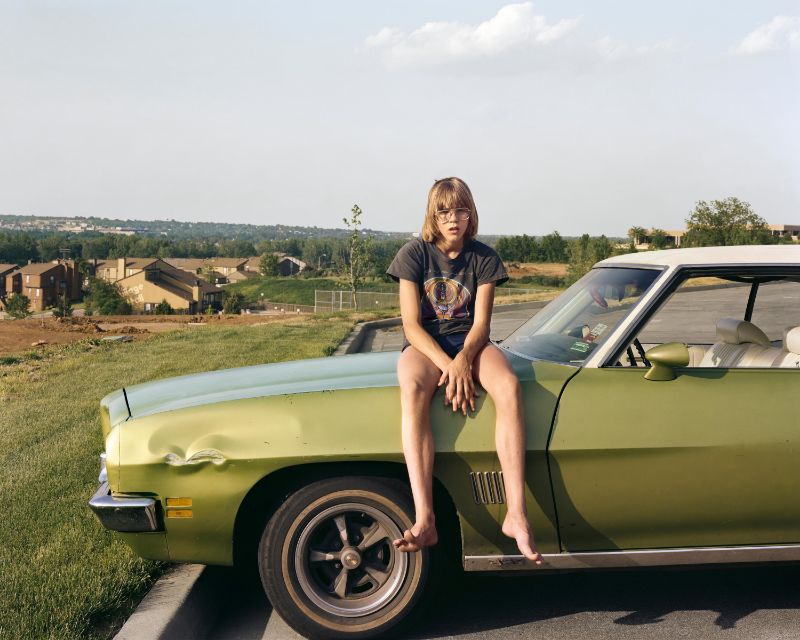
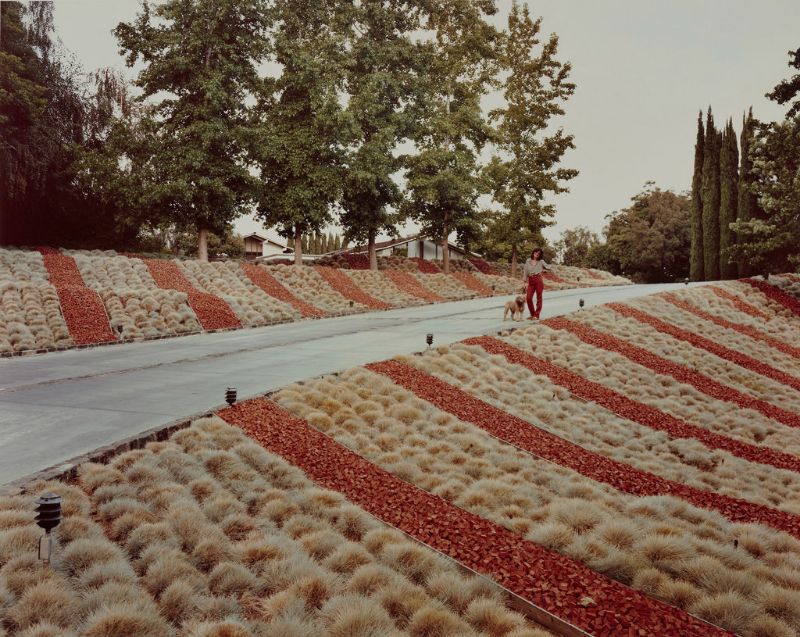
Bring back some good or bad memories


ADVERTISEMENT
Showing posts with label Washington. Show all posts

November 28, 2025

Vintage Photos Capture Street Scenes of Seattle in the 1970s

The streets of Seattle in the 1970s presented a gritty, transitional urban landscape, a distinct departure from the gleaming tech hub of today. Downtown, areas around First Avenue and Pike Place Market buzzed with a diverse mix of long-haired counter-culture youths, sailors from the nearby port, and working-class locals.

Fashion was a collision of styles: bell-bottom jeans, tie-dye shirts, and military surplus jackets were commonplace sights, often worn under the perpetual gray skies. The air carried the smells of fresh fish and strong coffee mixed with exhaust fumes from classic American cars: Chevys, Fords, and Volkswagens that dominated traffic, as the city had not yet fully embraced modern public transit.

The 1970s vibe was defined by an earthy, slightly rough-around-the-edges authenticity, as Seattle navigated a period of economic fluctuation and cultural change. These vintage photos, from duckswim2, capture street scenes of Seattle in March 1977.

View from bus to downtown, the Hat 'n' Boots Texaco Gas Station, Seattle, Washington, 1977

Hat 'n' Boots, Seattle, Washington, 1977

View from downtown to Space Needle, Seattle, Washington, 1977

Pioneer Building, Downtown Seattle, Washington, 1977

A building at night, Seattle, Washington, 1977

February 1, 2025

Some Photos Reveal Clark Gable Trained in Spokane as a Turret Gunner in World War II

In the 1940s, Clark Gable was the King of Hollywood. Millions of people around the world knew and loved him from his iconic roles in films like Gone With the Wind, Mutiny on the Bounty and It Happened One Night. Gable, with his trademark mustache, probably couldn’t have walked down a busy street anywhere in America without being recognized.

But in early January 1943, the 41-year-old Gable, a star even among stars, walked onto Fort George Wright in Spokane as a common soldier, ready to train as an aerial gunner alongside teenagers before heading overseas to fight in World War II.

Gable’s arrival at Fort George Wright would have been a topic of discussion among everyone on base, regardless of rank. The men he trained with during the few weeks he spent in Spokane undoubtedly told stories for the rest of their lives about meeting the Hollywood legend.

But there’s relatively little documented evidence of Gable’s time in Spokane, and his training has, to some extent, been shrouded in mystery.

Photos donated to Fairchild Air Force Base by the son of a man who trained Gable in aerial gunnery have helped remove some of that mystery.

Rebekah Horton, the 92nd Air Refueling Wing’s historian, said she had never seen two of the three Clark Gable photos that Craig Willan donated in June 2021. One of the images shows gunnery sergeant Merrill “Bill” Willan, Craig Willan’s father, next to Gable as the movie star trains in a turret. The other image shows the two men standing side by side holding shotguns.

The photos provide new historical evidence of what Gable was doing when he was here, Horton said. “We had originally thought that he had received his turret training at a different base,” she said. “This is a part of history that I had not yet found.”

Movie actor Clark Gable sits in a turret gun simulator during gunnery training with gunnery sergeant Bill Willan in January 1943 at Camp Seven Mile near Spokane. The movie star was training as a turret gunner at Camp Seven Mile, which is now inside of Riverside State Park, and staying at Fort George Wright, though it wasn’t a part of his assignment, which was to make films for the war effort. (Fairchild Air Force Base archive)

Merrill W. “Bill” Willan, left, stands next to movie idol Clark Gable during gunnery training at Camp Seven Mile in January 1943. Gable flew five missions in Europe aboard bombers. This photo and others were recently donated to the historical archives at Fairchild Air Force Base, proving once and for all that Gable took training in Spokane for several weeks before shipping out for Europe. (Fairchild Air Force Base archive)

In this 1943 military group photo, movie star Clark Gable, center of the back row, poses with the instructors stationed at Camp Seven Mile, a gunnery camp in an area that is now Riverside State Park. The photo was donated to the Fairchild Air Force Base historical archives by the son of Merrill W. “Bill” Willan, who worked at Camp Seven Mile. (JESSE TINSLEY/THE SPOKESMAN-REVIEW)

January 1, 2025

Fascinating Photos of the 1962 Seattle World’s Fair

The 1962 Seattle World’s Fair, officially known as the Century 21 Exposition, was held from April 21 to October 21, 1962. Its theme was “Living in the Space Age,” reflecting optimism about the future and technological advancements.

The fair showcased innovations in science, space exploration, and industry. Notable highlights included the iconic Space Needle, which became a symbol of Seattle, and the Washington State Pavilion, which featured the futuristic Monorail. The fair played a pivotal role in transforming Seattle’s skyline and infrastructure, establishing it as a hub for innovation and technology.

Here below is a set of fascinating photos from EspressoBuzz that show the Seattle World’s Fair in 1962.


May 24, 2024

Century 21 Exposition - Wonderful Color Photos of the 1962 Seattle World’s Fair

The Century 21 Exposition (also known as the Seattle World’s Fair) was a world’s fair held April 21, 1962, to October 21, 1962, in Seattle, Washington, United States. Nearly 10 million people attended the fair during its six-month run.

Here below is a wonderful color photo collection from AJ LaTrace that shows the 1962 Seattle World’s Fair.
“Over a year ago I found two boxes of slides at the Village Discount Outlet in Chicago, IL. At first, I was curious and looked at a couple. I quickly realized that the content of the slides was very interesting and offered a glimpse of the 1962 World’s Fair in Seattle. The photographs are very well composed and even show the personalities of the subjects. Each slide has a hand written title and caption and dates, which I’ve included on each image. The photos were taken by Eddie Sato, who was a Japanese American citizen interned by the United States during the second World War. These images offer the viewer a glimpse into the family’s life as they go on vacation to the World’s Fair in Seattle.” 
Aerial View of City and Fair, September 11, 1962

Doris n' Eddie... Hydro-Falls, September 14, 1962

Arches - Christian Witness, September 13, 1962

Automats In the Space Needle, September 13, 1962

Bug's Eye View of Space Needle, September 11, 1962

February 14, 2024

The World’s Largest Omelet Was Cooked in the World’s Largest Frying Pan in Chehalis, 1931

A huge crowd gathered at Alexander Park in Chehalis, Washington for the Lewis County Farmers and Merchants Picnic, where a giant omelet that took home the title of world’s biggest was cooked in 1931. The best part of the picnic was this priceless photo of Thora Yeager skating across the frying pan with slabs of bacon strapped to her feet, in an effort to grease the frying pan.

Thora Yeager (1907–2006) greasing the giant frying pan with slabs of bacon lashed to her feet, Chehalis, July 24, 1931.

On the morning of July 24, 1931, approximately 10,000 people showed up for the annual picnic in Alexander Park – a record crowd for the summertime event. Festivities started at 11:30 a.m. with an egg-cracking contest. Nineteen women vied to see who could crack a caseload of 30 dozen eggs the fastest, without leaving any shells in the yolk. The winner, Mrs. Al Blair, accomplished the task in 12 minutes.

Egg-cracking contest in Chehalis.

To ready the skillet for cooking, it needed to be greased. To accomplish this, Thora Yeager (1907–2006) attached a giant slab of bacon to each of her feet and skated around the pan. She maintained her balance by using one of the long wooden spatulas that would later be used to stir the eggs.

Yeager’s performance was one of the most photographed events of the day. She smiled for numerous newspaper reporters, as well as for anyone who brought his or her own camera. Universal Studios and Fox Movietone News were also there to film the event for its newsreels.

Her job now complete, Yeager was helped out of the pan, and the heat was raised on the 3,000-brick, open-air stove built to hold it. Attention now turned to the coronation of the queen of the “Principality of Egg Land.” The honors went to Shirley Brown of Winlock, who was crowned by Governor Hartley. Attending Queen Shirley were Ruth Miller (representing “Climate”), Margaret Limmer (representing “People – Patriotic, Intelligent, and Loyal”), Eleanor Sarvela (representing “Co-Operation”),  and Alma Hansen (representing “Fertile Soil”).

Crowd surrounding a woman skating around a giant skillet with slabs of bacon tied to her feet, holding a giant wooden spatula, Chehalis, Washington.

By the time the coronation was over, the pan was hot and it was time to start cooking. The work was performed by L. C. Otter, J. E. Lloyd, and Owen Warring, all chefs from the Northern Pacific Railroad. At one point Governor Hartley donned a chef’s hat and joined in to help stir the mixture. Giant salt and pepper shakers were used to add flavor.

Although the plan was to use 10,000 eggs in the omelet, the pan only held about 7,200 eggs. No one seemed to mind, since the omelet was enormous. When cooking was completed, the crowd was alerted through the use of a new loudspeaker system that had been installed a week before. The thousands who got a helping of the record-breaking dish enjoyed their lunch.

After everyone had gotten their fill of omelet, as well as free coffee, it was time for picnic fun. No speeches were given that afternoon; the picnic promoters just wanted the crowds to either join in on the planned activities or cheer from the sidelines.

Approximately 7,000 dishes of ice cream, 120 US gallons (450 L; 100 imp gal) of coffee, and 4,000 US gallons (15,000 L; 3,300 imp gal) of lemonade were handed out to spectators. After the event, the frying pan was put on temporary display throughout the city, including at the Peacock Theater where movie reels of the record omelet festival filmed by Universal Pictures were also shown.

Other events included a pie-eating contest, a greased-pig contest, a husband-calling contest, a rolling-pin-throwing contest, swimming matches, and various races, including a fat man’s race and a fat woman’s race. One of the more entertaining highlights of the day was the release of the Sperry Flour Company's homing pigeons by Governor Hartley. The six birds circled the park before heading straight to their home in Tacoma. This event became a regular feature of the annual picnic.

February 11, 2024

Rare Photographs of a Young Sharon Tate as Miss Richland in 1959

Sharon Tate, 16, was a student at Columbia High School in Richland when she was chosen Miss Richland during the 1959 Atomic Frontier Days, as well as Miss Autorama of 1958­-1959. Tate had to abdicate the title on August 12, 1959 to Patti Stewart when her fater, Maj. Paul J. Tate, was assigned to Italy after his tour at Camp Hanford. She went on to start a promising film career, which included a leading role in Valley of the Dolls, before she was murdered by the followers of Charles Manson in 1969.

For those who don’t know, Sharon Tate lived in Richland from 1955-1959. Her father was in the U.S. Army and was stationed at the Camp Hanford Army Base. Her family moved while she was a Junior at Richland (Columbia) High School in the late fall of 1959 to El Paso, TX, later graduating high school in Italy in 1961.


December 1, 2023

The World’s Tallest Christmas Tree

In 1950, Northgate Mall was brand new, as it was the first mall of its kind in the United States. In order to celebrate its newness, the mall wanted to hoist its own tree and make it bigger and better than ever before. As Christmas approached that year, the mall put up and lit a 212-foot-tall tree which as of 2023, still holds the record as the world’s tallest cut Christmas tree.

Christmas Tree night and day postcard, Northgate Mall, Seattle, December 1950.

In an interview by HistoryLink, Jim Douglas, the president of the Northgate Company in 1950 recalled: “The suggestion was made that Northgate should put an end to this contest for the world’s tallest Christmas tree. We were to put up a Christmas tree so tall that no one would ever again attempt to beat the record that would be established by Northgate.”

That goal was achieved by inspecting 1,000 trees before a 212-foot-tall Douglas fir tree was selected. The tree was located on Weyerhaeuser holdings which is about 30 miles east of Enumclaw. Get this, the evergreen was estimated “to weigh approximately 50,000 pounds and was calculated to be either 286 or 287 years old.”

As you would imagine, the tree’s 70-mile journey to Northgate had some difficulties due to the length of the tree. What’s more, “to make it easier to transport, it had been shorn of all its branches (save a small tuft at its top) before being brought to Seattle, making it look rather like a giant toothpick.”

Of course, the branches were reassembled and reattached to the tree with its lighting ceremony taking place on November 24, 1950. The tree remained lit each night until New Year’s Day 1951.

Christmas tree, Northgate Mall, Seattle, December 1950.

“World’s Tallest Christmas Tree” postcard, Northgate Mall, Seattle, December 1950.

Northgate Christmas tree, Northgate Mall, Seattle, December 19, 1950.

Hauling Northgate’s Christmas tree through Seattle via Union Street, 1950.

Hauling Northgate’s Christmas tree from Renton area, 1950.

April 24, 2023

50 Fascinating Photos of the Alaska–Yukon–Pacific Exposition in 1909

The Alaska–Yukon–Pacific Exposition, acronym AYP or AYPE, was a world's fair held in Seattle in 1909 publicizing the development of the Pacific Northwest. It was originally planned for 1907 to mark the 10th anniversary of the Klondike Gold Rush, but the organizers learned of the Jamestown Exposition being held that same year and rescheduled.

The fairgrounds became the campus of the University of Washington. Here below is a set of fascinating photos from University of Washington Libraries Digital Collections that shows Alaska–Yukon–Pacific Exposition in 1909.

2nd Ave. showing welcome arch for the Alaska Yukon Pacific Exposition, Seattle, 1909

Aerial view of the Alaska-Yukon-Pacific Exposition looking toward Mt. Rainier, Seattle, Washington, 1909

Aerial view of the Alaska-Yukon-Pacific Exposition, 1909

Alaska Theatre of Sensations, Pay Streak, Alaska Yukon Pacific Exposition, Seattle, Washington, 1909

Amusement ride on the Pay Streak, Alaska-Yukon-Pacific Exposition, Seattle, Washington, 1909

November 20, 2022

Robert W. Patten, the Iconic Seattle Street Character Known as the Umbrella Man

Robert W. Patten (1832–1913) was an American eccentric from Seattle, Washington. Few people in Seattle knew much about his past and he was seen as eccentric because of his lifestyle and outrageous claims. He lived on a houseboat, walked around town with an umbrella on his head and spent most of his time outdoors. He claimed to have been a significant historical figure in his own right rating alongside Buffalo Bill and Kit Carson.

He did become a historical figure in a different way, as a recognized part of Seattle’s cultural landscape, especially after cartoonist Dok Hager created a daily comic featuring his image. He was known as Old Sport or the Umbrella Man.

Born in New York in 1832, Robert Patten served in the Civil War from which he drew a small pension. While prospecting in Mexico, he devised his signature hat with an umbrella mounted atop and mosquito netting tucked within.

Coming to Seattle in 1890, Patten told many colorful tales of early life. He claimed that he was born in 1811, ran away from home at age nine, was adopted by Winnebago Chief Big John and romanced the chief’s daughter. Later (he said) he scouted with Kit Carson and saved John Fremont from death, for which heroics (he said) Abraham Lincoln made him Chief Scout of the Army, and that he later gave up the position to Buffalo Bill. As to the veracity of his claims, it may be said that the evidence is scanty.

Living on a Lake Union houseboat, and supporting himself by fishing and doing odd jobs, The Umbrella Man was a colorful figure of early Seattle. Patten was well enough known that when he had a stroke in 1910, he made the front page of the Seattle Daily Times. The Times also ran a story on his life in the Old Soldiers’ Home in Los Angeles. Papers in San Jose and Seattle ran stories which documented his bigger–than–life claims.


August 3, 2022

Fascinating Photos Capture Street Scenes of Seattle in 1985

Seattle is a seaport city on the West Coast of the United States. It is the seat of King County, Washington, and the largest city in both the state of Washington and the Pacific Northwest region of North America.

Seattle is situated on an isthmus between Puget Sound (an inlet of the Pacific Ocean) and Lake Washington. It is the northernmost major city in the United States, located about 100 miles (160 km) south of the Canadian border. A major gateway for trade with East Asia, Seattle is the fourth-largest port in North America in terms of container handling as of 2021.

The Seattle area developed into a technology center from the 1980s onwards with companies like Microsoft becoming established in the region; Microsoft founder Bill Gates is a Seattleite by birth. Internet retailer Amazon was founded in Seattle in 1994, and major airline Alaska Airlines is based in SeaTac, Washington, serving Seattle's international airport, Seattle–Tacoma International Airport.

These fascinating photos were found by Mark Susina that show street scenes of Seattle in 1985.

University St, Seattle, 1985

DeLaurenti Food & Wine, Seattle, 1985

Olive Way, Seattle, 1985

Olive Way, Seattle, 1985

Olive Way, Seattle, 1985

April 28, 2022

American Prospects: Beautiful Color Pictures of Life in America in the 1970s and 1980s

Joel Sternfeld was born in New York City in 1944, and earned a BA in Art from Dartmouth College. Sternfeld began taking photographs in 1970 having studied the colour theory of artists Johannes Itten and Josef Albers. Early work included street photography on small and medium format cameras. 

In 1978, Sternfeld embarked on a road-trip which traversed the United States. Using an 8 x 10 inch camera, Sternfeld photographed the communities, culture, landscapes and quotidian life he encountered along the way.

Kansas City, Kansas, May 1983

American Prospects is seen as a continuation of the American documentary tradition established in the 1930s by Walker Evans and continued by Robert Frank twenty years later. Sternfeld expanded the trajectory of the medium by photographing scenes rich in implied narrative, which were also distinct in their colour and composition. Laced with a touch of irony, his photographs from the project explore American identity in a thought-provoking yet humorous manner. 

His masterful use of colour heightens the tensions in these comic depictions of everyday life in America. First exhibited at the Museum of Modern Art, New York and then published in book form in 1987, American Prospects is regarded as one of the most influential bodies of photographic work from this period. Sternfeld’s later work has continued to experiment with colour and put it to use in documenting everyday events and the people he encounters. 

McLean, Virginia, December 1978

The Space Shuttle Columbia Lands at Kelly Air Force Base, San Antonio, Texas, March 1979

Beverly Hills, California, May 1979

Beverly Hills, California, May 1979

April 1, 2022

In 1934, Fearless Thieves Hit the Top of the Washington Monument and Stole the Lightning Rods

During the fall and winter months of 1934, the Washington Monument was prepped for repairs and cleaning, due to cracking at the base. Scaffolding was built around the 550-foot monument to allow the workers to make the repairs with Public Works Administration funding. The restoration lasted 140 days, during which time the Monument remained open to visitors.

National Bureau of Standards engineer William M. Greig (left) and an unidentified man examine the aluminum tip and lighting rods at the top of the Washington Monument in 1934.

Workmen install new platinum lightning rods atop the Washington Monument, Washington, DC.

However, on December 28, 1934, someone scaled the scaffolding to remove 107 of the 170 gold-plated, platinum-tipped lightning rod points from the top of the monument. The points were valued at $8 each, which totaled $856 (about $24,000 in today dollars). That’d buy quite a lot of beer during the Great Depression.

Construction on the Washington Monument began in 1848, and by 1854, it had reached a height of 156 feet (48 meters). Political squabbling and a lack of funds then stalled the project, leaving an unfinished landmark as a national embarrassment for the next 22 years. The structure was finally completed on December 6, 1884, when an aluminum tip was placed atop the capstone—the same section that would be examined 50 years later by National Bureau of Standards engineers.

The 1934 refurbishment with workmen setting larger rods into the copper bar girdle.

Workmen replacing stolen lighting rods, 1934.

The tubular steel scaffolding for the Washington Monument’s 1934-1935 restoration project was the highest ever constructed up to that time. The erection and dismantling of the scaffolding cost three-and-a-half times more than the cleaning, painting and repair work.

Aluminum cap of Washington Monument with lightning rods.

Aluminum cap of Washington Monument with lightning rods.

Aerial view of Washington Monument, ca. 1930s.


FOLLOW US:
Facebook • Tumblr • Pinterest • Instagram

CONTACT US


Browse by Decades

Popular Posts

Advertisement

09 10