Bring back some good or bad memories


ADVERTISEMENT
Showing posts with label Northern Ireland. Show all posts

November 14, 2026

30 Incredible Vintage Photos of the Belfast Blitz in 1941

These incredible vintage photos document the devastating air raids on Belfast, Northern Ireland during the spring of 1941, known as the Belfast Blitz. Over a series of attacks in April and May, German bombers targeted the city’s shipyards, factories, and residential areas, causing widespread destruction and significant loss of life.

The images capture the aftermath of the bombings: ruined streets, damaged buildings, fire-scarred neighborhoods, and the efforts of emergency services and civilians. They offer a powerful and sobering visual record of one of the most destructive periods in Belfast’s history during the Second World War.

"Land of Hope and Glory" York Road, Belfast, April 16, 1941

A.F.S. in York Street, Belfast, April 17, 1941

Aftermath of the Belfast Blitz, Spring 1941

Antrim Road corner of Duncairn Gardens, Belfast, April 19, 1941

Belfast Blitz, 1941

February 24, 2023

Incredible Photos From the Kennedy Family’s Trips to Ireland in the 1930s

In June 1963, JFK became the first sitting US president to visit Ireland. There are many gorgeous photos of the trip to Ireland, which would sadly be his last, all of them imbued with a sense of respect, awe, and history in the making.

Photos from the Kennedy family’s trips to Ireland in the 1930s could not be more different. They're the classic tourist photos that any family who's taken a trip to Ireland and seen the major attractions has: kissing the Blarney Stone, walking the streets of Dublin, posing at the Giants Causeway, riding a horse through the lakes and valleys of Killarney. Many of the photos are candid or surreptitious shots, some are blurry, smudged, or out of focus.
 
Plucked from the Kennedy family’s photo albums they were digitized and stored for posterity in the archives of the John F. Kennedy Presidential Library and Museum in Boston.
 
Kathleen Kennedy (left) rides on horseback with an unidentified woman (center) and an unidentified boy through the Gap of Dunloe in Killarney National Park, Killarney, Ireland, during a Kennedy family trip in 1937.

Joseph P. Kennedy, Jr. (center, surrounded by several unidentified people), sits on the basalt rock at Giant’s Causeway in Bushmills, Northern Ireland, during a Kennedy family trip in 1937.

Rose Fitzgerald Kennedy poses in front of the United States Legation in Dublin, Ireland, during a Kennedy family trip.

Kick and Joe, Jr. with their mother Rose, on board the SS Washington en route to Ireland.

Kathleen Kennedy (wearing hat) and Joseph P. Kennedy, Jr. (smoking a pipe), stand on the grass with their arms around each other outside Blarney Castle in Blarney, Ireland, during a Kennedy family trip.

September 26, 2022

26 Amazing Photos of National Schools in Northern Ireland in 1907

National schools, established by the United Kingdom of Great Britain and Ireland government, post the Stanley Letter of 1831, and were intended to be multi-denominational. The schools were controlled by a state body, the National Board of Education, with a six-member board consisting of two Roman Catholics, two Church of Ireland, and two Presbyterians.

In Ireland, a national school is a type of primary school that is financed directly by the state, but typically administered jointly by the state, a patron body, and local representatives.

In national schools, most major policies, such as the curriculum and teacher salaries and conditions, are managed by the state through the Department of Education and Skills. Minor policies of the school are managed by local people, sometimes directed by a member of the clergy, as representative of the patron, through a local ‘board of management’. Most primary schools in Ireland fall into this category, which is a pre-independence concept.

These amazing photos from Public Record Office of Northern Ireland that show national schools in Northern Ireland in 1907.

County Antrim. Bellahill School, 1907

County Antrim. Bridge End School, 1907

County Antrim. Carrickfergus Model School, 1907

County Antrim. Craigs School, 1907

County Antrim. Cullybackey School, 1907

August 28, 2022

30 Amazing Portrait Photos of Circus Performers in the Early 1910s

A number of circuses toured Ireland in the years before 1914 providing entertainment and excitement for the crowds they attracted. Cooper’s photographs of some circuses which arrived in Strabane are particularly useful for the behind-the-scenes views they record. The three main shows photographed by Cooper (or Burroughs) were Duffy’s Circus, Buff Bill’s American Circus and Hanneford’s Canadian Circus.

Circus performers in the early 1910s

The photographs of Duffy’s Circus were, almost certainly, all taken during the visit to Strabane in 1911. Duffy’s Circus was begun in the late 19th century by John, who died in 1909; by the time Duffy's Circus arrived in Strabane in 1911, it was run by John’s widow, Annie. One of John Duffy's sons, James, married Lena Kayes, daughter of William Kayes who ran the famous Buff Bill’s American Circus in Ireland before and after the First World War, Kayes himself being ‘Buff Bill’.

Ned Hanneford’s Canadian Circus toured Ireland up to 1916. It was renowned for its menagerie, including lions and ‘bears that talk’. It also featured a splendid street parade headed by an ornate, gilded bandwagon drawn by 8 sleek horses. Cooper's photos of Hanneford's Circus must have been taken before 1914, a period which seems to have been the heyday of circus visits to Strabane.

Here is a selection of amazing photos from the Cooper Photographic Collection that shows portraits of circus performers before 1914.

A crowd of people round a clown and a donkey, circa 1910

A circus performer in front of a wagon, circa 1910

Buff Bill's Circus, a child with a baboon on a donkey, circa 1910

Buff Bill's Circus, a group of circus performers, circa 1910

Buff Bill's Circus, group of circus performers standing on each other's shoulders, circa 1910

July 12, 2022

Snapshots of the Gordon Highlanders on Patrol in Belfast in the 1970s

The 1977 Silver Jubilee and Birthday Honours, announced on 11 June 1977, was in a year of debt, industrial problems and when it came to Northern Ireland, the Troubles. The Queen, however, was determined to include it on her travels and the IRA were determined to attack her.

On the Queen's day, more than 32,000 troops and policemen, including the Gordon Highlanders, were on duty — the largest security force ever deployed there.

At the time of the Queen's Silver Jubilee, the Gordon Highlanders were based at Palace Barracks, Holywood near Belfast. Take a look at them on patrol in the city in the 1970s through these fascinating shared by Ronnie on his Flickr site.

Gordon Highlanders on Foot Patrols in Bawnmore Estate

Gordons on patrol beside the Mc Kelvey Sinclair timber yard on Duncrue Street across from the Ulsterbus head offices, 1977

Gordons checking the map in a back alley

Berwick Road just off Alliance Avenue

Gordon Highlanders on Foot Patrols in Bawnmore Estate

July 7, 2022

33 Wonderful Black and White Vintage Photos of British Kids Playing on the Streets in the 1980s

The United Kingdom in the 1980s was a time of turmoil, with severe recession and mass unemployment leading to widespread distress and resistance.

While working as a staff photographer for The Militant Newspaper, Dave Sinclair visited Belfast, London, Newcastle and Bradford and took pictures of the children in the cities whose lives were affected by social and political changes. Still, they carried on hanging out and playing on the streets with such carefree expressions, as wonderfully captured in Sinclair's photographs. Take a look:


July 2, 2022

36 Fascinating Black and White Photos Capture Lives of Belfast Kids From the Late 1980s

The United Kingdom in the 1980s was a time of turmoil, with severe recession and mass unemployment leading to widespread distress and resistance.

Following a period of economic slowdown and industrial strife in the 1970s, the Conservative government of the 1980s under Margaret Thatcher initiated a radical policy of monetarism, deregulation, particularly of the financial sector and labor markets, the sale of state-owned companies, and the withdrawal of subsidies to others. There were also major changes to the governance of the UK with the establishment of devolved administrations for Scotland, Wales and Northern Ireland around the end of the 20th century.

In April and May 1988, while working for the Militant Newspaper, Dave Sinclair visited Belfast and photographed the lives of the children in a city affected by social and political changes. Take a look:


June 25, 2022

35 Vintage Photographs of Northern Ireland From the Late 1950s

Northern Ireland is a part of the United Kingdom that is variously described as a country, province, territory or region. Located in the northeast of the island of Ireland, Northern Ireland shares a border to the south and west with the Republic of Ireland.

Northern Ireland was created in 1921, when Ireland was partitioned by the Government of Ireland Act 1920, creating a devolved government for the six northeastern counties. The majority of Northern Ireland’s population were unionists, who wanted to remain within the United Kingdom. They were generally the Protestant descendants of colonists from Great Britain. Meanwhile, the majority in Southern Ireland (which became the Irish Free State in 1922), and a significant minority in Northern Ireland, were Irish nationalists and Catholics who wanted a united independent Ireland.

Cultural links between Northern Ireland, the rest of Ireland, and the rest of the UK are complex, with Northern Ireland sharing both the culture of Ireland and the culture of the United Kingdom. In many sports, the island of Ireland fields a single team, with the Northern Ireland national football team being an exception to this. Northern Ireland competes separately at the Commonwealth Games, and people from Northern Ireland may compete for either Great Britain or Ireland at the Olympic Games.

These vintage black and white photos from Public Record Office of Northern Ireland captured street scenes of Northern Ireland in 1958 and 1959.

High Street, Donaghadee, Co. Down, 1958

'Grannies' Corner', Donaghadee, Co. Down, 1958

Bowls and Tennis Courts, Donaghadee, Co. Down, 1958

Harbor area, Donaghadee, Co. Down, 1958

Lighthouse and harbor, Donaghadee, Co. Down, 1958

April 3, 2022

Fascinating Pictures of Traveling Circuses in Northern Ireland in 1910 and 1911

In the early years of the 20th century, a number of circuses toured Northern Ireland providing entertainment, tricks, and a lot of excitement for the crowds.

Though the dim lighting condition inside the circus’ tent prevented images from being made of the acts in progress, local photographer Herbert Cooper was able to take pictures of the clowns, acrobats, and animals outdoors, as they rehearsed their acts and mingled with the local people.

During this time, he documented various circus shows that arrived in Strabane, a town in Northern Ireland, the three main ones being Duffy’s Circus, Buff Bill’s American Circus, and Hanneford’s Canadian Circus.

His pictures capture scenes from the parade in Abercorn Square, Strabane, from a wall of death act (using a car), and of the animals of the circus, including lions and a sign for ‘bears that talk’.

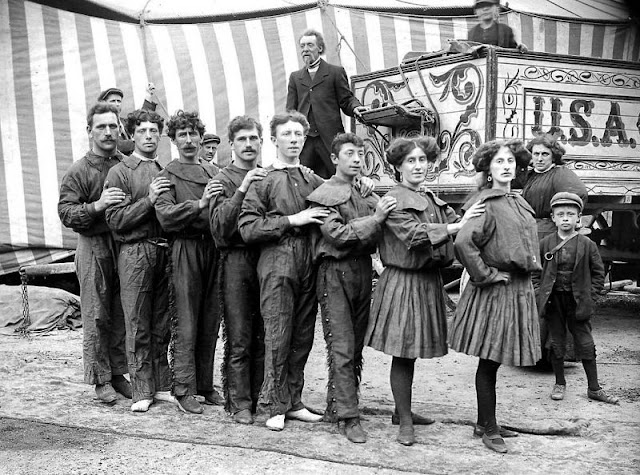
Performers with Buff Bill’s Circus

Performers with Buff Bill’s Circus

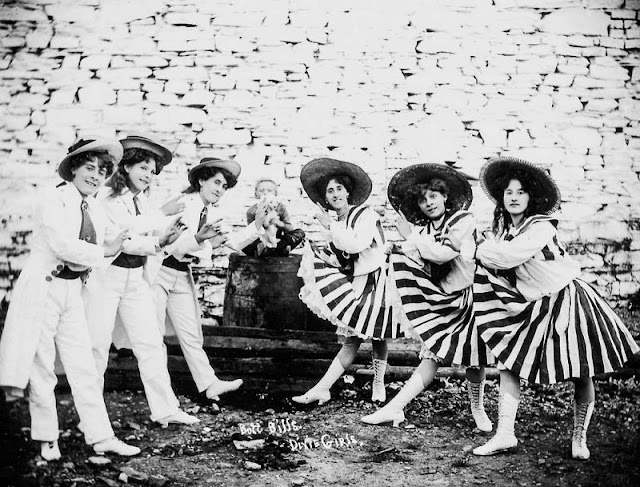
The Dixie Girls of Buff Bill’s Circus

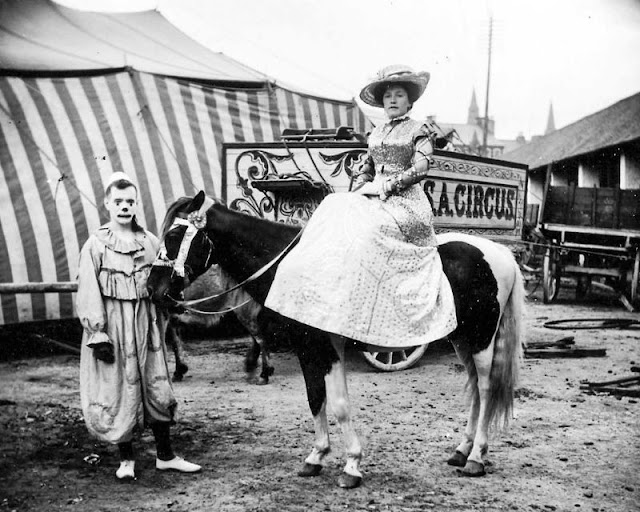
Lady on a horse, with a clown watching

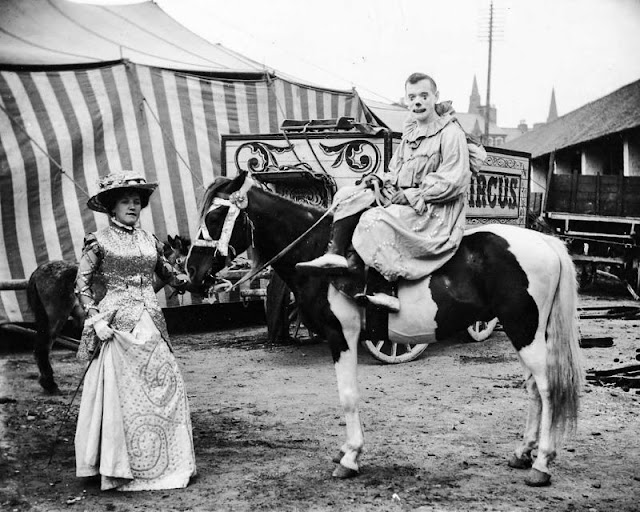
Clown on a horse, with a lady watching

March 1, 2022

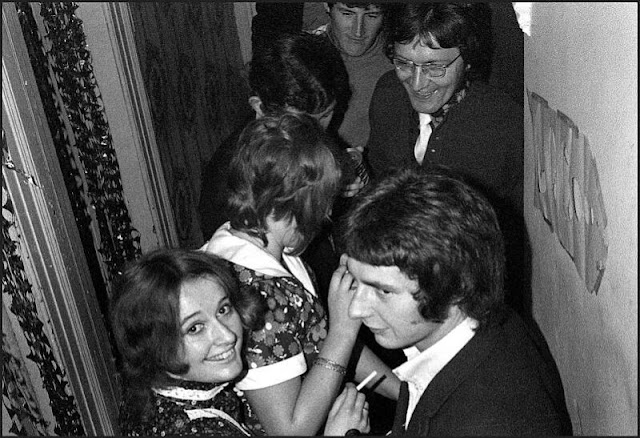
Candid Photographs Capture a Student Party in Belfast in 1970

The journey through university is not all roses and pleasures, which is why there are many other social activities that could help students relax, get to know each other and enjoy life beyond the four walls of the classroom. One of the most popular ways is through partying.

It’s Christmas time in 1970 and the students from Queen’s University in Belfast were living it up on Harp lager and tins of Guinness. The party was held on Wolseley Street, which would be called the University Quarter these days. 

These candid photographs are courtesy of Norman Craig. For more fascinating pictures, visit Craig’s brilliant Flickr site.


FOLLOW US:
Facebook • Tumblr • Pinterest • Instagram

CONTACT US


Browse by Decades

Popular Posts

Advertisement

09 10