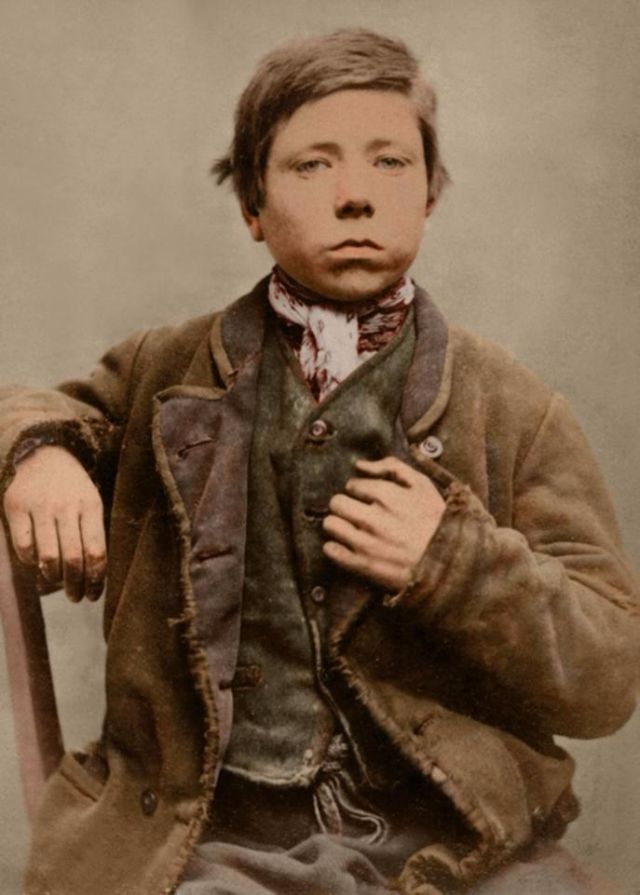
Bring back some good or bad memories


ADVERTISEMENT
Showing posts with label Newcastle. Show all posts

October 20, 2023

Newcastle in the Early 1970s Through Robert Hope’s Lens

Robert Hope was a resident of Newcastle upon Tyne. In the early 1970s, he took out a bank loan to buy a Rolleiflex camera.

Over the next few years, Hope photographed various Newcastle scenes, including the Grainger Market and the demolition of housing estates in the West End of the city.

Robert Hope died in 2001.

These fascinating black and white photos from Tyne & Wear Archives & Museums were taken by Robert Hope that show what Newcastle looked like in the early 1970s.

"The North's Leading Dog Food Specialist", Grainger Market

Angel and devils

Book browsing

Boxes

Building sandcastles from rubble, Newcastle upon Tyne

July 7, 2022

33 Wonderful Black and White Vintage Photos of British Kids Playing on the Streets in the 1980s

The United Kingdom in the 1980s was a time of turmoil, with severe recession and mass unemployment leading to widespread distress and resistance.

While working as a staff photographer for The Militant Newspaper, Dave Sinclair visited Belfast, London, Newcastle and Bradford and took pictures of the children in the cities whose lives were affected by social and political changes. Still, they carried on hanging out and playing on the streets with such carefree expressions, as wonderfully captured in Sinclair's photographs. Take a look:


April 18, 2022

Photos of the Grainger Market, Newcastle upon Tyne in the 1980s-90s

Newcastle’s historic indoor market, Grainger Market, opened to the public on 24 October 1835 following a huge celebratory banquet on 22 October. The market is known as Newcastle's first supermarket and is a gem in the heart of the city to this day.

Grainger Market, Newcastle upon Tyne in the 1980s-90s

This album from Tyne & Wear Archives & Museums has been created to commemorate the anniversary of the opening of the Grainger Market, Newcastle upon Tyne on 24 October 1835. The market was part of Richard Grainger’s grand plan to redevelop the centre of Newcastle, much of which still survives today in what is now known as Grainger Town.

The photographs were taken by well-known local amateur photographer Jimmy Forsyth (1913-2009), who enjoyed spending time in the market talking to traders and taking their pictures. While Jimmy’s later work is not of such good quality as his better-known black and white images of Scotswood in the 1950s and ’60s, it is nevertheless a reminder of the times.

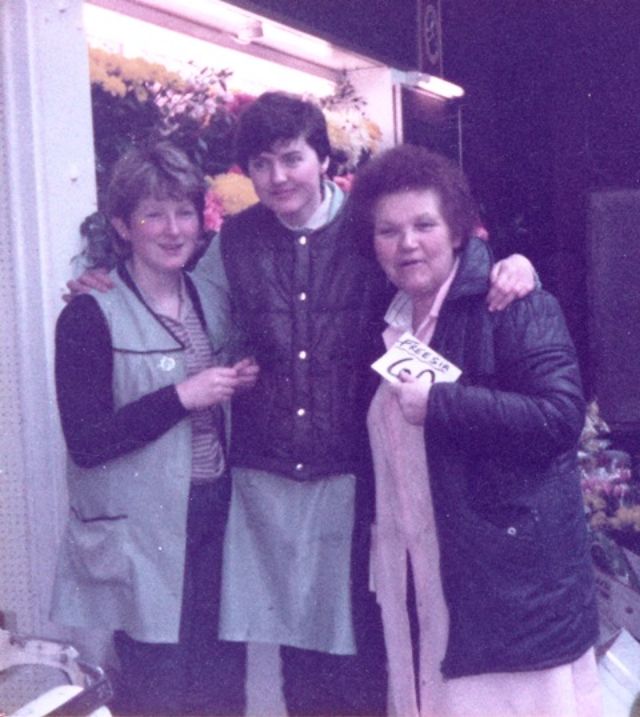
Flower stall, Grainger Market, Newcastle upon Tyne, 1980s

Fruit and vegetable stall, Grainger Market, Newcastle upon Tyne, 1980s

Fruit stall, Grainger Market, Newcastle upon Tyne, 1980s

Grainger Market, Newcastle upon Tyne, 1980s

Gregg's, Grainger Market, Newcastle upon Tyne, 1980s

August 23, 2021

Amazing Views of Esso Northumbria Tanker Under Construction at Wallsend, UK in 1969

The Esso Northumbria was the first of a series of Very Large Crude Carrier ships, built by Swan Hunter at Wallsend on Tyneside, in 1969. When launched on May 2, 1969 by Princess Anne it was the largest vessel to have been built in Britain at that time.

The ship was designed to carry crude oil from the Persian Gulf, and its large design was a result of the Suez Crisis, which had resulted in the closing of the Suez Canal. The ship was single-hulled and was designed with relatively limited knowledge of the behaviors of such large structures at sea, being generally a straightforward scaling-up of a smaller design. It was also built to a fixed-price contract at a time when rampant inflation was occurring in Britain. This led to many attempts to cut costs; Swan Hunter ultimately made a loss on the contract. Final cost of the ship was £6.5 million.

The ship was plagued with problems both with its fittings and more seriously, with cracking of the hull under stress. It needed many repairs in its short working lifetime and this, together with fears of a major spill, prompted its retirement in 1982 after only 12 years in service. The ship was broken up at Kaohsiung, Taiwan. A similar fate befell its sister ship, the Esso Hibernia, also built on Tyneside and launched in 1970.


March 29, 2018

These Incredible Haunting Photographs Are of Convicted Criminals in Newcastle Between 1871-1873

These images provided by Tyne & Wear Archives & Museums show those who were convicted of crimes in Newcastle, England between 1871-1873.

Margaret Cosh was convicted of stealing a coat, she had no previous convictions and served 2 months with hard labour.

Catherine Cain King was convicted of stealing a pocket watch, she had previously served 7 days for drunken conduct, on this occasion she served 3 months with hard labour.

John Mullen was convicted of stealing a watch and served 4 months with hard labour. This was his longest consecutive sentence having previously served time on 9 separate occasions totaling 3 months.

Isabella Hindmarch was convicted of stealing money, she had no previous convictions and served 1 month with hard labour.

John Park was convicted of stealing a violin, he had no previous convictions and served 1 month with hard labour.

January 1, 2018

No Jobs and No Hope: Extraordinary Photographs of the Forgotten Teenagers of Thatcher's Britain

During the early 1980s, when Britain experienced the rulings of then Prime Minister Margaret Hilda Thatcher, much of the island country experienced a swell of economical depression. As a result, and much like what happens elsewhere in the world, some of the poorer areas of England experienced a widespread of unemployment.

While today’s youth are still scrambling to find a job—albeit with less pressure than previous generations, especially here in the Western world—the need for a job was all the more paramount. But never-the-less, places like Newcastle ended up with more unemployed youth than they could handle during Thatcher’s reign, and working-class photographer Tish Murtha was able to document the faces of the lost teenagers of that time.

After leaving Photography school, Tish returned back to her hometown in Newcastle. She began to document the lives of her friends and family and numerous other projects. Tish's work was often concerned with the documentation of marginalised communities from the inside. She invested her time building relationships of trust, which allowed her access to different parts of the communities that she photographed. Her approach was informal, generating an understanding of what she was doing by giving copies of her photos to the people in them.


December 16, 2017

Wonderful Photos of Christmas Shop Fronts in Newcastle upon Tyne and South Shields in the 1960s

This wonderfully nostalgic collection of images from Tyne & Wear Archives & Museums documents the festive spirit of Newcastle upon Tyne and South Shields in the 1960s.

The street scenes of Christmas decorations, festivities, events and shoppers are not unlike those we see in the city centre today, despite their incredibly retro style!

The photographs were taken by local amateur photographer Robert Sanderson, of South Shields, whilst Christmas shopping with his wife. Because of this they give a very sentimental and intimate view of a 1960s Christmas in the region.

'Bainbridge, a century of service' This is a photograph of the decorated Christmas window of Bainbridge's in Newcastle upon Tyne. It was taken in 1962.

A Bainbridge's gift display. This is a photograph of a Christmas display in Bainbridge's department store, Newcastle upon Tyne. It was taken in 1966.

A Fenwick display. Taken in Fenwick department store in Newcastle upon Tyne, this is a festive Christmas display. It was taken in 1965.

Allen's department store. This is a night view of the Christmas display at Allens department store. It was taken in 1962.

Allen's festive windows. This is a photograph of the illuminated windows of Allens department sore in South Shields. It was taken in 1963.

June 3, 2017

These Colorized Photos Paint a Picture of How Society Treated Children From Poor Backgrounds During the Victorian Era

For petty crimes such as stealing daily necessities such as food and clothing, they have faced hard labor and jail. And these haunting photographs show the stern and haggard faces of Victorian criminal children who were sentenced to tough punishments in the 1870s, with many looking remarkably older than their actual ages.


The children in the shots were all from poor backgrounds. The incredible pictures show a range of children who were sentenced to a range of punishments from ten days of hard labor to two months in prison. Other eye-opening images reveal the stern and haggard appearances of the convicted children – with many looking significantly older than their actual ages.

The photographs were colorized by expert Tom Marshall and provided by the Tyne and Wear Archives and Museums.

"I colorize photos to bring faces, like that of these convicted children, to life and hopefully allow people to imagine their circumstances and how they must have felt at the time." Marshall said. "This period shows the real people behind 'official' histories – people that are from the lowest levels of society, those really struggling to survive. The pictures were found when Newcastle jail in Carliol Square was demolished."

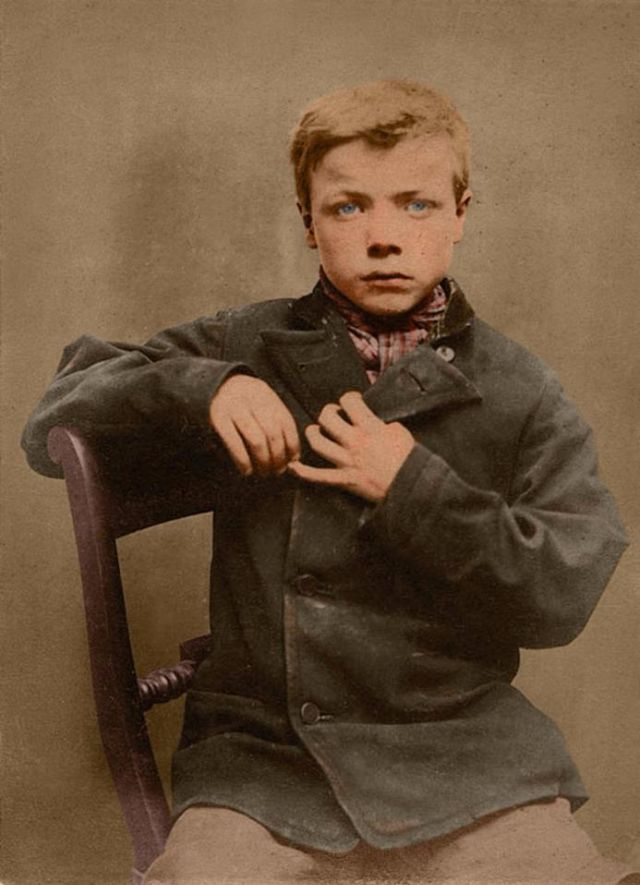
Stephen Monaghan,, 14, was convicted of stealing money on 25 July 1873 and was sentenced to 10 days hard labor and three years in Market Weighton Reformatory.

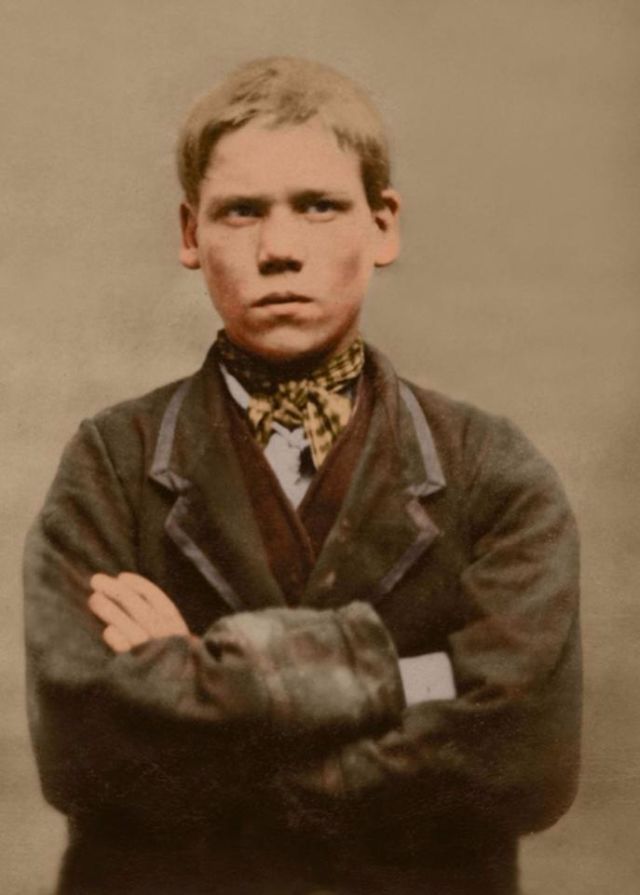
Robert Charlton, 16, a laborer from Newcastle, was sent to prison for four months for stealing two pairs of boots.

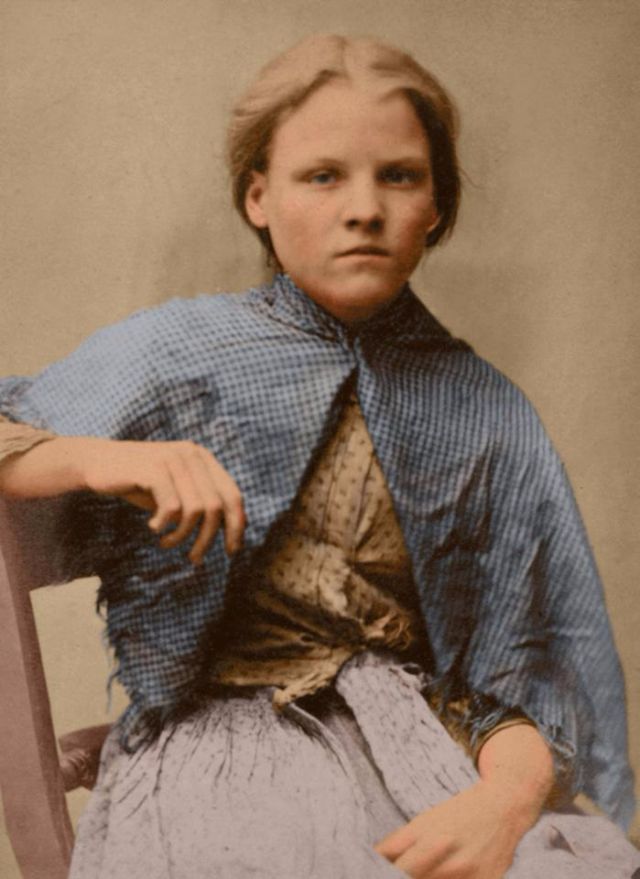
Rosana Watson, 13, was also part of the girl gang that stole the iron and she also got hard labor.

Aged 15, John Reed was handed 14 days hard labor and five years reformation for stealing money in 1873.

James Donneley, aged 16, had been in and out of prison for stealing clothes.

September 20, 2016

Mugshots of Victorian Child Thieves in Newcastle From the 1870s

Crime was on the increase along with populations, wealth, and poverty. The industrialization of England brought a great deal of success to many, but technology and populations grew much faster than regulations and management could keep up. All too often, the casualties of society’s problems are children. Many children found themselves completely alone in the world for a variety of reasons and found themselves crushed under the wheels of Victorian justice. 
  • Some parents fell into addiction (alcohol or drugs) and were useless to their children.
  • Parents were often in the justice system themselves and were either imprisoned or transported.
  • Mothers were separated from their children to prevent negative influence from a criminal parent.
  • Brothers and sisters were separated to prevent what was thought to be a natural inclination toward incest among the poor.
  • Many paupers’ children ended up in workhouses surrounded by individuals suffering from mental illness, those dying from illness, and weeping of broken mothers.
It is no surprise that many of the older children turned to a life of petty crime to try and survive. They had no sense of right and wrong except what the streets and elder criminals taught them. Some were taken in by “thief-trainers” like Fagin in Oliver Twist who fed and clothed them and taught them to be professional pickpockets. 
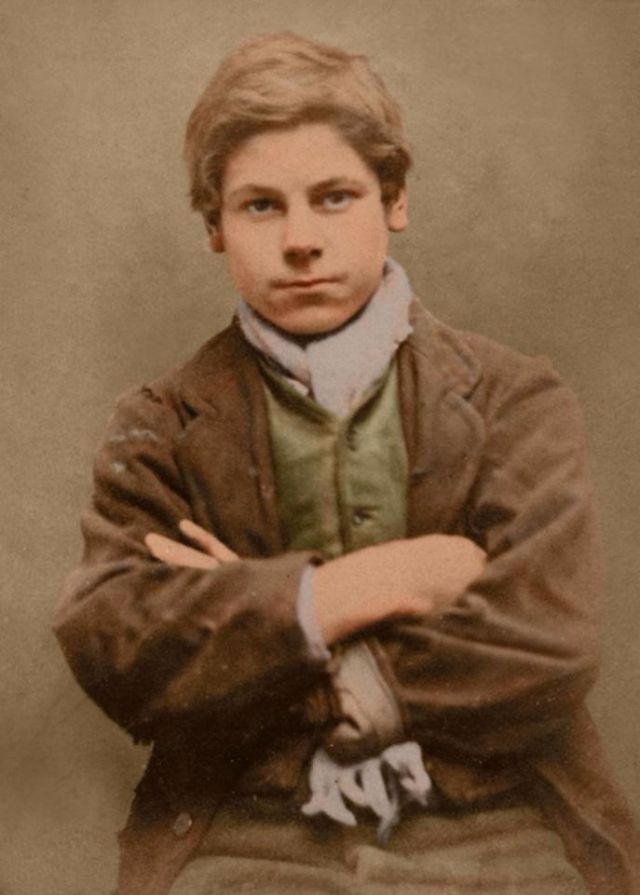
Staring into the camera, some with defiance and others in child-like wonder, these scruffy boys and girls look like any other group of Victorian urchins. But while some of the children may appear to be a picture of innocence, the gallery is in fact a collection of young criminals from the 1870s.

The fascinating Victorian images, which all feature children from the Newcastle area, have been released by Tyne and Wear Archives and Museums.

1. Ellen Woodman: 11. Ellen was ordered to do 7 days hard labor after being convicted of stealing iron.


2. Jane Farrell: 12. Jane stole 2 boots and was sentenced to do 10 hard days labor.


3. Henry Leonard Stephenson. 12. Henry was convicted of breaking in to houses and was sentenced to 2 months in prison in 1873.


4. Rosanna Watson: 13. Rosanna was sentenced to 7 days hard labor after being caught stealing iron.


5. Mary Hinnigan: 13. Mary was caught stealing iron and was sentenced to do 7 days hard labor.


June 6, 2016

Newcastle 50 Years Ago – Amazing B&W Show the Daily Life at North Shields Fish Quay in the 1960s

Laszlo Torday (1890–1975) was a chemical engineer, industrialist and a keen and gifted amateur photographer. He arrived in Tynemouth in January 1940 from Hungary and eventually moved to Jesmond. His photographs, the majority taken in the 1960s and 1970s, reflect his interest in the streets and people of Newcastle.

North Shields was one of his interested places when some of his photographs showed the Fish Quay here in the 1960s.


FOLLOW US:
FacebookTumblrPinterestInstagram

CONTACT US


Browse by Decades

Popular Posts

Advertisement

09 10