Bring back some good or bad memories


ADVERTISEMENT
Showing posts with label Finland. Show all posts

December 15, 2025

When Frogs Saved the Milk: A Russian-Finnish Tradition Backed by Science

Long before refrigerators made life easier, rural communities in Russia and Finland faced a tricky problem, how to keep milk from spoiling. Their solution? Drop a live brown frog (Rana temporaria) into the milk jar.


This practice was common in the 19th and early 20th centuries and was a traditional, empirical method of food preservation passed down through generations. People observed that milk stayed fresh for a longer time when a frog was present, but they did not understand the underlying scientific reason.

Modern research, notably a 2012-2013 study led by Dr. Albert Lebedev at Moscow State University, investigated this folklore. Scientists discovered that the skin of the brown frog secretes potent antimicrobial peptides (natural antibiotic compounds) which inhibit the growth of bacteria and fungi that cause milk to sour.

The study confirmed that these natural compounds, such as Brevinin 1Tb, were effective at fighting off harmful bacteria like Staphylococcus and Salmonella, essentially acting as nature’s preservative.

This unusual tradition, which seems bizarre by today’s standards, was an ingenious, albeit unwitting, application of natural biochemistry that helped people preserve a vital food source in the absence of technology. 

June 13, 2025

Amazing 1899 Photos of Finnish Farmers with Their Cows and Bulls

Finnish agriculture, series of photos from The Finnish Museum of Photography, 1899. I. K Inha (1865–1930), on a commission from the National Board of Agriculture, photographed scenes of Finnish agricultural work for the World’s Fair (Exposition Universelle) in Paris in 1900: stables and cowsheds, home economics exhibitions, fields and pastures.

Included among the surviving prints and negatives are nearly 150 individual portraits of cows and bulls. The photographed bovine specimens represented, at the time, the developed state and high quality of Finnish agriculture. In these photos, they pose next to their keepers or owners.


May 20, 2025

40 Fascinating Photos Capture Helsinki’s Street Scenes in the Early 1900s

In the early 1900s, Helsinki’s street scenes reflected a city in transition—balancing tradition and emerging modernity. Horse-drawn carriages clattered over cobbled streets lined with ornate stone buildings in Jugendstil (Art Nouveau) style. Street vendors sold goods from wooden carts, and women in long skirts and men in bowler hats bustled along the sidewalks.

Trams, first introduced in 1891, were becoming a common sight, weaving through the streets powered by overhead electric lines. Children played near market squares, while fishermen brought fresh catches into the harbor. The air carried the scent of coal smoke and sea breeze. Streetlights—still gas in some areas—glowed dimly at dusk, casting long shadows over Senate Square and the grand Helsinki Cathedral.

Though modest in size, the city buzzed with the energy of a growing capital, still under Russian rule yet increasingly proud of its Finnish identity. These fascinating photos, taken by I. K. Inha (1865–1930), offer a rare glimpse into Helsinki’s street scenes during the summer of 1908.

Corner of Satamakatu, Luotsikatu and  Kruununvuorenkatu on Katajanokka, Helsinki, 1908

Aleksanterinkatu, Helsinki, 1908

Boys at Hietalahti harbor, Helsinki, 1908

Crossing of Aleksanterinkatu and Unionkatu, Helsinki, 1908

Crossing of Tehtaankatu and Kapteeninkatu, Helsinki, 1908

December 20, 2024

Let’s Dance the Letkiss, the Scandinavian Bunny Hop Dance From the 1960s

The Letkiss is a 1960s novelty dance based on the Bunny Hop from a decade earlier. In the early 1960s, Finnish musicians composed modern arrangements of folk music for the Jenkka, a Finnish schottische. But instead of dancing the schottische, people danced a modified Bunny Hop (beginning with the left foot instead of the right).


This new genre of music was called letkajenkka (“line schottische”) based on the song “Letkajenkka” by Erik Lindström (first recorded by The Adventurers). In late 1963, Rauno Lehtinen composed another letkajenkka called “Letkis.” While in Finnish, this name is simply a diminutive form of “letkajenkka”, the English speaking world interpreted this as “Let’s Kiss.” This inadvertently suggestive title made this otherwise obscure genre of music popular around the world, along with the modified Bunny Hop that was danced to it.

The steps of Letkajenkka are like the steps of Bunny Hop, a novelty dance from the 1950s. It has been proposed that exchange students returning from the United States to Finland would have imported the steps of the Bunny Hop to Finland, as they had seen them on the TV show Bandstand. Whereas the Bunny Hop starts with a right foot lead, the Letkajenkka / letkajenkka transformed into a dance based on the same step, but starting with a left leg lead. This can be seen from the early recordings for TV and in some movies made during the hottest craze. Also many translated lyrics include advice on the steps: “left kick, left kick, right kick, right kick, forward jump, backward jump, hop, hop, hop.”

Steps:

The people participating in the dance form a Conga-like line (that can also be a circle) so that everyone holds the person in front of themselves by the shoulders or the waist. The steps go as follows (everybody does the same thing):
1. kick to the left with the left foot & step back into the middle,
2. kick to the left with the left foot & step back into the middle,
3. kick to the right with the right foot & step back into the middle,
4. kick to the right with the right foot & step back into the middle,
5. jump forwards with both feet together (for only a few inches),
6. jump backwards with both feet,
7. jump forwards three times with both feet,
(repeat).
1–4 may be enhanced by bouncing with the leg opposite to the kicking side.

August 5, 2024

40 Fascinating Photos Capture Street Scenes of Finland in the 1970s

In the 1970s, Finland experienced political stability under President Urho Kekkonen, economic growth driven by industrialization and exports, and significant social reforms, including advances in education and gender equality. The decade also saw a rise in Finnish pop and rock music and growing international recognition for Finnish culture.

In the 1970s, Finland also saw increased environmental awareness, with growing activism around issues like pollution and conservation. The country made strides in modernizing its infrastructure and expanding its social welfare system.

Raivo Luik was an Estonian-American engineer from Lincroft, New Jersey who took these fascinating photos that show street scenes of Finland in October 1973.


May 6, 2024

The Earliest Color Photos of Finland Taken by Sergey Prokudin-Gorsky in 1903

More than half a century before color photography established itself, a Russian photographer and scientist, Sergey Prokudin-Gorsky, took incredibly accurate color photos using a method of three different color plates. Prokudin-Gorsky studied science and art in St Petersburg at the end on the 19th century. He became interested in photography and was accepted as a member at the Photographic Section of the Imperial Russian Technical Society in 1898. In 1902 Prokudin-Gorsky moved to Berlin to work at the Higher Technical School in Charlottenburg. Here he met professor Adolf Miethe, that had developed a camera that could take color photos.

Which gets us to early fall in 1903 (exact date is not known) when Prokudin-Gorksy takes some of his first astounding color photos along the shores of Lake Saimaa and the Saimaa Canal. These pictures must have been part of the first showings that Prokudin-Gorksy arranged in 1905 in Moscow and St Petersburg. So Finland and the Finnish lake district are in fact the first parts of the world that have been artfully photographed in color.

Here are some of the stunning photos taken by Sergey Prokudin-Gorsky. It is very difficult to believe that these photos are over 100 years old. They look like they would have been taken just recently.

View from Punkaharju on Lake Saimaa, 1903.

View from Lake Saimaa, 1903

View from Lake Saimaa, 1903

View from Lake Saimaa, 1903.

View from Lake Saimaa, 1903

View of the Mälkiä locks from the Saimaa Canal near Lauritsala, 1903

View from the Saimaa Canal near Lauritsala, 1903

November 28, 2021

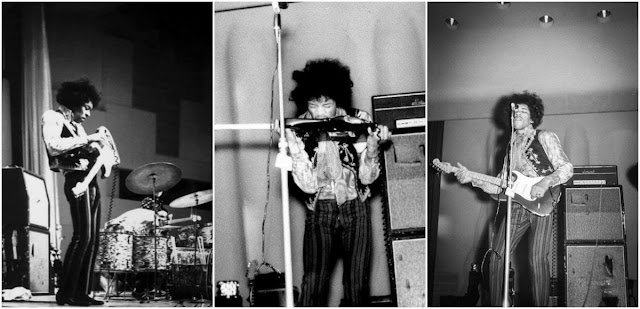
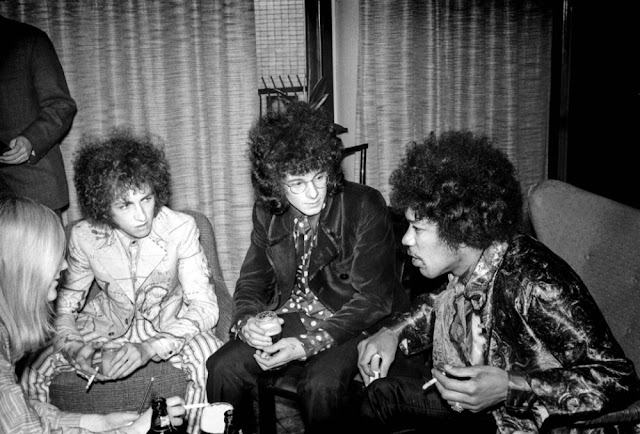
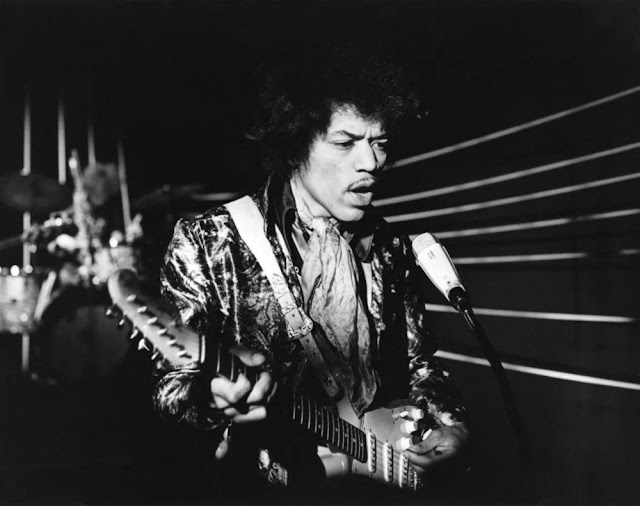
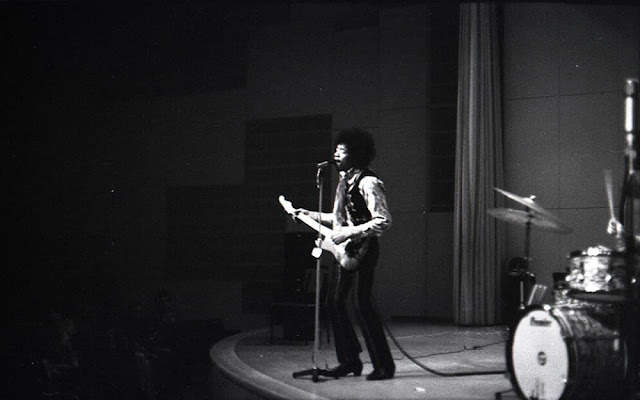
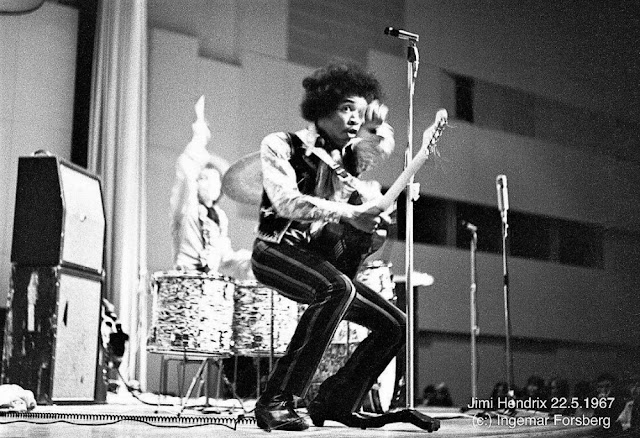
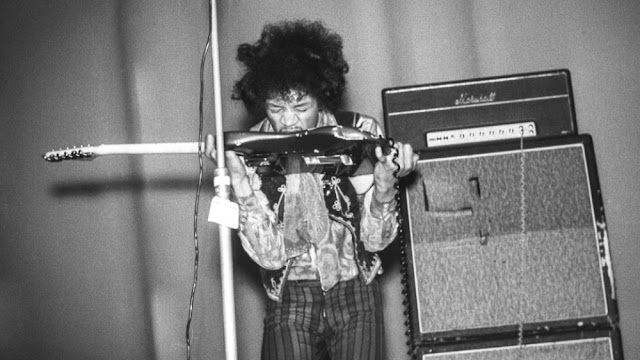
Amazing Photographs of Jimi Hendrix Performing at the Culture House in Helsinki, 1967

Jimi Hendrix made his only Finnish gig at the Culture House (Kulttuuritalo) in Helsinki, Finland on May 22, 1967 with unbeatable impact on many rock musicians. At the event hosted by Antti Einiö, Experience’s warming acts were performed by Finnish The Wantons, The New Joys and The First. Only few hundreds listeners attended the show.


Kulttuuritalo was originally built for Finnish Communist cultural organizations. Aalto designed the building pro bono and was given complete artistic freedom; the construction work was done largely by volunteers. Work began in 1955, and the building was opened in 1958. The building was owned by the Communist Party by a nonprofit foundation until the 1990, when the bankruptcy of the Finnish Communist Party forced its sale. Today its owned by the government owned Senate Properties. The building is protected by a decision made by the Finnish Council of State in 1989. 

Famous artists who have played at the venue include Jimi Hendrix in 1967, Cream in 1967, Led Zeppelin in 1970, Frank Zappa & Queen in 1974, AC/DC in 1977, Ramones in 1977 and 1990, Tina Turner in 1982, Metallica in 1984, Hanoi Rocks and Leonard Cohen in 1985, Iron Maiden in 1995, Lady Gaga in 2009, Stratovarius and Helloween in 2010. Frank Zappa played 3 concerts in September 1974, that were released as an album in the early 1990s.

The Jimi Hendrix Experience performed at the Culture House in Helsinki. Here seen before or after the concert.


November 17, 2021

Colorized Photos of Helsinki, Finland in the 1930s

Helsinki is the capital, primate, and most populous city of Finland. Located on the shore of the Gulf of Finland, it is the seat of the region of Uusimaa in southern Finland, and the most populous urban area in Finland as well as the country's most important center for politics, education, finance, culture, and research.

Helsinki is located 80 kilometers (50 mi) north of Tallinn, Estonia, 400 km (250 mi) east of Stockholm, Sweden, and 300 km (190 mi) west of Saint Petersburg, Russia. It has close historical ties with these three cities.

After Stockholm and Oslo, Helsinki is the third largest municipality in the Nordic countries. It has one of the world’s highest standards of urban living, and one of the world’s most livable cities.

These vintage photos were colorized by Frank Hellsten that show what Helsinki looked like in the 1930s.

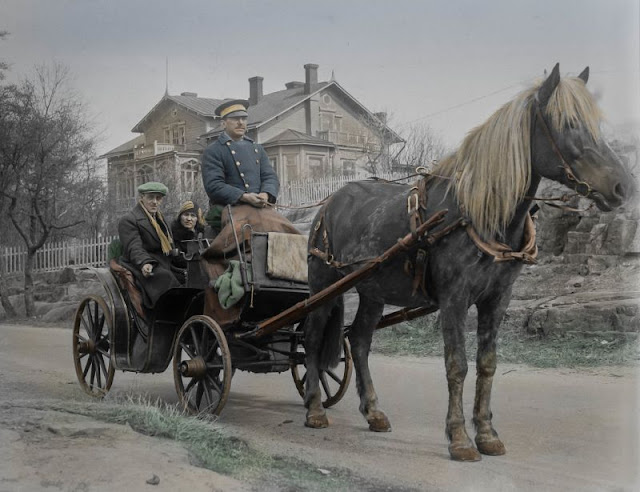
Horse and carriage in Helsinki, circa 1930

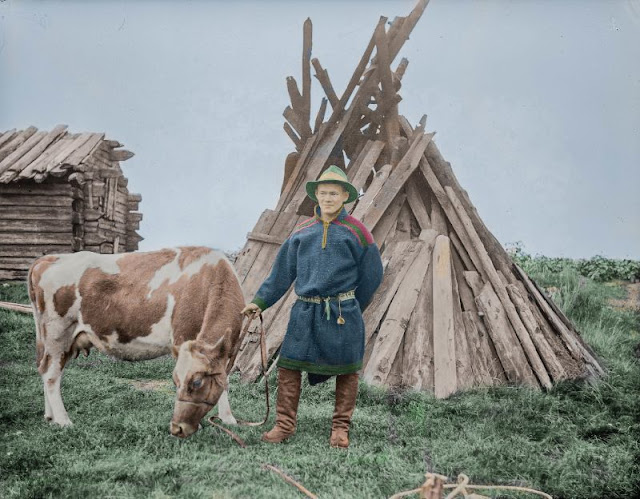
A Sami with his cow, 1930

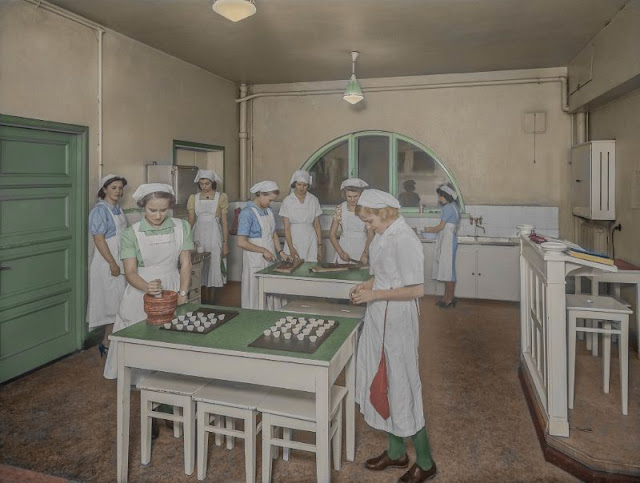
Girls from the private school Privata Svenska Flickskolan at a cooking lesson, Helsinki, circa early 1930s

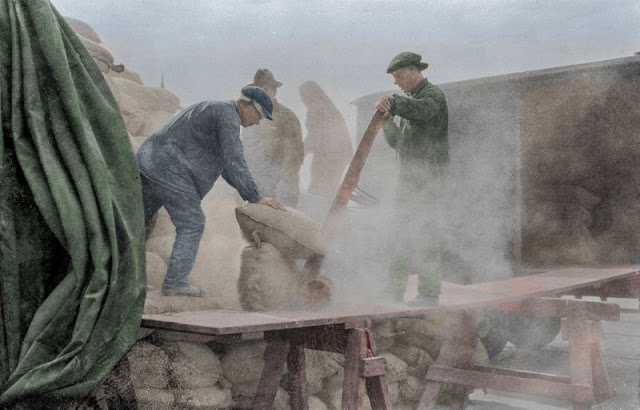
Longshoremen at port of Helsinki, 1930

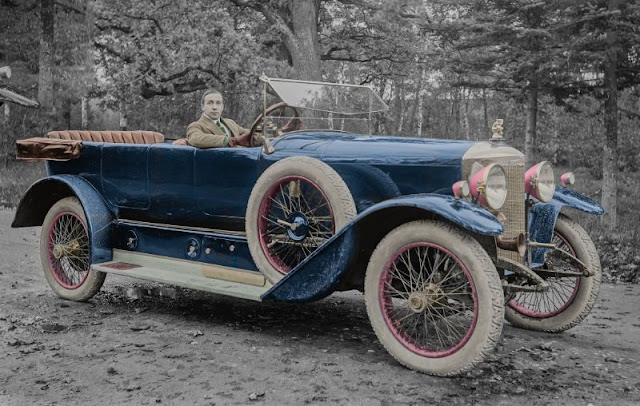
Photographer Constantin Grünberg driving a Daimler cabriolet in Helsinki, circa early 1930s

April 11, 2021

Helsinki in the Early 1980s Through Fascinating Photos

Helsinki is the capital, primate and most populous city of Finland. Located on the shore of the Gulf of Finland, it is the seat of the region of Uusimaa in southern Finland.

Helsinki is located 80 kilometres (50 mi) north of Tallinn, Estonia, 400 km (250 mi) east of Stockholm, Sweden, and 300 km (190 mi) west of Saint Petersburg, Russia. It has close historical ties with these three cities.

Often considered to be Finland’s only metropolis, it is the world’s northernmost metro area. After Stockholm and Oslo, Helsinki is the third largest municipality in the Nordic countries. Finnish and Swedish are both official languages.

Helsinki has one of the world's highest urban standards of living. It is one of the world’s most liveable cities.

These fascinating photos were taken by Leroy W. Demery, Jr. that show street scenes of Helsinki in 1981.

Aleksanterinkatu, the principal shopping street of central Helsinki, 1981

HM V class tramcar, working Line 2, turns from Snellmaninkatu into Aleksanterinkatu, at Senate Square, Helsinki, 1981

Kanavakatu and Uspenski Cathedral, Helsinki, 1981

Kauppatori marketplace, Helsinki, 1981

Mannerheimintie, at Arkadiankatu, Helsinki, 1981

April 5, 2020

Everyday Life of Helsinki in the Early 20th Century Through Amazing Colorized Photos

Helsinki is the capital and most populous city of Finland. Located on the shore of the Gulf of Finland, it is the seat of the region of Uusimaa in southern Finland.

Helsinki is located 80 kilometres (50 mi) north of Tallinn, Estonia, 400 km (250 mi) east of Stockholm, Sweden, and 300 km (190 mi) west of Saint Petersburg, Russia.

After Stockholm and Oslo, Helsinki is the third largest municipality in the Nordic countries. It has one of the highest urban standards of living in the world.

These amazing photos were colorized by Frank that show what Helsinki looked like in the 1900s and 1910s.

A local bus in Helsinki

A Russian ice cream vendor in Helsinki

A small boat approaching Helsinki's Southern harbor

A summer day in Kaivopuisto park

Carpet washing in Helsinki

February 19, 2020

20 Amazing Photos of Futuro Houses, the UFO-Shaped Tiny Homes Which Were Built During the Late 1960s and Early 1970s

A Futuro house is a round, prefabricated house designed by Matti Suuronen, of which fewer than 100 were built during the late 1960s and early 1970s. The shape, reminiscent of a flying saucer, and the structure’s airplane hatch entrance has made the houses sought after by collectors. The Futuro is composed of fiberglass-reinforced polyester plastic, polyester-polyurethane, and poly, measuring 4 meters (13 feet) high and 8 meters (26 feet) in diameter.

The Futuro house was a product of post-war Finland, reflecting the period’s faith in technology, the conquering of space, unprecedented economic growth, and an increase in leisure time. It was designed by Suuronen as a ski cabin that would be “quick to heat and easy to construct in rough terrain”. The end result was a universally transportable home that had the ability to be mass replicated and situated in almost any environment.

The material chosen for the project — fibreglass-reinforced polyester plastic — was familiar to Suuronen and was previously used in the design of a large plastic dome for the roof of a grain silo in Seinäjoki. To facilitate transport, the house consisted of 16 elements that were bolted together to form the floor and the roof. The project could be constructed on site, or dismantled and reassembled on site in two days, or even airlifted in one piece by helicopter to the site. The only necessity on site for its placement were four concrete piers, so the project could occupy nearly any topography. Due to the integrated polyurethane insulation and electric heating system, the house could be heated to a comfortable temperature in only thirty minutes, from -29 to 15 °C (-20 to 60 °F).

An excerpt from a February 1970 copy of Architecture d’aujourd’hui describes “Futuro” as:
“the first model in a series of holiday homes to be licensed in 50 countries, already mass-produced in the United States, Australia and Belgium. The segments of the elliptic envelope are assembled on the site using a metal footing. Through its shape and materials used, the house can be erected in very cold mountains or even by the sea. The area is 50 sq m, the volume 140 cubic m, divided by adaptable partitions.”
By the mid-1970s, the house was taken off the market. From the beginning, it had been met with public hostility. The first Futuro that was erected near Lake Puulavesi in Finland elicited public protest because it looked too unnatural for the rustic environment.

In the United States, Futuro houses were banned from many municipalities by zoning regulations. Banks were reluctant to finance them. Some were vandalized. Some customers who committed to buy them backed out and forfeited their non-refundable $1,000 deposits. Some have been destroyed. In 1999, the city of Tampa ordered a Futuro demolished. Shortly after the turn of the century, a Futuro house was purchased on Broadkill Beach, Delaware, and destroyed to make way for a double-wide modular home. Some have been vandalized in drive-by shootings.

The oil crisis of 1973 tripled gasoline prices and made the manufacture of plastic more expensive. Fewer than 100 were made and it is estimated that today around 60 of the original Futuro homes survive, owned mostly by private individuals. The prototype (serial number 000) is in the collection of Museum Boijmans Van Beuningen in Rotterdam, The Netherlands. The Futuro no. 001, the only other Futuro currently in a public collection, is in the possession of the WeeGee Exhibition Centre in Espoo, Finland.


October 28, 2019

The Old Gentleman of Raahe, the Oldest Surviving Diving Suit in the World

Established in 1862, Raahe Museum is the oldest local museum in Finland. Naturally, it has some very rare artefacts, the most famous of which is probably ‘The Old Gentleman of Raahe’ or ‘Wanha Herra’ – an 18th-century cowskin diving suit. It was donated to Raahe Museum by Captain Johan Leufstadius in the 1860s.

Attempts have been made to determine the diving suit’s further provenance, with no success. The suit is thought to have been made in Finland because the toes of the feet are modeled after traditional Finnish countryman’s boots. The hands of the suit are similar to typical Finnish forester’s mittens.

The diving suit at Raahe Museum is made of cowskin with seams stitched with pitch thread and sealed with pitch. The diving suit was water-proofed with a mixture of mutton tallow, tar and pitch. The top of the suit, the hood, is reinforced with strips of wood on the inside. Air was probably pumped for the diver with bellows through wooden pipes joined with flexible leather stockings. The top of the hood presumably featured a flap valve where the air came in, correspondingly leaving through a pipe in the back. The brave diver squeezed into the diving suit through a hole in the suit’s stomach, which was closed by twisting the long leather strip with the hole around the belt and fastening it around the diver’s waist. The diving suit made it possible to inspect the condition of a ship’s bottom without having to tilt the boat or dry-dock it.


The maker of the diving suit had mastered the latest achievements of diving technology, which had advanced immensely in the 18th century. The Old Gentleman of Raahe must be considered as a unique transitional form made of leather, due to an ongoing shift from diving bells to proper heavy diving suits.

In 1988, a curator at Raahe Museum created a perfect reproduction of the diving suit. The methods and materials were the same as those used by the original maker in the 18th century. However, the reproduction, which is referred to as the Young Gentleman, had to be made slightly taller in order to fit a modern person.


The aim of the reproduction was to prove that the diving suit could really be used for diving. Experiments showed that the suit was functional, with no observed limitations in regard to diving depth or duration. The longest dive carried out with the Young Gentleman was 40 minutes.

Another important reason for creating the reproduction was that the long journeys to exhibitions put such strain on the Old Gentleman that it was finally banned from traveling. It is now the Young Gentleman’s turn to represent Raahe Museum and 18th-century diving technology around the world.


These days, the Old Gentleman can be found in the diving department of Kruununmakasiinimuseo (Crown Granary museum).

(via Raahe Museum)


FOLLOW US:
Facebook • Tumblr • Pinterest • Instagram

CONTACT US


Browse by Decades

Popular Posts

Advertisement

09 10