Bring back some good or bad memories


ADVERTISEMENT
Showing posts with label Australia. Show all posts

September 25, 2026

Koolbiri, the Aboriginal Mailman Who Connected Australia’s Remote West Coast in the 1870s

Koolbiri, widely known to colonists as “Mailman Jimmy,” was a legendary Indigenous Australian runner from the Mirning people who served as the sole postal lifeline across the brutal Nullarbor Plain in the 1870s. Operating from roughly 1871 to 1876, he carried the Royal Mail between Fowlers Bay in South Australia and Eucla in Western Australia.

Portrait of Koolbiri in 1875

He traversed a grueling 280 miles (approx. 450 kilometers) one way, meaning a full round trip spanned nearly 560 miles (700 kilometers). Koolbiri completed this trek every single fortnight. He would run the mailbags out during one week, and return with a new batch the next.

According to colonial records and an obituary printed in Adelaide’s Saturday Journal in 1923, he routinely completed the trip faster than a man on horseback. He carried no specialized gear and ran entirely barefoot through one of the harshest, most arid landscapes on Earth.

Where colonial settlers saw an empty, lethal desert, Koolbiri saw his ancestral home. His incredible endurance relied entirely on his profound bushcraft skills and an intimate knowledge of hidden rock holes and reliable water supplies that only he knew how to find. He lived completely off the land during his journeys, hunting and gathering as he ran.


For nearly six years, Koolbiri was the only line of communication connecting these isolated frontier outposts before the official Eucla Telegraph Station was established in 1877. Despite the critical and superhuman nature of his work, colonial authorities only paid him in meager rewards, such as tobacco.

Mirning elder Bunna Lawrie recalled Koolbiri with reverence, saying, “He was the only man who could walk as fast as a horse.” To many, Koolbiri’s abilities seemed beyond explanation, almost magical. “They thought, ‘This man must be a magic man,’” Lawrie said, expressing hope that future generations would draw strength from his story. Today, a photograph of Koolbiri dating to around 1875, preserved by the State Library of South Australia, stands as a powerful tribute to a man whose footsteps once bridged some of the most remote lands in Australia.

May 29, 2026

Carrington Hotel, Katoomba: Beautiful Vintage Kodachrome Slides From 1970

The Carrington Hotel in Katoomba is one of the most iconic and historic landmarks in Australia’s Blue Mountains. Originally opened in 1883 as the Great Western Hotel, it was later renamed The Carrington in honor of Lord Carrington, the Governor of New South Wales. This grand Victorian-era hotel quickly became the premier social destination for wealthy Sydney residents and international visitors seeking the cool mountain air.

With its elegant architecture, sweeping verandas, ornate interiors, and luxurious ballrooms, the Carrington remains a symbol of Edwardian grandeur and old-world charm. Even today, the hotel stands as a living piece of history, offering visitors a nostalgic glimpse into the golden age of Blue Mountains tourism.

Taken in 1970, these beautiful Kodachrome slides offer a beautiful, nostalgic window into one of Australia’s most historic and atmospheric mountain hotels during the final years of its classic era.

Guests enjoying the pool and front lawn, Carrington Hotel, Katoomba, April 1970

View from the balcony showing the pool and Katoomba Street. Also visible: Penfolds Wine Bar, Aroney's Cafe, Mercantile Mutual Insurance Co., ANZ Bank and St Hilda's church, Carrington Hotel, Katoomba, April 1970

Hotel entry foyer with guests. The bronze statue was traditionally thought to be the Greek philosopher Diogenes with his lamp, looking for an honest man, Carrington Hotel, Katoomba, April 1970

Hotel forecourt with pool and lawn facing Katoomba Street, Carrington Hotel, Katoomba, April 1970

Twin room with bar, Carrington Hotel, Katoomba, April 1970

May 14, 2026

Australia’s Rabbit Disaster Started With Just 24 Animals

In 1859, English settler Thomas Austin (a wealthy pastoralist) released about 24 European rabbits (a mix of wild and domestic Oryctolagus cuniculus) on his Barwon Park estate near Winchelsea, Victoria, for sport hunting. The rabbits arrived on Christmas Day from his family in Somerset, England.

Rabbits had arrived earlier with the First Fleet in 1788 and in small numbers afterward, but these earlier populations did not explode. Genetic studies (2022) confirm that nearly all of Australia’s feral rabbits today descend from Austin’s single introduction, the wild English rabbits had advantageous genetics for rapid spread in the Australian environment.

A herd of rabbits gathers around a watering hole on South Australia’s Wardang Island. Within 50 years of arriving on an English settler’s estate near Melbourne, invasive European rabbits had overrun most of the continent.

Rabbits have high reproductive rates (females can produce multiple litters per year with 4–12 young each). With few natural predators, abundant food (grasses and crops), and suitable burrowing soil, their numbers exploded. By the mid-1860s, thousands were being shot on Austin’s property alone. They spread at up to 100 km per year. By the 1880s, they reached New South Wales and Queensland. By around 1910, they occupied most of southern and central Australia.

The rabbits caused severe ecological and economic damage. They devoured crops, pastures, and seedlings, leading to farm failures, soil erosion, and abandoned properties. They competed with sheep and cattle for food. Overgrazing stripped vegetation, causing erosion, loss of native plants, and habitat degradation. This harmed native wildlife (e.g., by reducing food and shelter for species like bilbies and bandicoots). They altered landscapes on a continental scale and contributed to the decline of native biodiversity.

Plagues were reported in various regions from the 1870s onward, with populations reaching hundreds of millions (estimates later peaked around 600 million before controls). Desperate colonial governments and farmers tried multiple strategies to halt the plague, though most had minimal impact.

By 1866, hunters had slaughtered 50,000 rabbits on Austin’s estate alone, yet the local breeding population outpaced the harvesting. Farmers deployed strychnine across properties to poison food and water sources, accidentally killing native wildlife. Settlers introduced European red foxes and feral cats to hunt the rabbits, but these predators chose to hunt easier native marsupials instead, worsening the biodiversity crisis. In the late 19th and early 20th centuries, states built massive barriers, including the famous 1,700km rabbit-proof fence in Western Australia, but rabbits breached them before completion.

Rabbit proof fence in Australia, ca. 1920.

Major success came later with biological controls: the myxomatosis virus in the 1950s (which initially killed ~99% of rabbits) and later the calicivirus (RHDV).

The rabbit invasion remains a classic cautionary tale about invasive species. Australia still manages feral rabbits (numbers are much lower than peak but still problematic), and the event highlights how a small introduction in a naive ecosystem can have catastrophic, long-lasting effects. Thomas Austin is often blamed, though he was just one of many who introduced animals for “acclimatisation.”

Lorry load of rabbits, Braidwood, NSW, early 20th century.

Bert Mann with a load of rabbit skins, Walcha, NSW, ca. 1905.

January 4, 2026

Australian Artist Norman Lindsay Posing With His Wife and Muse Rose Soady, Sydney, ca. 1909

Around 1909, Australian artist Norman Lindsay is pictured with his wife and muse, Rose Soady, in a photograph taken by his brother, Lionel Lindsay, inside Norman’s Bond Street studio in Sydney. The image offers a rare glimpse into the private world of one of Australia’s most influential early 20th-century artists.


Norman Lindsay (1879–1969) and Rose Lindsay (née Soady, 1885–1978) were a defining couple of Australia’s bohemian art scene, whose 67-year partnership was as professionally productive as it was personally unconventional.

Rose Soady was introduced to Norman in 1902 by artist Julian Ashton. She quickly became his principal model and muse, appearing in many of his most famous, often controversial, sensual paintings. After a long affair during Norman’s first marriage, they married in 1920. Rose chronicled their life in her 1967 memoir, Model Wife: My Life with Norman Lindsay.

Beyond modeling, Rose was a highly skilled printmaker who hand-printed most of Norman’s famous etchings. She also acted as his business manager and archivist, fiercely protecting his work and financial interests.

In 1912, the couple moved to a property in Springwood, Blue Mountains, which became a hub for artists and writers like Banjo Paterson and Henry Lawson. After Rose’s death in 1978, the Springwood property was acquired by the National Trust of Australia and now operates as the Norman Lindsay Gallery and Museum.

November 15, 2025

The Amazing Story of the Family Journey From Sydney to Paris on a Scooter in 1956

In 1956, the Montin family of four made an extraordinary 12,000-mile (over 19,000 km) journey from Sydney to Paris on a single Lambretta Lambro 150 FD three-wheeled scooter. The family consisted of French father Guy Montin, his British wife Beryl, and their two young children, Charles (4) and Yvonne (2).

A Lambretta Lambro 150 FD, a three-wheeled light commercial vehicle, not a typical two-wheeled scooter. Guy custom-built a small cabin of marine plywood and canvas on the back to accommodate his family and their luggage, which could also be used for sleeping. The vehicle had a top speed of just 25 mph (around 40 km/h). Beryl referred to the modified scooter as “the contraption.” The total journey took several months, with the main Sydney to Paris leg taking over two months of actual travel, plus extended stops due to weather and hospitality.

The family first drove 3,000 miles across the Australian outback from Sydney to Perth, where they boarded a ship to Colombo, Sri Lanka (then Ceylon). From there, they sailed to Bombay (Mumbai), India, where the main overland journey began. Their route then took them through: India, Pakistan, Persia (modern-day Iran), Iraq, Syria, Lebanon, Turkey, Greece, Yugoslavia (former), Italy, and France.

The Montins had initially planned to spend six weeks in India. Guy had carefully studied the seasonal movement of the monsoon rain and come up with a way of avoiding it. Nonetheless, it was the monsoon which eventually brought their travels to a stop, at which point Guy, Beryl and the children had to rely on the hospitality of the Indian people to offer them shelter. Their stay ended up lasting more than four months. An Indian newspaper focused on the family’s daily baths in the Ganges River and their strict adherence to vegetarian food as the main reason for their good health.

Later, Guy Montin wrote a letter to the Lambretta company. He explained that he has constantly been told that he’s insane, and that no one has at any point believed that they would reach their goal. In Sydney, no one thought they would even reach Perth. In Colombo, people swore that they could not reach Lahore through the monsoon. In Lahore, that it would be impossible to reach Quetta. In Quetta, they were perceived as mad if they really thought that they would be able to drive through Persia.

In the letter, Guy wrote – triumphantly and with great pleasure: “Eppoi si muove we are in Teheran...” Eppoi si muove translates to something along the lines of: Yet, we’re still moving... He continued the letter: “We have passed the worst. We now know for certain a family of four can eat, sleep and travel fifteen thousand kilometers on a Lambretta Furgoncino. We are not mad. In fact we are, the four of us, in splendid mental and physical shape. Just wait until you see us.

“Meanwhile we must stress an important fact: it is through no fault on the part of our machine that we have taken over six months to cover this part of our trip. It is the people who will not let us go. The engine purrs like a cheetah in the crisp morning air, the children have been fed, clothed and ‘potted.’ Mama has just retrieved Papa’s lost goggles. We are ready for the days three hundred kilometers...”

Eventually, they finally reached Paris and spent the night camping in their trusty Lambretta within the Bois de Boulogne park in the outskirts of the city. They have traveled through 11 different countries and have encountered everything from meter-high snow to heatwaves and monsoon rain. They’ve met primitive tribes, thick jungle and relentless desert. They’ve been plagued by dysentery and not least by the serious accident in the Australian outback. They sum up their spendings during their epic roadtrip: A total of 350 pounds – 80 for petrol, 200 for food and 5 for goatskin jackets and gloves. The rest was spent on repairs, visas and ferry tickets.

Back in England, The Sunday Express focused more on a couple of remarks made by Beryl. Under the headline: “One lipstick – on a trip half around the world” Beryl confessed that it wasn’t even the lack of daily baths which bothered her the most. It was the long and tiring route from Quetta in Pakistan to Mashed in Persia. This stretch was almost 3,000 km long and took them several weeks to put behind them, during which they lived solely off dried goat cheese and fruit. Still, Beryl did admit that not having a warm bath since leaving Sydney did eventually affect her mood, and it brought great joy when they finally had warm baths again in Persia.

Guy got to visit his family in Cahors in south-western France, and Beryl received a very warm welcome from her family in her hometown of Margate in the UK.

It had been a true adventure for the Montin family and a colossal, life-defining experience for the children Charles and Yvonne. Guy took a few notes during their trip, but mostly about the conversations they had, and seemingly mostly for personal use. Short episodes were captured by newspaper articles published as the family made their way through the many countries. In a time devoid of social media and before the need for self-promotion, tales from their travels are sparse. Even so, it’s food for thought and will surely energize most people’s fantasies. Just imagine all the adventures and experiences encompassed by a family roadtrip around half the globe on a three-wheeled scooter with 2hp and a total load of maximum 500 kg.


September 20, 2025

Sydney in the Late 19th Century Through Fascinating Photos

In the late 19th century, Sydney underwent a dramatic transformation from a colonial port to a thriving metropolis. The period was marked by an economic boom that fueled rapid urban expansion and an architectural renaissance. Grand Victorian buildings like the Sydney Town Hall and the Queen Victoria Building were constructed, reflecting the city’s newfound wealth.

While the city’s landscape was changing, so was its society. New tram lines and railways connected a growing number of suburbs to the city center, but stark social contrasts remained between the wealthy and the working class.

Despite these divisions, Sydney was a vibrant and lively place. Its bustling harbor was filled with ships, and its streets buzzed with a mix of horse-drawn carriages and pedestrians. The city also saw significant technological progress with the introduction of electric lighting and modern sanitation systems, solidifying its place as a sophisticated urban center on the global stage.

These photographs of Sydney in 1892–93 are from Fred Hardie – Photographs of Sydney, Newcastle, New South Wales and Aboriginals for George Washington Wilson & Co., 1892–1893. Fred Hardie was the company photographer for G. W. Wilson & Co. of Aberdeen, Scotland, the world’s largest view photography company at the time.

Castlereagh Street, Sydney, from near King Street, 1892-93

Circular Quay, Sydney, 1892-93

Circular Quay, Sydney, 1892-93

City of Sydney, 1892-93

Darling Harbour from Balmain, Sydney, 1892-93

September 17, 2025

The Mysterious Disappearance of Frederick Valentich in 1978

Frederick Valentich was a 20-year-old Australian pilot who disappeared on October 21, 1978, while flying a Cessna 182L light aircraft over the Bass Strait. He was on a 125-nautical-mile flight from Moorabbin Airport to King Island.


Shortly before his disappearance, Valentich contacted Melbourne air traffic control to report that he was being followed by an unidentified aircraft about 1,000 feet above him. He described the craft as having a shiny, metallic surface and a green light. He said it was “orbiting” above him and that his engine had begun running roughly. His last words were, “It’s not an aircraft,” before his transmission was interrupted by 17 seconds of “metallic, scraping sounds” and then silence.

An extensive four-day search was conducted, but no trace of Valentich or his plane was ever found. The cause of his disappearance remains unknown and has led to several theories.

Some officials from the Department of Transport speculated that Valentich, who had about 150 hours of flying time and a poor record in his pilot training, may have become disoriented while flying over water at night. This could have led him to inadvertently fly his plane upside down, causing his engine to run roughly and leading him to mistake his own lights reflecting on the water, or celestial objects like Venus, Mars, Mercury, and the star Antares, for another aircraft.

The possibility of a sudden mechanical failure, such as engine trouble or a structural problem, has also been considered, which could have led to a crash.

Due to conflicting reasons he gave for his flight and his history of a difficult time with flight exams, some have proposed that Valentich staged his own disappearance.

Given Valentich’s descriptions and his interest in UFOs, some believe he was abducted or his plane was destroyed by an unidentified flying object. This is a popular theory among ufologists. They believe that a UFO either destroyed his aircraft or abducted him. This theory is supported by late reports of an erratically moving green light in the sky in the same area on the night of the disappearance. A photo taken by a plumber on the same night near Cape Otway reportedly shows a fast-moving object exiting the water.

Frederick Valentich reported seeing some sort of aircraft just before he disappeared. (The Australian)

The case is still listed as “Unsolved” by the Australian Department of Transport. Valentich’s transmission has become one of the most famous in UFO lore, often cited as evidence of extraterrestrial encounters. His family, especially his father, believed until their deaths that Frederick was taken by a UFO.

April 1, 2025

Amazing Kodachrome Slides of Sydney From Above in 1970

Sydney in the early 1970s was a city on the cusp of transformation, both culturally and socially. It was a time of change, with the lingering echoes of the 1960s counterculture blending into the evolving landscape of the ’70s. The city’s skyline was rapidly changing, with the construction of the iconic Sydney Opera House in full swing, and the Harbour Bridge still standing as a symbol of the city’s past.

The streets of Sydney, particularly in areas like Kings Cross and Darlinghurst, were lively and buzzing with the energy of a more liberal social atmosphere. The rise of cafes, art galleries, and small theaters gave birth to a burgeoning counterculture, as people sought a more relaxed, open lifestyle.

These amazing Kodachrome slides from mjcas that captured Sydney from above in February 1970.


February 4, 2025

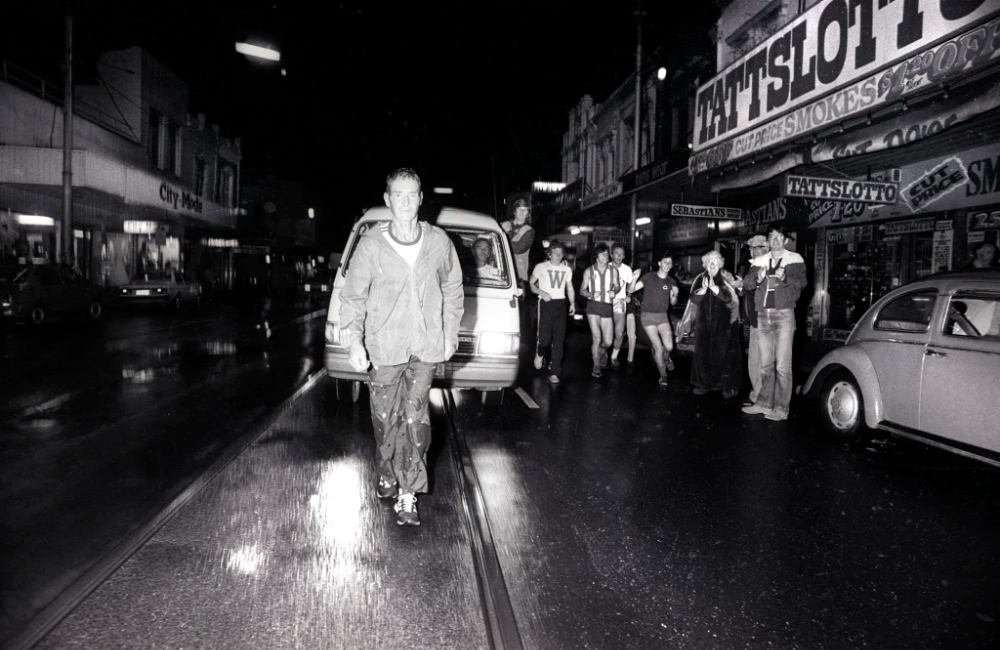
The Amazing Story of Running Legend Cliff Young, the 61 Year Old Farmer Who Won the World’s Toughest Race in 1983

Every year from between 1983 and 1991, Australia held 543.7-mile (875-kilometer) endurance racing from Sydney to Melbourne. It is considered among the world’s most grueling ultra-marathons. The race takes five days to complete and is normally only attempted by world-class athletes who train specially for the event. These athletes are typically less than 30 years old and backed by large companies such as Nike.


In 1983, a man named Cliff Young showed up at the start of this race. He was 61 years old and wore overalls and work boots. To everyone’s shock, Cliff wasn’t a spectator. He picked up his race number and joined the other runners. The press and other athletes became curious and questioned Cliff. They told him, “You’re crazy, there’s no way you can finish this race.” To which he replied, “Yes I can. See, I grew up on a farm where we couldn’t afford horses or tractors, and the whole time I was growing up, whenever the storms would roll in, I’d have to go out and round up the sheep. We had 2,000 sheep on 2,000 acres. Sometimes I would have to run those sheep for two or three days. It took a long time, but I’d always catch them. I believe I can run this race.”

When the race started, the pros quickly left Cliff behind. The crowds and television audience were entertained because Cliff didn’t even run properly; he appeared to shuffle. Many even feared for the old farmer’s safety. All of the professional athletes knew that it took about 5 days to finish the race. In order to compete, one had to run about 18 hours a day and sleep the remaining 6 hours. The thing is, Cliff Young didn’t know that!

When the morning of the second day came, everyone was in for another surprise. Not only was Cliff still in the race, he had continued jogging all night. Eventually Cliff was asked about his tactics for the rest of the race. To everyone’s disbelief, he claimed he would run straight through to the finish without sleeping.


Cliff kept running. Each night he came a little closer to the leading pack. By the final night, he had surpassed all of the young, world-class athletes. He was the first competitor to cross the finish line and he set a new course record.

January 16, 2025

Nurse in the Interior of Coast Hospital Horsedrawn Ambulance in Sydney, ca. 1900s

In the early 1900s, the sight of a nurse seated on the back of a horse-drawn ambulance at the Coast Hospital in Sydney was a testament to the grit and determination of medical professionals in a time of limited technology. The clatter of horses' hooves echoed through the hospital grounds as the ambulance made its way to the hospital, a stark contrast to the modern, motorized vehicles we see today.


This nurse, with her crisp white uniform and steadfast demeanor, embodied the spirit of an era when healthcare was as much about dedication as it was about skill. The Coast Hospital, which would later become the Prince of Wales Hospital, was a beacon of hope for the sick and injured.

Here, patients were transported not by the hum of an engine, but by the steady trot of a horse, each journey a reminder of the lengths to which medical staff would go to provide care.


As the ambulance pulled up to the hospital entrance, the nurse prepared to assist the patient, her calm presence a source of comfort in a time of uncertainty. This scene, simple yet profound, highlights a chapter in Sydney’s healthcare history when even the most basic of resources were used with utmost care and compassion. In the face of adversity, these early healthcare workers forged a path that would lead to the advanced medical services we rely on today.

November 17, 2024

Horse-Drawn Melbourne Fire Engine Converted to Motor Drive, 1914

In July 1914 the oil fired Steamer at MFB Station 38 South Melbourne was motorized with the addition of an Itala car converted to a tractor and designated as Car 23. The conversion was carried out at the MFB Workshops.


This bizarre vehicle was built by shortening a heavy touring car, by moving its rear axle to just behind the gearbox, removing the rear wheels, and fixing it to the chassis side-members. The rear springs were reversed and rested on the front axle of the fire engine. That is the middle set of wheels visible; they were chain-driven from what had been the car rear axle.

The original front axle of the fire-engine swiveled, and this was presumably retained to avoid a long rigid wheelbase, so it was effectively an articulated vehicle. It was built because there had been a spate of serious accidents when people tried to tow fire-engines with cars.

August 12, 2024

Unique Vehicles Used to Promote Life Savers Lollies From the 1920s and 1930s

In 1912, an American businessman named Ed Noble learned of a peppermint candy shaped like a life saver. Through Ed’s pioneering efforts in tinfoil packaging, distinctive label design and easy-reach product display, this candy with its distinctive ‘O’ shape quickly became an everyday favorite.

The first Life Savers factory was established in Australia in 1921 on Parramatta Road in Sydney, and from that moment, Life Savers was on a roll down under. An enterprising young Australian named Bill Kirby saw the potential of Life Savers and he played a prominent role in building Life Savers in Australia and across Asia.

Advertising its product had been an important part of Life Savers, starting with newspaper, magazine, and radio advertising. Television, let alone the internet, was far in the future. But the company was tuned in with the times and promoted its product with some interesting rolling billboards.

While trucks were naturals for displaying a company’s wares on their painted sides, several companies took this one step farther, building vehicles which resembled the actual product. The most remembered examples of this are the Oscar Mayer Wienermobile, and the Zippo lighter car. Life Savers was at the forefront of this trend with several fleets of mechanized marketing vehicles used by its sales staff. Perhaps the most blatant mobile display was the fleet of 1933 Dodges with car bodies purpose-built to resemble 15-foot long rolls of Life Savers. Advertising at the time noted the “body” on the Dodge was S4,000 times the size of a regular pack of the candy with the hole.

These custom-made cars were powered by a six-cylinder engine, and featured optional wire wheels and rare whitewall tires to dress them up. It appears the car’s engine, frame, running gear, fenders, and bumpers are all that were used from the donor car. There is a good chance the chrome headlight pods were retained, fitted into the circular body at the front. The “hole” in the car’s front would have been open to allow air to the radiator and engine compartment. The cars sport just two seats, have a custom windshield, and no weather protection.


June 18, 2024

Photos of the Grand Prix at Bathurst, New South Wales in 1946

In October 1946, the New South Wales 100-mile Grand Prix motor race was run at Bathurst, attracting a field of 32 cars, including five from Victoria and two from Queensland. On the day, around 30,000 people turned out for the race which was won by AS Najar of Sydney, with JP Hind in second place and AV Johnson third. This was a spectacular win for the first-time entrant, who drove a modified standard touring model MG, with a specially built monoposto (single-seater) body, shaped to fit the driver.

The over-1500cc handicap was won by F Kleinig, driving a Hudson Special. WB Murray, also driving a Hudson Special, crossed the line in second place. The track took its toll on the cars, with five of the 15 starters retiring with engine trouble.

Apparently the race also marked the first time a female driver, Joan Richmond, competed in the event. She was behind the wheel of a Q-Type MG fitted with a super-charged engine. Unfortunately, there are no recorded photographs in this collection from State Library of New South Wales.

John Crouch in a Delahaye 135 followed by Alby Johnson in a an MG TC, Grand Prix, Bathurst, October 1946

Alf Najar in an MG TB racing car, Grand Prix, Bathurst, October 1946

Alf Najar, Grand Prix winner at Bathurst, October 1946

Belf Jones in a Buick Special in front of Bill MacLachlan in a modified MG TA, Grand Prix, Bathurst, October 1946

Bill Conoulty and his Austin 7 Comet, Grand Prix, Bathurst, October 1946


FOLLOW US:
Facebook • Tumblr • Pinterest • Instagram

CONTACT US


Browse by Decades

Popular Posts

Advertisement

09 10