Bring back some good or bad memories


ADVERTISEMENT
Showing posts with label facts. Show all posts

April 23, 2026

10 Interesting Facts About Shirley Temple

Shirley Temple (April 23, 1928 – February 10, 2014) was not only Hollywood’s most iconic child star but also a pioneering diplomat and the youngest person ever to receive an Academy Award. Below are some of the most fascinating facts about her remarkable life and multifaceted career.

1. Her 56 Signature Curls


Her mother, Gertrude, was the architect of her image. For every film, Gertrude would personally style Shirley’s hair into exactly 56 pin curls. This was a precise, grueling process that ensured her look remained consistent in every scene.


2. The “Baby Burlesks” Controversies


Before her wholesome Fox films, a three-year-old Shirley starred in a series of short films called Baby Burlesks. In these, toddlers were dressed in adult costumes (including “diaper-and-lace” versions of adult fashion) and parodied hit movies. Shirley later wrote in her autobiography that these sets were often uncomfortable and that the director sometimes used a “sound box” (an ice box) to discipline the child actors.


3. She Almost Played Dorothy in The Wizard of Oz

MGM originally wanted to borrow Shirley Temple from 20th Century Fox to play Dorothy. However, the deal fell through, some say because Fox wouldn’t release her, others because her vocal range didn’t match the songs. The role, of course, went to Judy Garland, and the rest is history.


4. She Saved a Major Movie Studio


During the Great Depression, 20th Century Fox was teetering on the edge of bankruptcy. Shirley became such a massive box-office draw that she single-handedly saved the studio. At just seven years old, she was the top box-office star in the world for four consecutive years (1935–1938), out-earning adult stars like Clark Gable and Joan Crawford.


May 3, 2025

10 Things You May Not Know About Amelia Earhart

Amelia Earhart is one of the most famous American pilots. A record setting aviator, she was the second person to fly solo and nonstop across the Atlantic, the first person to fly solo and nonstop across the United States, and much more. She tragically went missing while attempting to fly around the world.

Earhart’s life, while tragically cut short, was many layered. In addition to the feats accomplished while in a plane, Earhart made an impact in areas from ranging from fashion to flying an autogiro. Here are ten things you may not know about the famous American pilot.

1. Amelia Earhart Saw Her First Plane When She Was 10


Amelia Earhart was born in Atchison, Kansas, on July 24, 1897. Today, we recognize this day as Amelia Earhart Day in honor of her accomplishments. She had one sister, and her family moved around a lot, eventually ending up in Chicago, where she graduated from Hyde Park High School in 1915. Did you know Amelia attended six high schools in four years because her family moved so much?

From a young age, Amelia was an adventurous girl. She loved spending time outdoors and exploring. She saw her first airplane when she was 10 at a state fair in Iowa. Although she didn’t realize it then, she would fall in love with flying and become the most famous female pilot in history.


2. Served as a Nurse During World War I


During World War I, Earhart decided to leave her studies at Philadelphia’s Ogontz School in order to join the World War I effort in Toronto. In February 1918, she moved to the city and became a Voluntary Aid Detachment nurse at Spadina Military Convalescent Hospital. During this time, Earhart also caught pneumonia from one of her patients, and her lungs never fully recovered.

While in Toronto, she and her sister, Muriel, became acquainted with local Royal Flying Corps officers, often visiting nearby military airfields to watch pilots practice.


3. Amelia Enrolled in Medical School — Twice


Even though Amelia is known as a world-famous pilot, it wasn’t always her plan. After graduating high school, she visited her sister in Toronto, Canada, and decided to become a nurse’s aide after seeing the effects of WWI firsthand. 

She enrolled at Columbia University for medical school in 1919 but left. In 1925, Amelia started school again at Columbia but eventually left because of finances. In the meantime, she worked as a teacher and a social worker.


4. She Advocated for Equality for Women


When she was a social worker, Amelia worked at the Denison House for immigrants in Boston. It was here that she was inspired to help pave the way for more educational opportunities for women and girls. In fact, she was in charge of adult education there. Throughout the 1920s and 1930s, Amelia advocated for equality for women in every aspect of life. If a man could do it, there was no reason a woman couldn’t too. 

Later, Amelia helped establish an organization for female pilots, the Ninety-Nines, and she served as its first president. In 1935, Earhart became a visiting professor at Purdue University and advocated for women in engineering and science.


5. She Designed a Clothing Line for Women


Being the adventurous spirit that she was, Amelia knew that women’s fashions of the time weren’t exactly compatible with ladies who liked to be active and on the go.So, she created Amelia Fashions in the early 1930s. Her line included dresses, pants, suits, and more designed to be wrinkle-free. She even developed a two-piece flying suit for the Ninety-Nines featuring a unique design.


February 25, 2025

George Harrison Had a Great Sense of Humor, Here Are 10 Funny Facts About George That Will Make You Smile!

George Harrison (February 25, 1943 – November 29, 2001) was an English musician, singer and songwriter who achieved international fame as the lead guitarist of the Beatles. Harrison had a wonderfully dry and witty sense of humor. He often displayed it in interviews, song lyrics, and even through projects like Monty Python’s Life of Brian, which he helped fund through his production company, HandMade Films.


Harrison was known for poking fun at the seriousness of the music industry, like when he appeared on Rutland Weekend Television (which led to The Rutles, a parody of The Beatles). His music video for “Got My Mind Set on You” even had a funny twist, with an older man dancing unexpectedly.

George Harrison had a great sense of humor, and there are plenty of funny and quirky facts about him! Here are 10 that will make you smile:

1. He Pranked Phil Collins: George tricked Phil Collins into thinking he had played on “All Things Must Pass” by giving him a fake, terrible drum recording years later. Phil believed it was real and was mortified—until George revealed it was a joke!

Portrait of a young Phil Collins in the 1960s.


2. His Love for Monty Python: George was such a huge Monty Python fan that he literally funded Life of Brian when the original backers pulled out. He mortgaged his house to do it, calling it “the most expensive cinema ticket ever.”

Eric Idle and George Harrison on the set of Monty Python's Life of Brian, 1978.


3. He Disguised Himself at a Beatles Tribute Event: In 1974, he sneaked into a Hollywood event honoring the Beatles by dressing in a wig and fake mustache. No one recognized him!


4. He Was a Gardening Addict: George was so obsessed with gardening that Tom Petty once said, “He’d rather talk about hedges than guitars.”


5. He Trolled Paul McCartney With a Ukulele: He loved the ukulele and would play one endlessly, sometimes just to annoy Paul McCartney.


October 8, 2024

7 Facts About Cissy Houston, Grammy-Winning Gospel Singer and Whitney Houston’s Mother

Cissy Houston, a two-time Grammy-winning soul and gospel artist who sang with Aretha Franklin, Elvis Presley and other stars and knew triumph and heartbreak as the mother of Whitney Houston, has died. She was 91.


“Our hearts are filled with pain and sadness. We loss the matriarch of our family,” Pat Houston said in a statement. She said her mother-in-law’s contributions to popular music and culture are “unparalleled.”

“Mother Cissy has been a strong and towering figure in our lives. A woman of deep faith and conviction, who cared greatly about family, ministry, and community. Her more than seven-decade career in music and entertainment will remain at the forefront of our hearts.”

Born Emily Drinkard, her journey in music was one woven with grace and grit, shaping her into a Grammy-winning artist and a beloved figure in the world of gospel. Known for her fierce talent and her role as the matriarch of a rnusical dynasty, Cissis influence extended far beyond her own hits.

She was the proud mother of one of the best-selling artists in history and shared family ties with musical legends like Dionne Warwick and opera star Leontyne Price. As we remember her remarkable life, Cissy Houston leaves behind a legacy as rich and timeless as the music she dedicated her life to.

Here are seven things you need to know about the late singer:

1. Grammy-Winning Talent
Cissy Houston was an award-winning gospel singer, earning Grammys for her albums Face to Face and He Leadeth Me in the 1990s. Her powerful voice made her a respected figure in the music industry.

2. Backup Singer
Cissy had a remarkable career as a backup singer, performing with icons like Elvis Presley, Aretha Franklin, and Dionne Warwick. She was also part of the renowned group The Sweet Inspirations.


3. Family of Music Greats
Music ran in her blood—Cissy was not only Whitney Houston’s mother but also the aunt of singers Dionne and Dee Dee Warwick. She was a cousin to the famed opera singer Leontyne Price.

4. Cross-Genre Collaborations
Cissis vocal talent graced the music of legendary stars across multiple genres, from Jirni Hendrix to Beyonce, cementing her status as a versatile and sought-after session singer.

5. Gospel Foundation
Though she worked across genres, gospel music was Cissy Houston’s core. Her solo work in the gospel field helped her carve out a name as one of the most respected gospel singers of her time.

6. Mother of a Music Icon
Cissy Houston was the mother of Whitney Houston, one of the best-selling artistes of all time, known for hits like “I Will Always Love You” and “I Wanna Dance With Somebody.”

7. Life of Legacy
Cissy Houston lived to 91, leaving behind a lasting musical legacy through her children and her work. Her influence on gospel, soul, and pop music remains unforgettable.


August 19, 2024

Image of Alain Delon in “L’Insoumis” (1964) Featured in the Cover Art of The Smiths’ “The Queen is Dead” (1986)

The Queen Is Dead is the third studio album by The Smiths, released in 1986. The album cover is iconic and features a still from the 1964 film L’Insoumis (The Unvanquished), showing the French actor Alain Delon lying down with his eyes closed, looking almost as if he is deceased. The image is tinted green, which gives it a haunting and melancholic feel, matching the themes of the album. The band’s name and album title are displayed in a simple serif font at the top.


The Smiths’ The Queen is Dead was designed by Morrissey, the band’s lyricist, vocalist, and over-all frontman. The Smiths’ album designs are always understated and usually a sort of duo-toned color. They often featured film or pop stars due to Morrissey’s fascination with them.

This album cover features Alain Delon from the 1964 French film L’Insoumis. Evidently, Delon experienced physical injury and terrible reception of the film. It was later considered one of his failures. It’s interesting how an image from a film star’s first failed performance is used on one of the most successful albums of all time.


Delon had written to The Smiths and gave them the approval to use his image. However, the offer came with one condition, as he revealed in his autobiography: “I told them my parents were upset that anyone would call an album The Queen is Dead.”

Here’s the last scene of the movie L’Insoumis featuring Alain Delon, and The Smiths used the scene for their album The Queen Is Dead in 1986:


The Queen Is Dead spent 22 weeks on the UK Albums Chart, reaching the number two position. It reached number 70 on the US Billboard Top Pop Albums chart and was certified Gold by the Recording Industry Association of America (RIAA) in late 1990. Critically acclaimed, Rolling Stone ranked the album 113th on its 2020-updated list of the “500 Greatest Albums of All Time.” In its 2013 list, NME named The Queen Is Dead the greatest album of all time.

June 17, 2024

Jerry West, the Man Behind the NBA Logo

Officially, the NBA’s logo is blank. It is an anonymous, faceless player dribbling a ball against a red and white background. That’s the NBA’s story and it’s sticking to it. Unofficially, however, the logo is well known to be the silhouette of one of the league’s first true icons: Jerry West, who died June 12, at the age of 86.

This photo of Jerry West by former Lakers photographer Wen Roberts was said to be the inspiration for the NBA logo.

In 1969, the NBA hired a brand consultant named Alan Siegel to create a logo. One year earlier, he had done so for Major League Baseball, and the images are strikingly similar. The baseball logo is also a blank player against a red and white background, but the image has no distinguishing stylistic features. The NBA’s logo, however, visibly features a player in the middle of a dribble move. In 2010, Siegel admitted the truth to the Los Angeles Times. “It’s Jerry West,” he said.

More specifically, it is the image of West taken in a photograph by Wen Roberts in 1969. “It had a nice flavor to it,” he said in 2010, “so I took that picture and we traced it. It was perfect. It was vertical and it had a sense of movement. It was just one of those things that clicked.”

The league itself, however, hasn’t been quite as forthcoming. In that same 2010 interview, Siegel offered a charitable explanation for why the league has refused to acknowledge West’s status as the logo. “They want to institutionalize it rather than individualize it. It’s become such a ubiquitous, classic symbol and focal point of their identity and their licensing program that they don't necessarily want to identify it with one player.”

In a 2017 interview with Aaron Dodson of The Undefeated, he offered a more practical possible explanation. “Maybe they thought West would want a fee.” In 2021, commissioner Adam Silver finally relented, if only slightly. “While it’s never been officially declared that the logo is Jerry West, it sure looks a lot like him.”

The irony of all of this is that West would seem unlikely to seek financial gain from the logo. In fact, he even told The Jump in 2017 that he wished the league would change it. “I wish that it had never gotten out that I’m the logo, I really do. I’ve said it more than once, and it’s flattering if that’s me — and I know it is me — but it is flattering, but to me, I played in the time when they first started to try to market the league. There were five people they were going to consider. I didn’t find out about it until the late commissioner told me about it, Walter Kennedy, and then, obviously, the New York Times had a big article about it. Again, it’s flattering, but it’s also, If I were the NBA, I would be embarrassed about it. I really would. I don’t like to do anything to call attention to myself, and when people say that, that’s just not who I am, period. If they would want to change it, I wish they would. In many ways, I wish they would.”

The NBA logo, featuring Jerry West’s iconic silhouette, stands as a testament to the sport’s rich history and the exceptional talent that has graced its courts.

There have been pushes for various players to replace West as the logo. When Kobe Bryant died in 2020, Kyrie Irving suggested that he become the league’s new face. Michael Jordan’s Jumpman logo, a similarly iconic silhouette, has also been suggested, though its corporate history likely makes that impossible. When West was asked to make a pick to replace him during an appearance on Podcast P with Paul George, he refused to put that any on any other player in the way it had been put on him. “I would never do that, it’s disrespectful to other players.”

From a business perspective, it’s hard to imagine the NBA ever making a change. Its logo has become indistinguishable from its brand and history. Even if that logo will outlast West, it isn’t how he wants to be remembered. “I have often felt, what would I like for people to think about me. He was a good guy and he cared. That would be it. Nothing more,” West said on Podcast P.

Well, he’ll be remembered for a good deal more than that, but his humility in serving as the league’s logo for the past 55 years certainly supports that preferred impression, even if he’s technically only held the role in an unofficial capacity.

June 13, 2024

The Model Featured on the Cover of Duran Duran’s ‘Rio’ Has Finally Been Identified After Four Decades

Rio is the second studio album by Duran Duran, released on May 10, 1982 through EMI. Duran Duran themselves do not appear on the front cover of Rio, which was a stylistic departure from their debut and most albums at the time; the band felt that photographs and the music videos would suffice.


Instead, the cover artwork is a portrait of a woman with striking make-up, a large smile and black hair. It was painted by artist Patrick Nagel, who was commissioned by the band after co-manager Paul Berrow discovered his work while browsing a Playboy magazine; Nagel was a regular contributor to the magazine at the time. Creating what became known as his trademark style, Nagel presented two options: a woman with a flower in her hair sitting sideways and the chosen shot of a woman smiling. Nick Rhodes recalled, “We all said instantly: ‘Yes, that’s it. That’s the cover.’” 42 years later, the woman’s identity has finally been revealed.

The big reveal was announced by Monica Moynihan, a Nagel historian and art broker who runs the definitive Patrick Nagel Arts website and Instagram. The cover girl’s mysterious identity was actually uncovered by another Instagram account, @nagel_angel, aka Nagel expert Mark Walker, who Moynihan said “deserves all the credit” and “spent $$$ and countless hours” in a hungry-like-the-wolf quest to hunt down the original lady with the cherry ice cream smile.

“Today we publicly reveal Duran Duran’s Rio May 1982 album cover image source from Vogue Paris, February 1981,” Moynihan wrote on Instagram before adding that the image stemmed from a multi-page editorial in the magazine.


Marcie Hunt in an Angelo Tarlazzi fashion spread for the French edition of Vogue, February 1981.

Marcie Hunt in an Angelo Tarlazzi fashion spread for the French edition of Vogue, February 1981.

Walker, who’d been “buying a lot of various fashion magazines from the era that Pat might have purchased: Everything from European versions of Vogue, to Linea Italiana to American magazines like GQ, Glamour, and U.S. Vogue,” tracked down the album cover’s original source image — a multi-page editorial spread for Angelo Tarlazzi in the February 1981 issue of Vogue Paris. “I saw that smile. I saw those eyes, those eyes that I’d stared at hundreds of times by this point in my life, hundreds if not thousands of times. I’ve been entranced by this magical woman for over 40 years. I knew it was her,” Walker posted on his own Instagram account.

April 22, 2024

18 Interesting Facts About Jack Nicholson

Jack Nicholson is one of the most iconic and versatile actors of his generation, who has starred in over 60 films and won three Academy Awards. His career spans six decades, from his humble beginnings as a B-movie actor and screenwriter to his rise to fame as a rebel and antihero in classics such as Easy Rider, Chinatown, and One Flew Over the Cuckoo’s Nest.

Nicholson is also known for his memorable roles in comedies, dramas, thrillers, and superhero films, such as Terms of Endearment, The Shining, Batman, and The Departed. Behind the scenes, Nicholson is a passionate filmmaker who has directed three films and produced several others. He is also a loyal friend, a sports fan, and a cultural icon. Here, below are 18 interesting facts about the actor:

1. Jack Nicholson Has Won Three Academy Awards.


With an illustrious career spanning over six decades, Jack Nicholson has secured his place as one of Hollywood’s most celebrated actors. Known for his versatility, he has thrice been honored with the prestigious Academy Award for Best Actor.


2. Nicholson Holds the Record for the Most Nominations for an Actor.


Throughout his career, Nicholson has received a staggering 12 Academy Award nominations, making him the most nominated male actor in the history of the prestigious awards.


3. Jack Nicholson’s Iconic Character in The Shining Has Become a Pop Culture Phenomenon.


His portrayal of the unhinged writer Jack Torrance in Stanley Kubrick’s The Shining has firmly cemented its place in cinematic history. The phrase “Here’s Johnny!” as Nicholson breaks through the door with an axe has become an enduring cultural reference.


4. Nicholson’s Real-Life Friendship With Fellow Actor Marlon Brando Ran Deep.


Nicholson and Brando forged a close friendship that lasted for decades. They often shared wisdom and advice, with Nicholson once confessing that Brando was like a father figure to him.


5. Jack Nicholson Has Been Romantically Linked to Many Famous Women.


Over the years, Nicholson has been involved in high-profile relationships with notable actresses and models, including Anjelica Huston, Lara Flynn Boyle, and Rebecca Broussard.

March 22, 2024

The Story Behind Michael Jackson’s Anti-Gravity Lean

In 1987, a new music video, “Smooth Criminal,” showed Michael Jackson performing a mind-boggling dance move. He leaned 45° forward while keeping his spine straight, using only his feet to prevent him from falling. Those who believed that special effects had been used in the video were shocked to see this man, also known as the “Moonwalker,” perform the move in live concerts all over the world.


For generations since, several MJ fans, including the authors, have tried to copy this move and failed, often injuring themselves in their endeavors. The scientists explained that most trained dancers can achieve no more than 25 to 30 degrees of forward tilt. Strain is shifted from the erector spine muscles which support the spinal column to the Achilles tendon.

Following the release of the 1987 video, the antigravity lean became so popular with audiences that Michael Jackson and his team undertook a search for ways to reproduce the move in live shows.

Drawings showing the “antigravity tilt” (> 45° forward bend), the dance move introduced by Michael Jackson, as well as the conceptualized shoe designed by MJ and co-inventors.

Shift of the fulcrum from the sacrum to the Achilles tendon in MJ’s antigravity tilt.

Because the use of wires is extremely difficult in front of a live audience, Jackson could not perform the move during his Bad World Tour in 1988, soon after the release of the music video. Undeterred, together with co-inventors Michael Bush and Dennis Tompkins, he developed an unusual shoe mechanism that, when used by dancers with strong core-strength training, could accomplish the antigravity lean without the use of wires. It took years to develop this invention, and the new technique was finally used in the Dangerous World Tour. The success of the antigravity lean spurred on the use of this move in most of Jackson’s later live shows featuring the song.

Inspired by Michael Jackson, the same shoe mechanism has been used by dancers all over the world who, after considerable training, have accomplished this move in front of mesmerized audiences without the use of wires.


On October 26, 1993, Michael Jackson filed United States Patent #5,255,452: Method and Means for Creating Anti-Gravity Illusion. The patent is for the shoes used to perform Jackson’s iconic anti-gravity illusion seen on the music video “Smooth Criminal.” Jackson wanted to solidify his “patented” move. The patent above includes the abstract, drawings, summary, and description of the shoes. The patent allows the “wearer to learn forwardly beyond his center of gravity.”

February 29, 2024

Why Do Women Propose on Leap Day?

Leap year –– when an extra day is added to the calendar as February 29 –– offered a special “opportunity” for women. In folk tradition, it was only then that women could propose marriage. Nowadays, marriage proposals are fair game for either gender. In the early 1900s, especially in 1908 and 1912, postcards like these ones were an inexpensive and novel way to send colorful greetings to family and friends.


As legend tells it, the leap year proposal tradition, officially dubbed “Bachelor’s Day” or “Ladies’ Privilege,” began in the 5th century. An Irish nun, St. Brigid of Kildare, told St. Patrick that it was unfair women needed to wait for men to propose, and asked that women be allowed to propose marriage too.

Saint Patrick first suggested that women be allowed to pop the question every seven years, but Saint Brigid allegedly drove a hard bargain. He ultimately decreed that women could propose to a man only on leap day, February 29th.

The Irish eventually brought the Bachelor’s Day tradition to Scotland. In 1288, a Scottish law was passed that allowed women to propose on leap day. If the recipient of the proposal declined, he would be fined anywhere between £1 to a silk gown.

Some say Queen Margaret passed the law, but others are skeptical of this claim given that she would have only been 5 years old at the time! It’s also unclear why Scottish women participating in the tradition are advised to wear red petticoats under their dresses, but some credit it as a “warning” to the men receiving the proposals.


December 23, 2023

Custom Limo for the President: 7 Strange Facts About John F. Kennedy’s 1961 Lincoln Continental Limousine

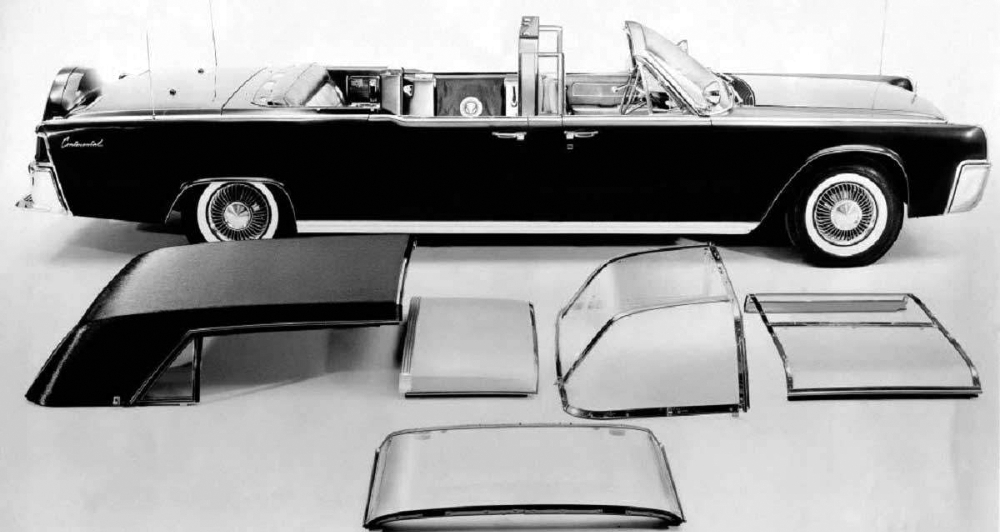
Customization wasn’t just replacing the interior or adding additional space and seating. It went way beyond the basics of what we know as a limousine. This limo had t-tops! Not in the general sense of sports car t-tops, but it had removable steel and transparent plastic roof panels that were referred to as a bubble top. It had a hydraulic rear seat that could be raised almost 12 inches to elevate the president. Retractable steps were added on for the convenience of the secret service agents tasked with walking next to the vehicle, as well as grab handles and two steps on the back bumper for additional agents. It also provided auxiliary jump seats for additional passengers, two radio telephones, and of course, hand embroidered Presidential Seals in each of the door pockets.

This June 1961 photo provided by the Ford Motor Co. shows President. John F. Kennedy's Lincoln Continental limousine.

On Nov. 22, Dallas will again be remembered as the place where John F. Kennedy was shot in 1963. Our images of him that day are forever locked with his limousine: A modified 1961 Lincoln Continental four-door convertible. Its low-slung, angular lines and rear-hinged “suicide” doors were a bold design that personified Kennedy's fresh appeal. The press later dubbed the vehicle the “death car.”

1. The Lincoln was leased, but received six-figure upgrades from the White House.

The car, a joint venture between Ford and partner Hess & Eisenhardt, is shown here being delivered to an unknown destination with sections of its removable bubble roof panels laid out behind it. The panels can stack into the trunk of the car.

The car was fashioned from a stock 1961 Lincoln Continental four-door convertible — retail price $7,347 — that had rolled off the assembly line at parent company Ford’s plant in Wixom, Mich. The White House leased it from Ford for a token $500 a year and sent it off for $200,000 in modifications by elite custom coachbuilder Hess and Eisenhardt in Cincinnati, Ohio. (The firm’s other high-profile clients included the Queen of England.) In the process, the car gained Secret Service codenames — SS-100-X and X-100 — and the grille of a 1962 model, so it appeared right up- to-date.


2. The limo was stretched and loaded up with unusual features.

President John F. Kennedy (back left), Jacqueline Kennedy (back right), begin the motorcade from Love Field to downtown Dallas on Nov. 22, 1963. Texas Gov. John Connally is waving.

The car had a six-piece roof system composed mostly of clear plastic panels that were stowed in the trunk and a rear seat that could be hydraulically raised more than 10 inches for better visibility of its occupants. There were two radio telephones, akin to walkie-talkies or CB radios rigged to telephone handsets. The car's most notable extra was its length, 3 1/2 feet of it, gained by cutting it in half and extending the rear passenger compartment to create more room and to fit a middle row of forward-facing jump seats that fold away when not in use.


3. The “bubble top” would not have helped Kennedy that day in Dallas.

The limo carrying a mortally wounded Kennedy races toward Parkland Hospital seconds after he was shot in Dallas.

Would the plastic bubble top have made a difference that day if used? Gary Mack, the late curator of Dallas’ Sixth Floor Museum at Dealey Plaza, said no, it wasn’t bulletproof. In fact, there was no protective armor on the vehicle. Mack says that for all of the car's upgraded features, it served mostly as an “expensive, fancy limousine.”


4. After the Kennedy assassination, the limo was hastily put back into service.

President John F. Kennedy was assassinated in this car on November 22, 1963. The midnight blue, un-armored convertible was rebuilt with a permanent roof, titanium armor plating, and more somber black paint. The limousine returned to the White House and remained in service until 1977. The modified car shows the fundamental ways in which presidential security changed after Kennedy’s death.

Kennedy’s Lincoln, sensationally dubbed the “Death Car” in a 1964 Associated Press story, was hastily rebuilt after the assassination. Project name? The Quick Fix. The logic was straightforward, according to The Henry Ford museum’s curator of transportation Matt Anderson. “It takes four years or so to get one of these done, from the original planning to its delivery to the White House. They simply didn’t have the time to build a new car. The president [Lyndon B. Johnson] needed a limousine; this was the simplest, most effective way to do it.”


5. The rebuilt Kennedy limo was considerably fortified at the cost of nearly half a million.

The 1961 Lincoln limousine (code name: X-100) that John F. Kennedy was assassinated in on a trip to Dallas was sent back to Ford and partner Hess & Eisenhardt to rebuild and improve its safety and design. The project started around December 1963 and was dubbed the “Quick Fix.”

The high-tech — for the time — features include two radiophones, a dial telephone, an AM-FM radio, a public-address system, an electronic siren and remote-control door locks. The car gained 17% more power with a new hand-built, high-compression V-8 engine. And with all of the added weight — the car now tips the scale at 9,800 pounds, up from 7,822 — the team installed “the largest passenger-car air-conditioning unit ever built.” The ventilation system filled the trunk and was capable of producing 3 cubic tons of conditioned air, which was “sufficient for an average house.”

The final price tag for project Quick Fix was an estimated $500,000. The car went through extensive road testing and was delivered to the White House and LBJ’s fleet in late spring of 1964.


6. The limo stayed in service longer than you would expect and you can still view it today.

Kennedy’s 1961 Lincoln Continental in the Henry Ford Museum.

Improbably, the car stayed in service through President Richard Nixon’s administration and into 1977, Jimmy Carter’s administration’s first year. It was retired late that year and returned to Ford. The automaker donated it to The Henry Ford Museum, where Anderson says it remains one of the museum’s most popular exhibits. On Nov. 22 each year, some people leave flowers near the car.


7. JFK’s limo remains part of assassination conspiracy lore.


According to the late Sixth Floor Museum curator Gary Mack, while the car was parked outside Parkland Hospital that fateful day, something strange happened. There were odd reports by some hospital staff of a man in a suit inside the emergency area who asked for a bucket of water and some towels. “And the implication was that they were going to clean out the car — clean out the crime scene,” he said. The mysterious man was never identified, but Mack says “a bucket was photographed at the left rear door of the limo before being carried toward the emergency entrance.” And yet, photographs of the car’s backseat taken by the FBI after the car was flown back to Washington, DC revealed it does not appear to have been cleaned. Perhaps only the driver’s area was wiped down?

Mack points out one more remaining mystery connected with the car: the radio transmissions. Each vehicle in the motorcade that day was patched into a radio network, and he said the Secret Service was monitoring the chatter from a room at the Adolphus Hotel. The transmissions were being fed to Air Force One and, presumably, the White House Communications Agency. “Where are the tapes? No one knows,” Mack says. “The tapes could be important if, as one of the agents in the limo confirmed, he was on his radiotelephone during some of the assassination and his microphone could have picked up the sounds of the shots.”


FOLLOW US:
FacebookTumblrPinterestInstagram

CONTACT US


Browse by Decades

Popular Posts

Advertisement

09 10