Bring back some good or bad memories


ADVERTISEMENT
Showing posts with label advice & how to. Show all posts

July 8, 2026

Learn Roller Disco With Kevin Bacon, 1979

Long before he became an icon for breaking the “no dancing” rule in Footloose, a young Kevin Bacon was putting his rhythm to use on eight wheels in New York City. The year was 1979, and the roller disco craze was sweeping across America. At the time, Bacon was a struggling actor working as a busboy in Manhattan. He had bought a pair of quad skates in 1977 and became an avid street skater.

Because elite, flashy New York roller clubs like The Roxy and Xenon were far too expensive for a busboy’s budget, Bacon took his talents to the pavement, spending hours grooving, spinning, and practicing roller disco out in Central Park.

While skating in the park, an acquaintance who was putting together a project to capitalize on the exploding trend approached him. The pitch was simple: “Hey, I’m writing a book about this roller disco thing. Do you want to be a model?” Desperate for the gig, Bacon agreed. He ended up being featured as an instructional model in the 1979 paperback book titled How to Disco Rollerskate.

“Back when I was working as a busboy, I got a gig to model for a how-to roller disco book,” he recalled. “For reference, this move is called ‘Shoot the Duck.’”

In the book’s black-and-white photo spreads, a young, heavily feathered-haired Kevin Bacon can be seen demonstrating highly technical maneuvers, including a left-hand turn transition and a classic 1970s skate trick called the “Can Opener.”

Years later, Bacon revisited the memory on The Late Late Show, admitting that while he still owns those original 1977 skates, his feet have grown two sizes since his days as a Central Park roller disco model. Still, during the 2020 lockdowns, he famously dusted them off to post “Roller Disco” dance videos from his basement, proving he’s still got the moves.


January 14, 2025

The Mama Cass Elliot Diet

Throughout her career, Cass Elliot had to face cruel, constant and pervasive fatphobia. She tried to use humor and laugh it off, her friend Sue Cameron recalled, “She covered it up. She was the ‘funny one.’ It was horrible for her to be thought of as ‘the fat one’ and Michelle [Phillips] as the pretty one. People would say that to Cass’ face. She had to suck it up and laugh.” Cass was even mocked in her own band’s songs: “Nobody’s getting fat, except Mama Cass,” the Mamas & the Papas sang in their 1967 song “Creeque Alley.”

Rumor has it that, in the early days, the band didn’t want her because she was overweight. The quartet’s founder, John Phillips, confessed that peer pressure to lose weight took its toll on Cass, leading her to go on diets that were as extreme as they were dangerous. These diets ended up irrevocably damaging her cardiovascular system. In 1968, after fasting four days a week and losing up to 55 kilos (about 121 pounds), Elliot was admitted to the hospital. “I’ve been fat since I was seven and being fat sets you apart,” she said.

“I’ve invented a fabulous new diet. It costs only $2,000 for each pound you lose. It also weakens your natural resistance to disease. I can’t guarantee it, but the Mama Cass Diet can give you acute tonsillitis, hemorrhaging vocal cords, mononucleosis and a dangerous case of hepatitis. At least that’s what it did for me. I lost my health–and more than a quarter of a million dollars in earnings as a singer.”


Mama Cass was both sassy and painfully candid in her talks about her unhealthy approach to weight loss in this 1969 article from March issue of The Ladies Home Journal. She could have chosen to keep her health problems a guarded secret, but obviously she chose authenticity. She admitted that she didn’t consult a doctor about her drastic approach to weight loss because she knew starving herself “was wrong” and she “was in a hurry to weigh 110 pounds.”

Although 1969 was still a time when the majority of Americans were not overweight or obese and whose daily (non-reducing) diet and lifestyle kept their figures, fad diets, starvation, gimmicky gums, magic couches and dangerous drugs were gaining popularity. They were dangerous and/or expensive carrots dangled in front of those who did need help.

Cass in 1969, after losing around 100 lbs.

Sue Cameron, who worked as a journalist for The Hollywood Reporter at the time, wrote the article that linked her friend’s death to the ham sandwich. She was commissioned by the singer’s manager, Allan Carr, who was trying to save the artist’s reputation and avoid hypotheses that associated Cass’s sudden death with drug use. The autopsy did not find any narcotics in her system or food lodged in her mouth or trachea. “Many people don’t realize that [the ham sandwich story is] not even true. Even though I have said — and written — it’s not true, it still goes on. I never thought it would last as long as it has,” Cameron says apologetically.

October 28, 2024

How to Dance the Hanes Cantrece – by “Killer Joe” Piro

The Hanes Cantrece was created by the king of the discotheque, “Killer Joe” Piro, to introduce Hanes Cantrece nylons with the exclusive Run Guard heel and toe feature. Beginning with the basic kick and clap, every one of the five steps which make up The Hones Cantrece calls for movement... for stretching, bending, looking beautiful. All the things that Hones Cantrece nylons do so well!


The rhythm of the music written expressly for The Hanes Cantrece is 4/4 time. All the dance steps are counted 4 beats to the bar. Example: 1, 2, 3, 4 ... 1, 2, etc. The feet keep time. So do the hips, as they swing with each step to the beat of the music.

Follow the sequence “Killer Joe” indicates. Feel free to improvise. Have fun! You may enjoy doing The Hanes Cantrece even more—in your stocking feet. Preferably in stockings by the same name.

HANES CANTRECE KICK AND CLAP (BASIC STEP)


a. Step to the side with left foot on the count of 1, 2
b. Skip sideways (going to left) on the count of 3
c. Raise right knee and clap hands under right leg on court of 4
d. Step to the side with right foot on the count of 1, 2
e. Skip sideways (going to right) on the count of 3
f. Raise left knee and clop hands under left leg on count of 4

RUN GUARD HEEL AND TOE


a. Place weight on right foot, left leg to the side on heel on the count of 1
b. Bring left toe to right foot on the count of 2
c. Repeat above pattern three move times
d. Place weight on left loot, right leg to the side on heel on the count of 3
e. Bring right toe to left foot on the count of 2
I. Repeat above pattern three move times

NEW YORK TO CALIFORNIA


a. Hop to left side on left foot, crossing right foot in front of left leg on the count of 1, 2
b. Hop to right side on right foot, crossing left foot in front of right leg on the count of 3, 4
c. Repeat above pattern three more times
REPEAT BASIC STEP

AROUND THE WORLD


a. Place weight on right foot, sett leg to the side on heel on count of 1
b. Bring left toe to right foot, pivot on right foot to the right (clockwise) on count of 2
c. Repeat above movement three more times, going around in a circle
REPEAT BASIC STEP

HANES SWING


a. Shift weight to left foot, keeping both knees bent, on the count of 1
a. Shift weight to right foot, keeping both knees bent, on the count of 2
c. Repeat above movement three more times
REPEAT BASIC STEP AND START ALL OVER AGAIN

October 27, 2024

How Frankenstein Monster Was Made on the Set of “Frankenstein” Movies

During the filming of his three Frankenstein movies (Frankenstein, 1932, Bride of Frankenstein, 1935, and Son of Frankenstein, 1939), Boris Karloff had to check in each morning at Universal Pictures at six o’clock sharp, where he was met by a sleepy-eyed Jack Pierce, the ace makeup specialist. For Karloff, or for any actor in his position, the next six hours were the most grueling.


From six o’clock till noon, Pierce was plastering on Karloff’s facial and arm makeup. Karloff, practically strapped to the makeup chair, sat motionless while Pierce applied the thick, greenish-gray greasepaint. Bloody scars were trenched on Karloff’s forehead, scalp, neck, and wrists; and collodion and cotton made the fire-wrinkled skin of cheek and hand. There were aluminum neck spikes (popularly known as the Monster’s electrodes), and steel braces for the arms.

At twelve o’clock, Pierce would begin fitting on the shoes. which weighed 11 pounds, five ounces apiece. They were size 24. Then came the final touch in creating Frankenstein’s monster — helping Karloff on with the padded suit two inches thick, which he wore under his clothes from neck to ankles.

September 23, 2024

Marilyn Monroe’s Strange Diet Secrets

The life of the cultural icon may have been laced with mystery but in an interview with Pageant magazine in September, 1952 entitled “How I Stay in Shape,” Marilyn Monroe revealed some of her self-described “bizarre” eating habits. Her morning breakfast routine: a glass of warm milk with two raw eggs beaten into it. This was followed by a multi-vitamin. “I doubt if any doctor could recommend a more nourishing breakfast for a working girl in a hurry,” Marilyn said of what is, nowadays, considered an uncommon breakfast.


A girl can’t survive just on raw eggs and milk. So what else did Marilyn eat to nourish her curves? Her daily diet was very meat centric. Lunch and dinner usually involved some type of animal protein with a side of vegetables. Her favorite? A grilled steak.

Was Marilyn was a goddess in the kitchen as she was on the big screen? We’ll never truly know. But she did enjoy cooking. Here’s what she told Pageant: “My dinners at home are startlingly simple. Every night I stop at the market near my hotel and pick up a steak, lamb chops or some liver, which I broil in the electric oven in my room. I usually eat four or five raw carrots with my meat, and that is all. I must be part rabbit; I never get bored with raw carrots.”

In that interview, Marilyn admitted that her protein-rich diet is what kept her in shape, especially because she occasionally treated herself to an ice cream sundae after attending evening drama classes. “It’s a good thing, I suppose, that I eat simply during the day, for in recent months I have developed the habit of stopping off at Wil Wright’s ice cream parlor for a hot fudge sundae on my way home from my evening drama classes. I’m sure that I couldn’t allow myself this indulgence were it not that my normal diet is composed almost totally of protein foods.”

The article “How I Stay in Shape” by Marilyn Monroe on Pageant magazine in September, 1952.

April 3, 2024

This Book From 1908 Shows How Photo Retouching Was Around Long Before Photoshop Ever Was

“Photoshopping” portraits have been around a lot earlier! Over a century ago, photographers were already altering images to satisfy demands of customers in the Victoria era. Their retouching tools include an easel, magnifying glass, lead holder, lead, spotting brush, retouching fluid, negative varnish, and etching paste. Pencils were used to remove imperfections and blend highlights, shadows, and halftones, while etching knives were used to reduce highlights and remove photo parts.

An instructional book published in 1908 shows examples of photo retouching dating all the way back to the early 20th century. “Complete Self-instructing Library of Practical Photography” is a 10-volume collection of black and white books. It gives instructions to photographers on how to shoot, retouch, and 'eliminate imperfections’ on their subjects.

The book says, “in delivering finished work to your customers, you do not hand them the photographic negatives, but the prints made from these negatives.” And that “the early days of photography prints were made directly from the negative without any alteration.”

This is because “the wet-plate rendered softer effects than are obtainable with the ready prepared dry-plate.” Therefore, “the imperfections were less visible, and at that time the general public was satisfied with an exact likeness of themselves.”

However, when the dry-plate began replacing the wet-plate, photographs became more accurate, and “the defects in the human face became more apparent on the negative, and there arose a demand for a greater softening of the lines and a removal of the more objectionable imperfections.”

That’s when retouching became a thing! Here are some examples portrayed in the book regarding the removal of imperfections from photography subjects during the early 20th century.

This image mentions the use of “first stage, preliminary etching.”

The finished result appears much smoother. The photographer used “second stage etching and retouching.”

The original negative print alongside the retouched negative print.

The three stages of elementary retouching.

Some side view before-and-after examples of first stage retouching.

March 17, 2024

HOW TO STOP MOUTH BREATHING! (1922)

You can make sure that you breathe through your nose during the day, but one-third of your time you are asleep.


The Davis Chin Supporter stops mouth breathing and thereby prevents snoring, also the various throat and ear troubles directly due to mouth breathing. It's fine mesh canvas or linen fits like a glove and washes like a handkerchief. It will add to your good health and spirits. Measure size around crown of head and point of chin. By mail, postpaid, Cotton—$2.00, Linen—$3.00, Mesh—$4.00.
CORA M. DAVIS
Dept. P. C.
507 Fifth Avenue
NEW YORK

January 15, 2023

Joan Crawford’s Tips for a Great Party: “Everyone Welcome, Except Hippies With Unwashed Feet”

Helpful hints for your holiday party per Joan Crawford:


“The best parties are a wild mixture of people. Take some corporation presidents, add a few lovely young actresses, a bearded painter, your visiting friends from Brussels, a politician, a hairdresser, and then toss them all together. It’s especially important to have all age groups. Of course I wouldn’t want to have hippies come crawling in with unwashed feet, but all the younger people I know are bright and attractive and have something to say and they dress like human beings. Another important party secret is I always add a splash of vodka to everything. Nobody ever knows and everyone ends up having a wonderful time.”

January 13, 2023

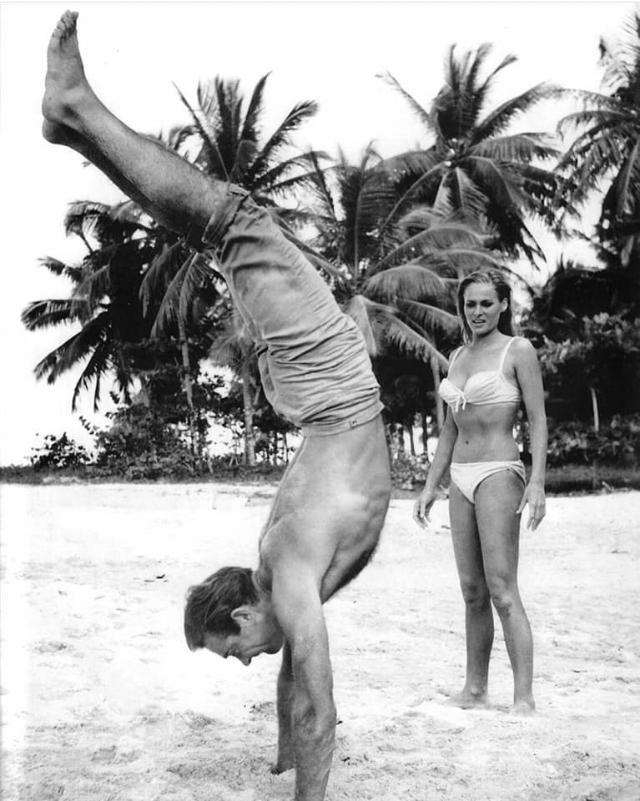
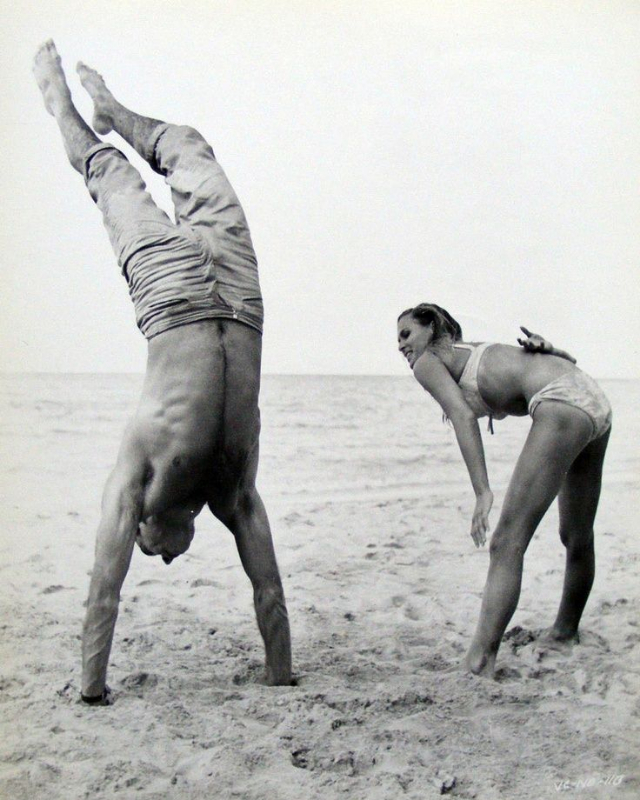
Sean Connery Showing Ursula Andress How to Do a Handstand, 1962

Behind the scenes photographs of Sean Connery teaching his co-star, Ursula Andress, how to do a handstand on the set of the first James Bond movie, Dr. No (1962).


Dr. No is a 1962 spy film directed by Terence Young, and it is the first film in the James Bond series. Starring Sean Connery, Ursula Andress, Joseph Wiseman and Jack Lord, it was adapted by Richard Maibaum, Johanna Harwood, and Berkely Mather from the 1958 novel of the same name by Ian Fleming. The film was produced by Harry Saltzman and Albert R. Broccoli, a partnership that continued until 1975. It was followed by From Russia With Love in 1963.

In the film, James Bond is sent to Jamaica to investigate the disappearance of a fellow British agent. The trail leads him to the underground base of Dr. Julius No, who is plotting to disrupt an early American space launch from Cape Canaveral with a radio beam weapon.

December 15, 2022

“The Bull” by Pablo Picasso, 1945

Pablo Picasso’s The Bull is a series of eleven lithographs created in 1945. It depicts the bull at various stages of abstraction, starting with a fairly realistic depiction and ending with nothing but a few lines.

Pablo Picasso, The Bull, 1945.

Pablo Picasso created The Bull around the Christmas of 1945. Bull is a suite of eleven lithographs that have become a masterclass in how to develop an artwork from the academic to the abstract. In this series of images, all pulled from a single stone, Picasso visually dissects the image of a bull to discover its essential presence through a progressive analysis of its form. Each plate is a successive stage in an investigation to find the absolute “spirit” of the beast.


Plate 1: To start the series, Picasso creates a lively and realistic brush drawing of the bull in lithographic ink. It is a fresh and spontaneous image that lays the foundations for the developments to come. Picasso used the bull as a metaphor throughout his artwork but he refused to be pinned down as to its meaning. Depending on its context, it has been interpreted in various ways: as a representation of the Spanish people; as a comment on fascism and brutality; as a symbol of virility; or as a reflection of Picasso’s self image.


Plate 2: At the second stage of the lithograph, Picasso bulks up the form of the bull to increase its expressive power and achieve a more mythical presence.


Plate 3: On Plate 3, the development takes a change of direction. Picasso stops building the beast and starts to dissect the creature with lines of force that follow the contours of its muscles and skeleton. He cuts into the form of the bull much in the same way as a butcher would cut up a carcass. In fact, he was known to have joked with the printers about this butcher analogy. Also at this stage, Picasso introduces the use of a lithographic crayon to add more detail to the surface texture of the animal’s skin. The overall effect is reminiscent of Dürer’s famous image of a rhinoceros.


Plate 4: Plate 4 sees the artist start to abstract the structure of the bull by simplifying and outlining the major planes of its anatomy. Ten years earlier Picasso had said that, “A picture used to be a sum of additions. In my case a picture is a sum of destructions.” In view of this statement, lithography seems to be the most natural choice of media for this series of prints. One of the technical advantages of lithography over other printmaking techniques is that you can both add to and subtract from the image with relative ease.


Plate 5: The simplification and stylization of the image continues on Plate 5. Picasso starts to erase sections of the bull in order to redistribute the balance and reorganize the dynamics between the front and the rear of the creature.

First, he reduces its massive head and compresses its features into the small area that was previously the bull’s forehead. By enlarging the eye and flattening its horns into a more lyrical design, he creates a sharper focal point at the front of the animal. Next, he erases a section of the back which has the counter effect of raising the front. He literally underlines this change with the bold white line that runs diagonally across the animal, parallel to the new angle of the back. As a counterbalance to this movement, he strengthens a line that runs in the opposite direction across the middle of the body, parallel to the shoulders at the front. Picasso’s process of development is like building a house of cards where balance and counterbalance of the individual elements is crucial to the stability of the whole.


December 13, 2022

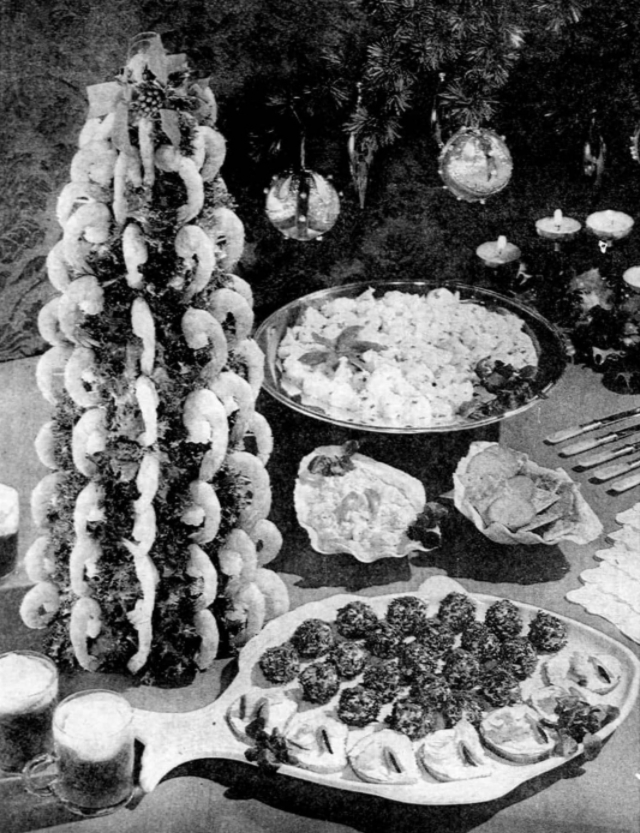
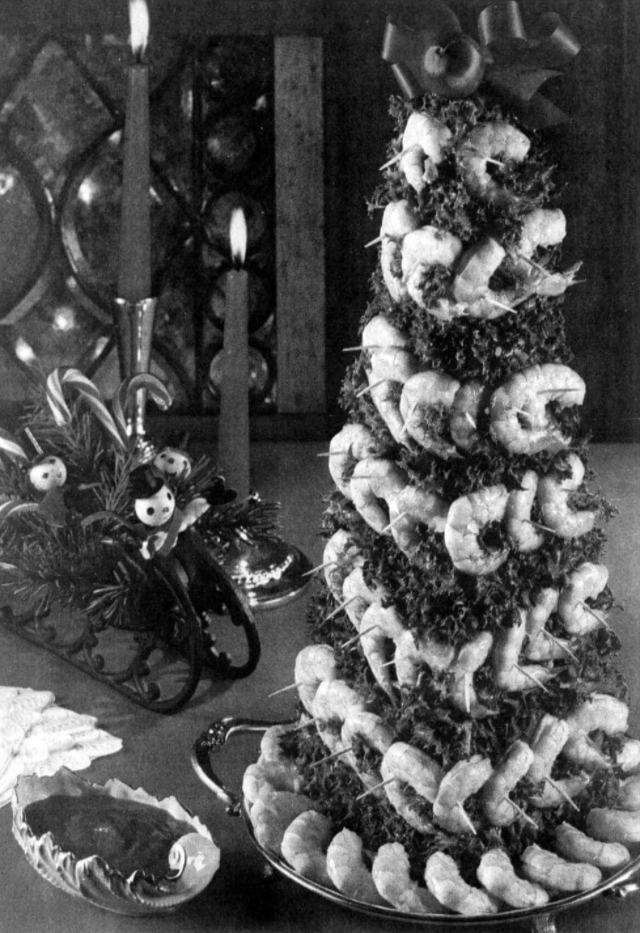
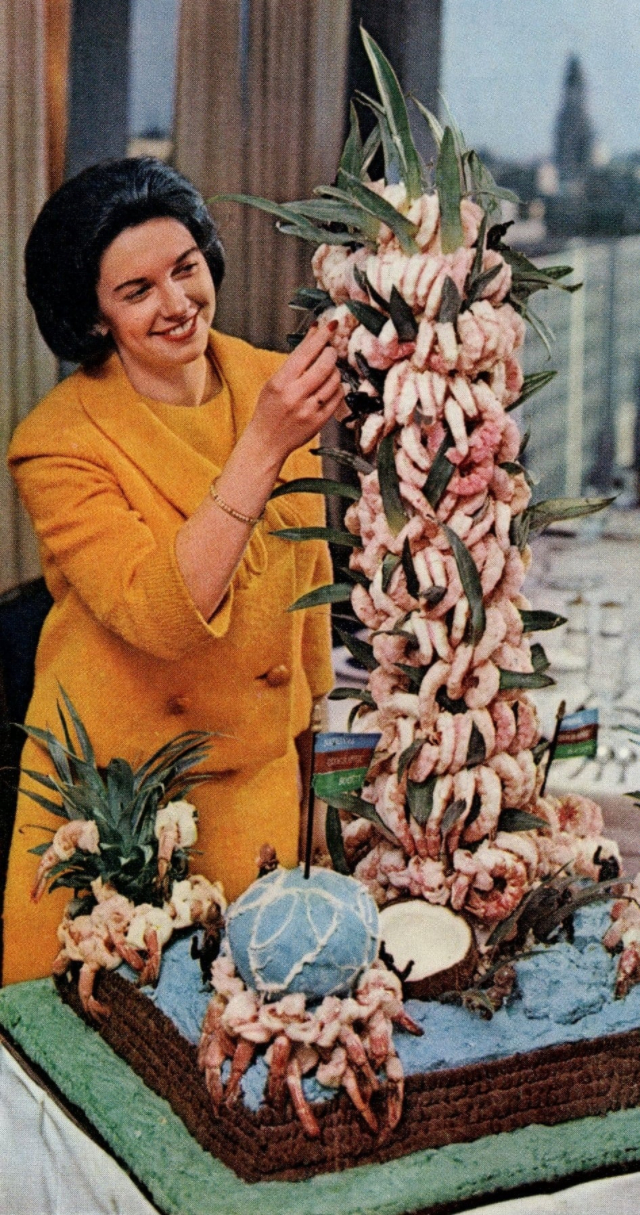
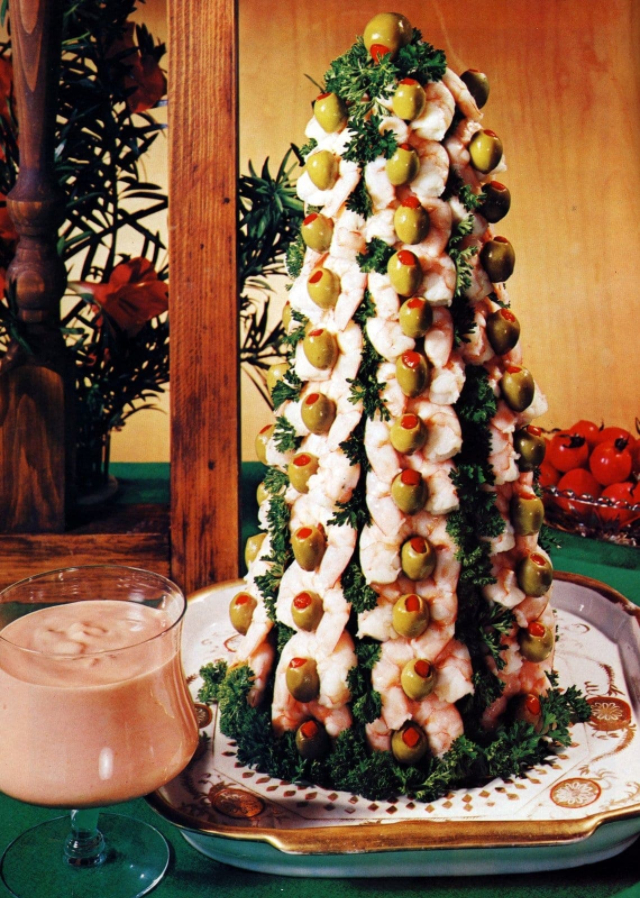
Here’s How to Make a Retro Shrimp Christmas Tree for Your Holiday Party

Every Christmas you try to innovate and surprise your visitors, maybe it’s time to find an old cookbook. You will be able to create unimaginable things and put them on the dining table. Now, it’s time to introduce everyone to your famous Christmas tree with shrimp.


What you need
3 pounds shrimp, fresh or frozen
2 quarts water
1/2 cup salt
4 large bunches curly endive
1 styrofoam cone, 2-1/2 feet high
1 styrofoam square, 12″ x 12″ x 1″
1 small box round toothpicks
Cocktail sauce

Directions

Thaw frozen shrimp; place shrimp in boiling salted water. Cover and simmer about 5 minutes or until shrimp pink and tender. Drain. Peel fresh shrimp, leaving last section of tails on. Remove sand veins and wash. Chill. Separate and wash endive; chill.

Place cone in center of styrofoam square; draw a circle around base of cone. Cut out circle and insert cone.

Cover base and cone with overlapping leaves of endive, fastening leaves of endive with toothpick halves. (Stick toothpicks into endive and styrofoam.) Start at the outside edge of the base and work up. Cover fully with greens to resemble Christmas tree.

Attach shrimp artistically to the tree with toothpicks.

Provide cocktail sauce in several dishes for dunking shrimp. Place tree on large plate or tray, and add leftover shrimp around the base.

Top tree with ribbon, tinsel, or your favorite ornament. Provide cocktail sauce for dunking.

Recipe makes about 12 servings.

Note: Chili sauce with horseradish blended into it makes a good shrimp dip. Blend to taste, adding cream if blander dip preferred.


August 19, 2022

“I take one everywhere I take my PENIS!!” – Art Chantry Posters, 1993

In 1993, commissioned as a pro-bono project by Cole and Weber, a Seattle-based advertising agency, Art Chantry was asked to design a print campaign promoting condom use among gays, women and minority groups. The campaign was ultimately distributed by Washington State Department of Health and Social Services.
Chantry’s design work has become synonymous with the use of vernacular pictorial references that are drawn from technical and instruction manuals and cheap illustrations from the 1950s and 1960s. This use of visual and textual language is targeted to a specific audience, in particular young people who may feel disaffected by official government warnings on the subject.

‘Penis Cop’, an offset litho-printed in three colors, takes the image of a policeman from a public information poster and reworks the message into a humorous instructional on the use of condoms to prevent the spread of sexual disease. The headline, “I take one everywhere I take my penis”, implies a direct voice of authority, and is specifically designed to relay a very serious message in an amusing and ironic manner. The poster was hung in public restrooms, saunas and corporate offices, and in Chantry’s words, “those locations where sexual activity might take place.”


The poster was intended for a gay male audience, but it drew so much attention that Playboy Magazine asked permission to feature it in its Forum section in 1996. Public Health expressed concern that publication outside the intended arena (Seattle’s Gay Pride Parade) might jeopardize the program and would serve no legitimate public health purpose. Playboy editors chose to feature the poster regardless, with a jab at local politics.


The companion poster. “I have something for you” portrays two heterosexual couples—a Caucasian couple and an African-American couple—each promoting the use of condoms as the smart and sexy thing to do.

August 3, 2022

Your Beautiful Home on a Budget, 1974

“Your Beautiful Home on a Budget: How to Create Style on a Shoestring” was a home decorating book published in 1974. It was aimed at people who wanted to brighten up their homes on a shoestring budget. The book was written by Dawn Marsden, who also published a book titled “Planning Colour for Your Home: All You Need to Know About Colour” in the same year. She made her last contribution to literature world with her 1981 book “The Complete Home Handywoman.”

Here’s a few pages from the seventies home interior publication. They include ghastly looking bathrooms and kitchens, groovy tables and a Brian May look-a-like model – Enjoy!


FOLLOW US:
FacebookTumblrPinterestInstagram

CONTACT US


Browse by Decades

Popular Posts

Advertisement

09 10