Bring back some good or bad memories


ADVERTISEMENT
Showing posts with label Wales. Show all posts

December 9, 2025

Rare Photos of North Wales in the Late 1800s

North Wales in the late 19th century was a region defined by its striking natural beauty and robust industrial activity, primarily centered around quarrying and tourism. The massive slate industry was at its peak, particularly in areas like Bethesda and Llanberis (home to the Penrhyn and Dinorwic quarries), which scarred the landscape but fueled the local economy, employing thousands of men and creating a distinct, working-class culture.

This period saw rising social tensions, culminating in the Great Strike of Penrhyn Quarry (1900-1903), reflecting the growing labour movement. Simultaneously, the development of the railway network transformed coastal towns such as Llandudno and Rhyl into popular Victorian seaside resorts.

Wealthy tourists flocked to these areas, seeking both the bracing sea air and the dramatic scenery of Snowdonia. This contrast between the harsh, industrial heartland and the burgeoning leisure economy shaped the unique identity of North Wales as the century drew to a close.

These rare photos, found by Etchings Plus, capture North Wales in the late 1800s.

Canal possibly near Llangollen, North Wales, circa late 1800s

Canal possibly near Llangollen, North Wales, circa late 1800s

Arthog waterfall near Barmouth, North Wales, circa late 1800s

Beddgelert looking North towards Capel Curig, North Wales, circa late 1800s

Beddgelert, North Wales, circa late 1800s

September 1, 2025

Historical Photos of the Crumlin Viaduct, Once the Tallest Railway Viaduct in the United Kingdom

The Crumlin Viaduct was a railway viaduct located above the village of Crumlin in South Wales, originally built to carry the Taff Vale Extension of the Newport, Abergavenny and Hereford Railway (NA&HR) across the Ebbw River.

Hailed as “one of the most significant examples of technological achievement during the Industrial Revolution,” in its 107 years of service until being dismantled in 1965, it remained: the least expensive bridge for its size ever constructed; the tallest railway viaduct in the United Kingdom; the third tallest viaduct in the world, after the aqueduct at Spoleto, Italy, and the timber viaduct in Portage, New York state.

The viaduct was designed by Scottish civil engineer Thomas W. Kennard. The railway’s chief engineer, Charles Liddell, also provided valuable input. The design utilized a “Warren truss” system, with ten iron trusses supported by tall stone piers.

At the time of its completion, it was the tallest railway viaduct in the United Kingdom, standing 200 feet high and spanning 1,650 feet. It was also noted for being one of the least expensive bridges for its size ever constructed. The viaduct was made of a combination of wrought and cast iron, with the ironwork produced at Kennard’s family ironworks in Falkirk and Blaenavon.

Construction began in 1853 and was completed in 1857. Despite the dangers of the project, there was only one fatality during the entire construction process. The viaduct was officially opened on Whit Monday, June 1, 1857.

The viaduct was a vital artery for the region’s coal industry and helped to transform the small village of Crumlin into a bustling town. Throughout its life, the viaduct required consistent maintenance, including regular repairs and repainting due to the high winds and other environmental factors in the valley.

By the mid-20th century, the railway system in Britain was undergoing significant changes. The Beeching Report of 1963 recommended sweeping closures of unprofitable lines. The railway line that the Crumlin Viaduct serviced was one of those recommended for closure.

The last scheduled passenger train crossed the viaduct in June 1964. Although it was scheduled as a monument of architectural and historical interest in 1962, British Railways argued that it was in a state of disrepair and too expensive to maintain.

Demolition work began in 1965 and was carried out by Birds of Swansea. The dismantling took approximately nine months. The iron components were sold for scrap. During its demolition, the viaduct gained a final moment of fame when it was used as a filming location for the 1966 Hollywood spy thriller, Arabesque, starring Gregory Peck and Sophia Loren. The film’s climactic chase scene takes place on the viaduct.

Today, all that remains of the Crumlin Viaduct are its stone abutments on either side of the valley, serving as a reminder of a remarkable structure and a bygone era of industrial innovation.


April 30, 2025

40 Wonderful Photochrom Prints of Wales From the 1890s

At the close of the 19th century, Wales stood at a crossroads of tradition and transformation. Its rugged landscapes, coal-streaked valleys, and seaside towns were alive with the rhythms of industry and rural life.

The Industrial Revolution had left a deep imprint—coal mines and slate quarries powered the economy, while railways stitched together once-isolated communities. Yet amid this progress, age-old Welsh customs, language, and folklore remained strong, especially in the countryside.

These images, captured through the Photochrom process, bring the era vividly to life. Though originally black and white, they were painstakingly colorized to reflect the tones and textures of the time. What emerges is a rare and richly detailed portrait of a nation balancing its deep-rooted heritage with the momentum of modern change.

Station Road, Colwyn Bay, Wales, circa 1890s

Bangor from Anglesey, Wales, circa 1890s

Beach and pier, Penarth, Wales, circa 1890s

Bridge and Cadair Idris, Barmouth, Wales, circa 1890s

Bridge over the Monnow, Monmouth, Wales, circa 1890s

December 22, 2023

Car Gwyllt: Quarrymen in North Wales Used to Hurtle Down a Mountain on a Homemade Toboggan Thingy

The car gwyllt (wild car) – it’s not a Mustang nor a Ferrari, but a skimpy piece of wood mounted on a wheel and a rod of iron racing 50mph down a Welsh mountain.

The car gwyllt was invented around 1870 by the quarry blacksmith, Edward Ellis. In later years they were made by Edward Jones, an independent smith living on Manod Road, who charged 5 shillings. Each quarryman had their own car and so an early purchase with a new starter’s tal mawr would be a new car gwyllt. When they got to the bottom they would chuck their cart into a wagon which would be transported back to the top of the mountain each day.

Their construction was a wooden plank, around two feet long. It rode on a single double-flanged wheel, with a V-shaped iron slipper on the rear of the plank. It was balanced by an iron outrigger to one side, with a pipe-shaped roller over its end. This wide roller also allowed for slight variations in gauge. To control the car there was a hand brake. Pulling upwards on this applied an iron brake to the tread of the wheel. Despite the simplicity of the idea, the cars were not unsophisticated in their manufacture. Most was made by the smith, but the cast wheel was made by a foundry in Porthmadog. The brake linkage comprised several pieces, each hand-forged. The brake handle was detachable and fitted over the main lever. It was decoratively forged with a lightweight curve. When not in use it was carried in the quarryman’s pocket, a primitive form of anti-theft measure.

The carts lived up to their wild name with regular accidents, broken bones and even deaths. If you didn’t use any kind of braking, you were in serious risk of knacking yourself. The wild cars were used up until the quarry shut in the 1940s.


December 15, 2023

Railway Curiosities: How Quarry Workers in North Wales Returned Home From Work in the 1930s

In 1935, quarry workers in Portmadoc, North Wales used a unique device to ride the rails when returning from work. The device consisted of three wheels and a hand brake.


To get them back down to the bottom at end-of-shift, a no-energy means was devised: A peculiar-looking board with a single large wheel mounted beneath, two smaller wheels at the nose, and a sort of outrigger arm.

If you’re wondering how they controlled the speed, to avoid having a heavier man crash into a lighter man ahead of him, this lever at the top serves as a brake. When you pull it back, it connects to something beneath the board that contacts the track.


Nevertheless, apparently there were still crashes from time-to-time (though this appears to be staged for the camera’s sake):

December 5, 2022

Cardiff in the 1970s Through Fascinating Black and White Photos

Cardiff is the capital and largest city of Wales. It forms a principal area, officially known as the City and County of Cardiff, and the city is the eleventh-largest in the United Kingdom.

Located in the south-east of Wales and in the Cardiff Capital Region, Cardiff is the county town of the historic county of Glamorgan and in 1974–1996 of South Glamorgan. It belongs to the Eurocities network of the largest European cities.

A small town until the early 19th century, its prominence as a port for coal when mining began in the region helped its expansion. In 1905, it was ranked as a city and in 1955 proclaimed capital of Wales. Cardiff Built-up Area covers a larger area outside the county boundary, including the towns of Dinas Powys and Penarth.

Cardiff is the main commercial centre of Wales as well as the base for the Senedd. Cardiff Bay contains the Senedd building (home to the Senedd, the Welsh Parliament) and the Wales Millennium Centre arts complex.

These fascinating black and white photos were taken by Ben Salter that show how Cardiff has changed from the 1970s.

Tiger Bay Fountain. A fountain that once stood at the entrance to the Bute Docks in Cardiff's Butetown. Now relocated, and in Victoria Park, Canton. You don't see adverts for cigarettes like this anymore, Cardiff, February 1971

A three coach DMU set at Bute Street Station. In those days this service ran between here and Coryton. Now it's been replaced by a single coach unit shuttling between here and Queen St, Cardiff, July 1973
Low tide. Looking towards Cardiff docks before the barrage. A dredger is at work near Queen Alexandra dock, Cardiff, May 1973

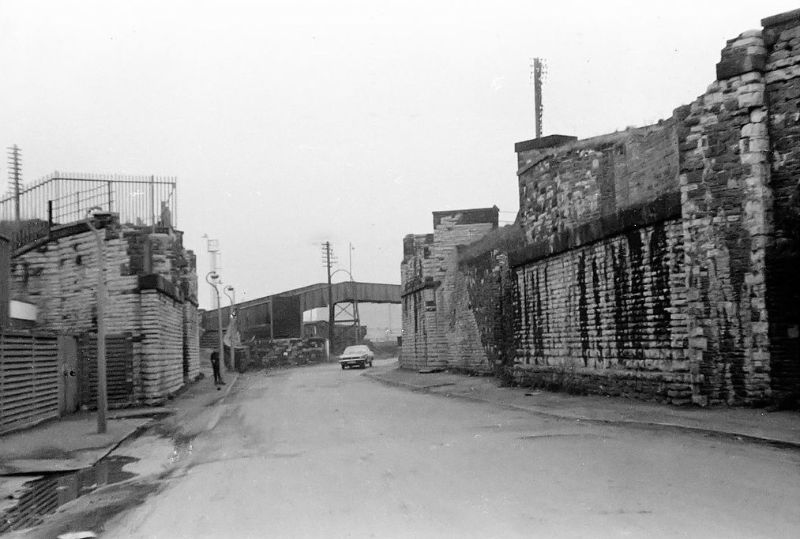
Bridge buttresses that once supported the bridges taking the lines down to the eastern side of the Bute East dock. All gone, Cardiff, March 1974

Bute Street Station. Trains now use the platform opposite, Cardiff, November 1974
January 9, 2022

Wonderful Black and White Photos of Life in South Wales in the 1970s

South Wales is a loosely defined region of Wales bordered by England to the east and mid Wales to the north. Generally considered to include the historic counties of Glamorgan and Monmouthshire, south Wales extends westwards to include Carmarthenshire and Pembrokeshire. The Brecon Beacons National Park covers about a third of south Wales, containing Pen y Fan, the highest British mountain south of Cadair Idris in Snowdonia.

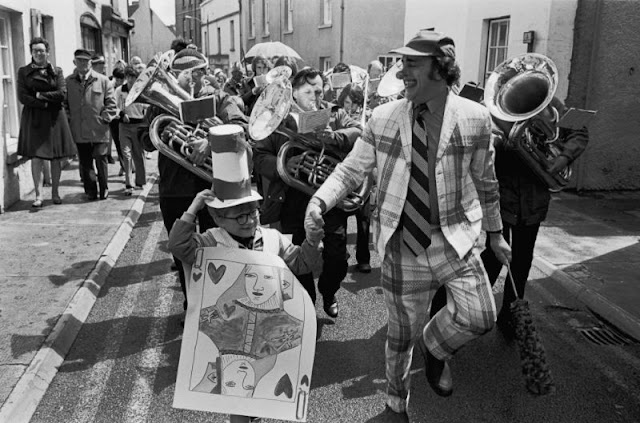
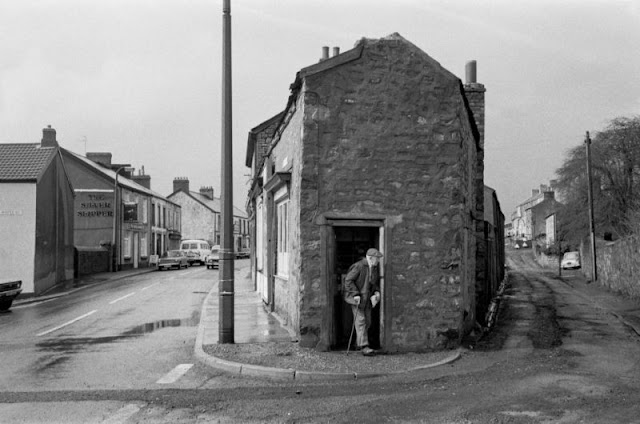
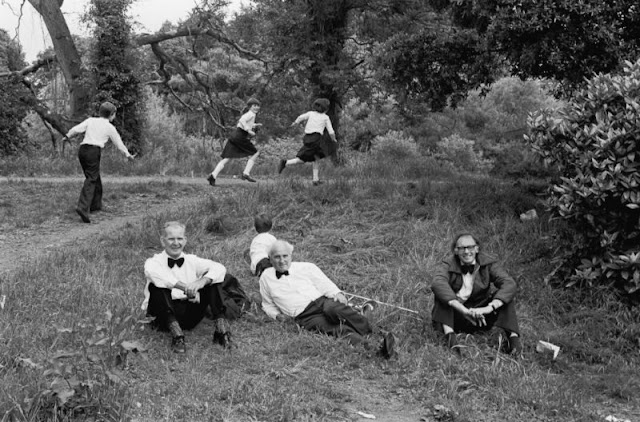
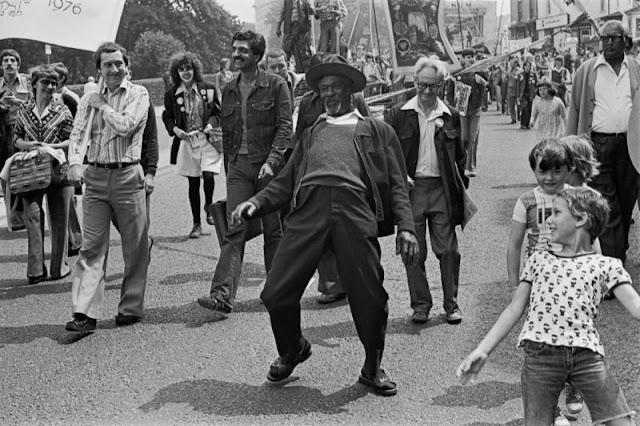
These pictures were taken by Robin Weaver during his time as a newspaper photographer in South Wales in the seventies. When he wasn't covering hard news or local events for his paper, Weaver liked to photograph the people and everyday scenes he came across.

Silver Jubilee fancy dress parade, Monmouth, Monmnouthshire

To give a portrait of a unique place and time for his first book, A Different Country, he has revisited his old personal negative files. “I believe that old photographs develop a special character. It’s a unique sheen imbued by the passage of time.” Said Weaver. “Looking through these photographs today, four decades later, I find myself not only in a different time, but also in a different country.”

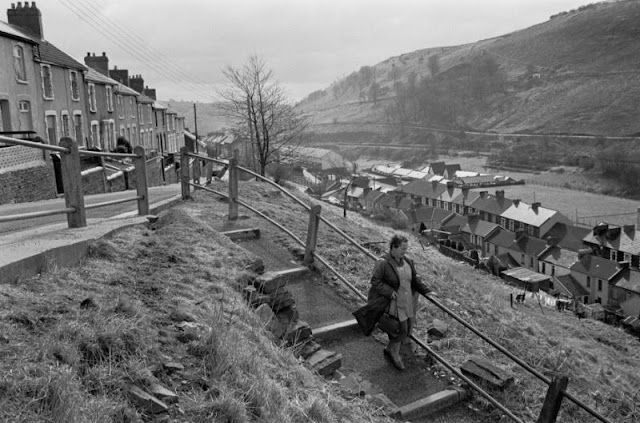
From old terrace houses and corner shops to pancake races and fancy parades, Weaver truly captured the essence of life in the South Wales Valleys at the time. For more details of his book, visit Blurb and Weaver's website.

Corner shop, Dowlais

Band members relax at The Miners’ Gala, Cardiff

Anti-racism demonstration, Cardiff

New Tredegar

October 26, 2021

Stunning Vintage Black-and-White Photos of Edwin Smith

Edwin Smith (born Edwin George Herbert Smith) was an English photographer best known for his distinctive vignettes of English gardens, landscapes, and architecture. In 1935 he became a freelance photographer, working as a fashion photographer for Vogue for a short time. However, Smith concentrated his artistic efforts on subjects such as the mining community of Ashington in Northumberland, the docks of Newcastle, and circuses and fairgrounds around London. 
In 1954, Smith married artist and writer Olive Cook, whom he authored or contributed to numerous books during his lifetime. A tireless promoter of Smith’s work, Cook left her husband’s archive of 60,000 negatives to the Royal Institute of British Architects’ Robert Elwall Photographs Collection in 2002.

Take a look at Smith’s stunning photography through these 28 gorgeous black-and-white pictures below: 

Kentish Town station, London

Gateshead

Herring girls gutting fish on the quayside, North Shields

35 Hallam’s Lane, Chilwell near Nottingham

Church Farm Approved School, East Barnet, London

October 14, 2021

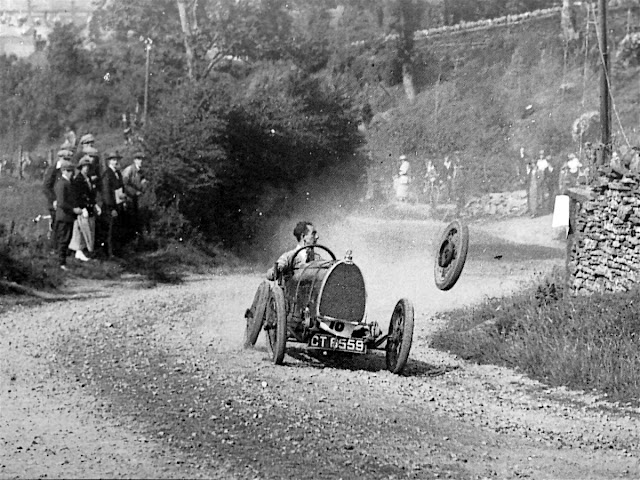
Raymond Mays and the 3 Wheeled Bugatti, 1924

You picked a fine time to leave me loose wheel.
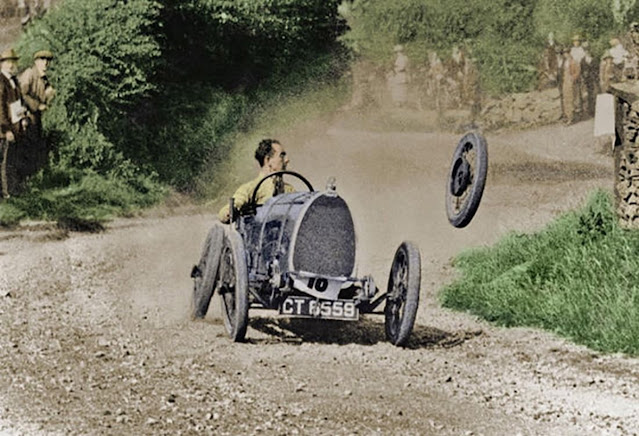
During the 1920s, Raymond Mays became the subject of the most famous photographs in motor racing. This moment captured when a wheel flew off his Bugatti during the Caerphilly Mountain Hill climb race in 1924, and Raymond is seen watching it go. Despite safety not even stretching to a driver’s helmet in those days, no one was hurt.

Raymond Mays, driving the Bugatti T13 Brescia, loses his rear wheel and brake drum. Accident at the Caerphilly Mountain Hill climb race in Cardiff, Wales. Photograph, 1924.

The car is Mays’ second Bugatti Type 13 Brescia “Cordon Bleu” in which the driver sits lower in a car with a higher bonnet and a radiator with a wider surround.

Englishman Raymond Mays was an avid racer and through a deal with a Bugatti importer he managed to finagle himself a Type 13 to go racing with. He was so obsessed with performance that he had the engine tuned an order of magnitude higher that it could reasonably handle (6,000rpm), which resulted in the above mechanical failure.

His luck wasn’t totally absent though, the 660 lb (300 kg) car remained upright and skidded to a halt just inches from a precipice that would have almost certainly killed him had he gone over.

Here’s the colorized version.
June 17, 2021

Vintage Brochures of Pontins Holiday Camps in the ‘80s

“All the best people come to Pontins” was the caption printed on a publicity brochure of Pontins, a British company operating holiday parks in the UK, founded in 1946 by Fred Pontin. It specializes in offering half-board and self-catering holidays featuring entertainment at resorts, or "holiday parks", as they have branded them. Accommodation is usually in the form of chalets (which Pontins calls "apartments").
Fred Pontin opened his first holiday camp just after the Second World War (during which he had established hostels for construction workers in Scotland and in England) when he took advantage of a former U.S. army base at Brean Sands near Weston-super-Mare in Somerset. The ex-stockbroker, who had left school at fifteen without qualifications, had not the £23,000 to buy it. Instead, Pontin formed a syndicate, in which he held 50% control, to own the camp. Within a year he had six camps. Over the years he bought more camps and personally ran them for a year, before selling them to the syndicate. Twenty-five years later, at its peak, the company was running twenty-two holiday camps with a million visitors a year.

Park Hall, Charnock Richard

Pontins Tower Beach Holiday Camp, Prestatyn

Pontins Tower Beach Holiday Camp, Prestatyn

Pontins Tower Beach Holiday Camp, Prestatyn

Pontins Tower Beach Holiday Camp, Prestatyn

February 24, 2021

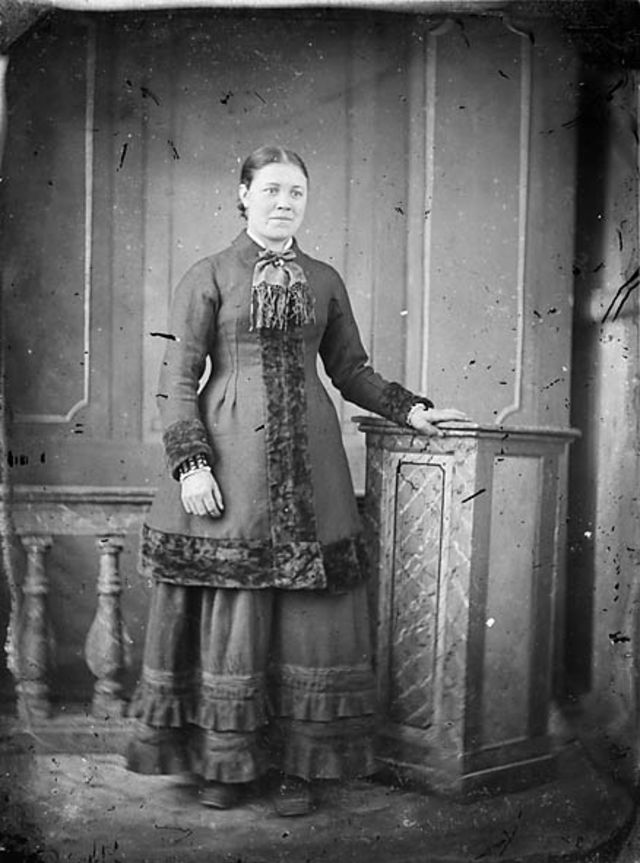
40 Amazing Studio Portraits of Welsh Women in Their Dresses From the 1870s

John Thomas (1838-1905) came originally from Cellan, Ceredigion and established a studio known as ‘The Cambrian Gallery’ in Liverpool (various addresses) with a branch in Regent Street, Llangollen. He is famous for the large number of portraits of famous Welsh men, especially non-conformist ministers, which he took on his travels in Wales and he also recorded many buildings but among the surviving 3,000 glass plate negatives of superb quality, there are about 100 of women in Welsh costume. Many of these are labelled with the name of the subjects and the place they were taken. They were not dated but the earliest is pre 1865 and remainder are thought to be 1875 – 1885.


He started as a traveling photographer in 1863 and charged 6d for each portrait. Many of the younger women were photographed outside (providing natural light) with a crudely painted backdrop and mud floor. They all wore a combination of three sets of costume which they presumably borrowed from the photographer. The costumes consist of bright patterned bedgowns with large collars of the north Wales type, either mottled or spotted; an apron of bold check or horizontal stripes and a skirt of vertical stripes either light on dark or dark on light. They didn’t wear a shawl: the neckerchief seems to differ from one subject to the next and the stockings are different (i.e. these belonged to the subjects). Most, but not all wore a frilled cap under a Welsh Hat.

The older women are shown wearing different costumes, suggesting that there were their own. A few of the older women appear to be wearing a tight-fitting, low-cut, short-sleeved top in the style of a bedgown, but the lower part and back are not visible, and the front is often completely covered by a shawl. Most are wearing a fine blouse, shawl, long striped skirt and check apron. Several appear to be wearing separate sleeves on their lower arms.

Some of the portraits are of his family, presumably from Cellan.


FOLLOW US:
FacebookTumblrPinterestInstagram

CONTACT US


Browse by Decades

Popular Posts

Advertisement

09 10