Bring back some good or bad memories


ADVERTISEMENT
Showing posts with label Scotland. Show all posts

April 21, 2026

Vintage Snapshots of People Posing on the Crocodile Rock in Millport, Scotland

Crocodile Rock is a quirky, beloved landmark on the beach in Millport, the main town on the Isle of Great Cumbrae (often just called Cumbrae) in North Ayrshire, Scotland. It’s a natural rock formation on the shoreline that has been painted to resemble a crocodile, complete with a toothy grin and eyes, and has been delighting visitors for over a century.

The stone itself is millions of years old, formed from the local geology along the Firth of Clyde. What makes it special is the way the craggy outcrop naturally suggests the shape of a reptile’s head and body when viewed from certain angles.

The crocodile “artwork” dates back to around 1913–1914. Local man Robert Brown (sometimes described as an artist or retired architect) is credited with the original paint job. The popular story goes that Brown was walking home after a lunchtime visit to the pub (with a few drinks involved) when he spotted the rock formation and imagined it looked like a crocodile. He returned with paint and a brush to bring the idea to life, adding the distinctive features that turned it into the “Crocodile Rock.”

In 1913, the Millport Town Council publicly thanked Robert Brown for his work, marking the earliest recorded mention. Some accounts note it was already established by 1914.

The rock is regularly repainted every few years by locals or volunteers, always staying true to the original playful design. This community upkeep has helped it remain vibrant and iconic. In 2013, Millport celebrated its centenary with a party.

Crocodile Rock sits on Millport Beach (near the Dancing Midge Café) and is a favorite spot for photos, especially with children who love climbing on it (though it can be slippery). It’s one of several painted rocks on the island (including Lion Rock and Indian Rock), but by far the most famous.


January 5, 2026

J.K. Rowling Writing Harry Potter at a Café in Scotland, 1998

In this photo from 1998, J.K. Rowling is seen writing in an Edinburgh café, where she famously drafted much of Harry Potter and the Philosopher’s Stone. She famously wrote the first drafts of the series by hand rather than on a computer.


In the 1990s, Rowling frequently wrote in local cafes because it was easier to get her infant daughter to sleep while walking, and once asleep, the cafes provided a warm place to work that was cheaper than heating her apartment. While she wrote in several places, The Elephant House and Nicolson’s Cafe (which was owned by her brother-in-law) are the most famous.

At the time, Rowling was navigating life as a single mother on welfare, relying on sheer determination, a pen, and her imagination to bring the world of Hogwarts to life. She meticulously planned the series by hand, often using napkins or sticky notes in lieu of proper notebooks, pouring hours of creativity into a story that would soon capture the hearts of millions.

Despite facing repeated rejection from twelve different publishers, Rowling persevered. When Bloomsbury finally accepted her manuscript, it marked the beginning of a literary phenomenon. From those humble café beginnings, the Harry Potter series would grow into one of the most successful and influential franchises in modern literary history, a testament to persistence, vision, and unyielding dedication.

July 7, 2025

35 Amazing Photos of the Old Country Houses of the Old Glasgow Gentry in 1878

Step back in time to the year 1878, when the outskirts of Glasgow were still dotted with the grand country estates of the city’s wealthy merchant class — the Old Glasgow Gentry. These stately homes, set amid sweeping lawns, walled gardens, and ancient trees, stood as symbols of prosperity, taste, and architectural ambition in the 18th and 19th centuries.

These amazing photos, captured by Scottish photographer Thomas Annan (1829–1887), offer a rare visual archive of these once-celebrated houses — many now vanished, repurposed, or hidden beneath modern developments.

Tollcross, Glasgow, Scotland, 1878

Aikenhead, Glasgow, Scotland, 1878

Auldhouse, Glasgow, Scotland, 1878

Bardowie, Glasgow, Scotland, 1878

Barlanark, Glasgow, Scotland, 1878

March 30, 2025

Eric Clapton of Cream Pictured in Scotland During a Photoshoot for the Cover of the Album “Disraeli Gears” (1967)

In 1967, photographer Robert Whitaker captured a series of images of Eric Clapton and his band, Cream, during a trip through Scotland. These photographs were intended for the cover of Cream’s forthcoming album, Disraeli Gears.

Whitaker, who was living at The Pheasantry in Chelsea with Australian artist Martin Sharp, collaborated with Sharp on the album’s psychedelic cover art. Sharp incorporated Whitaker’s photographs into a vibrant collage that became iconic.

“Cream were going to do a tour of the north of England and Scotland,” said Whitaker. “I just jumped in a car. Various things presented themselves to us on our journey around Scotland, none of which I could have recreated in a studio. I was very lucky that Martin had discovered day-glo paint. I had all the pictures, which I knew were for some form of publicity. I made a whole series of colour prints and Martin just started cutting them up - much to my annoyance, because they weren't cheap to do. He then laid them out on a 12-inch square as a piece of finished artwork and then painted all over it.”

The Scottish photoshoot was marked by memorable experiences, including an instance where the band, while driving through the scenic landscape—most of them under the influence of LSD—encountered a bagpiper in full Highland attire playing by the roadside, which they described as a “magic moment.”

“It was a beautiful day to be driving through the Scottish scenery,” drummer Ginger Baker recalled. “Most of us were on acid, then someone remarked that all we needed was to encounter a piper and, as we rounded a bend, there in front of us was a guy in full Highland rig playing the bagpipes. It was a magic moment and the atmosphere continued to feel very special.”

Robert Whitaker (1939–2011) is renowned for his work with several prominent musicians of the 1960s, including The Beatles and Cream. His collaboration with Cream during the Scotland photoshoot contributed significantly to the visual legacy of the band and the era.


November 1, 2024

Benjamin Baker’s Human Cantilever Model of the Forth Bridge

The Forth Bridge is a cantilever railway bridge across the Firth of Forth in the east of Scotland, 9 miles west of central Edinburgh. Completed in 1890, it is considered as a symbol of Scotland (having been voted Scotland’s greatest man-made wonder in 2016), and is a UNESCO World Heritage Site. It was designed by English engineers Sir John Fowler and Sir Benjamin Baker.

After the collapse of an earlier Tay Bridge in 1879 (with the loss of an estimated 75 lives), Benjamin Baker and Sir John Fowler submitted a design to the Forth Bridge Company on the cantilever and central girder principle. Fowler and Baker were well-established engineers whose long list of achievements included a substantial role in constructing the London underground rail network.

For many years an exponent of the use of cantilevers as the most effective means of constructing long-span bridges, Baker devised the human cantilever to explain the principle at a lecture to the Royal Institution in London in 1887.

To demonstrate the stability of the cantilever, Benjamin Baker designed a demonstration with three men, two chairs, two piles of bricks, and four broomsticks. With their outstretched arms, the people on the left and right serve to transfer the load of the suspended person (center) to the anchors (pile of bricks on left and right). As he explained, “when a load is put on the central girder by a person sitting on it, the men’s arms and the anchorage ropes come into tension, and the men’s bodies from the shoulders downwards and the sticks come into compression.”

Hanging by a Thread

Forth Bridge’s engineers created one of the first living models of the bridge in 1885. A closer look at the photograph makes a question if the model was successful, both in explaining the cantilever and transmitting confidence.

‘Forth Bridge Construction’, possibly Evelyn George Carey, 1885.

The building in the background is not set on the ground; it is supported by construction materials, creating a feeling of uncertainty and improvisation. The composition is off-centre, and the window and the construction site are distracting. The wrinkled drawing on the wall looks makeshift. There are construction materials scattered around, making it difficult to see what is holding the wooden sticks. Wooden boards under the left chair try to compensate the unevenness of the ground, aggravating the sense of precariousness.

The feeling of instability is even more pronounced if we look at the young man sitting in the middle. His face looks worried, and his awkward body language – a stiff pose, hands rigidly placed on his lap – suggests uneasiness. Looking even closer, we notice that his seat is tilted and secured by sloppy, thin strings. They seem to be on the verge of breaking. He is, literally, hanging by a thread. One cannot help but wonder if he fell off the model in the end.

Stronger Ropes, Stronger Message

Two years later, at a talk held before the Royal Institution, Benjamin Baker showed a photograph depicting a notably different setting.

‘Living Model Illustrating Principle of the Forth Bridge’, published in ‘The Forth Bridge’, W. Westhofen, 1890.

The perfectly centered building is sturdier and firmly set on an even, cleaner ground than in the first version. There are no distracting elements. The drawing on the wall looks more polished. The chairs are levelled and the brick structure holding the model on each side is clear. The two men sitting on the chairs are the same as in the previous image. Their faces show the same expression. But their bodies are now much more confident and upright, their limbs straight and symmetrical.

Even the ropes are thicker, enhancing the strength of the structure. The ropes holding the seat are shorter and were put closer to the ends of the sticks, positioning the middle seat higher. The analogy with the cantilever principle applied to the bridge became more pronounced.

Looking Confident to Create Confidence

The most striking difference is, however, the man sitting in the middle. The insecure looking, puny boy has disappeared. In his place we find a man with a knowledgeable-looking countenance, dressed in better clothes, his clock chain partially showing. The man’s hands are firmly placed on the wooden board. His legs are crossed, revealing how relaxed and assured he is. There is even another image of this same model where he crosses his arms with confidence, looking almost defiantly at the camera. He is telling us that he will not fall.

‘Demonstration of the Cantilever Principle of the Forth Bridge’, 1887.

The 1887 model is clearly much more effective in showing that the cantilever principle applied to bridges is stable and safe. More than explaining an engineering principle, it has a reassuring agency of its own. It shows how a model can be both objectively accurate and subjectively persuasive.

The well-dressed man of this second model is Kaichi Watanabe, a Japanese engineer who studied in Glasgow and who worked at the Forth Bridge construction.

The Forth Bridge under construction.

The Forth Bridge under construction.

(via V&A blog)

July 17, 2023

45 Amazing Photos Capture Street Scenes in Edinburgh in the 1970s

Edinburgh is the capital city of Scotland and one of its 32 council areas. The city was historically part of the county of Midlothian (formally called the “county of Edinburgh” or Edinburghshire until 1947), but was administered separately from the surrounding county from 1482. It is located in Lothian on the southern shore of the Firth of Forth. Edinburgh is Scotland’s second-most populous city, after Glasgow, and the seventh-most populous city in the United Kingdom.

The city is home to national cultural institutions such as the National Museum of Scotland, the National Library of Scotland and the Scottish National Gallery. The University of Edinburgh, founded in 1582 and now one of three in the city, is considered one of the best research institutions in the world. The city is also known for the Edinburgh International Festival and the Fringe, the latter being the world’s largest annual international arts festival.

Historic sites in Edinburgh include Edinburgh Castle, the Palace of Holyroodhouse, the churches of St. Giles, Greyfriars and the Canongate, and the extensive Georgian New Town built in the 18th/19th centuries.

These amazing photos from Podkin were taken by Hugh McCreadie that show street scenes of Edinburgh in the 1970s.

Rose Street, Edinburgh, circa early 1970s

City Observatory, Edinburgh, 1970

Nuffield Transplantation Surgery Unit, Western General Hospital, Edinburgh, 1970

Paddling pool, Portobello, Edinburgh, 1970

Parrots, Edinburgh Zoo, 1970

February 24, 2023

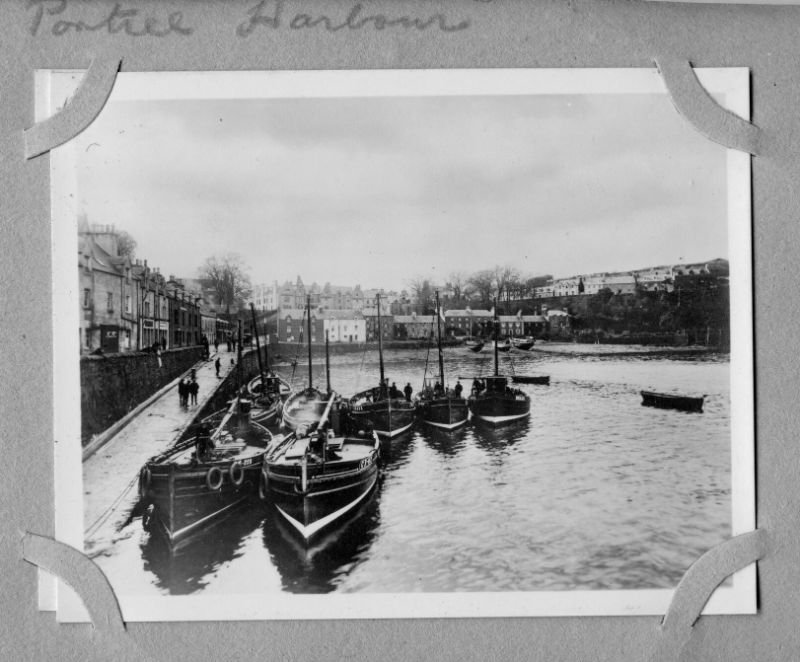
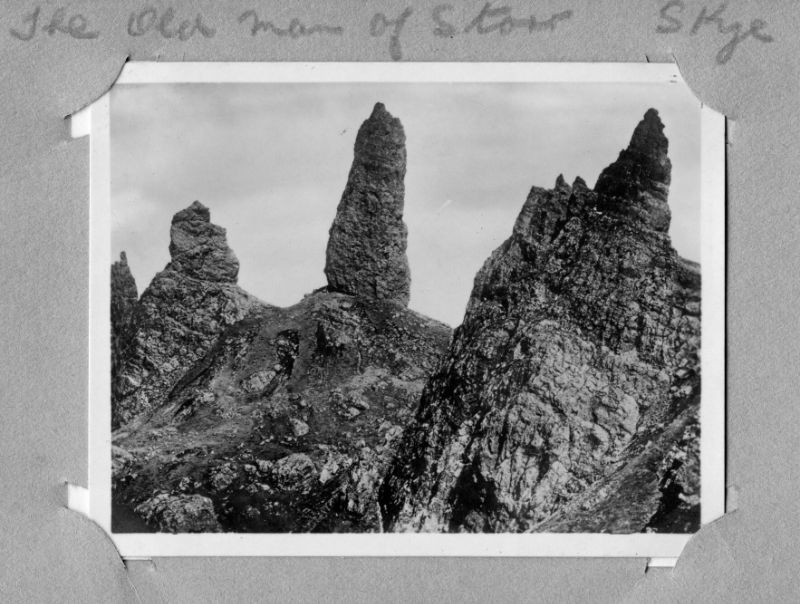
Isle of Skye in 1937 Through Vintage Found Photos

The Isle of Skye, or simply Skye, is the largest and northernmost of the major islands in the Inner Hebrides of Scotland. The island’s peninsulas radiate from a mountainous hub dominated by the Cuillin, the rocky slopes of which provide some of the most dramatic mountain scenery in the country. Although Sgitheanach has been suggested to describe a winged shape, no definitive agreement exists as to the name’s origins.

The main industries are tourism, agriculture, fishing, and forestry. Skye is part of the Highland Council local government area. The island's largest settlement is Portree, which is also its capital, known for its picturesque harbor. Links to various nearby islands by ferry are available, and since 1995, to the mainland by a road bridge. The climate is mild, wet, and windy. The abundant wildlife includes the golden eagle, red deer, and Atlantic salmon. The local flora is dominated by heather moor, and nationally important invertebrate populations live on the surrounding sea bed.

Skye has provided the locations for various novels and feature films, and is celebrated in poetry and song. These vintage photos were found by Tommy Napier that captured scenes of the Isle of Skye in 1937.


January 8, 2023

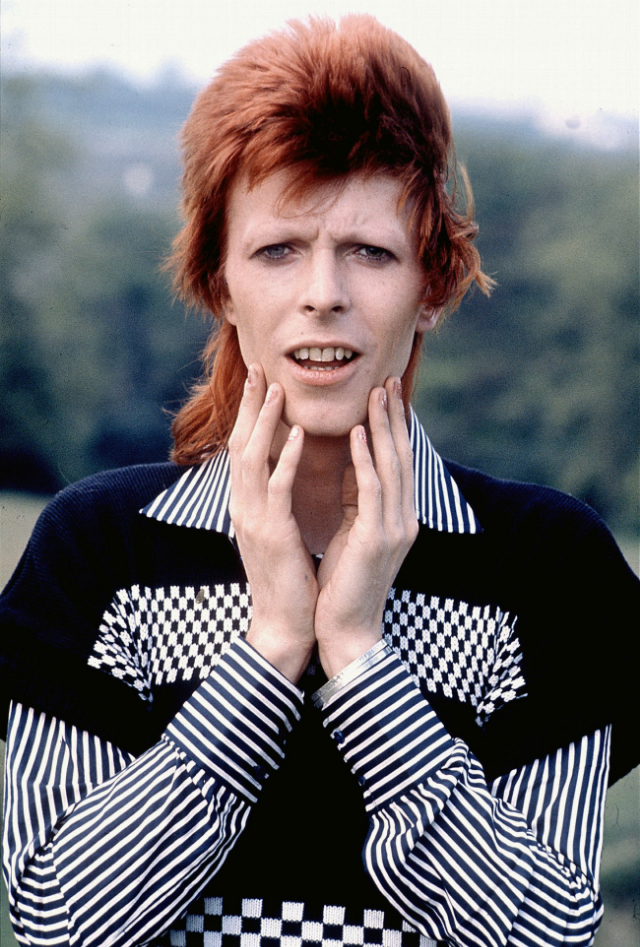
David Bowie Photographed by Roger Bamber in 1973

David Bowie photographed by Roger Bamber in 1973. This was a field in Scotland during the tour – the bus stopped and Bowie just mucked about for Roger while they waited for the “back on the bus” call.

Roger said: “It was a really fun time. That sort of stuff backstage never got used before but it was a great time to be a fly on the wall. Most of those pictures no one has ever seen. Most I hadn’t seen since I took them. It was incredible.”

Even when some people did not yet know what to think of the glittering and leotarded Ziggy Stardust, Roger was convinced.

“I though he was brilliant. He was a very, very affable man. I went on a few tours with him. The whole thing is still in my memory and in these pictures. I got on very well with Mick Ronson the guitarist. At the Lewisham gig which must have been one of my earliest, I did all that stuff backstage.

“After the show had finished and I had finished my work I went to get my car. In those days I had a Lotus Cortina which I went around in, it was very sporty. It was a cream color, no Ivory. And I used it that day. I went out after the show and there was no car. It had been stolen or pinched or something.

“I went back to the theatre – this was in the days well before mobile phones. I went back in and upstairs and found Mick in the dressing room. He said ‘What you doing back here?’ And I said ‘someone’s stolen my car.’ He said they were just wrapping up and so we went out and looked for my car in the tour bus. We went touring round Lewisham looking for my car with Mick Ronson and David Bowie in the top of the tour bus. We never did find my car.

“But they were such great fun to hang around with, such an affable crowd. I photographed David Bowie quite a few times on different tours and in his different guise and he was always such an easy person to get on with. I think that was the thing, we just got on.”


October 15, 2022

Scottish Essay: 29 Beautiful Vintage Black and White Photos Captured Life in Scotland in 1947

In 1947, LIFE profiled Scotland's landscape, economy and traditions, touting its most celebrated exports—among them whiskey, golf, tweed, herring, ships and bagpipes.

Hans Wild’s photos for LIFE, and the hundreds of outtakes never printed, capture the intricate detail of Scottish culture down to the shearing of a wooly sheep and the fingering on a traditional bagpipe melody. Pride, in both national heritage and familial lineage, courses through the images.

Competitors for the world championship danced the Reel of Tulloch, Scotland, 1947.

Competitors for the world championship danced the Reel of Tulloch, Scotland, 1947.

Ancient Castle Rock and its fortifications (upper right) have looked down on Edinburgh for centuries. The royal residence of Scottish kings beginning in 1004, it was also the scene of witch burnings. The “Royal Mile,” a mile of streets connecting castle and Holyrood Palace, began beyond the castle at the extreme right. Essayist Thomas De Quincey was buried in the cemetery of St. Cuthbert’s Church (lower left).

Eilean Donan Castle guarded Loch Duich in the western Highlands near Dornie. Under the low cloud (right) lay the Isle of Skye, to which Prince Charlie once fled, disguised as the serving maid of Scottish Heroine Flora Macdonald. The castle was wrecked by British gunfire in 1719 when it was a headquarters for Spanish and Scottish leaders in one of the endless revolts against the English crown.

The key to the Highlands was once this old bridge over the Forth Stirling. For centuries it was the only escape route for clansmen fleeing north.

July 31, 2022

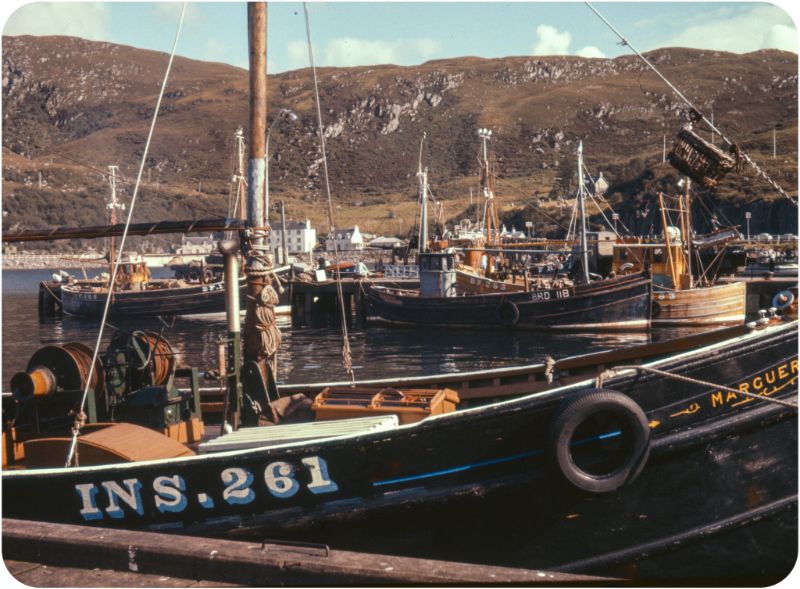
45 Wonderful Color Photos of Scotland During the 1960s

The Sixties may have been swinging in places like London, Paris and San Francisco - but in Scotland, there wasn’t much to smile about.

Scotland in the 1960s

High unemployment, shipyard closures and the troubles of traditional industries all contributed to a mood that the country was sinking, and little could be done to stop the slow death.

However, from this gloom a new political spirit suddenly emerged - the whirlwind of Scottish nationalism. At a stroke, Scottish independence was on the political agenda, and there seemed to be little anyone could do to stop it.

It was a remarkable renaissance. At the start of the Sixties, the Scottish National Party (SNP) had been so small and weak that one of their own leaders quipped that if all the senior members had been together in a small plane and it had crashed, then the party would have been wiped out forever.

However, hard work by the SNP’s activists, particularly in West Lothian where they established a stronghold, started to restore the party’s fortunes.

These wonderful color photos from MartinJSnelling that show what Scotland looked like during the 1960s.

Ballater Station, Scotland

Black Watch Monument, Aberfeldy, Scotland

Boats at Mallaig, Scotland

Boats Upon the Water, Mallaig, Scotland

Cannons at Edinburgh Castle, Scotland

March 25, 2022

The Extraordinary of James Craig Annan Photography From the Late 19th and Early 20th Centuries

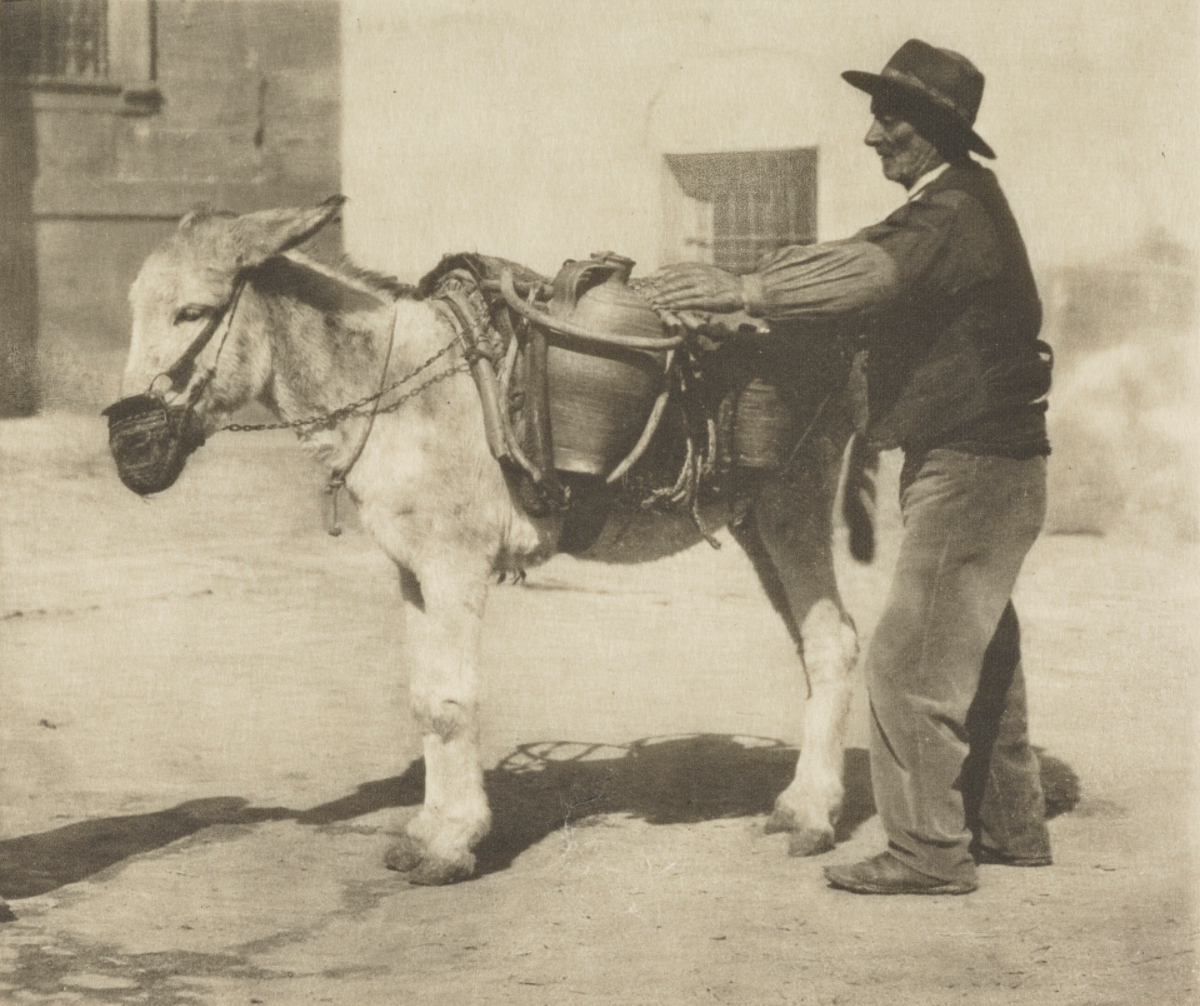
James Craig Annan (1864–1946) was a pioneering Scottish-born photographer and Honorary Fellow of the Royal Photographic Society.

The son of the early documentary photographer Thomas Annan (who published Photographs of the Old Closes and Streets of Glasgow in 1878), J. Craig Annan apprenticed in his father’s photographic printing business. The firm specialized in the carbon process, and after James learned photogravure directly from its Austrian inventor in 1883, the firm became expert in that process as well.

When his father died in 1887, Annan took over and continued to successfully run the family business, but about 1890 he grew restless and began to follow his own, artistic interests in the medium. He was particularly drawn to photography’s ability to render mood and atmosphere, as in this photograph. In it, Annan has employed his expertise in photogravure to subdue the edges of the figures in the foreground and unify the tonal character of the entire image in order to effect a stronger and more unified composition. The dynamic disintegration of form verging on the abstract is reminiscent of the paintings of James MacNeill Whistler-one of Annan’s favorite artists.


FOLLOW US:
FacebookTumblrPinterestInstagram

CONTACT US


Browse by Decades

Popular Posts

Advertisement

09 10