Bring back some good or bad memories


ADVERTISEMENT
Showing posts with label Ukraine. Show all posts

November 18, 2026

Historical Portraits of Anastasiia Tkachenko Dressed in Traditional Ukrainian Attire, 1939

On August 21, 1939, fifteen-year-old Anastasiia Tkachenko stood for a photograph in Merefa, Ukraine, dressed in traditional Ukrainian clothing. She looks composed. Almost serene. But the girl in these photographs had already survived something that had destroyed much of her family.


Six years before these photos were taken, Anastasiia survived the Holodomor (1932–1933), the man-made famine in Soviet Ukraine caused by Stalin-era forced collectivization and grain seizure policies. During the famine, she lost her father, a younger brother, and two sisters to starvation. Anastasiia and her surviving brother, Semen, lived because their mother secured a job at a local orphanage in Merefa, allowing her to keep her remaining children with her and provide them with shelter and food rations.

The famine hit Merefa severely; records from the Holodomor memorial project document roughly 1,200 victims and a mass burial site near the town’s railway station.

The portraits were captured just eleven days before the outbreak of World War II in Europe (September 1, 1939), capturing a fleeting moment of peace before Ukraine was plunged into further devastation. Taken during a period of intense Soviet repression and Russification, her traditional Slobozhanshchyna regional attire acts as a quiet statement of Ukrainian identity. She wears an embroidered shirt (vyshyvanka), a woven wrap skirt (plakhta), layered coral/beaded necklaces (namysto), and a traditional floral wreath (vinok) with flowing ribbons worn by unmarried young women.

Anastasiia survived the war and lived to old age, passing away on April 26, 2018, at the age of 94. The photographs were preserved in her grandson’s family archive before being shared publicly to honor Holodomor survivors.

April 12, 2026

The Heroes of Chernobyl, Who Saved Europe From Nuclear Fallout

Ten days after the 1986 Chernobyl disaster, officials discovered a new, potentially greater threat: a massive pool of water had collected beneath the melting core of Reactor 4. If the molten fuel (corium) reached this water, it could have triggered a massive steam explosion. Experts feared this second blast would have been powerful enough to destroy the remaining three reactors and render much of Europe uninhabitable.

The men seen suiting up in the photo were not professional divers, but power plant employees who knew the facility's layout: Alexei Ananenko, a mechanical engineer who knew where the release valves were located; Valeri Bespalov, a senior engineer who assisted in the search; Boris Baranov, the shift supervisor whose job was to provide light for the others.

Alexei Ananenko (second from left), Valeri Bezpalov (center), and Boris Baranov (far right) preparing in protective equipment during the Chernobyl nuclear accident of 1986 in Pripyat, Ukraine.

When asked, Ananenko’s response was simple: “How could I refuse, when I was the only person on shift who knew where the valves were located?”

Equipped with basic respirators, wetsuits, and flashlights, they waded through knee-to-waist-high radioactive water in the dark to manually drain the chambers. Despite their lights failing during the mission, they successfully located the valves by touch, following a main pipe until they reached the sluice gates.

For years, popular legend claimed that all three men died of radiation poisoning shortly after the mission. However, reality was much different. All three men survived the immediate aftermath of the mission. Boris Baranov lived until 2005, when he died of a heart attack at age 65. Alexei Ananenko and Valeri Bespalov were still alive as of 2018 and were personally awarded the “Order for Courage” by the Ukrainian president. 

February 15, 2024

In 1995, Martin Parr Visited Yalta, Crimea, to Capture a Post-Soviet Beach Holiday

In the summer of 1995 the British photographer Martin Parr, traveled to Yalta, he had for himself called the “Russian Riviera.” And in this series, you will see all the variety, which could offer the tourist Yalta almost three decades ago – the Crimean beaches, noise waterfront girls topless, giving Brezhnev, local bandits, pensions and sedate family vacation.

In Parr’s images we can almost smell the salt air, feel the warmth of the sun, and can keenly recall that particular feeling of a beachy endless summer. The photographs invoke nostalgia for sunny days full of hope that Ukrainians are holding onto dearly at the moment.

Martin Parr was born in Epsom, Surrey, UK, in 1952. When he was a boy, his budding interest in the medium of photography was encouraged by his grandfather George Parr, himself a keen amateur photographer. Parr studied photography at Manchester Polytechnic, from 1970 to 1973. Since that time, he has worked on numerous photographic projects. He has developed an international reputation for his innovative imagery, his oblique approach to social documentary, and his input to photographic culture within the UK and abroad.

In 1994 Martin Parr became a full member of Magnum Photographic Cooperative. He developed an interest in filmmaking, and has started to use his photography within different genres, such as fashion and advertising. Parr holds the Guiness World Record for having the largest simultaneous photography exhibition. He has published over 120 books of his own work and edited another 30.


September 7, 2023

‘Flying Saucer’ Gas Stations in Kyiv From the Late 1970s and Early 1980s

In the 1970s even banal gas stations in the USSR turned into real masterpieces, without losing their functionality.

In 1977, at least two such gas stations were built in Kyiv. Despite their unusual appearance, they were quite comfortable. It didn’t matter which side of the car the fuel filler neck was on. And the drivers only had to park the car not very far from the desired hose.

After the driver paid off with the operator, a gun with a hose was lowered from the “flying saucer”. So there was no need to jump up after him.

The idea of such gas stations was not invented in the Soviet Union. It was borrowed from the Japanese, where such speakers were popular at the time. That is why these gas stations were called “Japanese”.

Unfortunately, this technology for refueling a car has not caught on. Apparently there were more disadvantages than advantages.


August 6, 2023

50 Fascinating Photos Capture Everyday Life in Ukraine in 1991

A referendum on the Act of Declaration of Independence was held in Ukraine on 1 December 1991. An overwhelming majority of 92.3% of voters approved the declaration of independence made by the Verkhovna Rada on 24 August 1991.

On the same day, a presidential election took place. From 2 December 1991 onwards, Ukraine was globally recognized by other countries as an independent state. Also on 2 December, the President of the Russian SFSR Boris Yeltsin recognized Ukraine as independent. In a telegram of congratulations Soviet President Mikhail Gorbachev sent to Kravchuk soon after the referendum, Gorbachev included his hopes for close Ukrainian cooperation and understanding in “the formation of a union of sovereign states”.

Ukraine was the second-most powerful republic in the Soviet Union both economically and politically (behind Russia), and its secession ended any realistic chance of Gorbachev keeping the USSR together. These fascinating photos were taken by American photographer Peter Turnley that show everyday life of Ukraine in 1991.

Kiev, Ukraine, 1990

A man holds a sign above the crowd at a Ukrainian pro-independence rally, Ukraine, 1991

A woman holds a sign above the crowd at a Ukrainian pro-independence rally, 1991

A worker operates a press at the Lviv Bus Plant (Lvivsky Avtobusny Zavod, or LAZ), Lviv, Ukraine, 1991

A worker operates a press at the Lviv Bus Plant (Lvivsky Avtobusny Zavod, or LAZ), Ukraine, 1991

March 16, 2022

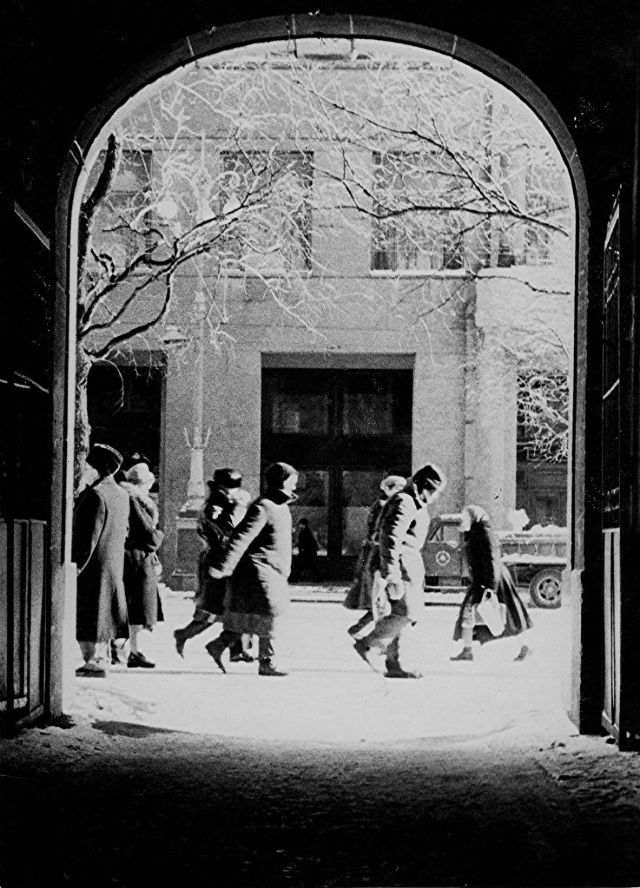
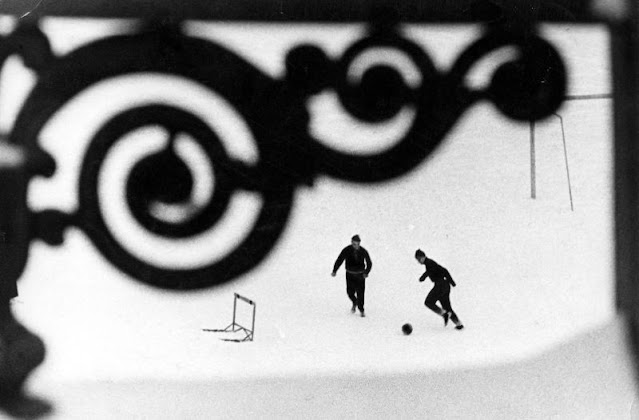
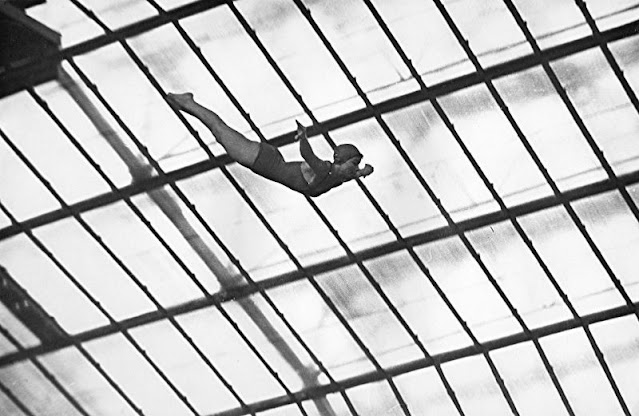
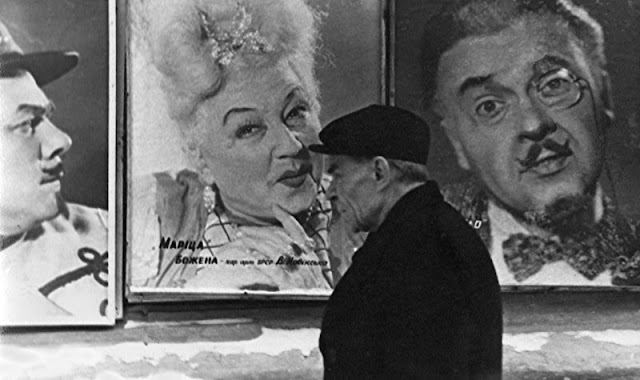
30 Black and White Photos of Kiev in the 1960s and ’70s

Kyiv or Kiev is the capital and most populous city of Ukraine. It is in north-central Ukraine along the Dnieper River. It is the seventh-most populous city in Europe.

Kiev is an important industrial, scientific, educational, and cultural center in Eastern Europe. It is home to many high-tech industries, higher education institutions, and historical landmarks. The city has an extensive system of public transport and infrastructure, including the Kyiv Metro.

In 1918, after the Ukrainian People’s Republic declared independence from Soviet Russia, Kiev became its capital. From 1921 onwards, Kiev was a city of Soviet Ukraine, which was proclaimed by the Red Army, and, from 1934, Kiev was its capital. The city was almost completely ruined during World War II but quickly recovered in the postwar years, remaining the Soviet Union’s third-largest city.

Following the collapse of the Soviet Union and Ukrainian independence in 1991, Kiev remained Ukraine’s capital and experienced a steady influx of ethnic Ukrainian migrants from other regions of the country. During the country’s transformation to a market economy and electoral democracy, Kiev has continued to be Ukraine’s largest and wealthiest city. Its armament-dependent industrial output fell after the Soviet collapse, adversely affecting science and technology, but new sectors of the economy such as services and finance facilitated Kiev’s growth in salaries and investment, as well as providing continuous funding for the development of housing and urban infrastructure.

These fascinating black and white photos were taken by Emanuel Antsis that show street scenes of Kiev in the 1960s and 1970s.

Cold day in January, Kiev, 1962

Football in the winter, Kiev, 1962

The jump, Kiev, 1963

Theatre and a man of reality, Kiev, 1963

Aunt Valia, Kiev, 1965

January 15, 2022

45 Fascinating Photos Capture Everyday Life of Khrustalnyi in the 1980s

Khrustalnyi or Krasnyi Luch is a city in the Luhansk Oblast (province) of south-eastern Ukraine, currently controlled by the Luhansk People’s Republic. It is incorporated as a city of oblast significance.

The town was founded as Kryndachivka at the last years of the 19th century. It became one of the most important coal mining centres of the Donets Basin. In December 1920, it was renamed as Krasnyi Luch (lit. “red beam”). City since 1926.

Under the Ukrainian decommunization laws the city was renamed on 12 May 2016 by the Ukrainian parliament to Khrustalny, to no practical effect, since they don't control the area.

These fascinating photos were taken by Juri Nesterov that documented everyday life of Khrustalnyi in the 1980s.


April 26, 2020

20 Haunting Images by Russian Photographer Showing the True Scale of the Chernobyl Nuclear Disaster

Igor Kostin (1936–2015) was one of the five photographers in the world to take pictures of the Chernobyl nuclear disaster near Pripyat in Ukraine, on April 26, 1986. He was working for Novosti Press Agency (APN) as a photographer in Kiev, Ukraine, when he represented Novosti to cover the nuclear accident in Chernobyl. Kostin’s aerial view of the Chernobyl nuclear power plant was widely published around the world, showing the extent of the devastation, and triggering fear throughout the world of radioactivity contamination the accident caused, when the Soviet media was working to censor information regarding the accident, releasing limited information regarding the accident on 28 April 1986, until the Soviet Union’s collapse in 1991.

Within hours of the explosion on April 26, 1986, comrade Kostin knew he witnessed an event that would be engraved in history books. He was right. Reactor #4 at the V. I. Lenin Nuclear Power Plant near Chernobyl exploded, releasing 400 times more radioactive matter than the bombing of Hiroshima. He was a skilled photographer and dedicated to his work. His professionalism and unbreakable will have made him immortal. At the very least, his photography will remain for centuries to come.

On the late evening of 26 April 1986 a helicopter pilot whom he worked closely with for his journalistic activities alerted him that there had been a fire at the nuclear power plant in Chernobyl. The fire had been extinguished by the time they arrived at Chernobyl via helicopter, and witnessed a war-like scramble of military vehicles and power plant personnel down at the scene of the nuclear power plant. He also experienced an odd feeling combined with high temperature and toxic smog, that was unusual for an accident scene. The motor of his cameras began to exhibit symptoms of radioactive-caused degradation after around 20 shots. The helicopter returned to Kiev after the cameras’ failure.

Kostin managed to develop the films, only to realize that all but one was unsalvageable - most of the films were affected by the high level of radiation, that caused the photographs to appear entirely black, resembling a film that was exposed to light pre-maturely. Kostin’s only photograph of the nuclear power plant was sent to Novosti in Moscow, but he did not receive a permit to publish it until May 5, 1986. His visit to Chernobyl was illegal and not sanctioned by the authorities. Pravda published limited information about the accident on April 29, 1986, but did not publish Kostin’s photographs.

This is the first photograph ever taken of the Chernobyl nuclear disaster, and the only photo that survives from the morning of the accident. Igor Kostin was a photographer from Kiev who became world famous for his images of the the clean-up operation. The image is very noisy because the radiation was destroying the film in his camera. Of all the shots he took on that flight, this is the only one that wasn’t ruined.

The accident was interpreted as a major catastrophe by the global news media, even when the Ukrainian and Soviet authorities were trying to suppress any news regarding the accident. Kostin later received permits as one of the representative of the five accredited Soviet media to cover the accident site and the Zone of Alienation. On May 5, 1986 he ventured into the rubbles of the Chernobyl nuclear plant site and Reactor 4 along with the liquidators.

It was then that he covered the mass exodus of inhabitants of Pripyat and 30 km zone surrounding the nuclear power plant, before the 1 May Labour Day celebration. Dozens had died from the accident, mostly workers at the nuclear power plant.

Kostin died in Kiev in 2015 at the age of 78 in a car accident.

Liquidators clean the roof of the No. 3 reactor. At first, workers tried clearing the radioactive debris from the roof using West German, Japanese, and Russian robots, but the machines could not cope with the extreme radiation levels so authorities decided to use humans. In some areas, workers could not stay any longer than 40 seconds before the radiation they received reached the maximum authorized dose a human being should receive in his entire life.

The majority of the liquidators were reservists ages 35 to 40 who were called up to assist with the cleanup operations or those currently in military service in chemical-protection units. The army did not have adequate uniforms adapted for use in radioactive conditions, so those enlisted to carry out work on the roof and in other highly toxic zones were obliged to cobble together their own clothing, made from lead sheets and measuring two to four millimeters thick. The sheets were cut to size to make aprons to be worn under cotton work wear, and were designed to cover the body in front and behind, especially to protect the spine and bone marrow.

Liquidators clear radioactive debris from the roof of the No. 4 reactor, throwing it to the ground where it will later be covered by the sarcophagus. These “biological robots” have only seconds to work—time to place themselves by a pile of debris, lift a shovel load, and throw it among the ruins of reactor No. 4.

A team of human liquidators prepares to clear radioactive debris off the roof of the No. 4 reactor.

A liquidator, outfitted with handmade lead shielding on his head, works to clean the roof of reactor No. 3.

February 2, 2020

Snapshots of the Lviv Schoolgirl Who Became a Meme

The photographs were taken in Lviv, Ukraine in on May 1, 1968. The images depict a Lviv schoolgirl, whom her parent brought to the May Day demonstration. The girl’s face shows that she is not at all happy with this fact.


Around the 2010s, photography spread all over the internet, and the girl – for her stern appearance – became the heroine of numerous jokes and memes.

But who was she? According to Flashbak, many note its similarity with Vera Serdyuchka, former Prime Minister Arseniy Yatsenyuk, and Nadezhda Savchenko and even ex-parliamentarian Irina Fariion.


These terrific snapshots were taken by Pavliuk Ilya, and someone must know who she was.

(Photos © Lviv Museuem of History)

September 8, 2019

35 Fascinating Photos Document Everyday Life of Ukraine During the War of Independence

The Ukrainian War of Independence, a period of sustained warlike conflict, lasted from 1917 to 1921 and resulted in the establishment and development of a Ukrainian republic – later a part of the Soviet Union as the Ukrainian Soviet Socialist Republic of 1922–1991.

The war consisted of a series of military conflicts between different governmental, political and military forces. Belligerents included Ukrainian nationalists, anarchists, Bolsheviks, the forces of Germany and Austria-Hungary, the White Russian Volunteer Army, and Second Polish Republic forces. They struggled for control of Ukraine after the February Revolution (March 1917) in the Russian Empire. The Allied forces of Romania and France also became involved.

The struggle lasted from February 1917 to November 1921 and resulted in the division of Ukraine between the Bolshevik Ukrainian SSR, Poland, Romania, and Czechoslovakia. The conflict is frequently viewed within the framework of the Russian Civil War of 1917–1922, as well as the closing stage of the Eastern Front of the First World War of 1914–1918.

These fascinating photos from Southern Methodist University Digital Collections that documented everyday life of Ukraine in spring of 1918.

Kiev street scene with horses and buggies

Kiev street scenes

Kiev street scenes

Kiev. German military procession on a street

Kiev. German officers conversing with women and child in rail yard

January 29, 2018

Here's What Ukrainians Looked Like 100 Years Ago

“Only Little Russians and Parisian women know how to dress tastefully! You will not believe how charmingly the girls dress, the young men as well. It is a really national, comfortable and graceful costume, despite the huge boots. And the ducats, the beads! Headbands, flowers! And the faces! Oh, what language! Just beauty, beauty and beauty!” Wrote artist Ilya Repin.

The main elements of the Ukrainian national costume were formed back in the times of Princes and were almost unchanged since then. The location can determine the characteristics of clothing from certain regions of Ukraine, such as: Volyn, Podillya, Polissya, Pokuttya, Hutsulshchina, Boykivshchina, Lemkivshchina, Slobozhanshchina, Poltavshchina and Dnipro Ukraine. There was festive and everyday, winter and summer clothing.

Here's some interesting vintage photos that show the way people dressed around the Kyiv region 100 years ago. The photographs present mostly women’s festive clothing, which included jewelry and beads.


January 28, 2018

The Last Jew of Vinnitsa, 1942

“The Last Jew of Vinnitsa” is an iconic photograph picturing the imminent execution of a Jewish man in the vicinity of the Ukrainian town of Vinnytsia during a massacre perpetrated by Nazi SS and Ukrainian militia. The photograph was found from the personal album of an Einsatzgruppen soldier (from Nazi death squad). It is named after the handwritten inscription located at its back.

Photograph of the imminent execution of a Jewish man kneeling before a filled mass grave in Vinnytsia, Ukraine, during a massacre perpetrated by Einsatzgruppe D and Ukrainian militia in 1942.

The executioner is a member of Einsatzgruppe D, a paramilitary death squad of the Nazi SS. The picture was taken at the third and final massacre at Vinnytsia in 1942, in which Ukrainian militia participated to a greater extent. It is often wrongly dated at 1941, the year in which the two previous massacres took place, which had far higher casualties according to Wehrmacht Lieutenant Erwin Bingel. Unlike what is suggested by the inscription, not all of the Jews of Vinnytsia died in the massacres: a few survived by joining the partisans or by going into hiding. The photograph was found in a photo album belonging to a German soldier.

The three SS-led massacres at Vinnitsa took place on the 16 and 22 September 1941 and in 1942, and resulted in the virtual extinction of the town's large Jewish population. There was one eye-witness to the procedure involved. Lieutenant Erwin Bingel, a Wehrmacht officer was ordered to report to the Town Commandant of Uman, in the Ukraine, and instructed to set up guards on all railways in the area, and around the airport.

Vinnitsa during the time Bingel was there.

On the 22 September 1941 Lieutenant Bingel and his men witnessed a second massacre in Vinnitsa. This was followed by a third, also in Vinnitsa, carried out by Ukrainian militia who had been trained by the SS, and were commanded by a small group of SS officers and NCO's.

In the first two massacres, Bingel calculated first twenty-four thousand and then twenty-eight thousand Jews were killed. In the third, Ukrainian militia killings, six thousand were murdered.

Lieutenant Bingel recalled:
“In the morning at 10.15, wild shooting and terrible human cries reached our ears. At first I failed to grasp what was taking place, but when I approached the window from which I had a broad view over the whole of the town park, the following spectacle unfolded before my eyes and those of my men, who, alerted by the tumult, had meanwhile gathered in my room. 
Ukrainian militia on horseback, armed with pistols, rifles and long straight cavalry swords, were riding wildly inside and around the town park. As far as we could make out, they were driving people along before their horses- men, women and children. 
A shower of bullets was then fired at this human mass. Those not hit outright were struck down with the swords. Like some ghostly apparition, this horde of Ukrainians, let loose and commanded by SS officers, trampled savagely over human bodies, ruthlessly killing innocent children, mothers and old people whose only crime was that they had escaped the great mass murder, so as eventually to be shot or beaten to death like wild animals.”


FOLLOW US:
Facebook • Tumblr • Pinterest • Instagram

CONTACT US


Browse by Decades

Popular Posts

Advertisement

09 10