Bring back some good or bad memories


ADVERTISEMENT
Showing posts with label Spain. Show all posts

May 22, 2026

The Wedding of Republican Milicianos in 1936

The photograph titled La boda de los milicianos (The Wedding of a Militiaman and a Militiawoman), capturing the marriage of the Republican defenders Alfonsa and Ernesto, is one of the most poignant humanizing images from the opening months of the Spanish Civil War. Captured on October 18, 1936, by the renowned Spanish photojournalist Alfonso Sánchez Portela (often known simply as “Alfonso”), the image stands in sharp contrast to the typical, grim combat photography of the era.


In October 1936, the Siege of Madrid was intensifying as Francisco Franco’s Nationalist forces advanced toward the capital. Tens of thousands of ordinary citizens, men and women alike, known as milicianos, joined left-wing union and political militias to defend the Second Spanish Republic.

Amidst the existential dread and chaos of impending battle, Alfonsa and Ernesto decided to marry. Rather than traditional bridal wear, both the bride and groom are wearing their utilitarian miliciano overalls (monos), which served as the standard wartime uniform for the citizen-soldiers.

The photo captures a fleeting moment of joy, tenderness, and normalcy. The couple is surrounded by fellow militia members, celebrating a union formalized under wartime emergency civil laws rather than church sanction.

Sánchez Portela’s photograph became a powerful symbol of the Republican resistance, showcasing the youth, idealism, and shared equality of the men and women fighting side by side on the front lines.


Like many anonymous fighters captured in wartime photojournalism, the ultimate fate of Alfonsa and Ernesto after the brutal three-year war and the fall of Madrid in 1939 remains unknown to history. Today, the original gelatin silver print of this historic moment is preserved in the permanent collection of the Museo Nacional Centro de Arte Reina Sofía in Madrid.

April 20, 2026

30 Fascinating Photos Capture Everyday Life in Mallorca in the 1960s

In the 1960s, Mallorca transformed from a quiet Mediterranean island into one of Europe’s most desirable holiday destinations. With its golden beaches, dramatic mountains, and year-round sunshine, the island welcomed a rapidly growing wave of tourists, especially British and German visitors, as affordable package holidays became popular. Small fishing villages like Magaluf, Palma Nova, and Cala d’Or began to evolve into lively resorts, while traditional Mallorcan life continued in the inland villages and terraced hillsides.

This was an era of sun-soaked innocence: families lounged on less crowded beaches, sipped sangria at simple chiringuitos, and danced the night away in emerging beach clubs. Celebrities and bohemians, from Hollywood stars to artists and writers, sought refuge in places like Deià and Valldemossa, drawn by the island’s natural beauty and laid-back charm. Bikinis made their bold debut, infrastructure expanded rapidly, and a unique blend of old Mallorcan traditions and modern cosmopolitan energy defined the decade.

Though mass tourism was still in its early, more gentle phase, the 1960s marked the beginning of Mallorca’s golden era as the ultimate sun-and-sea escape of the Swinging Sixties. These fascinating photos by Kai Heinrich showcase everyday life in Mallorca as it was in 1968.


April 27, 2025

Spain in 1961 Through Wonderful Kodachrome Slides

In the early 1960s, Spain was under the authoritarian rule of General Francisco Franco, who had held power since the end of the Spanish Civil War in 1939. The country remained politically isolated from much of Europe, but it was beginning to open up economically.

With the 1959 Stabilization Plan, Spain shifted from autarky to a more liberal, market-oriented economy, leading to the so-called “Spanish Miracle”—a period of rapid industrial growth and modernization.

Despite economic progress, civil liberties were restricted, censorship was widespread, and political opposition was suppressed. Traditional Catholic values heavily influenced public life, while tourism and foreign investment started to change the cultural and social landscape.
These wonderful Kodachrome slides, taken by C. E. Hablutzel and discovered by David Pirmann, beautifully capture street scenes in Spain in 1961.

Barcelona Bullring, Spain, 1961

Barcelona fountains, Spain, 1961

Barcelona view from Columbus column, Spain, 1961

Barcelona view from Columbus column, Spain, 1961

Barcelona view from Tibidabo, Spain, 1961

March 17, 2025

Barcelona in the 1990s Through Captivating Black and White Photos

Barcelona in the 1990s was a city undergoing significant transformation, both culturally and architecturally. The 1992 Summer Olympics acted as a catalyst for modernization, rejuvenating the city’s infrastructure and coastline. Iconic projects like the construction of the Olympic Village and the revitalization of the waterfront reshaped Barcelona’s image on the global stage.

Culturally, the city was a vibrant hub, blending traditional Catalan identity with an openness to global influences. The arts scene flourished, and the city became a melting pot of creativity, with emerging music, design, and fashion movements.

The 1990s marked a period of optimism and growth, as Barcelona transformed into one of Europe’s most dynamic and influential cities, setting the stage for the 21st century. These captivating photos were taken by PointOmega, showcasing everyday life in Barcelona during the 1990s.

Fountain in Plaça de Sant Agustí Vell, Barcelona, early 1990s

Seat 127, Barcelona, 1990

La Villa Olímpica, Barcelona, 1991

Plaça de Catalunya, Barcelona, 1991

Bar Kentucky, Barcelona, 1992

December 7, 2024

20 Spanish Christmas Cards For Customers in the Early 20th Century

Early 20th-century Christmas cards reflected a blend of Victorian influences and new design trends. Many cards featured intricate illustrations with snowy landscapes, holly, angels, and religious scenes, continuing the ornate style of the late Victorian era. The use of rich colors like red, green, and gold, along with nature motifs such as mistletoe and winter imagery, was common.

The rise of Christmas postcards in the early 20th century led to simpler designs, often with more graphic elements. These postcards sometimes incorporated humor, with playful depictions of Santa Claus or animals dressed in festive attire. These cards marked a shift toward more accessible and varied designs, while still maintaining the festive and traditional spirit of the season.

Here below is a set of Christmas cards for customers from various service and professional workers in early 20th century Spain.

El Cartero felicita a V. las Pascuas de Navidad (The Postman sends Christmas Greetings)

El Barbero felicita a V. las Pascuas de Navidad (The Barber sends Christmas Greetings)

El Camarero felicita a V. las Pascuas de Navidad (The Waiter sends Christmas Greetings)

El Carbonero felicita a V. las Pascuas de Navidad (The Coal man sends Christmas Greetings)

El Carpintero les desea felices Navidades

October 28, 2024

30 Found Photos of Majorca, Spain in the 1960s

Majorca in the 1960s was a vibrant and transformative period for the island. During this decade, Majorca became a popular tourist destination, attracting visitors from across Europe, especially the UK and Germany.

The influx of tourists led to significant changes in the island’s economy and infrastructure. Hotels and resorts sprang up along the coast, particularly in areas like Magaluf and Palma, catering to the growing demand for beach vacations. This development, however, also sparked discussions about environmental conservation and the impact of mass tourism on the island’s natural beauty and traditional ways of life.

Culturally, the 1960s saw a blend of traditional Majorcan life with new influences brought by tourists. The island’s local cuisine, music, and festivals began to evolve, reflecting a mix of old and new. The period also marked a time of increased artistic activity, with many artists and writers finding inspiration in Majorca’s landscapes and vibrant culture.

Overall, the 1960s were a pivotal decade for Majorca, shaping its identity as a tourist destination while also leading to challenges related to tourism and development. Here below is a set of vintage photos from daves_archive _inactive at current time that shows Majorca in the 1960s.


October 28, 2023

Mallorca in the Mid-1970s Through Wonderful Photos

Mallorca, or Majorca, is the largest island of the Balearic Islands, which are part of Spain, and the seventh largest island in the Mediterranean Sea.

The capital of the island, Palma, is also the capital of the autonomous community of the Balearic Islands. The Balearic Islands have been an autonomous region of Spain since 1983. There are two small islands off the coast of Mallorca: Cabrera (southeast of Palma) and Dragonera (west of Palma). The anthem of Mallorca is “La Balanguera”.

Like the other Balearic Islands of Menorca, Ibiza, and Formentera, the island is an extremely popular holiday destination, particularly for tourists from the Netherlands, Germany, and the United Kingdom. The international airport, Palma de Mallorca Airport, is one of the busiest in Spain; it was used by 28 million passengers in 2017, with use increasing every year between 2012 and 2017.

These wonderful photos were taken by wilford peloquin that show street scenes of Mallorca in 1974.


July 3, 2023

35 Impressive Black and White Photos Capture Street Scenes of Madrid in the 1980s

Madrid is the capital and most populous city of Spain. It is the second-largest city in the European Union (EU), and its monocentric metropolitan area is the second-largest in the EU. The municipality covers 604.3 km2 (233.3 sq mi) geographical area.

Madrid lies on the River Manzanares in the central part of the Iberian Peninsula. Capital city of both Spain (almost without interruption since 1561) and the surrounding autonomous community of Madrid (since 1983), it is also the political, economic and cultural centre of the country. The city is situated on an elevated plain about 300 km (190 mi) from the closest seaside location. The climate of Madrid features hot summers and cool winters.

While Madrid possesses modern infrastructure, it has preserved the look and feel of many of its historic neighborhoods and streets. Its landmarks include the Plaza Mayor, the Royal Palace of Madrid; the Royal Theatre with its restored 1850 Opera House; the Buen Retiro Park, founded in 1631; the 19th-century National Library building (founded in 1712) containing some of Spain’s historical archives; many national museums, and the Golden Triangle of Art, located along the Paseo del Prado and comprising three art museums: Prado Museum, the Reina Sofía Museum, a museum of modern art, and the Thyssen-Bornemisza Museum, which complements the holdings of the other two museums. Cibeles Palace and Fountain has become one of the monument symbols of the city.

These impressive black and white photos were taken by Spanish photographer Julio López Saguaro that show street scenes of Madrid in the 1980s.

Geometry, Madrid, 1980

Calle de la Princesa, Madrid, 1981

Beggars, Calle de Goya, Madrid, 1983

Parque Eva Duarte de Perón, Madrid, 1983

Traffic, Madrid, 1983

May 15, 2023

30 Wonderful Photos of Spain in the 1950s and Early ’60s

The 1940s and 1950s were a dark period in Spanish history, where the country was still recovering from the effects of the Spanish Civil War, where the economy was poor and people suffered a huge number of deprivations as a result of the loss of life and the repressive nature of the regime which sought to vanquish any and all remaining Republican support by going after anyone who had been affiliated with or expressed any sympathies towards the Second Republic.

Until the mid-1950s, Spain was crippled by an economic crisis coupled with a government imposed repressive society and culture that demanded uniformity and compliance. Starting in the 1950s, Spain started adopting a more consumerist economy. This would continue on into the 1960s.

These wonderful photos from SBA73 were taken by his father that show life of Spain in the 1950s and early 1960s.

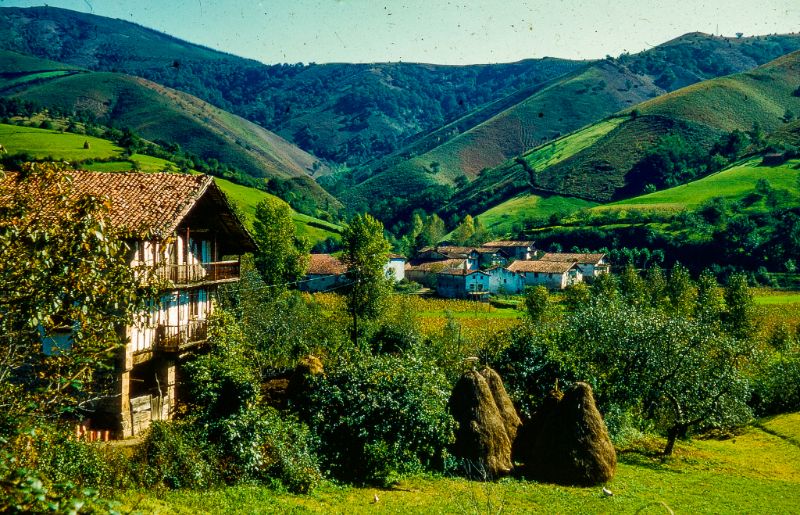
The beautiful Basque village of Pasai Donibane, 1956

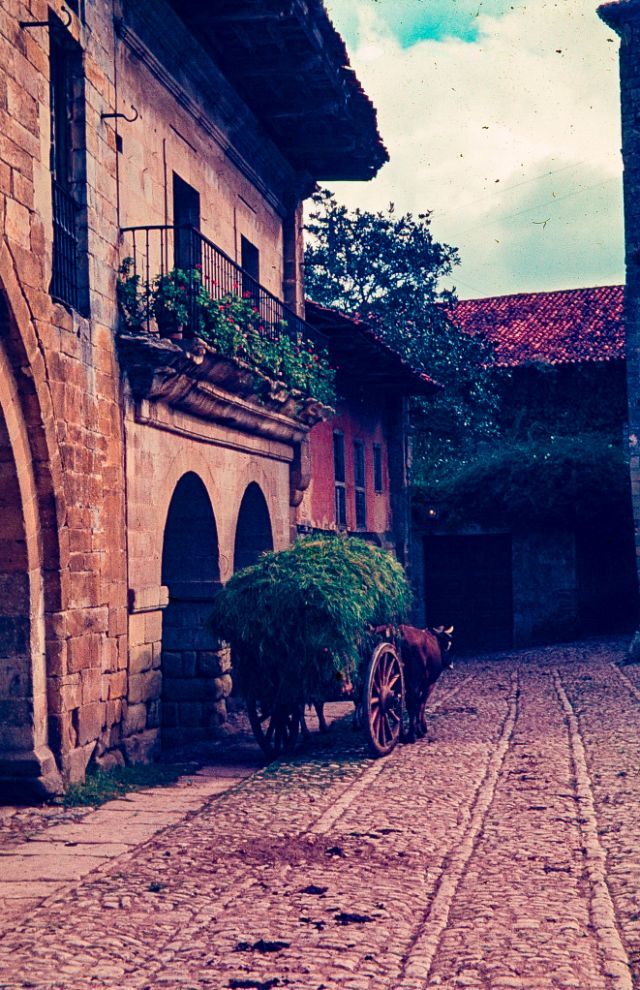
A public phone house, Santillana del Mar, in northern Spain, 1956

Before mass tourism, Santillana del Mar, in northern Spain, 1956

Cantabria rural, 1956

Carts instead of mass tourism, Santillana del Mar, in northern Spain, 1956

April 14, 2023

Vintage Photographs of a Flying Holiday to Mallorca in 1957

These vintage photographs were found by Vintage Cars & People that were taken on a flying holiday to Mallorca by a German middle-class family in 1957.

The German holidaymakers enjoying their flight in the cosy cabin of the Vickers Viking propeller airliner. In the background, a stewardess can be seen preparing a meal in the aircraft's galley, 1957

Passengers enjoying a chat aboard a Vickers Viking on a flight from Düsseldorf to Mallorca. The twin-engined propeller aircraft is operated by West German airline Luftreederei Karl Herfurtner (KHD), 1957

The view down the aisle of the Vickers Viking's narrow cabin. The photo was taken on a flight from Düsseldorf to Mallorca. Note the opened cockpit door in the background, 1957

The captain and the first officer are busy with pre-flight preparations in the Vickers Viking's cockpit. The shot was taken by German holidaymakers on a trip to Mallorca, 1957

A view of clouds – and probably the Mediterranean Sea – photographed from an aircraft window. This shot was taken by German holidaymakers aboard the KHD Vickers Viking on their flight to Mallorca, 1957

January 19, 2023

‘Humanist’ Photography: Sabine Weiss’ Gorgeous Pictures of Everyday Life From the 1940s to 1960s

Sabine Weiss (1924 – 2021) was a Swiss-French photographer active in the French humanist photography movement, along with other notable representatives including Robert Doisneau, Willy Ronis, Édouard Boubat, and Izis.

At eighteen years old, she decided to become a photographer and left her small town, Saint-Gingolph, on her bicycle for the capital, Geneva. Weiss studied and practiced photography under Frédéric Boissonnas, a studio photographer and Willy Maywald, a famous fashion photographer.

1st May, Paris, 1955.

In 1950, Sabine started her own career as an independent photographer and was hired in 1952 by Vogue as a photo reporter and fashion photographer until 1961. In the office of Vogue’s director, Robert Doisneau discovered her photographs and offered her to be part of the Rapho agency. She started travelling the world for newspapers and magazines such as Time, Life, Newsweek, and Paris-Match.

Weiss' personal work has always been essential, representing a perfect balance between poetry and social observation. With her keen eyes, she has been depicting the everyday life, the people, and their emotions.

Paris, 1948.

Pont Neuf, Paris, 1949.

Avenue des Champs Elysées, Paris, 1949.

Paris, 1950.


FOLLOW US:
Facebook • Tumblr • Pinterest • Instagram

CONTACT US


Browse by Decades

Popular Posts

Advertisement

09 10