Bring back some good or bad memories


ADVERTISEMENT
Showing posts with label Rio de Janeiro. Show all posts

July 13, 2024

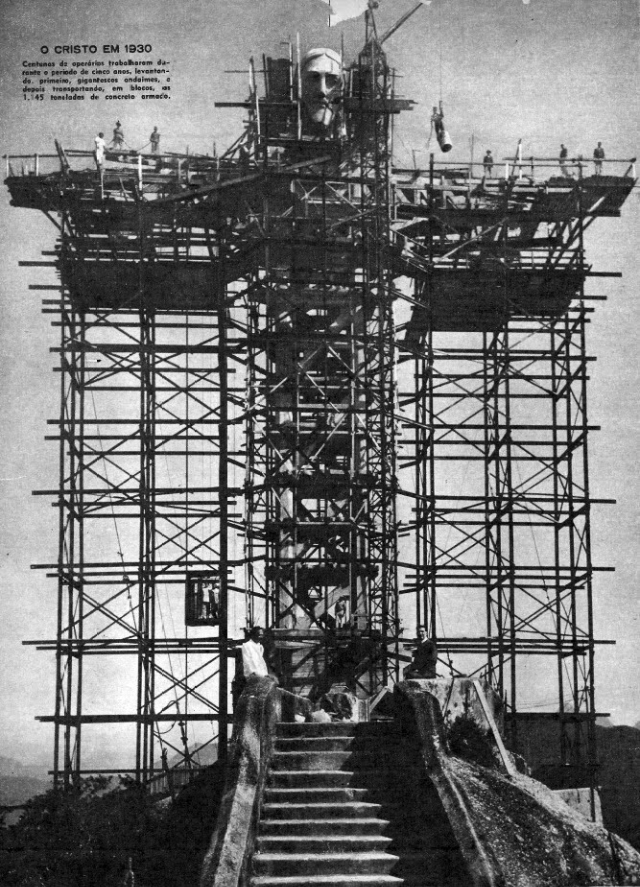
Historical Photographs of Christ the Redeemer Statue Under Construction in Rio de Janeiro, Brazil

Christ the Redeemer is an Art Deco statue of Jesus Christ in Rio de Janeiro, Brazil, created by French-Polish sculptor Paul Landowski and built by Brazilian engineer Heitor da Silva Costa, in collaboration with French engineer Albert Caquot. Romanian sculptor Gheorghe Leonida sculpted the face. Constructed between 1922 and 1931, the statue is 30 meters (98 ft) high, excluding its 8-meter (26 ft) pedestal. The arms stretch 28 meters (92 ft) wide. It is made of reinforced concrete and soapstone. Christ the Redeemer differs considerably from its original design, as the initial plan was a large Christ with a globe in one hand and a cross in the other. Although the project organizers originally accepted the design, it later changed to the statue of today, with the arms spread out wide.

The statue weighs 635 metric tons (625 long, 700 short tons), and is located at the peak of the 700-meter (2,300 ft) Corcovado mountain in the Tijuca National Park overlooking the city of Rio de Janeiro. This statue is the largest Art Deco–style sculpture in the world. A symbol of Christianity around the world, the statue has also become a cultural icon of both Rio de Janeiro and Brazil and was voted one of the New 7 Wonders of the World.

Vincentian priest Pedro Maria Boss first suggested placing a Christian monument on Mount Corcovado in the mid-1850s to honor Princess Isabel, regent of Brazil and the daughter of Emperor Pedro II, but the project was not approved. In 1889, the country became a republic, and owing to the separation of church and state, the proposed statue was dismissed.

The Catholic Circle of Rio made a second proposal for a landmark statue on the mountain in 1920. The group organized an event called Semana do Monumento (“Monument Week”) to attract donations and collect signatures to support the building of the statue. The organization was motivated by what they perceived as “Godlessness” in the society. The donations came mostly from Brazilian Catholics. The designs considered for the “Statue of the Christ” included a representation of the Christian cross, a statue of Jesus with a globe in his hands, and a pedestal symbolizing the world. Eventually, the statue of Christ the Redeemer with open arms, a symbol of peace, was chosen.

Local engineer Heitor da Silva Costa and artist Carlos Oswald designed the statue. French sculptor Paul Landowski created the work. In 1922, Landowski commissioned fellow Parisian Romanian sculptor Gheorghe Leonida, who studied sculpture at the Fine Arts Conservatory in Bucharest and in Italy.

A group of engineers and technicians studied Landowski’s submissions, and they felt building the structure out of reinforced concrete (designed by Albert Caquot) instead of steel was more suitable for the cross-shaped statue. The concrete making up the base was supplied from Limhamn, Sweden. The outer layers are soapstone, chosen for its enduring qualities and ease of use. Construction took nine years, from 1922 to 1931, and cost the equivalent of US$250,000 (equivalent to $4,300,000 in today) and the monument opened on October 12, 1931. During the opening ceremony, the statue was to be lit by a battery of floodlights turned on remotely by Italian shortwave radio inventor Guglielmo Marconi, stationed 9,200 kilometers (5,700 mi) away in Rome but because of bad weather, the lights were activated on site.

Below are some historical photographs of Christ the Redeemer status under construction in Rio de Janeiro in the 1920s and early 1930s:


January 11, 2024

35 Amazing Photographs of Fans at Rock in Rio 1985, the World’s Largest Music Festival

Rock in Rio is one of the largest music festivals in the world. The first edition of the festival was held from January 11–20, 1985. Queen, George Benson, Rod Stewart, AC/DC, and Yes were the headliners, each occupying top spot for two nights (Benson, however, ceded it to James Taylor for their second night in the same bill, due to the huge delay Taylor’s extended performance had caused to his concert two days before).

It was 10 days of music and a lot of excitement in the first City of Rock, which occupied an area of 250 thousand square meters in Rio de Janeiro. On stage – the largest in the world at the time with 80 meters of proscenium – 15 national and 16 international attractions. In the audience, 1 million and 380 thousand people. For the first time in the world the audience of a great show was illuminated. At that moment the audience began to take part in the show. The biggest music festival in the world was born there.


January 24, 2022

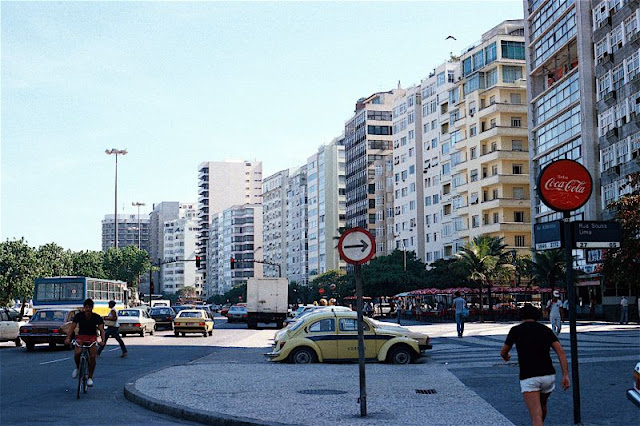
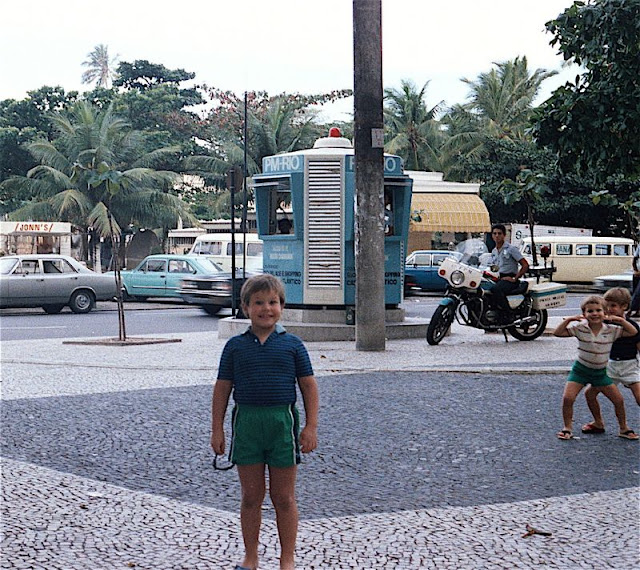
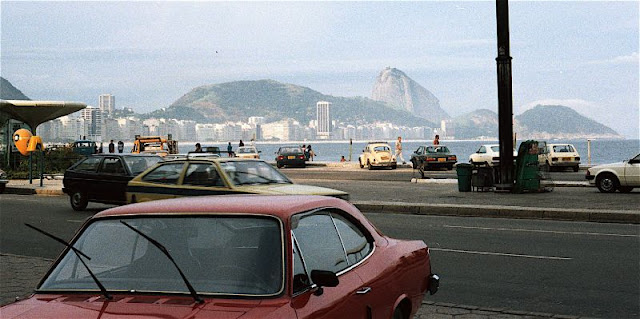
35 Fascinating Photos of Rio de Janeiro in the 1980s

Rio de Janeiro is the second-most populous city in Brazil and the sixth-most populous in the Americas. Rio de Janeiro is the capital of the state of the same name, Brazil’s third-most populous state, after São Paulo and Minas Gerais.

Rio de Janeiro is one of the most visited cities in the Southern Hemisphere and is known for its natural settings, Carnival, samba, bossa nova, and balneario beaches such as Barra da Tijuca, Copacabana, Ipanema, and Leblon.

In addition to the beaches, some of the most famous landmarks include the giant statue of Christ the Redeemer atop Corcovado mountain, named one of the New Seven Wonders of the World; Sugarloaf Mountain with its cable car; the Sambódromo (Sambadrome), a permanent grandstand-lined parade avenue which is used during Carnival; and Maracanã Stadium, one of the world’s largest football stadiums.

These fascinating photos were taken by Moacir de Sa Pereira that show street scenes of Rio de Janeiro in 1984.

Avenida Atlântica, Copacabana, Rio de Janeiro, 1984

Avenida Atlântica, Copacabana, Rio de Janeiro, 1984

Avenida Atlântica, Copacabana, Rio de Janeiro, 1984

Avenida Atlântica, Copacabana, Rio de Janeiro, 1984

Avenida Atlântica, Copacabana, Rio de Janeiro, 1984

February 28, 2021

Rio de Janeiro in the 1970s Through Fascinating Photos

Rio de Janeiro is the second-most populous city in Brazil and the sixth-most populous in the Americas. It is the capital of the state of Rio de Janeiro, Brazil’s third-most populous state, after São Paulo and Minas Gerais.


Part of the city has been designated as a World Heritage Site, named “Rio de Janeiro: Carioca Landscapes between the Mountain and the Sea”, by UNESCO on 1 July 2012 as a Cultural Landscape.

Rio de Janeiro is one of the most visited cities in the Southern Hemisphere and is known for its natural settings, Carnival, samba, bossa nova, and balneario beaches such as Barra da Tijuca, Copacabana, Ipanema, and Leblon.

In addition to the beaches, some of the most famous landmarks include the giant statue of Christ the Redeemer atop Corcovado mountain, named one of the New Seven Wonders of the World; Sugarloaf Mountain with its cable car; the Sambódromo (Sambadrome), a permanent grandstand-lined parade avenue which is used during Carnival; and Maracanã Stadium, one of the world's largest football stadiums.

Take a look at these fascinating photos from Brian Delk to see what Rio looked like in the 1970s.


October 14, 2020

25 Amazing Photos Capture Street Scenes of Rio de Janeiro in the Early 1980s

Rio de Janeiro is anchor to the Rio de Janeiro metropolitan area and the second-most populous municipality in Brazil and the sixth-most populous in the Americas. It is the capital of the state of Rio de Janeiro, Brazil's third-most populous state, after São Paulo and Minas Gerais.

Rio de Janeiro is one of the most visited cities in the Southern Hemisphere and is known for its natural settings, Carnival, samba, bossa nova, and balneario beaches such as Barra da Tijuca, Copacabana, Ipanema, and Leblon.

In addition to the beaches, some of the most famous landmarks include the giant statue of Christ the Redeemer atop Corcovado mountain, named one of the New Seven Wonders of the World; Sugarloaf Mountain with its cable car; the Sambódromo (Sambadrome), a permanent grandstand-lined parade avenue which is used during Carnival; and Maracanã Stadium, one of the world's largest football stadiums.

These amazing photos were taken by Moacir de Sa Pereira that show street scenes of Rio de Janeiro in 1980 and 1984.

Copacabana, Rio de Janeiro, 1980

Copacabana, Rio de Janeiro, 1980

Ipanema, Rio de Janeiro, 1980

Paraty, Rio de Janeiro, 1980

Paraty, Rio de Janeiro, 1980

June 14, 2016

Vintage Photos Capture Daily Life at the Rio Beaches From the Late 1970s

The beaches of Brazil must be counted as among the best in the world. Canada-based photographer Blake W. Smith strolled along Ipanema, Leblon, Copacabana and others in Rio with his trusty Nikon in hand photographing the beach scenes in 1978. Lots of interesting activity on Rio’s superb beaches.


June 3, 2016

Rarely Seen Vintage Photographs Document Everyday Life in Rio de Janeiro in the early 1940s

In the early 1940s as the conflict between the Axis and the Allies spread worldwide, the U.S. State Department turned its attention to Axis influence in Latin America. As head of the Office of Inter-American Affairs, Nelson Rockefeller was charged with cultivating the region’s support for the Allies while portraying Brazil and its neighbors as dependable wartime partners.

Genevieve Naylor, a photojournalist previously employed by the Associated Press and the WPA, was sent to Brazil in 1940 by Rockefeller’s agency to provide photographs that would support its need for propaganda. Often balking at her mundane assignments, an independent-minded Naylor produced something far different and far more rich—a stunning collection of over a thousand photographs that document a rarely seen period in Brazilian history. Accompanied by analysis from Robert M. Levine, this selection of Naylor’s photographs offers a unique view of everyday life during one of modern Brazil’s least-examined decades.


May 15, 2016

January 3, 2014

Wonderful Color Photographs of The Carnival in Rio de Janeiro in 1964

The Carnaval in Rio de Janeiro is a world famous festival held before Lent every year and considered the biggest carnival in the world with two million people per day on the streets. The first festivals of Rio date back to 1823.

Below is a collection of wonderful color photographs of the Carnival in Rio de Janeiro in 1964.


June 11, 2013

15 Amazing Color Photographs of Carnival in Rio de Janeiro, 1943

The Carnival in Rio de Janeiro is a festival held every year before Lent and considered the biggest carnival in the world with two million people per day on the streets. The first Carnival festival in Rio occurred in 1723.

The typical Rio carnival parade is filled with revelers, floats, and adornments from numerous samba schools which are located in Rio (more than 200 approximately, divided into five leagues/divisions). A samba school is composed of a collaboration of local neighbors that want to attend the carnival together, with some kind of regional, geographical and common background.

There is a special order that every school has to follow with their parade entries. Each school begins with the “comissão de frente” (meaning “Front Commission”), that is the group of people from the school that appear first. Made of ten to fifteen people, the comissão de frente introduces the school and sets the mood and style of their presentation. These people have choreographed dances in elaborate costumes that usually tell a short story.

Following the “comissão de frente” is the first float of the samba school, called “abre-alas” (“Opening Wing”). These are followed by the Mestre-sala and Porta-Bandeira (“Master of Ceremonies and Flag Bearer”), with one to four pairs, one active and three reserve, to lead the dancers, which include the old guard veterans and the “ala das baianas”, with the drum line battery at the rear and sometimes a brass section and guitars.


FOLLOW US:
FacebookTumblrPinterestInstagram

CONTACT US


Browse by Decades

Popular Posts

Advertisement

09 10