Bring back some good or bad memories


ADVERTISEMENT
Showing posts with label Brazil. Show all posts

November 29, 2025

The Story of Roque José Florêncio, the Slave Turned Into a “Human-Breeding Machine” in the 19th Century

Roque José Florêncio was allegedly born around 1827 in Sorocaba. He was purchased around 1849 by the powerful landowner and coffee grower Francisco da Cunha Bueno, who later became the Viscount of Cunha Bueno, and was taken to the Fazenda Santa Eudóxia. He was nicknamed “Pata Seca” (Dry Paw), reportedly due to his long, thin hands.

Oral accounts describe him as an extraordinarily tall and strong man, possibly reaching 2.18 meters (over 7 feet). These physical characteristics, combined with a contemporary belief that tall men with thin shins were more likely to produce male offspring, sealed his fate.


Roque was systematically exploited by his enslaver as a “slave-breeder” (escravo reprodutor). This horrific practice was aimed at increasing the plantation's enslaved labor force, particularly after the slave trade was banned in 1850 (Lei Eusébio de Queirós). He was allegedly forced to impregnate enslaved women regularly and is said to have fathered more than 200 children (some accounts suggest over 250).

Due to his role as a “breeding slave,” Roque was often granted a relatively different life than most other enslaved people. He reportedly did not work in the coffee fields and lived outside the senzala (slave quarters). He was entrusted with the care of the farm’s transport animals and tasked with riding a long distance daily to fetch his master's correspondence.

With the abolition of slavery in 1888 (Lei Áurea), Roque was freed. While performing his duties as a courier, he had met and later married a woman named Palmira. The Viscount of Cunha Bueno allegedly granted the couple 20 alqueires (a measure of land), where they built a home and raised nine children together.

Tragically, much of the land Roque was given was gradually appropriated by influential, wealthy farmers through irregular demarcation, a common occurrence that left newly freed Black Brazilians marginalized and impoverished. He was reportedly left with only a small fraction of the promised land.

One of the most remarkable parts of the Pata Seca legend is his alleged extreme longevity. He is widely believed to have lived to be 130 years old, with his death recorded on February 17, 1958. While this claim places him as a supercentenarian and is a key part of his myth, it lacks rigorous historical confirmation.

Due to the forced reproduction and his later marriage, Roque José Florêncio is considered the direct ancestor of a significant portion of the population in the district of Santa Eudóxia, some estimates suggest up to 30%.

Today, Pata Seca is remembered as a legendary figure whose story highlights the brutal realities of Brazilian slavery, particularly the institutionalized sexual violence and the efforts to create a domestic supply of enslaved labor. His history is preserved through oral reports and the memory of his countless descendants in the region.

March 22, 2025

Kurt Cobain and Courtney Love Arriving at Guarulhos Airport in São Paulo, Brazil in January, 1993

On January 15, 1993, Kurt Cobain and Courtney Love arrived at Guarulhos Airport in São Paulo, Brazil, for Nirvana’s scheduled performances at the Hollywood Rock Festival. Nirvana were in Brazil to play Hollywood Rock — a two day festival in São Paulo (January 16) and Rio (January 23) in 1993.

Jan. 16: An iconic Nirvana show (Kurt was disengaged after 30 mins) and Courtney danced side of stage. At the end, Kurt smashed up his blue ‘Courtney’ Telecaster guitar and Courtney retrieved the body from the stage.

Jan. 17: After the show, in the early hours of the next day, Courtney and Kurt headed to a party at Der Tempel.

Jan. 20: The couple were interviewed at their hotel and Courtney made a point of showing (quite proudly) a Polaroid photo of her daughter, Frances: “Isn’t she beautiful? She’s already five months old!”

In an interview a few days later when asked why they didn’t bring Bean, Kurt said: “We didn’t know much about Brazil. We were told that it’s very hot here, she’s so tiny that we were afraid she would get sunburned or get sick because of the water, we think it’s better to leave her at home.”

Jan. 21: Courtney and Kurt recorded some demos together with Patty Schemel which were dubbed “the Argentina demos,” despite them actually being recorded in Rio.

One song they recorded that night (with Kurt on bass) went on to become a Hole deep cut called “Drunk in Rio” — also known as “Closing Time.” While never officially released, it was played at many shows in 1994 and 1995. Courtney Love prefaced the song in 1995 saying: “Do you want to hear a song that me and Kurt and Patty wrote when we were drunk? It’s really poppy!”

At an interview conducted at the studio, Kurt said when asked if Courtney and he interfere with each others work: “Well, we just like to be together all the time, you know? We’re best friends, she’s my best friend. And so, when she’s playing music, I like to listen to it and maybe suggest some things. And she does the same thing with me too. She came with us and Patty, her drummer, came too. It’s just a vacation... and this is just a spontaneous thing, for them to just make a few demos and see what they're gonna do with it.”

Jan. 23: Prior to the show in Rio, Kurt, Patty and Courtney went hang gliding together over Floresta da Tijucan. Kurt had gone the previous day with Dave Grohl but he loved it so much he went back the next day. Kurt cut an interview short to go hang gliding.

Interviewer: Do you like hang gliding?

Kurt Cobain: Yeah, I did it yesterday for the first time. It’s a lot of fun. It’s very relaxing. I’ve got to get going. I’m late to go hang gliding. I know it’s a lame excuse to stop an interview, but I have to do it again, I had so much fun yesterday!”

Also at the Rio show, Courtney and Kurt sat side of stage together to watch L7’s set. Kurt wore one of Courtney’s dresses during the encore as well as a tiara owned by Donita Sparks (she bought it at a street stall in Brazil).

Jan. 24: The couple departed the hotel to head back to the U.S on January 24, 1993. Courtney’s carrying No Exit by Julie Burchall.


July 13, 2024

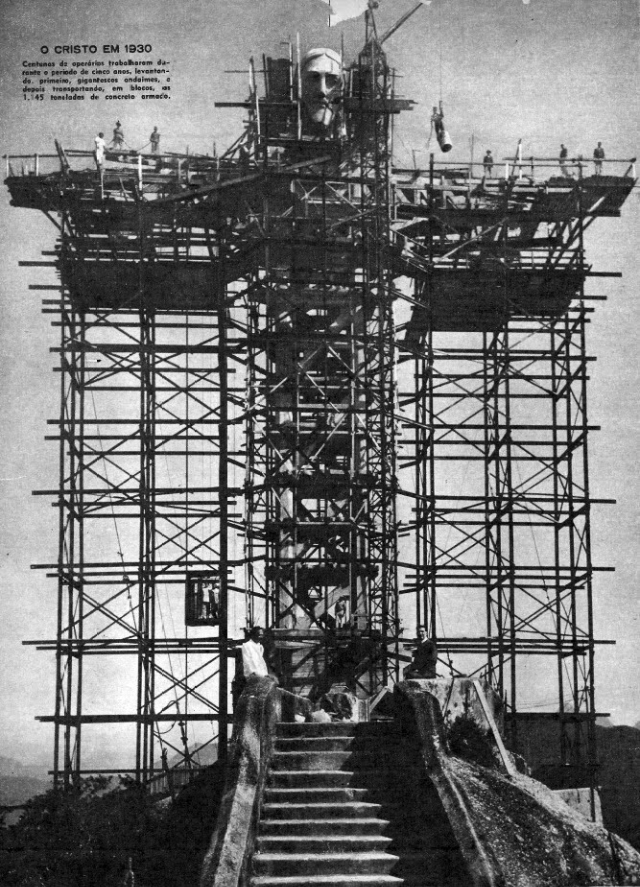
Historical Photographs of Christ the Redeemer Statue Under Construction in Rio de Janeiro, Brazil

Christ the Redeemer is an Art Deco statue of Jesus Christ in Rio de Janeiro, Brazil, created by French-Polish sculptor Paul Landowski and built by Brazilian engineer Heitor da Silva Costa, in collaboration with French engineer Albert Caquot. Romanian sculptor Gheorghe Leonida sculpted the face. Constructed between 1922 and 1931, the statue is 30 meters (98 ft) high, excluding its 8-meter (26 ft) pedestal. The arms stretch 28 meters (92 ft) wide. It is made of reinforced concrete and soapstone. Christ the Redeemer differs considerably from its original design, as the initial plan was a large Christ with a globe in one hand and a cross in the other. Although the project organizers originally accepted the design, it later changed to the statue of today, with the arms spread out wide.

The statue weighs 635 metric tons (625 long, 700 short tons), and is located at the peak of the 700-meter (2,300 ft) Corcovado mountain in the Tijuca National Park overlooking the city of Rio de Janeiro. This statue is the largest Art Deco–style sculpture in the world. A symbol of Christianity around the world, the statue has also become a cultural icon of both Rio de Janeiro and Brazil and was voted one of the New 7 Wonders of the World.

Vincentian priest Pedro Maria Boss first suggested placing a Christian monument on Mount Corcovado in the mid-1850s to honor Princess Isabel, regent of Brazil and the daughter of Emperor Pedro II, but the project was not approved. In 1889, the country became a republic, and owing to the separation of church and state, the proposed statue was dismissed.

The Catholic Circle of Rio made a second proposal for a landmark statue on the mountain in 1920. The group organized an event called Semana do Monumento (“Monument Week”) to attract donations and collect signatures to support the building of the statue. The organization was motivated by what they perceived as “Godlessness” in the society. The donations came mostly from Brazilian Catholics. The designs considered for the “Statue of the Christ” included a representation of the Christian cross, a statue of Jesus with a globe in his hands, and a pedestal symbolizing the world. Eventually, the statue of Christ the Redeemer with open arms, a symbol of peace, was chosen.

Local engineer Heitor da Silva Costa and artist Carlos Oswald designed the statue. French sculptor Paul Landowski created the work. In 1922, Landowski commissioned fellow Parisian Romanian sculptor Gheorghe Leonida, who studied sculpture at the Fine Arts Conservatory in Bucharest and in Italy.

A group of engineers and technicians studied Landowski’s submissions, and they felt building the structure out of reinforced concrete (designed by Albert Caquot) instead of steel was more suitable for the cross-shaped statue. The concrete making up the base was supplied from Limhamn, Sweden. The outer layers are soapstone, chosen for its enduring qualities and ease of use. Construction took nine years, from 1922 to 1931, and cost the equivalent of US$250,000 (equivalent to $4,300,000 in today) and the monument opened on October 12, 1931. During the opening ceremony, the statue was to be lit by a battery of floodlights turned on remotely by Italian shortwave radio inventor Guglielmo Marconi, stationed 9,200 kilometers (5,700 mi) away in Rome but because of bad weather, the lights were activated on site.

Below are some historical photographs of Christ the Redeemer status under construction in Rio de Janeiro in the 1920s and early 1930s:


January 11, 2024

35 Amazing Photographs of Fans at Rock in Rio 1985, the World’s Largest Music Festival

Rock in Rio is one of the largest music festivals in the world. The first edition of the festival was held from January 11–20, 1985. Queen, George Benson, Rod Stewart, AC/DC, and Yes were the headliners, each occupying top spot for two nights (Benson, however, ceded it to James Taylor for their second night in the same bill, due to the huge delay Taylor’s extended performance had caused to his concert two days before).

It was 10 days of music and a lot of excitement in the first City of Rock, which occupied an area of 250 thousand square meters in Rio de Janeiro. On stage – the largest in the world at the time with 80 meters of proscenium – 15 national and 16 international attractions. In the audience, 1 million and 380 thousand people. For the first time in the world the audience of a great show was illuminated. At that moment the audience began to take part in the show. The biggest music festival in the world was born there.


November 25, 2023

A Stunning Portrait of 22-Year-Old Penha Goez, a Tribeswoman of the Amazon Rainforest in Brazil, 1997

Portrait of Penha Goes, age 22, a tribeswoman in the Yanomami tribe of the Amazon Rainforest in Brazil, taken by photographer Richard Stuckert in 1997. The tribe is divided into around 250 villages along with border with Brazil and Venezuela. They have 35,000 members.


And here are close-up portraits of Penha Goes at 22 and 39 years old, when she reunited with Richard Stuckert in 2015:


Stuckert said of his photos:
“On Indian Day, I want to pay homage to India Yanomami Penha Goés. She was the one who sparked my interest, passion and motivation to photograph Brazilian Indians. I photographed Penha for the first time in 1997, in the Maturacá Community, in the Amazon. She was 22, a son of two and a story all at once.

“In 2015, in a conversation with my wife, Cristina, I talked about the desire to see her again. It was the first step toward the date I’ve been waiting almost 20 years to happen. May 2015 I left Brasilia and went to Manaus. From there, I followed on to São Gabriel da Cachoeira, a city inside the Amazonas. A kite (typical Amazon ship) was waiting for me. It took 8 hours by boat to reach the village.

“When I found the Penha again, I didn’t see that 20-something-year-old girl, but a 39-year-old woman who kept the same purity in her eyes 17 years ago. There I was sure that I was on a mission not only to photograph India which marked my professional career, but to humbly pay tribute to the indigenous people of my country.”

January 24, 2022

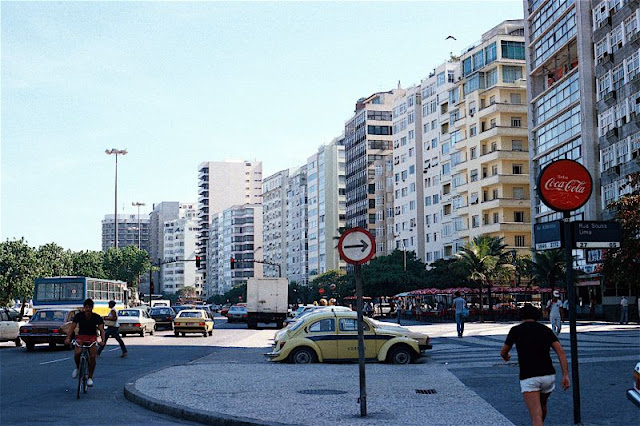
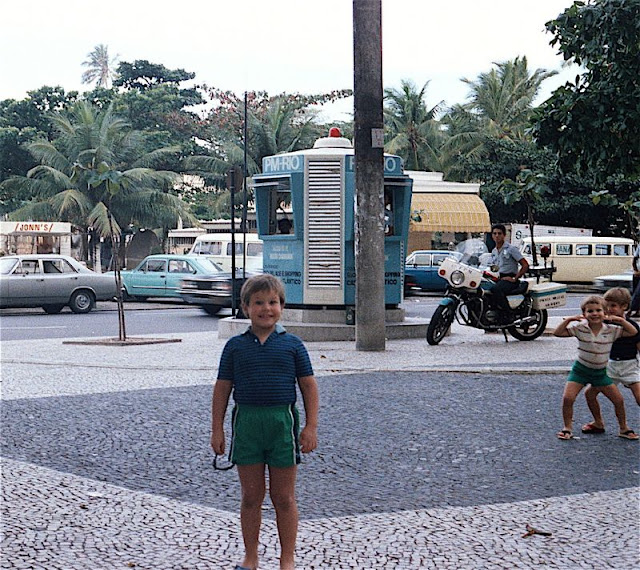
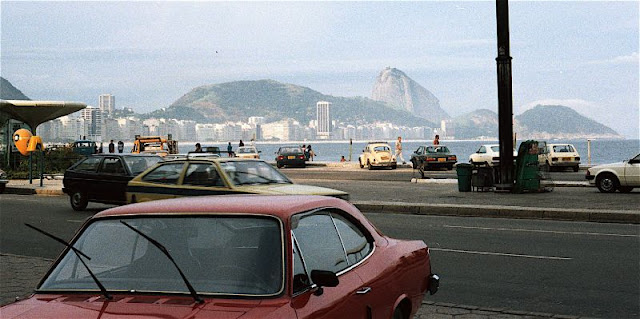
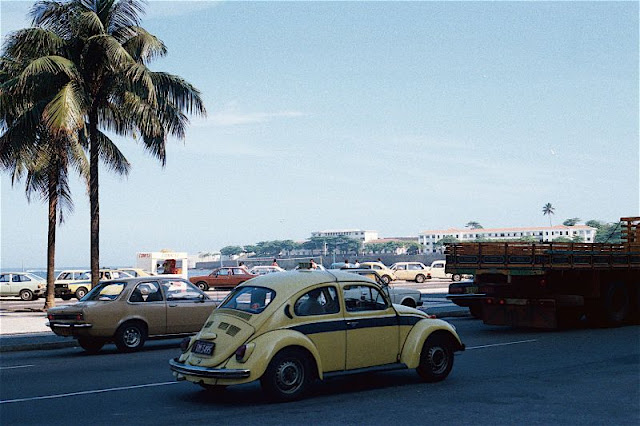
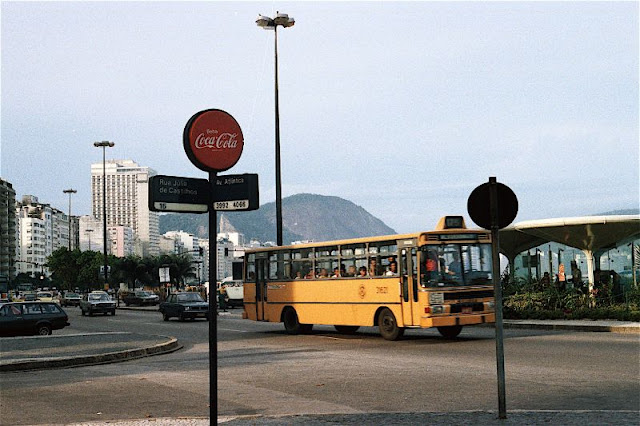
35 Fascinating Photos of Rio de Janeiro in the 1980s

Rio de Janeiro is the second-most populous city in Brazil and the sixth-most populous in the Americas. Rio de Janeiro is the capital of the state of the same name, Brazil’s third-most populous state, after São Paulo and Minas Gerais.

Rio de Janeiro is one of the most visited cities in the Southern Hemisphere and is known for its natural settings, Carnival, samba, bossa nova, and balneario beaches such as Barra da Tijuca, Copacabana, Ipanema, and Leblon.

In addition to the beaches, some of the most famous landmarks include the giant statue of Christ the Redeemer atop Corcovado mountain, named one of the New Seven Wonders of the World; Sugarloaf Mountain with its cable car; the Sambódromo (Sambadrome), a permanent grandstand-lined parade avenue which is used during Carnival; and Maracanã Stadium, one of the world’s largest football stadiums.

These fascinating photos were taken by Moacir de Sa Pereira that show street scenes of Rio de Janeiro in 1984.

Avenida Atlântica, Copacabana, Rio de Janeiro, 1984

Avenida Atlântica, Copacabana, Rio de Janeiro, 1984

Avenida Atlântica, Copacabana, Rio de Janeiro, 1984

Avenida Atlântica, Copacabana, Rio de Janeiro, 1984

Avenida Atlântica, Copacabana, Rio de Janeiro, 1984

February 28, 2021

Rio de Janeiro in the 1970s Through Fascinating Photos

Rio de Janeiro is the second-most populous city in Brazil and the sixth-most populous in the Americas. It is the capital of the state of Rio de Janeiro, Brazil’s third-most populous state, after São Paulo and Minas Gerais.


Part of the city has been designated as a World Heritage Site, named “Rio de Janeiro: Carioca Landscapes between the Mountain and the Sea”, by UNESCO on 1 July 2012 as a Cultural Landscape.

Rio de Janeiro is one of the most visited cities in the Southern Hemisphere and is known for its natural settings, Carnival, samba, bossa nova, and balneario beaches such as Barra da Tijuca, Copacabana, Ipanema, and Leblon.

In addition to the beaches, some of the most famous landmarks include the giant statue of Christ the Redeemer atop Corcovado mountain, named one of the New Seven Wonders of the World; Sugarloaf Mountain with its cable car; the Sambódromo (Sambadrome), a permanent grandstand-lined parade avenue which is used during Carnival; and Maracanã Stadium, one of the world's largest football stadiums.

Take a look at these fascinating photos from Brian Delk to see what Rio looked like in the 1970s.


October 14, 2020

25 Amazing Photos Capture Street Scenes of Rio de Janeiro in the Early 1980s

Rio de Janeiro is anchor to the Rio de Janeiro metropolitan area and the second-most populous municipality in Brazil and the sixth-most populous in the Americas. It is the capital of the state of Rio de Janeiro, Brazil's third-most populous state, after São Paulo and Minas Gerais.

Rio de Janeiro is one of the most visited cities in the Southern Hemisphere and is known for its natural settings, Carnival, samba, bossa nova, and balneario beaches such as Barra da Tijuca, Copacabana, Ipanema, and Leblon.

In addition to the beaches, some of the most famous landmarks include the giant statue of Christ the Redeemer atop Corcovado mountain, named one of the New Seven Wonders of the World; Sugarloaf Mountain with its cable car; the Sambódromo (Sambadrome), a permanent grandstand-lined parade avenue which is used during Carnival; and Maracanã Stadium, one of the world's largest football stadiums.

These amazing photos were taken by Moacir de Sa Pereira that show street scenes of Rio de Janeiro in 1980 and 1984.

Copacabana, Rio de Janeiro, 1980

Copacabana, Rio de Janeiro, 1980

Ipanema, Rio de Janeiro, 1980

Paraty, Rio de Janeiro, 1980

Paraty, Rio de Janeiro, 1980

May 7, 2020

Color Photos Capture Life in Brazil in 1957

Take a look back at life in Brazil in 1957 through these 20 color photographs taken by LIFE photographer Dmitri Kessel:

Leblon beach, Rio de Janeiro

Fishermen.

Woman walking while carrying a large jar on her head.

Boys stand among fishing nets.

Sailboats

October 19, 2019

33 Fascinating Color Photos Capture Everyday Life of Brazil in the Mid-1960s

Brazil is the largest country in both South America and Latin America. It is the world's fifth-largest country by area and the fifth most populous. Its capital is Brasília, and its most populated city is São Paulo.

The federation is composed of the union of the 26 states, the Federal District, and the 5,570 municipalities. Brazil is the largest country to have Portuguese as an official language and the only one in the Americas; it is also one of the most multicultural and ethnically diverse nations, due to over a century of mass immigration from around the world.

Brazil is considered an advanced emerging economy. It is one of the world's major breadbaskets, being the largest producer of coffee for the last 150 years.

These fascinating color photos were taken by Gene Whitmer that documented everyday life of Brazil from 1965 to 1967.

Rio de Janeiro. Cinelândia, Bar Amarelinho

Rio de Contas. Slow day with some of the local fellows

Rio de Janeiro. Novo Rio bus station

Rio de Janeiro. Ipanema Beach

Amambai school

May 10, 2019

20 Haunting Photographs of the Hell of Serra Pelada Mines in the 1980s

Serra Pelada was a large gold mine in Brazil 430 kilometres (270 mi) south of the mouth of the Amazon River. The mine was made infamous by the still images taken by Alfredo Jaar and later by Sebastião Salgado and the first section of Godfrey Reggio’s 1988 documentary Powaqqatsi, showing an anthill of workers moving vast amounts of ore by hand. Because of the chaotic nature of the operation estimating the number of miners was difficult, but at least 100,000 people were thought to be present, making it one of the largest mines in the world.

In January 1979, farmer Genésio Ferreira da Silva hired a geologist to investigate whether gold he found on his property was part of a larger deposit. A local child swimming on the banks of a local river found a 6 grams (0.21 oz) nugget of gold. Soon word leaked out that da Silva was indeed sitting upon one of the largest deposits in the world. By the end of the week a gold rush had started with thousands of people descending upon the farm to mine. Five weeks later, there were 10,000 on Ferreira’s property and another 12,000 nearby. Huge nuggets were quickly discovered, the biggest weighing nearly 6.8 kilograms (15 lb), $108,000 at the 1980 market price (now $328,405 in 2019).

At first the only way to get to the remote site was by plane or foot. Miners would often pay exorbitant prices to have taxis drive them from the nearest town to the end of a dirt track; from there, they would walk the remaining distance—some 15 kilometres (9.3 mi)—to the site. The growing town, since it could only be made of material that was carried in by hand, was a collection of haphazard shacks and tents. Each miner had a 2 metres (6.6 ft) by 3 metres (9.8 ft) claim. By May 1980 there were 4,000 such claims.

When Brazilian photographer Sebastião Salgado visited the mine, he was stunned. “Every hair on my body stood on edge. The Pyramids, the history of mankind unfolded. I had traveled to the dawn of time,” he said. Below are some of the most powerful photos ever taken showing the sheer madness and chaos of the situation.


FOLLOW US:
FacebookTumblrPinterestInstagram

CONTACT US


Browse by Decades

Popular Posts

Advertisement

09 10