Bring back some good or bad memories


ADVERTISEMENT
Showing posts with label Poland. Show all posts

July 17, 2026

Portrait of Marek Ptasiński, a 41-year-old Polish Peasant From the Village of Ptaki, Summer 1856

This striking image is a portrait of Marek Ptasiński, a 41-year-old Polish peasant from the village of Ptaki, located near Starogród. The photograph was taken in the summer of 1856 by Marcin Olszyński, a 27-year-old budding photographer from Warsaw. It was captured as a salted paper print created from a glass collodion negative.


Olszyński visited the rural estate of the Horodyński family in Starogród, where he photographed local village life and its residents. He approached his subjects with a painterly, realist aesthetic, seeking to capture an authentic, unvarnished look at rural society rather than staging an idealized scene.

At the time this photo was taken, Marek Ptasiński lived under the system of serfdom (chłop pańszczyźniany), which legally tied peasants to the land owned by nobles. Serfdom was not officially abolished in this region of Poland until the emancipation reform of 1864.

Today, this rare photograph is preserved in the collections of the Museum of Warsaw (Muzeum Warszawy), where it serves as an important visual document of 19th-century European social history.

March 10, 2023

Before Smart Phones, Polish Attendees Hold Up Tape Players to Record Acts at the Punk Festival Jarocin in 1986

Jarocin’s festival was based in terms of its organization and atmosphere on the famous American Woodstock Festival, thus it is sometimes called the Polish Woodstock. In the 1980s it was regarded as an escape from the drab, poor reality of the late period Polish People’s Republic. It lasted 3 days, and was usually held at the beginning of August.

The festival attracted thousands of fans (e.g. in 1986 there were more than 30,000 of them), who lived in tents and came to listen to music which was otherwise hardly (or never) played on Polish radio or TV. Still, many believe that Jarocin was designed by the totalitarian government’s secret services, to create a “safe outlet” for the restless Polish youth.

A variety of music was played over the course of the festival, but generally speaking, “alternative” genres – blues, rock, heavy metal, punk rock, and reggae were played. Bands performed on two stages, with the bigger one located on the local football pitch. Many fans brought cassette players with them to record the music. This was one of the only chances to record and distribute music on cassettes that didn’t appear in official mass-media because of the authorities strict policies on the publishing of “Western-style” music.


May 16, 2022

The World’s First Effective Bulletproof Vest, 1901

Jan Szczepanik (June 13, 1872 – April 18, 1926) was a Polish inventor, with several hundred patents and over 50 discoveries to his name, many of which are still applied today, especially in the motion picture industry, as well as in photography and television. Some of his concepts helped the future evolution of TV broadcasting, such as the telectroscope or the wireless telegraph, which greatly affected the development of telecommunications.

Probably the most popular among Szczepanik’s works was the world’s first effective bulletproof vest, made of steel sheets, in 1901. The resistance of the material was confirmed by the military, after revolver shots and blows with slash weapons. The vest was bought, among others, by Nicholas II and the King of Spain, Alfonso XIII, whose life was saved during the attack in 1905, thanks to Szczepanik’s invention. The Tsar of Russia wanted to honor Szczepanik with the order of Saint Anna, but Szczepanik, most probably for patriotic reasons, refused to accept it.

Test of a 1901 vest designed by Jan Szczepanik, in which a 7 mm revolver is fired at a person wearing the vest.

Interestingly, the first inventor who worked on a bullet-proof vest and patented it was also a Pole – Kazimierz Żegleń. He was a monk born in Galicia, living in Chicago. In 1898, he started cooperation with Szczepanik. The “Żegleń’s fabric” became effective only after the improvements introduced by Szczepanik with the use of weaving machines.

Jan Szczepanik and Kazimierz Żegleń during the test of the first bulletproof vest. The authors of the project were so sure of their invention that during the show in 1901, Szczepanik shot his servant from just three steps away.

At the beginning of the 20th century, Szczepanik moved to the capital of Austria-Hungary, where he made some significant inventions. Among the visitors to his Viennese studio were the pianist and future prime minister Ignacy Paderewski, the writer Gabriela Zapolska and the poet Kazimierz Przerwa-Tetmajer. Despite the great interest in Szczepanik’s works, the sale of some of his inventions was quite slow, because entrepreneurs were afraid to base their investments on risky ideas.

In 1906, financial problems prompted Szczepanik to return to Tarnów, a town with which he maintained a lifelong attachment. During this period, he invented, among other things, the color photo projector and color printing paper, which were then used for many years by Kodak and Agfa. Despite the popularity of his works, this self-taught artist did not always care to reap the financial benefits resulting from his achievements.

Bulletproof vest by Jan Szczepanik, 1901.

Bulletproof vest by Jan Szczepanik, 1901.

Szczepanik was undoubtedly ahead of his time. He had thousands of ideas, most of which, unfortunately, were never implemented and produced. This most versatile Polish inventor worked on, among others, a submarine, a helicopter with a double rotor system, an airship (before Ferdinand von Zeppelin), a sculpture copying device, alarm solutions, a solar energy storage system and an electric rifle. How famous would he have been if start-ups had been invented a hundred years ago?

March 25, 2022

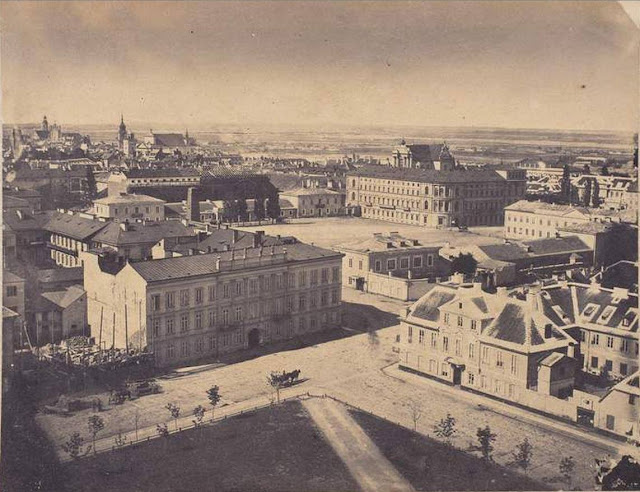
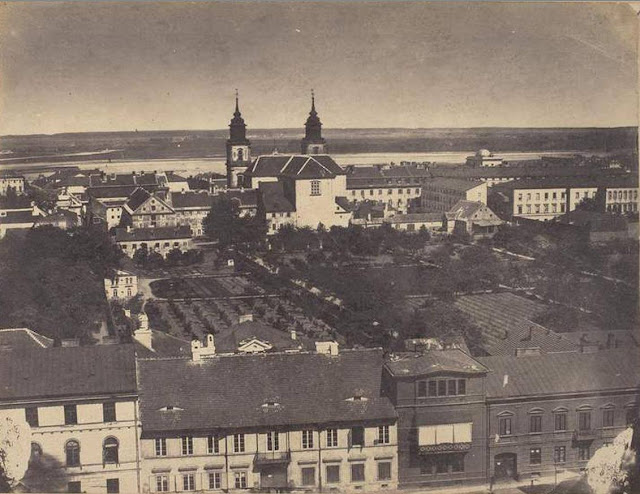
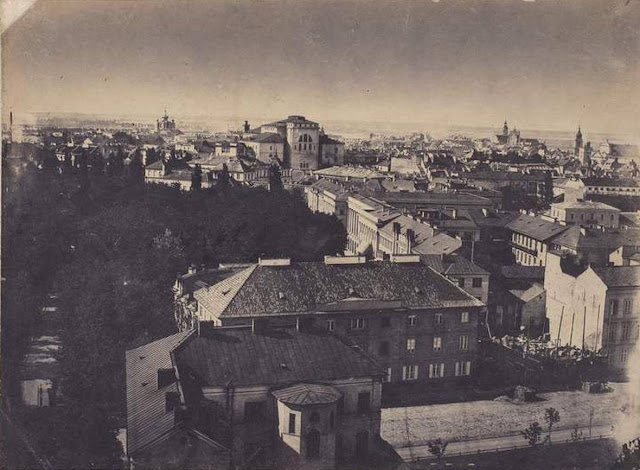
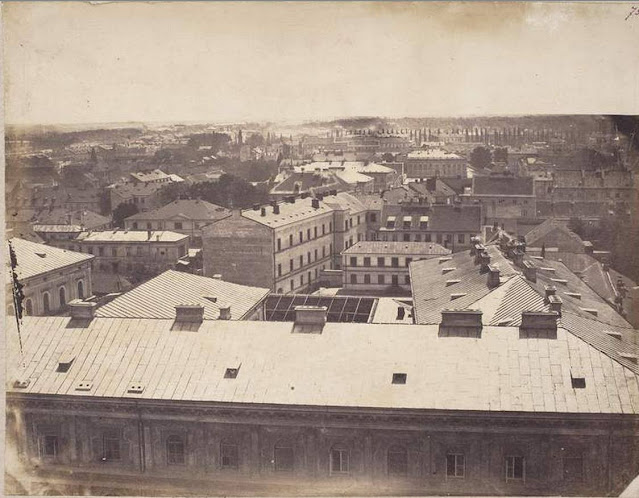
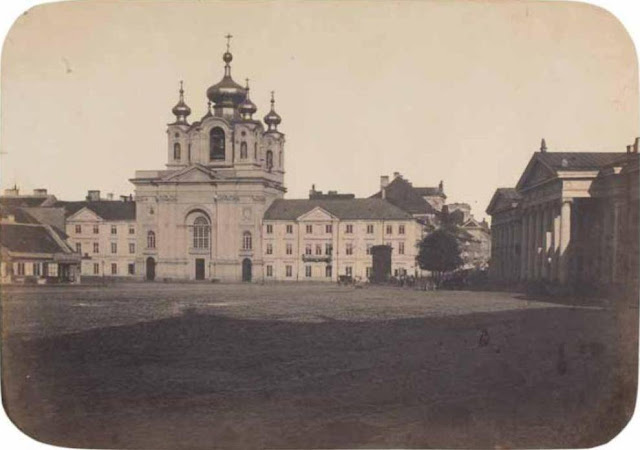
Rare and Amazing Photographs of Warsaw, Poland From the 1850s

Warsaw is the capital and largest city of Poland. The city area measures 517 km2 (200 sq mi) and comprises 18 boroughs, while the metropolitan area covers 6,100 km2 (2,355 sq mi). Warsaw is an alpha- global city, a major cultural, political and economic hub, and the country’s seat of government.

Warsaw flourished throughout the 19th century under Mayor Sokrates Starynkiewicz (1875–92), who was appointed by Alexander III. Under Starynkiewicz Warsaw saw its first water and sewer systems designed and built by the English engineer William Lindley and his son, William Heerlein Lindley, as well as the expansion and modernization of trams, street lighting, and gas infrastructure.

Between 1850 and 1882, the population grew by 134% to 383,000 as a result of rapid urbanization and industrialization. Many migrated from surrounding rural Masovian towns and villages to the city for employment opportunities. The western borough of Wola was transformed from an agricultural periphery occupied mostly by small farms and windmills to an industrial and manufacturing centre. Metallurgical, textile and glassware factories were commonplace, with chimneys dominating the westernmost skyline.


December 3, 2021

22 Amazing Photochrom Prints of Warsaw in the 19th Century

Warsaw flourished throughout the 19th century under Mayor Sokrates Starynkiewicz (1875–92), who was appointed by Alexander III. Under Starynkiewicz Warsaw saw its first water and sewer systems designed and built by the English engineer William Lindley and his son, William Heerlein Lindley, as well as the expansion and modernisation of trams, street lighting, and gas infrastructure.

Between 1850 and 1882, the population grew by 134% to 383,000 as a result of rapid urbanisation and industrialisation. Many migrated from surrounding rural Masovian towns and villages to the city for employment opportunities. The western borough of Wola was transformed from an agricultural periphery occupied mostly by small farms and windmills (mills being the namesake of Wola's central neighborhood Młynów) to an industrial and manufacturing centre. Metallurgical, textile and glassware factories were commonplace, with chimneys dominating the westernmost skyline.

Like London, Warsaw's population was subjected to income segmentation. Gentrification of inner suburbs forced poorer residents to move across the river into Praga or Powiśle and Solec districts, similar to the East End of London and London Docklands.[46] Poorer religious and ethnic minorities such as the Jews settled in the crowded parts of northern Warsaw, in Muranów.

The Imperial Census of 1897 recorded 626,000 people living in Warsaw, making it the third-largest city of the Empire after St. Petersburg and Moscow as well as the largest city in the region. Grand architectural complexes and structures were also erected in the city centre, including the Warsaw Philharmonic, the Church of the Holiest Saviour and tenements along Marszałkowska Street.

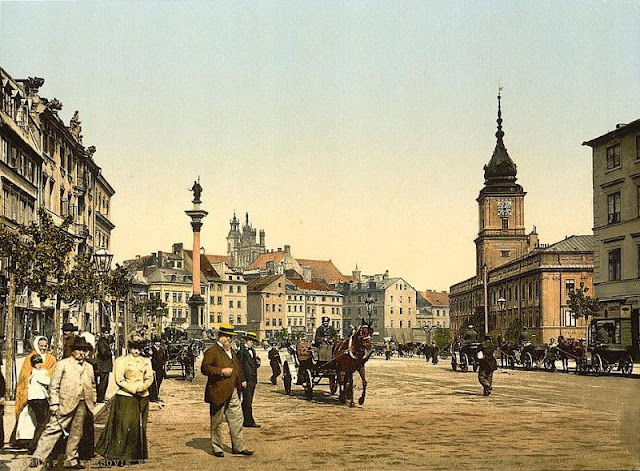
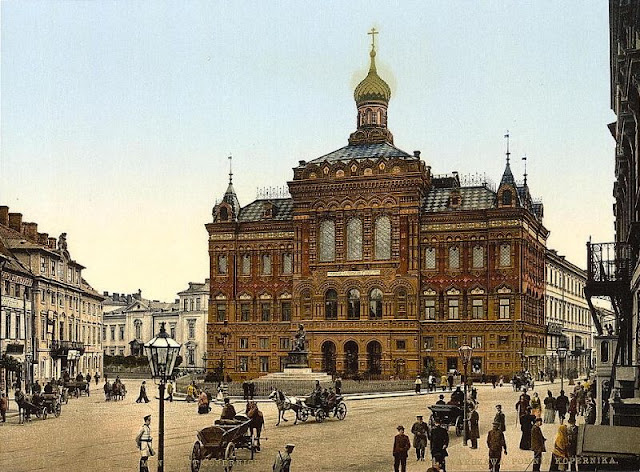
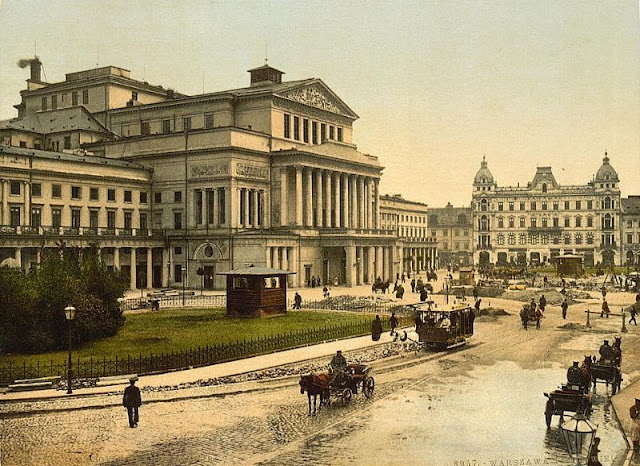
These amazing Photochrom prints from Library of Congress captured street scenes of Warsaw in 1890.

Faubourg de Cracow, Warsaw

Copernicus Monument, Warsaw

Grand theatre, Warsaw

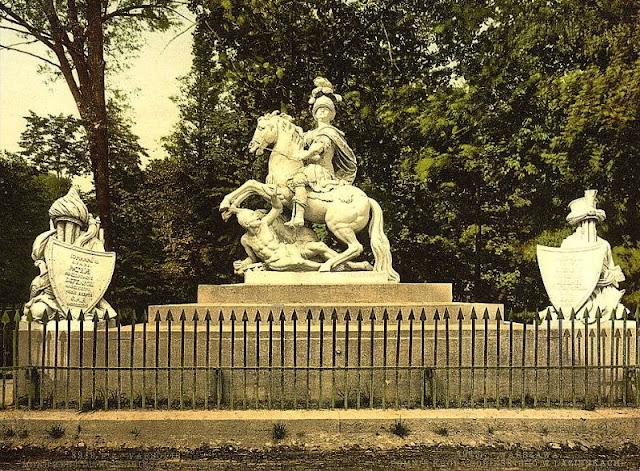
John III Sobieski Monument at Łazienki Park, Warsaw

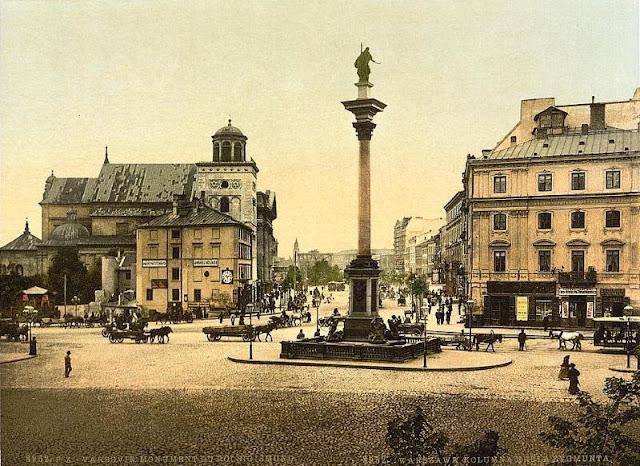
King Sigismund's monument, Warsaw

June 10, 2021

40 Amazing Vintage Portraits of Polish Men in the Late 19th Century

During the Spring of Nations (a series of revolutions which swept across Europe), Poles took up arms in the Greater Poland Uprising of 1848 to resist Prussian rule. The uprising was suppressed and the semi-autonomous Grand Duchy of Posen, created from the Prussian partition of Poland, was incorporated into Prussia.


In 1863, a new Polish uprising against Russian rule began but failed to win any major military victories. Afterwards no major uprising was witnessed in the Russian-controlled Congress Poland, and Poles resorted instead to fostering economic and cultural self-improvement. Congress Poland was rapidly industrialized towards the end of the 19th century, and successively transformed into the Empire's wealthiest and most developed subject.

Despite the political unrest experienced during the partitions, Poland did benefit from large-scale industrialization and modernization programs, instituted by the occupying powers, which helped it develop into a more economically coherent and viable entity.

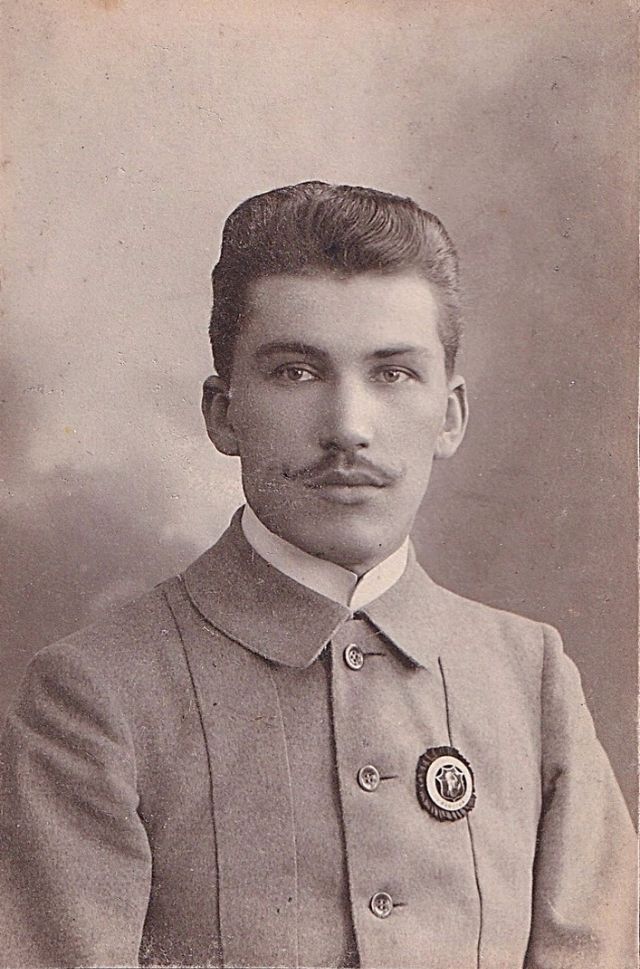
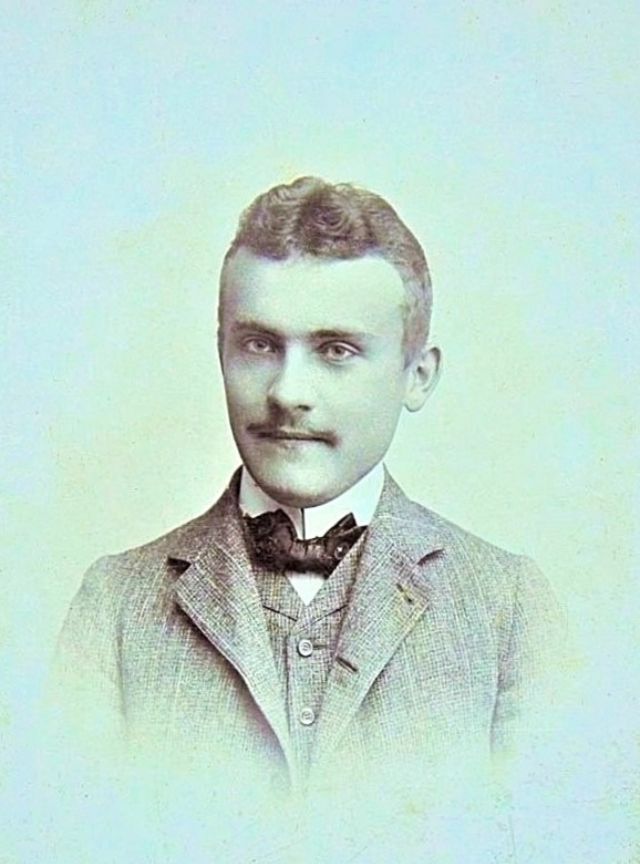
Here below is a set of amazing photos from Faces from the past that shows portraits of Polish men from between the 1870s and 1890.


June 4, 2021

A Pregnant Ancient Egyptian Mummy From the 1st Century BC Uncovered in Poland

The world’s first pregnant Egyptian mummy has been discovered in Warsaw by a team of Polish scientists using radiological scanning. The mummy, which dates back to the 1st century BC, was transported to Poland in the early 1800s, and is currently in the collection of the National Museum in Warsaw.


The 2,000-year-old mummy was initially identified as the body of the male priest and scribe Hor-Djehuti, after hieroglyphic inscriptions on the sarcophagus were translated in the 1920s. However, non-invasive tomographic scans of the mummy in 2015 – which revealed that it did not have a penis, an organ the Egyptians usually mummified – suggested the body was in fact that of a woman.

“Our first surprise was that it has no penis, but instead it has breasts and long hair, and then we found out that it's a pregnant woman,” Marzena Ozarek-Szilke, an anthropologist and archeologist, told The Associated Press. “When we saw the little foot and then the little hand, we were really shocked.”

A 3D model also showed long, curly hair flowing to the shoulders, mummified breasts, and female genitalia. The scans then revealed the presence of a fetus in the womb of the mummy.

July 17, 2020

40 Fascinating Color Photos Capture Street Scenes of Poznań in the 1950s

Poznań is a city on the Warta River in west-central Poland, in the Greater Poland region. It is best known for its renaissance Old Town and Ostrów Tumski Cathedral.

Poznań is the fifth-largest and one of the oldest cities in Poland. The Larger Poznań Metropolitan Area (PMA) is the fourth largest metropolitan area in Poland. It is the historical capital of the Greater Poland region and is currently the administrative capital of the province called Greater Poland Voivodeship.

The city’s most renowned landmarks include Poznań Town Hall, the National Museum, Grand Theatre, Fara Church, Poznań Cathedral and the Imperial Castle. Poznań is classified as a Gamma- global city by Globalization and World Cities Research Network. It has often topped rankings as a city with very high quality of education and a very high standard of living. It also ranks highly in safety and healthcare quality.

These fascinating color photos from Gorm Helge Grønli Rudschinat that captured street scenes of Poznań in the 1950s.


June 28, 2020

Warsaw in the Mid-1950s Through Amazing Color Photos

After World War II, the “Bricks for Warsaw” campaign was initiated and large prefabricated housing projects were erected in Warsaw to address the major housing shortage. Plattenbau apartment blocks were a solution to avoid Warsaw's former density problem and to create more green spaces. Some of the buildings from the 19th century that have survived in a reasonably reconstructible form were nonetheless demolished in the 1950s and 1960s, like the Kronenberg Palace.

The Śródmieście (central) region's urban system was completely reshaped; former cobblestone streets were asphalted and significantly widened for traffic use. Many notable streets such as Gęsia, Nalewki and Wielka disappeared as a result of these changes and some were split in half due to the construction of Plac Defilad (Parade Square), one of the largest of its kind in Europe.

Much of the central district was also designated for future skyscrapers. The 237-metre Palace of Culture and Science resembling New York's Empire State Building was built as a gift from the Soviet Union.

Warsaw's current urban landscape is one of modern and contemporary architecture. Despite wartime destruction and post-war remodelling, many of the historic streets, buildings, and churches were restored to their original form.

These amazing color photos from Gorm Helge Grønli Rudschinat captured street scenes of Warsaw in 1956.

Krucza Street into Bracka Street

Barbakan

Buildings of the Embassy of the People's Republic of China from Świętojerska Street

Copernicus Statue, Krakowskie Przedmieście 

Dziekania Street

January 27, 2020

In 2015, 4 Survivors Posed With Iconic Auschwitz Photo 70 Years After the Notorious Death Camp Was Liberated

In 2015, child survivors of the holocaust who were photographed huddled together at notorious Auschwitz have been reunited 70 years after the notorious death camp was liberated. This is the moment four of the survivors pointed themselves out in the shocking photograph, that was taken by Red Army photographer Alexander Vorontsov on the day they liberated the concentration camp.

One the 70th anniversary of the liberation of Auschwitz on January 26, 2015, a group of survivors hold up and point to a picture of themselves, which was taken the day the camp was freed by the Soviet army.

The four – 86-year-old Gabor Hirsch of Switzerland, 80-year-old Eva Kor of Chicago, 81-year-old Paula Lebovics of Los Angeles and 79-year-old Miriam Ziegler of Toronto – were part of a historic delegation of 300 Auschwitz survivors visited Poland to mark International Holocaust Remembrance Day on January 26, 2015. An initiative of the USC Shoah Foundation finally brought them together – decades later.

For Ziegler, this was the first time back on Polish soil. “I swore I would never go back to Poland, but I feel it’s my duty now to do it,” she said during a recent interview with the Canadian Press.

During the shoot she recreated the gesture. “How come I am the only one showing my number? I don’t know what made me do it,” she tried to explain in the interview, adding that, at her then-youthful age, one army looked like any other.

In the photo, Vorontsov, who accompanied the soldiers of the Red Army when they liberated the camp on 27 January 1945, depicts 13 children – ten of whom are still alive today.

Yad Vashem had previously said that six of them live in Israel: Gabriel Neumann (fourth from the right), Bracha Katz (second from the right), Tomy Shacham (81, first from the left), Erika Dohan (84, fourth from the left), Shmuel Schelach (third from the right), and Marta Wise (80, seventh from the left).

“That I survived and my sister survived is beyond me,” told Wise in an interview with the Associated Press. Wise, who was a 10-year-old Slovakian Jew and weighed just 17 kilograms (37 pounds) when the camp was liberated, is now 80 and lives in Jerusalem. “I’ve never been able to work it out. To me, as far as I am concerned, the 27th of January is my second birthday... because that’s when we got another lease on life.”

The survivors – From left: 81-year-old Paula Lebovics, 79-year-old Miriam Ziegler, 85-year-old Gabor Hirsch and 80-year-old Eva Kor pose with the original image of them as children taken at Auschwitz at the time of its liberation on January 26, 2015 in Krakow, Poland.

Gabor Hirsch

Paula Lebovics

Miriam Ziegler

Eva Kor

(Photos: Getty Images)

January 13, 2020

30 Incredible Vintage Photos of Warsaw Uprising Have Been Brought to Life After Colorized

The intricate process of coloring black and white photographs has been carried out by Mikołaj Kaczmarek. The photographs presented here come from collections of, among others, the Warsaw Rising Museum, the Polish Press Agency, the KARTA Center as well as private collections. They are part of an exhibition prepared by the IPN’s National Education Office entitled “Warsaw Uprising 1944. Battle for Poland”.


Artist Mikołaj Kaczmarek from Gostyń, Wielkopolska, has spent years painstakingly recreating some of the key moments of the Uprising. Now the breath-taking colorized images have earned his Facebook page, Mikołaj Kaczmarek – Kolor Historii, over 54K followers, who are drawn by the shocking immediacy that color brings to people and scenes that have been known only in black and white.

However, Kaczmarek admitted that his interest in history came as a surprise to him. “I was never particularly interested in history. In fact I nearly didn’t complete the year on two occasions.”

Kaczmarek first became interested in photo colorization when he saw the film Warsaw Rising, which told the story of the battle using colorized footage. “The film made a huge impact on me,” he told The First News. “They lived in a time of apocalypse and whether they wanted to or not they had to fight and they often died. The colorization made me realize that they were people just like us, they just happened to live at that time.”

“The first photo I tried was the girl next to a grave. When I finished, I was in shock – the past just came right out at me. You might see an image of a pretty girl that looks like it was taken a week ago, but she fought in the war and died,” he added.


The Warsaw uprising began on August 1, 1944 at 5 p.m. That moment is now named in the Polish history as “Godzina W” (the W hour) with W standing for Warsaw.

Approximately 45,000 members of the AK under commandment of general Antoni Chruściel “Monter” joined the combat. They were supported by 2,500 soldiers from other resistance movements, such as the National Armed Forces (Narodowe Siły Zbrojne, NSZ) and the communist People's Army (Armia Ludowa, AL). Only a quarter of the partisans had access to weapons, fighting against 25,000 German soldiers equipped with artillery, tanks, and air forces.

Within the first few days of the uprising, Polish forces took over several districts of Warsaw, including downtown and the Old Town. After the initial success of the AK, German troops gradually recaptured the city. They surrounded the Old Town and other areas. On September 2, after more than two weeks of combat, the last Polish soldiers left the Old Town through the sewers. Warsaw’s historical district was turned into ruins. In mid-September, the Red Army took Praga, the district of Warsaw on the east bank of the Vistula River, but did not cross the river to intervene.

Towards the end of September 1944, German forces took control over further parts of Warsaw, systematically destroying most of the city to the ground. On October 2, 1944, the uprising ended. The number of victims exceeded 180,000 people. More than 11,000 AK soldiers were captured as prisoners of war, including “Bór” and “Monter.” Soviet troops resumed their offensive much later, liberating devastated Warsaw on January 17, 1945.


FOLLOW US:
Facebook • Tumblr • Pinterest • Instagram

CONTACT US


Browse by Decades

Popular Posts

Advertisement

09 10