Bring back some good or bad memories


ADVERTISEMENT
Showing posts with label Northumberland. Show all posts

October 15, 2023

2000-Year-Old “Darning Tool” Found at Vindolanda Roman Fort in Northumberland

In 1992, archaeologists discovered an oblong-shaped object at the ancient Roman fort of Vindolanda, in northern England. Found next to shoes and clothing accessories, the wooden item—which had a wide base and a narrow tip—was at the time believed to be a ‘darning tool’. The phallic shaped object, which measures about 16 centimeters (6.2 inches).
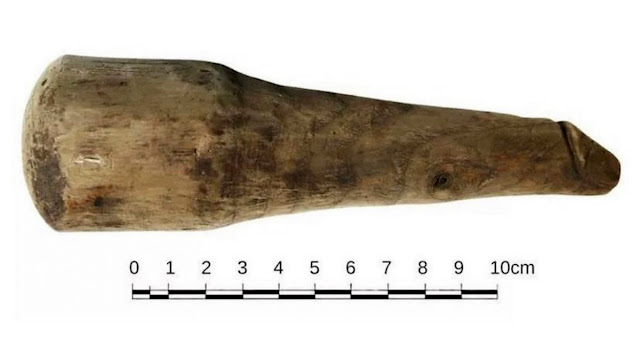
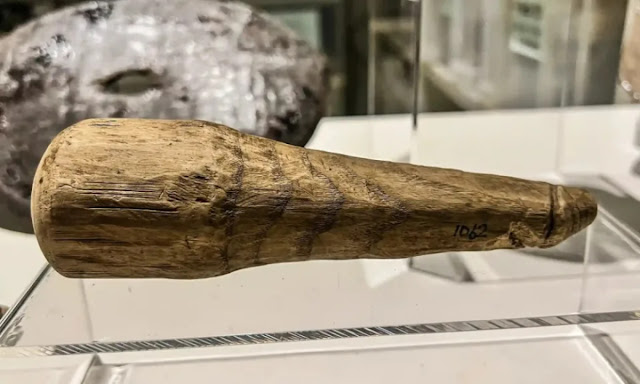
Researchers have come up with three possible theories for what it was used for. Phallic symbols were common in ancient Rome, used as good luck protection and appearing as decoration on everything from jewelry to frescoes to pottery. 

One theory is that it was used as a pestle that would imbue magical properties into the ingredients it ground up, the scholars said. Another is that it would have been embedded into a public statue for passers-by to touch for good luck, as was common at the time, they added.

But there’s a problem with the “statue” theory: the object is worn down at both ends, and not just the tip, suggesting repeated handling.

The phallus is now on display in the Vindolanda museum.

March 19, 2022

Fascinating Pictures of the Whippet Clubs in Ashington and North Seaton in 1982

The Whippet is a British dog breed of medium size. They are a sighthound breed that originated in England, where they descended from the Greyhound. Whippets today still strongly resemble a smaller Greyhound. 

In the 19th century, Whippet racing was a popular sport in parts of England. The Whippet was held in high regard in the northern parts of England and Wales. At the time, there were two varieties of Whippet. The first type had a smooth coat, was more popular in Lancashire, Yorkshire, and the Midlands, and became the modern Whippet. The other had a rough coat from crossbreeding with Bedlington Terriers. This type was more popular in Durham and Northumberland and was frequently referred to as a "rabbit dog".

These images were captured during 1982 at Ashington and North Seaton Whippet Clubs in Northumberland by Mik Critchlow, a social documentary photographer based in the North East of England.


March 12, 2022

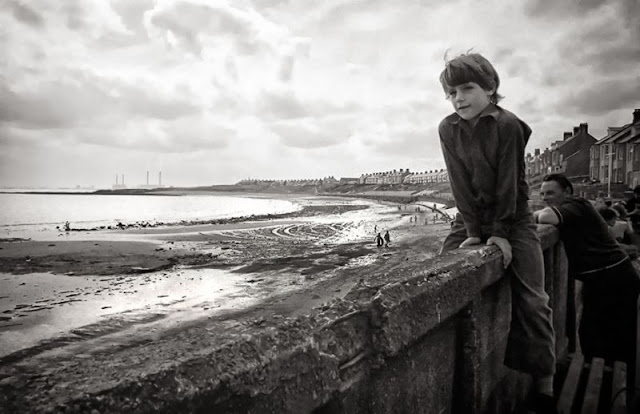
Fascinating Black and White Photos of Life in an English Coal Town From the 1970s to 1990s

Mik Critchlow is a social documentary photographer based in the North East of England. On seeing an exhibition of paintings in 1977 by 'The Ashington Group' (Pitmen Painters), a group of Ashington men brought together in 1934 by the Workers Educational Association for Art Appreciation classes, he realized the value of art as social document, the visual representation of everyday life, by one’s own knowledge and personal experiences.

In the same year, he began a long-term photography project documenting his hometown of Ashington in Northumberland. The son of a miner, he has worked within the community with a deep-rooted empathy for the townsfolk, documenting the area and its people during a rapid period of social and environmental change. 

Ashington was once a center of the coal mining industry. The first evidence of mining is from bell-shaped pits and monastic mine workings discovered in the 20th Century during tunneling. It developed from a small hamlet in the 1840s when the Duke of Portland built housing to encourage people escaping the Great Famine of Ireland to come and work at his nearby collieries. As in many other parts of Britain, "deep pit" coal mining in the area declined during the 1980s and 1990s. During the heyday of coal mining, Ashington was considered to be the "world's largest coal-mining village".

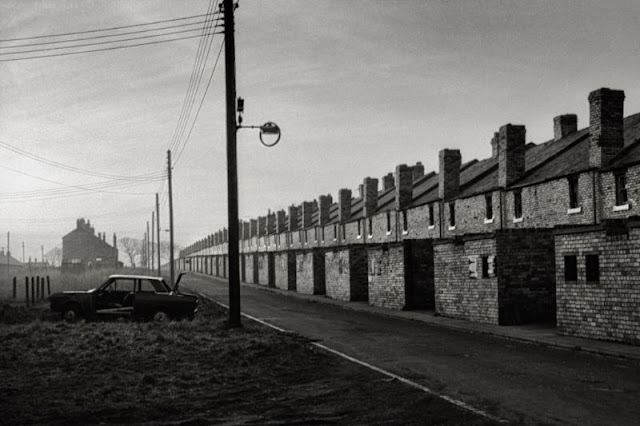
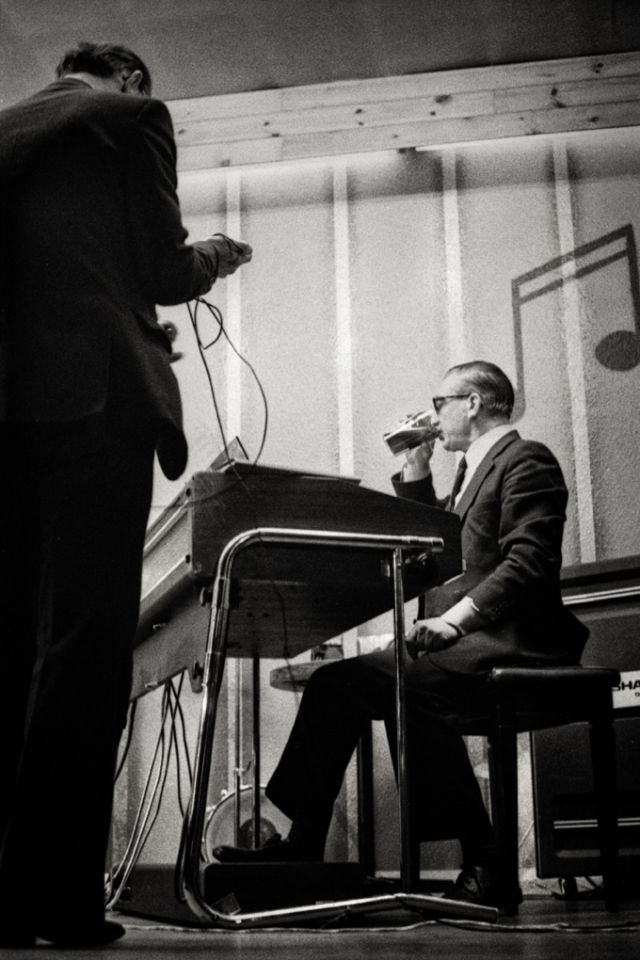
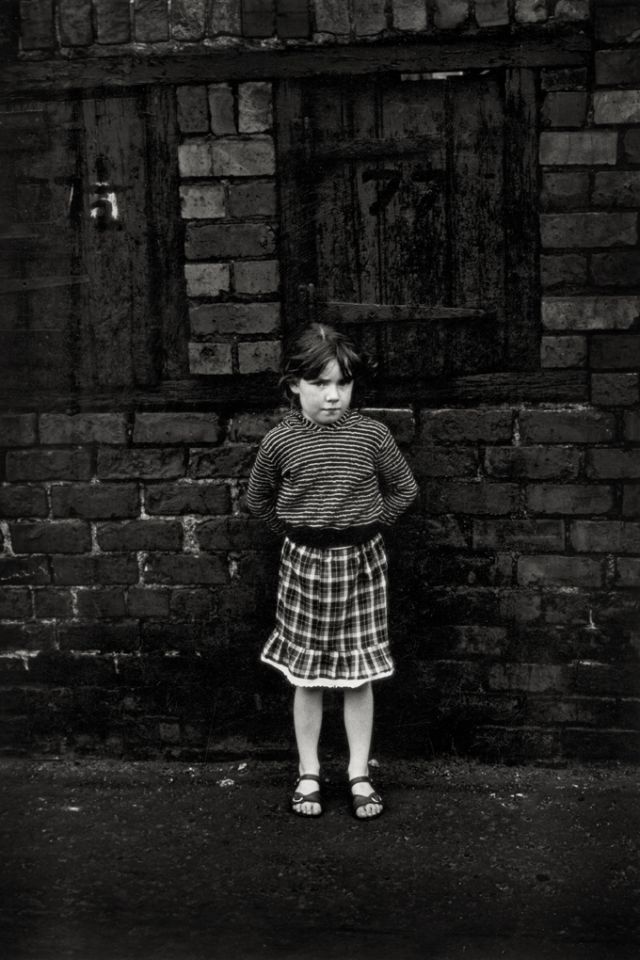
Take a look at life in Ashington from the late 1970s to 1990s through these 30 brilliant photographs taken by Critchlow:

Ashington, Northumberland

Colliery Housing, 1977

Northern Social Club, 1977

Poplar Street, 1977

Saturday morning, Hirst Miners Welfare Club, 1977

September 22, 2021

Inside Stannington Sanatorium, the Very First Purpose-Built Children’s TB Hospital in the UK

Stannington Sanatorium was the first purpose-built children’s tuberculosis sanatorium in the UK which officially opened on October 5, 1907 near to the village of Stannington, Northumberland. The institution was established by a local charity, The Poor Children’s Holiday Association (PCHA), which developed into the modern-day charity Children North East, and also took contributions from local Poor Law Guardians for the upkeep of patients.

Tuberculosis at the beginning of the 20th century was one of the biggest killers in the UK, responsible for more deaths than any other disease. The disease had long been associated with poverty and poor living conditions and by establishing a dedicated institution the PCHA hoped to make a difference to the lives of thousands of disadvantaged children.

When the sanatorium first opened in 1907 it contained only 50 beds but high demand and generous donations soon saw it expand with many new wards and additional facilities added over the coming years. Stannington was the first TB sanatorium to open in the UK that was dedicated purely to the treatment of children. At this time, while national death rates from TB were still fairly high Stannington maintained comparatively low death rates. By 1928 the hospital had the capacity to treat 310 children and this was the maximum capacity the sanatorium was ever to reach.

The sanitorium witnessed a great number of important changes in the treatment of tuberculosis as well as significant social changes. For example, the introduction of Streptomycin in 1947 revolutionized treatment for some. The National Health Service took over the responsibility of the sanatorium in 1948 and it continued its work dedicated to the treatment of tuberculous children up until 1953 whereupon it became a general children’s hospital. With the introduction of effective antibiotic treatments in 1947 and an array of other public health measures, tuberculosis had now begun to steadily decline, however, even after this date it continued to take in tuberculosis patients. It continued its operations as an NHS children’s hospital until 1984 when it was closed completely. Many of the historic medical records were recovered when the hospital closed.

‘Senior girls - surgical cases’ at Stannington Sanatorium, the first British sanatorium for tuberculosis children in Morpeth, Northumberland.

Interior of ward for non-pulmonary boys, Stannington Sanatorium.

Outdoor terrace at Stannington enabling patients to spend maximum time in fresh air environment.

Group of children at Stannington Sanatorium.

An interior view of Stannington Sanatorium, 1926. The young patients can be seen resting in wicker chairs in a sun room. Exposure to sunlight was part of the core treatment for TB patients.

November 9, 2018

The Coal Queens: Vintage Photographs Show the Glamorous Side of Coal Mining in Northumberland From the 1950s

Donald Hindson, General Manager of the National Coal Board once commented that it was rather unusual to associate a queen with coal, but “as there have been coal barons and King Cole, why not a coal queen?”

The Coal Queen pageant was a tradition that ran until the 1980s within mining communities. Coal Queens could be the wife, sister or daughter of pit workers and would be crowned each year at local miners’ picnics or carnivals. The competition added a touch of glamour and femininity to the heavy, dirty and gritty nature of their work.

These vintage photographs explore the tradition and history of Coal Queens, their place in the local community and the fashion of the times in which the competition took place.

These photographs are from the collections held by Northumberland Archives.

This is a photograph of the Ashington Miners’ Holiday week of 1952 with the coronation of “Her Majesty the Coal Queen” - 21 year old Mrs. Sally Smith. Mr Donald Hindson, General Manager, placed the crown on Mrs. Smith’s head commenting that it was rather unusual to associate a queen with coal, but “as there have been coal barons and King Cole, why not a coal queen?”

This is a photograph of the Bedlingtonshire Coal Queen Gillian McNair, with her fiancé Cyril Richardson in 1954.

This is a photograph of Frances Cogan, the former Miss Brenkley Colliery. Frances was crowned Northumberland Coal Queen in 1978.

This is a photograph of Coal Queens being paraded on a float at the Northumberland Miners’ Picnic held at Ashington, 1979. Pictured in the centre in blue is the Picnic Queen and to the right in the red sash is the Northumberland Coal Queen.

This is a photograph of the opening of the new colliery baths at Ellington Colliery, Ellington, 1982. Northumberland by Deborah Bramley, The Northumberland Coal Queen.

This is a photograph of the regional Coal Queens posing at a railway station for the National Coal Queen final at Blackpool in 1982.


FOLLOW US:
FacebookTumblrPinterestInstagram

CONTACT US


Browse by Decades

Popular Posts

Advertisement

09 10