Bring back some good or bad memories


ADVERTISEMENT
Showing posts with label Dallas. Show all posts

March 15, 2026

The Moment Jack Ruby Shot Lee Harvey Oswald in Dallas on November 24, 1963

One of the most shocking moments in American history, captured live on television and in photographs. On the morning of November 24, 1963, just two days after President John F. Kennedy’s assassination, Lee Harvey Oswald was being transferred from Dallas Police Headquarters to the county jail. As he was escorted through the basement of the Dallas Police Department, nightclub owner Jack Ruby stepped forward from the crowd of reporters and detectives and fired a single .38-caliber revolver shot into Oswald’s abdomen at point-blank range.


Oswald died approximately two hours later at Parkland Memorial Hospital, the same hospital where President Kennedy had died two days earlier.

The shooting was broadcast live on national television, making it one of the first acts of violence ever witnessed in real time by a mass audience. The famous photograph, taken by Robert H. Jackson of the Dallas Times Herald, won the 1964 Pulitzer Prize for Photography.

Jack Ruby (52) shoots Lee Harvey Oswald (24). The image was captured by Dallas Times Herald photographer Robert H. Jackson and it won the 1964 Pulitzer Prize for Photography.

Jack Beers’s photograph taken a split second before Jack Ruby shot Lee Harvey Oswald on November 24, 1963. The photo was used on the front page of the Dallas Morning News the next day

A camera captures the back of Jack Ruby as he shoots Lee Harvey Oswald who is being escorted by guards during a television press conference at the Dallas police headquarters.

The AP says this is Jack Ruby’s hat on the ground just after shooting Lee Harvey Oswald in 1963.

Mugshot of Jack Ruby taken November 24, 1963, after his arrest for killing Lee Harvey Oswald.

November 22, 2025

The Story Behind Robert Croft’s Iconic Photograph of John F. Kennedy in Dealey Plaza, Before the First Shot Struck Kennedy

Assassination eyewitness Robert Croft took this up-close picture of John F. Kennedy and Jackie Kennedy after the limousine had made its fatal turn onto Elm Street. Jackie, probably to the photographer’s immense delight, appears to be looking directly at Mr. Croft when he clicked his camera’s shutter.

Jacqueline Kennedy looks at Robert Croft as he snaps a photo of her, her husband President John F. Kennedy, Texas Gov. John Connally, his wife Nellie Connally and two Secret Service agents in the presidential limousine just before shots rang out in Dealey Square on Nov. 22, 1963.

The photo was snapped by Croft at the equivalent of approximately Frame #161 of Abraham Zapruder’s home movie, which was almost exactly the same time that Lee Harvey Oswald fired the first of his three gunshots from the Book Depository (the first shot missed the car and its occupants completely).

Robert Earl “Bob” Croft was a 20-year-old missionary for the Church of Jesus Christ of Latter-day Saints who was in Dallas on Nov. 22, 1963.

“It was the most gruesome, horrible thing I have ever seen in my life,” he told the Powell Tribune 50 years ago. “I don’t know if I will ever get over it.”

Croft decided to see Kennedy’s motorcade pass through Dallas, and he left the Union Terminal, where he was waiting for a bus to take him to Denver, to see the president pass. He walked over to Dealey Plaza in the downtown area — and took his Argus C3 35mm camera with him.

Croft told the Powell Tribune for a story published Nov. 26, 1963, that he was 30 feet from JFK’s limousine when the shots rang out at around 12:30 p.m. Central Time.

During an interview Croft did on April 20, 1988, 25 years after the assassination, with JFK researcher Richard Trask for Trask’s book “Pictures of the Pain,” Croft offered more details on what he witnessed in Dallas.

He said he was winding his camera to get as many photos as possible. He took three, and was trying to snap a fourth when he heard a shot ring out in the concrete canyon of Dealey Plaza. Croft told Trask the photo was “taken simultaneously with the shot which killed the President,” according to the book.

Then, the area was in pandemonium.

Croft also appears in some photos taken that day, as many people took cameras to capture an image of the glamorous president and his wife. He is also seen in the famed Abraham Zapruder film of the assassination.

After the fatal events of Nov. 22, 1963, Bob Croft was in contact with the Secret Service and the FBI. Both agencies examined his color slides.

Online and printed reports, based on an FBI file, state that Croft took 22 images on his roll of 36-exposure Kodachrome-X film before it was processed. Three were of the Kennedy motorcade. One was of the motorcycles in the advance guard; the other two showed the presidential limousine.

The more famous of the photos, frame 18 on the roll, shows first lady Jacqueline Kennedy looking right at Croft. He was standing on the south curb of Elm Street on the driver’s side of the limo, facing the Texas School Book Depository. President John F. Kennedy is next to his wife and is shown in profile.

Texas Gov. John Connally and his wife Nellie are in the middle of the 1961 Lincoln Continental convertible in the jump seats. The driver is Secret Service Agent William Greer, with Secret Service Assistant Special Agent in Charge Roy Kellerman riding next to him in the front seat.

It’s an iconic photo, one of the most famous taken on that day. It appears on dozens of websites and has been published in books, magazines and newspapers.

According to the book, “Matrix for Assassination: The JFK Conspiracy,” Croft took a fourth photo at the scene. He believed it was snapped at the exact moment as the devastating head shot struck Kennedy. But when he received his photos back from the FBI, this slide was a complete blank. The FBI told him his camera appeared to have malfunctioned at that moment.

Croft’s photos were first examined by the FBI, according to a Secret Service memo, after he turned his film over to the Denver FBI office.

According to Trask’s book, “... frame number 18 appears to show the Presidential car on Elm Street south of Houston Street just moments before the President was shot ... Croft believed the last picture taken by him was taken simultaneously with the shot which killed the President. This no doubt refers to frame number 19 which is a complete blank which probably was occasioned by some malfunction of Mr. Croft’s camera or some other fault.”

Trask said he very much doubts the FBI tampered with the photo. Others, in the conspiracy-thick world of the JFK assassination, are not as convinced.

After the FBI returned his photos on Jan. 4, 1964, Croft mailed them to his parents in Powell. Two days later, the Secret Service office in Denver learned of the photos and asked Croft, who was living there as part of his two-year LDS mission, if they could examine them. He had his parents mail the photos back to him, and turned them over to the Secret Service, which, according to memos, was looking for its agents in the motorcade or any unusual activity which appears to be related to the attack.

Eventually, Croft called and asked for the photos, and the color slides were mailed to his Powell home, according to an April 20, 1964, Secret Service memo.

“Please accept our sincere thanks for your cooperation in making these slides available for our review,” the letter from Rolland H. Osborne, the special agent in charge of the Denver office states.

Rob Croft said he has no idea what happened to the photos, which captured a healthy, happy JFK and his wife seconds before their lives, and the fate of the nation, were forever changed.

November 23, 2024

The Famous Polaroid Photo of John F. Kennedy Taken by Mary Ann Moorman a Fraction of a Second After the Fatal Shot

This is one of the most famous (and most studied) photographs taken on November 22, 1963; the Polaroid snapshot captured by Mary Moorman. Abraham Zapruder can be seen filming the motorcade from atop the concrete pedestal on the right-hand side of the photo. The ugly thumbprint that mars the photo was left there by someone who handled it after Moorman gave the picture to the FBI.


On November 22, 1963, U.S. President John F. Kennedy was assassinated in Dallas, Texas.

Moorman stated that her 11-year-old son had wanted to see Kennedy, but was unable to attend because of school. She said she promised to take a picture for him.

Moorman was standing on grass about 2 feet (61 cm) south of the south curb of Elm Street in Dealey Plaza, directly across from the grassy knoll and the North Pergola concrete structure that Abraham Zapruder and his assistant Marilyn Sitzman were standing on – during the assassination. Moorman stated that she stepped off the grass onto the street to take a photo with her Polaroid camera. Zapruder can be seen standing on the pergola in the Moorman photograph, with the presidential limousine already having passed through the line of sight between Zapruder and Moorman.

Both Moorman and her friend, Jean Hill, can be clearly seen in the Zapruder film. Between Zapruder frames 315 and 316, Moorman took a Polaroid photograph, her fifth that day, showing the presidential limousine with the grassy knoll area in the background.

Jean Hill and Mary Moorman on November 22, 1963.

Moorman’s photograph captured the fatal head shot that killed President Kennedy. When she took it – approximately one sixth of a second after President Kennedy was struck in the head at Zapruder frame 313, Moorman was standing behind and to the left of President Kennedy, about 15 feet (5 m) from the presidential limousine. Moorman said in a TV interview that immediately after the assassination, there were three or four shots close together, that shots were still being fired after the fatal head shot, and that she was in the line of fire. She later stated in a 2013 PBS documentary Kennedy Half Century that she was close enough to hear Jackie Kennedy exclaim that John had been shot.

In 2013, Moorman attempted to sell the original Polaroid through Cowan’s Auctions in Cincinnati. The photo was expected to sell for between $50,000 and $75,000, but did not meet its reserve. It ultimately sold there. She had previously tried selling the photo to Sotheby’s in New York, but the auction house deemed it to be “too sensitive to auction.” That same year, she expressed her opinion on the assassination; she was convinced that Kennedy was killed as a result of a conspiracy.

Jean Hill’s affidavit

Mary Moorman’s affidavit


“I really don’t know what exactly happened, but I do know there is bound to be a lot more to the story that hasn’t been told,” she said. “I was hoping it would come out in my lifetime, but who knows. So much has been hidden by the government; anything can take place and it can be hidden. Oswald probably wasn’t a lone person, he probably had backers. I really do think it was a conspiracy.”

Whatever was captured in the background of Moorman’s photo has been a matter of contentious debate. On the grassy knoll, some have claimed to identify as many as four different human figures, while others dismiss these indistinct images as either trees or shadows. Most often, one figure has been dubbed the “Badge Man” as it seems to resemble a uniformed police officer wearing a badge. Others claim to see Gordon Arnold, a man who claimed to have filmed the assassination from that area, a man in a construction hard hat, and a hatted man behind the stockade fence.

An enlargement of the Badge Man image from the Moorman photograph.

Moorman stated she heard a shot as the limousine passed her, then heard another two shots, “pow pow,” when the president’s head exploded. She stated that she could not determine where the shots came from, and that she saw no one in the area that appeared to have possibly been the assassin. Moorman was interviewed by the Dallas County Sheriff’s Department and the FBI. She was called by the Warren Commission to testify, but due to a sprained ankle, she was unable to be questioned. She was never contacted by them again.

November 23, 2023

3 Powerful Snaps of the Final Moments of John F. Kennedy in Dallas on November 22, 1963

In 2013, there was a story in TIME magazine, regarding previously unpublished images of President Kennedy’s motorcade in Dallas, Texas, in 1963. The color pictures, snapped in the moments before the US president was shot dead as he rode in an open-top limousine through Dallas on November 22, 1963, were taken by H. Warner King and lay sitting in storage before being found by his daughter, Sonia King.

John and Jacqueline ride in an open-top limousine on the way to the Dallas Trade Mart, Nov. 22, 1963, where Kennedy was to give a speech later in the day.

Her father had been an amateur photographer in New Zealand during World War II, but was working as a jewelry wholesaler in Dallas when he took the snaps.

“My dad arranged to be in town the day he heard Kennedy was coming to Dallas because he wanted to take pictures. He knew Dallas really well, and he knew where to go to get close to the motorcade,” she told the magazine. “The cars passed him and he photographed John and Jackie. In one photo, they’re smiling right at him.”

Ms King, who was 10 at the time of the shooting, says her father returned to New Zealand in 1975 after retiring, taking the color slides with him. He died in 2005 and Ms King was going through his possessions recently when she came across a red box labelled November/December 1963 Kennedy.

Despite ill political winds in Texas, the Kennedys were greeted on Nov. 22nd by cheering throngs in Dallas.

“I found these pictures right away. Now, 50 years later, his photographs of the Kennedys finally see the light of day.”

But shots capturing the aftermath of the shooting with the motorcade taking the fatally injured president to hospital are missing, possibly out of respect.

“I think he may have deliberately destroyed them,” Ms King said. “The assassination was at the forefront of my father’s mind for a long time.”

Kennedy’s well-wishers crowded close to his limousine as the motorcade neared Dealey Plaza.

The photos feature on the cover of the November 25 US edition of the magazine to mark the 50th anniversary of the assassination.

(All photos by H. Warner King)

President John F. Kennedy Riding in an Open Car in Dallas, Texas Before His Assassination on November 22, 1963

The most notorious political murder in recent American history occurred this day on November 22,1963, when John F. Kennedy, the 35th U.S. president (1961–63), was shot and killed while riding in an open-car motorcade in downtown Dallas, Texas.

The shocking event of 60 years ago happened near the end of JFK’s third year as president. Riding in the same car as Kennedy and first lady Jacqueline Kennedy was Texas Gov. John B. Connally, as well as Connally’s wife, Nellie Connally.

That same day, the suspect in the shooting, Lee Harvey Oswald, was arrested. Vice President Lyndon B. Johnson was sworn in as president that day as well as the stunned nation absorbed the blow of so suddenly and violently losing its elected president.

The car turned off Main Street at Dealey Plaza around 12:30 p.m. As it was passing the Texas School Book Depository, gunfire suddenly reverberated in the plaza. Bullets struck the president's neck and head and he slumped over toward Mrs. Kennedy. The governor was shot in his back.

Right after the shooting, the car sped off to Parkland Memorial Hospital just a few minutes away. But little could be done for the president. A Catholic priest was summoned to administer the last rites, and at 1:00 p.m. John F. Kennedy was pronounced dead. Gov. Connally had been seriously wounded but later recovered.


December 4, 2021

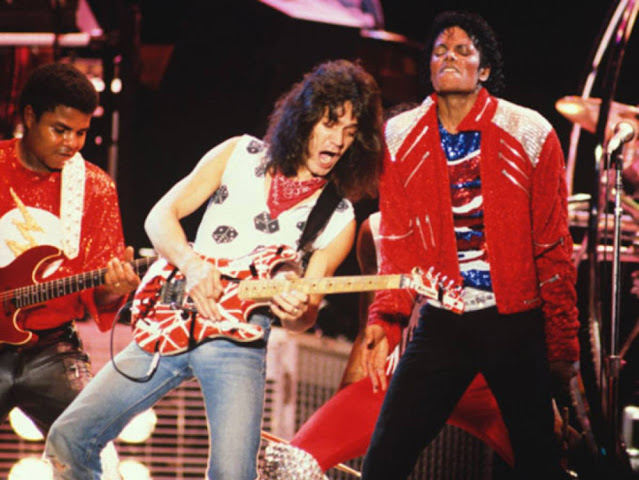
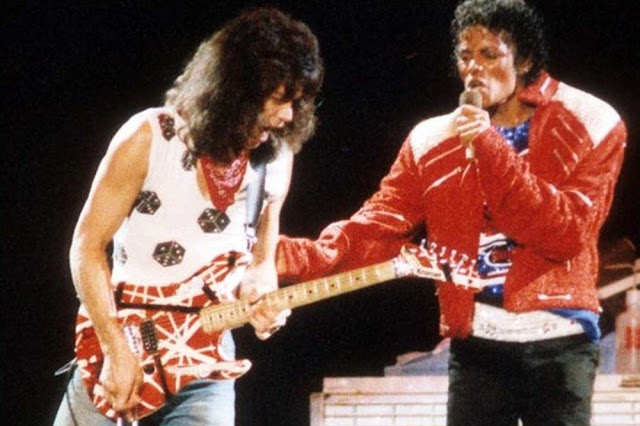
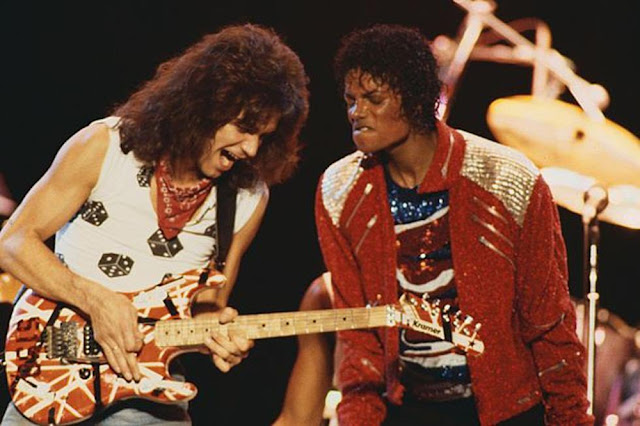
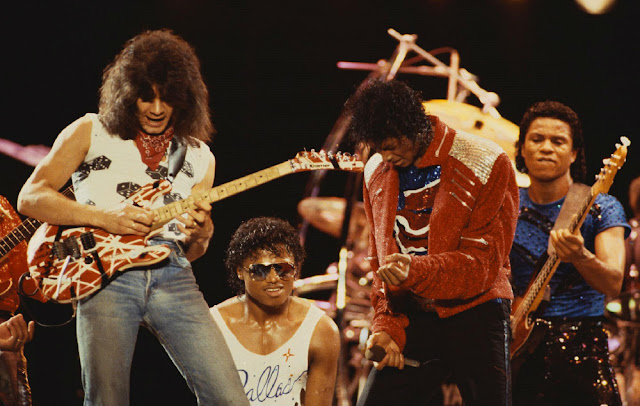
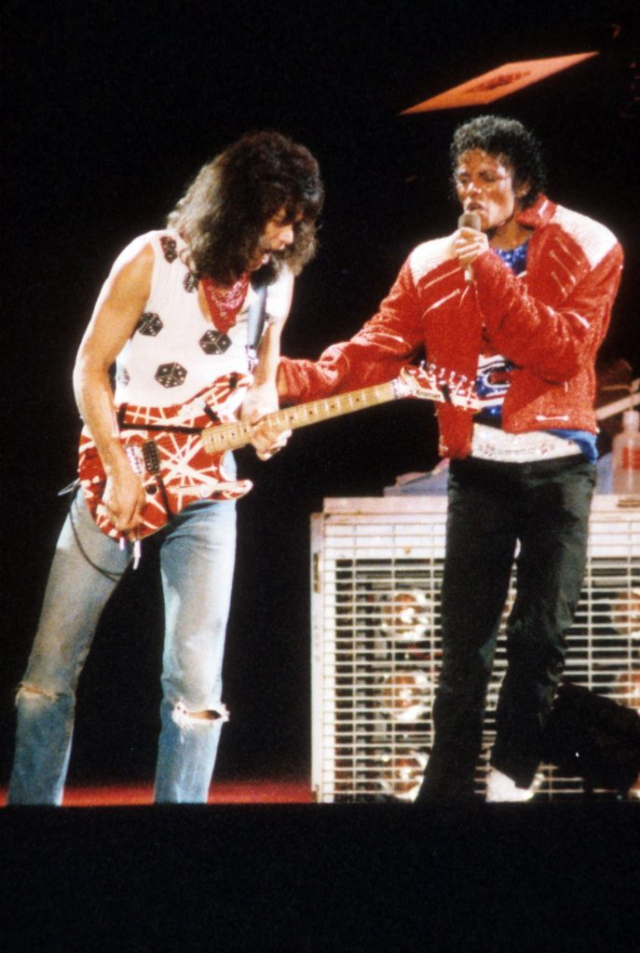
Photographs of Michael Jackson and Eddie Van Halen Playing “Beat It” at Texas Stadium in Dallas, 1984

“Beat It” is a song by Michael Jackson from his sixth studio album, Thriller (1982). It was written by Jackson and produced by Jackson and Quincy Jones. Jones encouraged Jackson to include a rock song on the album. Jackson later said: “I wanted to write a song, the type of song that I would buy if I were to buy a rock song... and I wanted the children to really enjoy it—the school children as well as the college students.” It includes a guitar solo by Eddie Van Halen.

And while Van Halen didn’t appear in the track’s successful video, he did join Michael once more to play “Beat It” on an early stop on The Jacksons’ Victory Tour at Texas Stadium in Dallas on July 14, 1984.


When initially contacted by Jones, Van Halen thought he was receiving a prank call. “I went off on him. I went, ‘What do you want, you f-ing so-and-so!,’” Van Halen told CNN in 2012. “And he goes, ‘Is this Eddie?’ I said, ‘Yeah, what the hell do you want?’ ‘This is Quincy.’ I’m thinking to myself, ‘I don’t know anyone named Quincy.’ He goes, ‘Quincy Jones, man.’ I went, ‘Ohhh, sorry!’”

Having established that the call was genuine, Van Halen used a Hartley–Thompson amplifier borrowed from guitarist Allan Holdsworth and recorded his guitar solo free of charge. “I did it as a favor,” the musician later said. “I was a complete fool, according to the rest of the band, our manager and everyone else. I was not used. I knew what I was doing—I don’t do something unless I want to do it.” Van Halen recorded his contribution following Jones and Jackson arriving at the guitarist’s house with a “skeleton version” of the song. Fellow guitarist Steve Lukather recalled, “Initially, we rocked it out as Eddie had played a good solo—but Quincy thought it was too tough. So I had to reduce the distorted guitar sound and that is what was released.”

September 18, 2021

Portraits of Highland Park High School Teenage Girls, 1947

Highland Park High School is a public, co-educational high school located immediately north of downtown Dallas in University Park, Dallas County, Texas. It is a part of the Highland Park Independent School District, which serves residents who are predominantly college-educated professionals and business leaders in the Dallas community. It serves: all of the city of University Park, most of the town of Highland Park, and portions of Dallas.


The first building was the yellow brick schoolhouse of the Armstrong School which opened on October 12, 1915. The Armstrong School only served children through ninth grade. In 1922, the high school moved to its own separate building on Normandy Avenue following HPISD’s purchase of 11 lots in 1920. The tenth grade was added in the fall of 1922, and the eleventh grade a year later.

In 1924, 34 students became the first graduating class of the Highland Park Independent School District when they participated in the first-ever high school graduation ceremony of HPISD on June 2, 1924 (at that time, only eleven years of school were required prior to college admittance; it was not until 1937 that the twelfth grade was added).

These black and white photos were taken by LIFE photographer Cornell Capa in 1947. They show beautiful teenage girls’ styles of Highland Park High School from between the mid to the late of 1940s.


December 19, 2020

Giant Santa Claus at Porter Chevrolet in Dallas, Texas in December 1953

When Porter Chevrolet opened at 5526 East Mockingbird, it asked and got permission from the Dr Pepper Company to use in its ads the statement, “Just across the street from the Dr Pepper Company.”

Then came that big Porter Santa Claus, the one sitting on the roof. It landed on front pages as far away as Atlanta and New York. People came from all over. And cars streamed past it down Mockingbird.

A papier-mache Santa Claus so large, in fact, that he’ll be holding a full-sized automobile in his lap.

Big Santa was the offspring of Big Tex: Porter’s Christmas ornament was designed by none other than Jack Bridges, the very same man who, at the request of then-State Fair president R.L. Thornton in 1951, transformed a 49-foot-tall Santa from Kerens, Texas, into Big Tex. Bridges and a squadron of 11 assistants would spend some two months on the project, which presented several engineering problems – all of which were exacerbated, Bridges said, “because Santa is sitting down.”

Wrote the legendary Frank X. Tolbert: “Biggest chore is coupling Santa’s bent-over torso to his fat steel legs. The head, with its six-foot sweep of a beard, and the legs and the great boots (each boot top will be level with the roof of the building) will be hauled from Bridges’ studio at 3226 East Illinois to the motor company on trucks. The torso will be put on wheels and towed.”

Much of the papier-mache work had to be done outdoors, in the studio’s yard. Santa was too big; so too the problems. Said Bridges, “One of the little ones is getting the expression just right around Santa’s mouth and eyes so the kids will love him.”

But mere hours after Santa took his place, tragedy.

In late November 1953, Jack Bridges’s biggest nightmare had come true: He could not move Santa Claus. A truck big enough to transport an 82-foot figure of Santa Claus can’t be found in Dallas. And so the pieces had to be hauled separately: The torso was put on wheels and trucked across town, while the other pieces were loaded into vehicles for the long haul to the dealership located across the street from the Dr Pepper plant. At which point he was finally assembled.

On December 9, a Wednesday, his head was put on – the final piece at last in place. Santa Claus had come to town, a Chevy perched in his lap.

January 26, 2020

40 Fascinating Pics Capture Street Scenes of Dallas, Texas in the Early 1980s

Dallas is a city in the U.S. state of Texas and the largest city and seat of Dallas County. It is the ninth most-populous city in the U.S. and third in Texas after Houston and San Antonio.

Located in North Texas, the city of Dallas is the main core of the largest metropolitan area in the Southern United States and the largest inland metropolitan area in the U.S. that lacks any navigable link to the sea. It is the most populous city in the Dallas–Fort Worth metroplex, the fourth-largest.

Dominant sectors of its diverse economy include defense, financial services, information technology, telecommunications, and transportation. Dallas is home to 9 Fortune 500 companies within the city limits. Over 41 colleges and universities are located within its metropolitan area, which is the most of any metropolitan area in Texas.

The city has a population from a myriad of ethnic and religious backgrounds and one of the largest LGBT communities in the U.S. WalletHub named Dallas the fifth most-diverse city in the U.S.

These fascinating photos from Red Oak Kid were taken by Leta Patterson that show street scenes of Dallas from 1981 to 1984.

The Majestic Theatre before it was restored, circa early 1980s

Dallas High School (also known as Crozier Tech), circa early 1980s

Dallas skyline, circa early 1980s

West End, circa early 1980s

Building on the corner of Commerce and Polydras, 1981

April 24, 2018

Vintage American Interiors: 14 Pictures Show What Dallas Modern Rooms Looked Like in the 1950s

These photos from Lynne's Lens that show modern rooms in Dallas from the 1950s. They were taken by Tom Collins who spent his early years as a photographer taking photos for businesses, advertising firms, architects, and newspapers.

50's Office

50's Office

50's Modern Room in Dallas

Atomic Boomerang 50's Office

Bedroom

January 1, 2018

In the 1940s, Men Dressed in Short Shorts and Cowboy Boots Served Up Women at a Drive Through in Dallas

What’s funny is this isn’t a completely new idea in Dallas. In the 1940s, men dressed in short shorts and cowboy boots served up women at a drive through across the street from Love Field.

“At your service, ma’am” (AP Photo)

In 1940, Dallas was in a tizzy about the sudden fad of scantily-clad “girl carhops.” This scourge had made its way to Dallas from Houston, and in April of 1940, it was a newspaper story with, as it were … legs. For a good month or two, stories of sexy carhops were everywhere.

The girls started wearing uniforms with very short skirts — or midriff-baring costumes with cellophane hula skirts. Some of the women reported an increase in tips of $25 or more a week — a ton of money for the time.


The Dallas Morning News, Apr. 24, 1940.

The public’s reaction ranged from amusement to outrage. There were reports of community matrons who reported the “indecent” attire to the police department and demanded action. Other women were annoyed by the objectification of young womanhood. Lawmakers in Austin discussed whether the practice of waitresses exposing so much extra skin posed a health risk to consumers.

But it wasn’t until a woman from Oak Cliff piped up that something actually happened. She complained that she didn’t want to look at girls’ legs when she stopped in at her local drive-in — she wanted to look at men’s legs. Drive-in owners thought that was a GREAT idea, and the idea of the scantily-clad male carhop was born.

The Dallas Morning News, Apr. 26, 1940.

Fort Worth Star-Telegram, Apr. 28, 1940.

One might think that the woman behind this “equal ogling” campaign was sort of proto-feminist, until you get to the part where she said that the whole girl carhop thing was “wrong socially and economically and should not be tolerated” (DMN, Apr. 27, 1940) — not because of the skin flashed, but because men needed jobs, not girls. And that also raised hackles.

The Dallas Morning News, May 5, 1940..

The photo at the top (syndicated in papers via the Associated Press) ran in The Dallas Morning News under the headline: “Adonis and Apollo of Roadside Bring Trade to Daring Stand.” The caption:

  • “First large roadside stand Friday to bow to the demand of Dallas women and feature husky young male carhops in shorts was the Log Lodge Tavern at Lemmon and Midway where four six-footers found jobs. Above, in blue shorts, white sweatshirt and cowboy boots, Joe Wilcox serves Pauline Taylor who smiles her approval of the idea. Bound for another car is James Smith, at right.” (DMN, April 27, 1940)

There were other male carhops around town, some not quite so hunky. This guy — game as he was — really needed to reconsider his outfit.

Xenia Daily Gazette, May 3, 1940.

But back to the female carhops and their siren-like hold over their male customers. This was, by far, the best story to hit the wires:

The Dallas Morning News, July 16, 1940.

Top image originally appeared in The Dallas Morning News on April 27, 1940, and was then syndicated by the Associated Press. The Log Lodge Tavern was located at 7334 Lemmon Avenue, which was across from Love Field and adjacent to the Log Lodge Tourist Court.

(This original article was written by Paula Bosse on Flashback Dallas)

September 11, 2017


FOLLOW US:
Facebook • Tumblr • Pinterest • Instagram

CONTACT US


Browse by Decades

Popular Posts

Advertisement

09 10