Bring back some good or bad memories


ADVERTISEMENT
Showing posts with label Czech Republic. Show all posts

June 2, 2026

The Memorial to the Child Victims of War in Lidice, Czech Republic

The Memorial to the Child Victims of War is a deeply moving bronze sculpture located at the Lidice Memorial in Lidice, Czech Republic. Created by academic sculptor Marie Uchytilová, it serves as a universal monument to all innocent child casualties of global conflicts while specifically commemorating the 82 local children murdered by Nazi forces at the Chełmno extermination camp in the summer of 1942.

In June 1942, Nazi forces completely destroyed the village of Lidice as a brutal act of retaliation for the assassination of SS General Reinhard Heydrich. The village was burned to the ground, the adult men were executed, and the women were sent to concentration camps.

Among the village children, 82 were deemed “unsuitable for Germanization,” transported to Chełmno, and murdered in mobile gas vans. They consisted of 42 girls and 40 boys ranging from 1 to 16 years old. Only 9 children from the village survived by being placed with German families.

Deeply moved by the tragedy, sculptor Marie Uchytilová dedicated two decades of her life, starting in 1969, to crafting the installation. To give each child a distinct identity, Uchytilová meticulously studied surviving photographs of the victims to capture their unique personalities, sizes, and expressions.

Working without financial support from the state, she spent her own savings to cast the first three statues in bronze. She completed the plaster molds in the spring of 1989 but unexpectedly passed away in November of that year, never seeing the finished product. Her husband, Jiří Václav Hampl, took over the monumental task in 1990. The first batch of 30 bronze statues was unveiled in 1995, and the final statues were safely installed in the year 2000.

The final monument comprises 82 life-sized bronze statues positioned on a hillside overlooking the site of the razed village. The figures stand together looking out into space, frozen in expressions of confusion, sadness, and innocence, creating a profound and chilling impression on visitors. The installation directly adjoins the "Garden of Peace and Friendship" on the expansive grounds of the Lidice Memorial Park.


June 25, 2025

Prague in 1995 Through Fascinating Photos

Prague in the 1990s was a city in transition, reborn from decades of communist rule into a vibrant center of culture, tourism, and democracy. After the Velvet Revolution in 1989 and the peaceful split of Czechoslovakia in 1993, Prague emerged as the capital of the newly independent Czech Republic.

The city’s rich architectural heritage—Gothic spires, Baroque churches, and Art Nouveau facades—drew growing numbers of international visitors. At the same time, a youthful energy transformed its streets: cafés, clubs, and galleries flourished, while local artists and entrepreneurs began shaping a new cultural identity.

The decade marked a blending of old-world charm and post-communist renewal, making Prague one of Europe’s most captivating capitals of the era. These fascinating photos, uncovered by David Pirmann, offer a glimpse into the streets of Prague in 1995.


February 17, 2024

Czech Republic in 1994 Through Fascinating Photos

The Czech Republic, also known as Czechia, is a landlocked country in Central Europe. It is bordered by Austria to the south, Germany to the west, Poland to the northeast, and Slovakia to the southeast. The Czech Republic has a hilly landscape that covers an area of 78,871 square kilometers (30,452 sq mi) with a mostly temperate continental and oceanic climate. The capital and largest city is Prague; other major cities and urban areas include Brno, Ostrava, Plzeň and Liberec.

Czech Republic in 1994

Czechoslovakia was restored in 1945 and three years later became an Eastern Bloc communist state following a coup d'état in 1948. Attempts to liberalize the government and economy were suppressed by a Soviet-led invasion of the country during the Prague Spring in 1968. In November 1989, the Velvet Revolution ended communist rule in the country and restored democracy. On 31 December 1992, Czechoslovakia was peacefully dissolved, with its constituent states becoming the independent states of the Czech Republic and Slovakia.

The Czech Republic is a unitary parliamentary republic and developed country with an advanced, high-income social market economy. It is a welfare state with a European social model, universal health care and free-tuition university education. It ranks 32nd in the Human Development Index. The Czech Republic is a member of the United Nations, NATO, the European Union, the OECD, the OSCE, the Council of Europe and the Visegrád Group.

These fascinating photos were taken by Sludge G that show street scenes of Czech Republic in 1994.

Česká Lípa Post Office and Tatra 613, Czech Republic, 1994

Česká Lípa, Czech Republic, 1994

Karlovy Vary, Czech Republic, 1994

Karlovy Vary, Czech Republic, 1994

Liberec railway station, Czech Republic, 1994

April 14, 2022

Fascinating Black and White Photos of Prague in 1990

Prague is the capital and largest city in the Czech Republic, the 13th largest city in the European Union and the historical capital of Bohemia. Situated on the Vltava river, Prague is home to about 1.3 million people, while its metropolitan area is estimated to have a population of 2.7 million. The city has a temperate oceanic climate, with relatively warm summers and chilly winters.

In 1989, after the riot police beat back a peaceful student demonstration, the Velvet Revolution crowded the streets of Prague, and the capital of Czechoslovakia benefited greatly from the new mood.

In 1993, after the Velvet Divorce, Prague became the capital city of the new Czech Republic. From 1995, high-rise buildings began to be built in Prague in large quantities.

In the late 1990s, Prague again became an important cultural center of Europe and was notably influenced by globalization. These fascinating black and white photos were taken by Greg Wass that show street scenes of Prague in 1990.


March 5, 2022

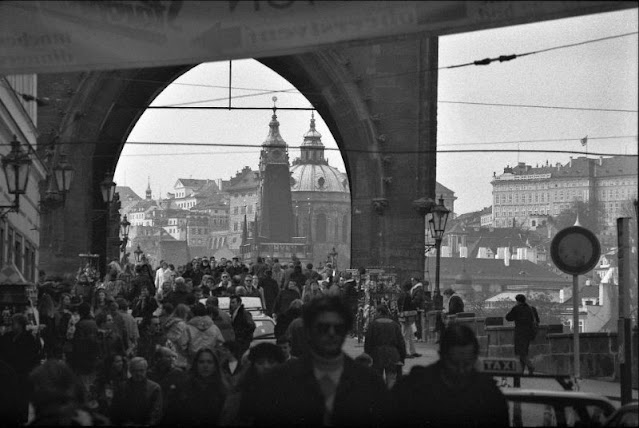
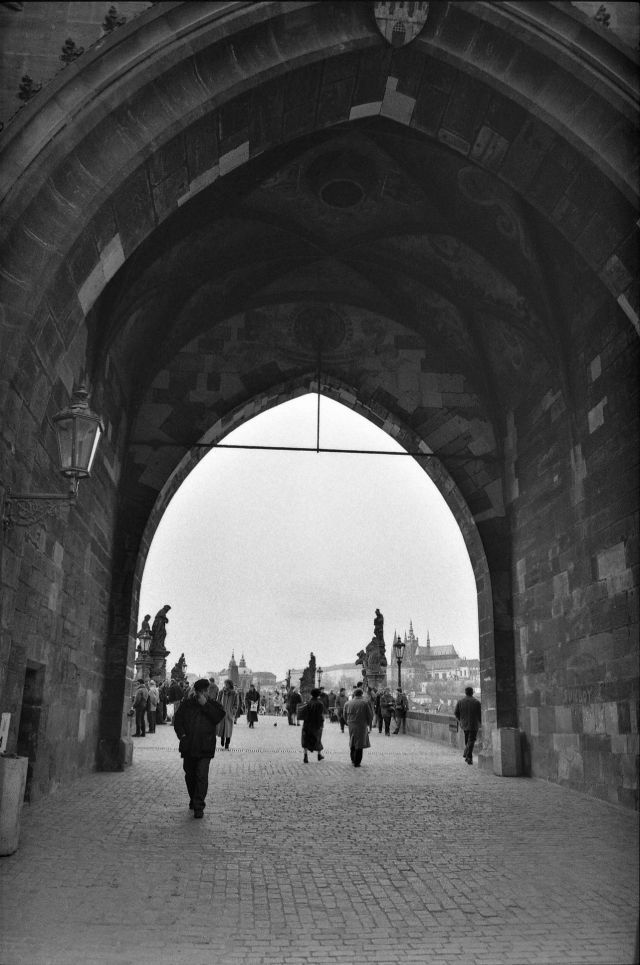
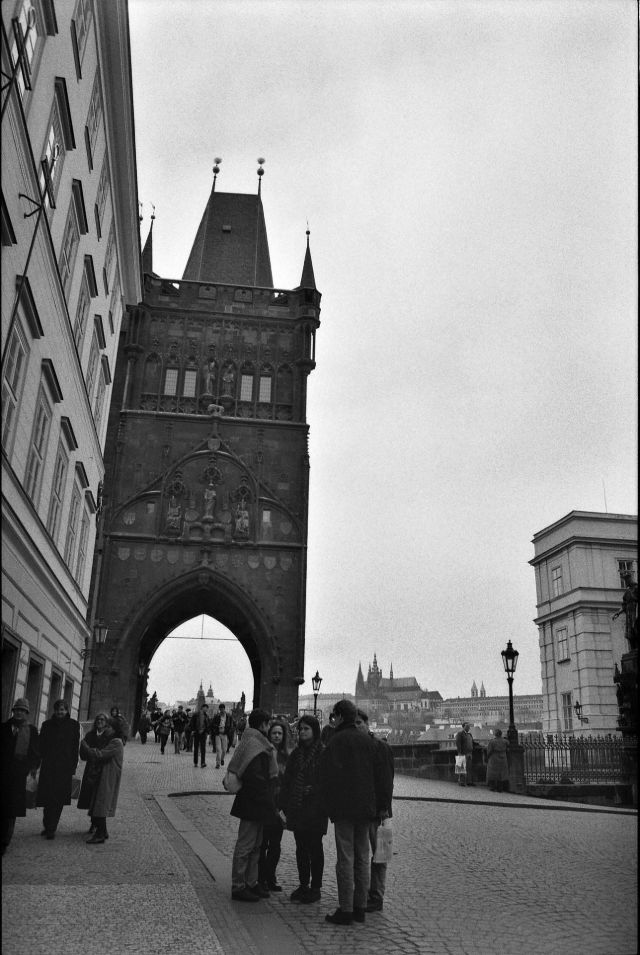
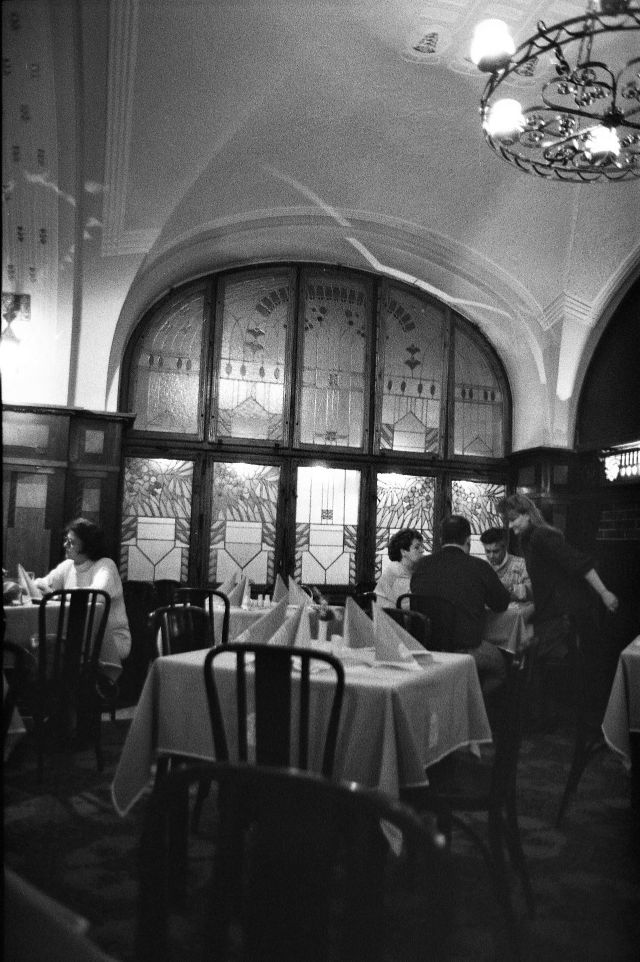
30 Black and White Photos Capture Street Scenes of Prague in the Mid-1990s

In 1989, after the riot police beat back a peaceful student demonstration, the Velvet Revolution crowded the streets of Prague, and the capital of Czechoslovakia benefited greatly from the new mood.

In 1993, after the Velvet Divorce, Prague became the capital city of the new Czech Republic. From 1995 high-rise buildings began to be built in Prague in large quantities. In the late 1990s, Prague again became an important cultural center of Europe and was notably influenced by globalization.

These beautiful black and white photos were taken by Fraser Pettigrew that show street scenes of Prague in February 1995.

Approaching Charles Bridge, Prague, 1995

Approaching Charles Bridge, Prague, 1995

Approaching Charles Bridge, Prague, 1995

Basement restaurant, Grand Hotel Europa, Wenceslas Square, Prague, 1995

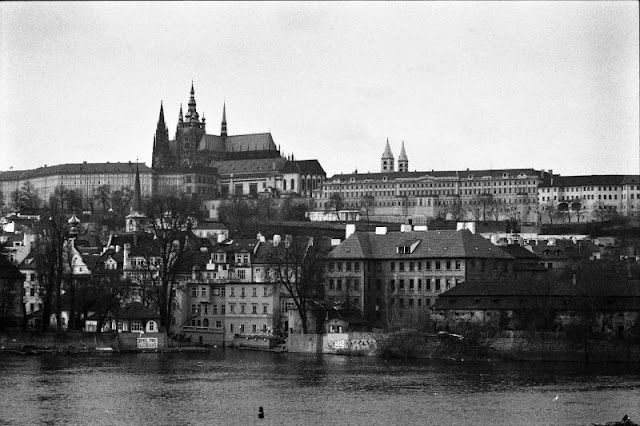
Castle from Charles Bridge, Prague, 1995

January 10, 2021

Here’s How to Take a Group Selfie From 1911

“The latest photographic trick, a rocket firing camera that shoots from above.” – Světozor, February 17, 1911

Here, some people in Czech Republic show how to take a group selfie back in 1911:


The word selfie was incorporated in Oxford Dictionaries in 2013. It is basically a self portrait taken by a camera at arm’s length. Even though selfie became popular in the past 5-6 years, self portrait has been around since a long time.

The first self portrait, or the selfie in modern terminology, was taken in 1839 by an American called Robert Cornelius. While selfie is the word for a self portrait by a single person, words such as usies, groupfie and wefie have been used to describe group selfie – a selfie taken with two or more people.

December 20, 2017

24 Impressive Black and White Photos of Prague in the 1950s

Prague is the capital and largest city in the Czech Republic, the 14th largest city in the European Union and also the historical capital of Bohemia. Situated in the north-west of the country on the Vltava river, the city has a temperate climate, with warm summers and chilly winters.

Prague has been a political, cultural and economic centre of central Europe complete with a rich history. Founded during the Romanesque and flourishing by the Gothic, Renaissance and Baroque eras, Prague was the capital of the kingdom of Bohemia and the main residence of several Holy Roman Emperors. It was an important city to the Habsburg Monarchy and its Austro-Hungarian Empire.

The city played major roles in the Bohemian and Protestant Reformation, the Thirty Years' War and in 20th-century history as the capital of Czechoslovakia, during both World Wars and the post-war Communist era.

take a look at these impressive photos from Mark Susina to see everyday life of Prague from the 1950s.


July 29, 2017

45 Wonderful Pictures Capture Street Scenes of Prague in 1980

Prague is the capital and largest city of the Czech Republic, and the 14th largest city in the European Union. It is also the historical capital of Bohemia. Situated in the north-west of the country on the Vltava river, the city has a temperate climate, with warm summers and chilly winters.

Prague has been a political, cultural, and economic centre of central Europe with waxing and waning fortunes during its history.
It is also home to a number of famous cultural attractions, many of which survived the violence and destruction of 20th-century Europe. Main attractions include the Prague Castle, the Charles Bridge, Old Town Square with the Prague astronomical clock, the Jewish Quarter, Petřín hill and Vyšehrad.

The city has more than ten major museums, along with numerous theatres, galleries, cinemas, and other historical exhibits. An extensive modern public transportation system connects the city. Also, it is home to a wide range of public and private schools, including Charles University in Prague, the oldest university in Central Europe.

Take a look at these wonderful photos from Ed Sijmons to see street scenes of this beautiful city taken in June 1980.


May 25, 2017

Faces of Century: These Photos of People When They Were Young and At 100 Will Leave You Amazed!

So many things change when a person ages. Wrinkles, changing hairlines, graying hair, the list goes on... But one thing that always stays the same is a person's identity.

For his photo project called Faces of Century, photographer Jan Langer captured over a dozen Czech centenarians and compared their pictures of when they were young, and when they were over 100 years old.

“How these people see their life after such a period? The majority of those I approached agree that with advancing age life is faster; until, at last, the life will pass in a moment,” Langer says. “Time is shrinking, as are the faces of the elders. I wondered what changes and what remains on a human face and in a human mind in such a long time, and in such a short while in relative terms. I wondered how much loneliness of the old age weighs, and what memories stay in 100-year-old mind.”

This set of comparative photos (of archive portraits from the family album and contemporary portraits from the present time) explores the similarities and the differences in appearance and in physiognomy. The characteristics of personality change throughout life but it seems as if individual nature remains rooted in the abyss of time.

1. Vlasta Čížková, 23 Years Old (Finished Girl High School), 101 Years Old


2. Antonín Kovář, 25 Years Old (Bandmaster Of His Own Band), 102 Years Old


3. Marie Burešová, 23 Years Old (Wedding), 101 Years Old


4. Marie Fejfarová, Her Personal History Was Burnt; On The Right 101 Years Old


5. Antonín Baldrman, 17 Years Old (Skilled Locksmith), 101 Years Old


October 21, 2016

Breathtaking Black and White Photos Show Everyday Life of Prague in the 1950s

These fantastic black and white photos were taken by an American amateur photographer during his time in the Army. They show everyday life of Prague, Czech Republic in the 1950s.


April 22, 2016


FOLLOW US:
Facebook • Tumblr • Pinterest • Instagram

CONTACT US


Browse by Decades

Popular Posts

Advertisement

09 10