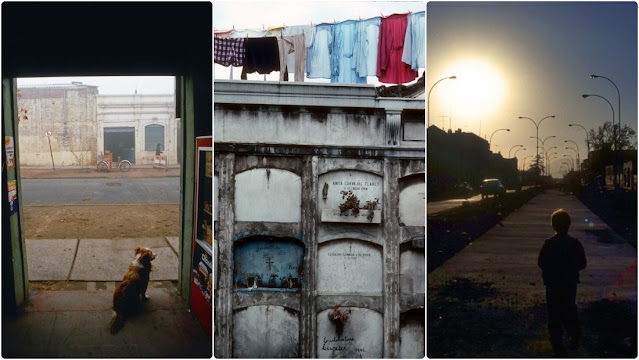
Bring back some good or bad memories


ADVERTISEMENT
Showing posts with label Chile. Show all posts

May 23, 2025

40 Wonderful Photos Capture Everyday Life in Chile From the Early 1990s

Everyday life in Chile in the early 1990s was marked by a sense of cautious optimism. After years under dictatorship, people enjoyed newfound freedoms—political debates returned to cafés and homes, and the press became more open.

Daily routines blended tradition with change: street markets (ferias) bustled with local produce, while modern malls began to appear in cities. Chileans watched telenovelas, listened to emerging local rock bands, and followed a growing national pride in football.

Though economic inequality remained, improvements in education and infrastructure slowly changed the landscape, especially in urban areas like Santiago. Captured by Duncan_and_Gladys, these wonderful photos offer a glimpse into everyday life in Chile in 1991.

White Beach on Lake Caburgua, Chile, 1991

Collecting firewood with ox-cart, near Natales, Chile, 1991

Lower slopes of Villarrica Volcano, Chile, 1991

Olmué. Rider in plaza, 1991

Panorama of Punta Arenas and Magellan Strait, Chile, 1991

April 13, 2024

Intimate Portraits of Trans and Cross-Dressing Sex Workers in Santiago, Chile in the 1980s

Paz Errázuriz (born 1944) is a Chilean photographer. She documented marginalized communities such as sex workers, psychiatric patients, and circus performers during the military dictatorship of Chile. Errázuriz has said about her work: “They are topics that society doesn’t look at, and my intention is to encourage people to dare to look.”

She was a teacher at a primary school when Augusto Pinochet overtook Chile’s Presidential Palace in 1973, inspiring her to begin her photography career. She is the co-founder of the Association of Independent Photographers (AFI). Originally titled the “Asociación de Fotógrafos Independientes,” she helped create the AFI in 1981 to make it easier for artists in Chile to find legal support and organize group art shows.

Errázuriz is also a collaborator for the magazine Apsi and of diverse press agencies. She is known for her work in marginalized communities. Errázuriz goes on to say about her work: “...what I photograph has to do with people who are not at the center, who stand outside and have always been subordinated to power.”

Errázuriz began her career in the 1970s, and ever since she has been a voice for subordinate groups in society, more specifically, in Chile. She was a primary school teacher at the time when she started her photography, and was slowly taking pictures “under the radar.”


October 17, 2021

Chile 1988: Year of the Plebiscite and the Defeat of Pinochet

The 1988 Chilean national plebiscite was a national referendum held on October 5, 1988 to determine whether Chile’s de facto leader, Augusto Pinochet, should extend his rule for another eight years through 1996. The “No” side won with nearly 56% of the vote, thus ending Pinochet's fifteen and a half years in power.

Chile in 1988

The fact that the dictatorship respected the results is attributed to pressure from big business, the international community and unease with extended rule by Pinochet within the dictatorship.

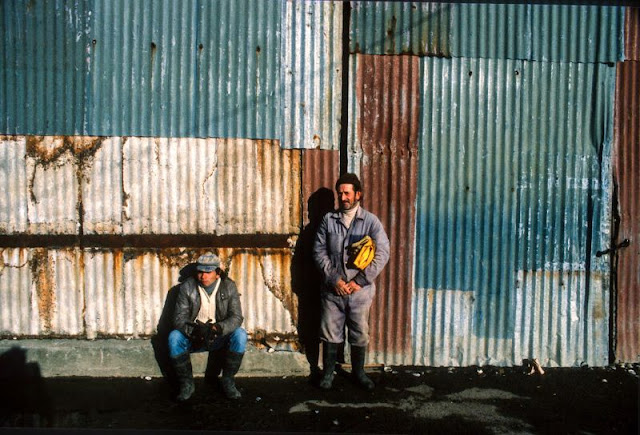
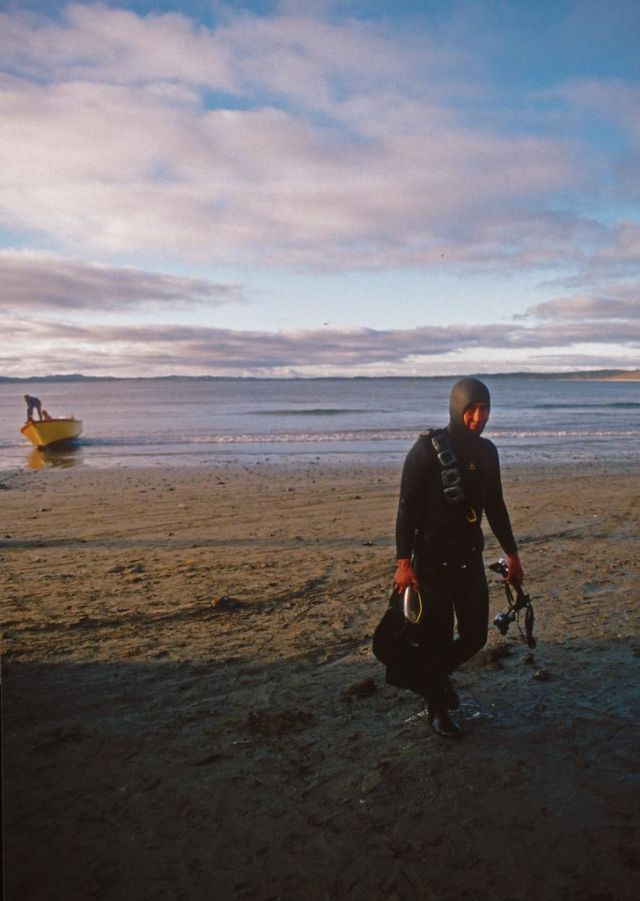
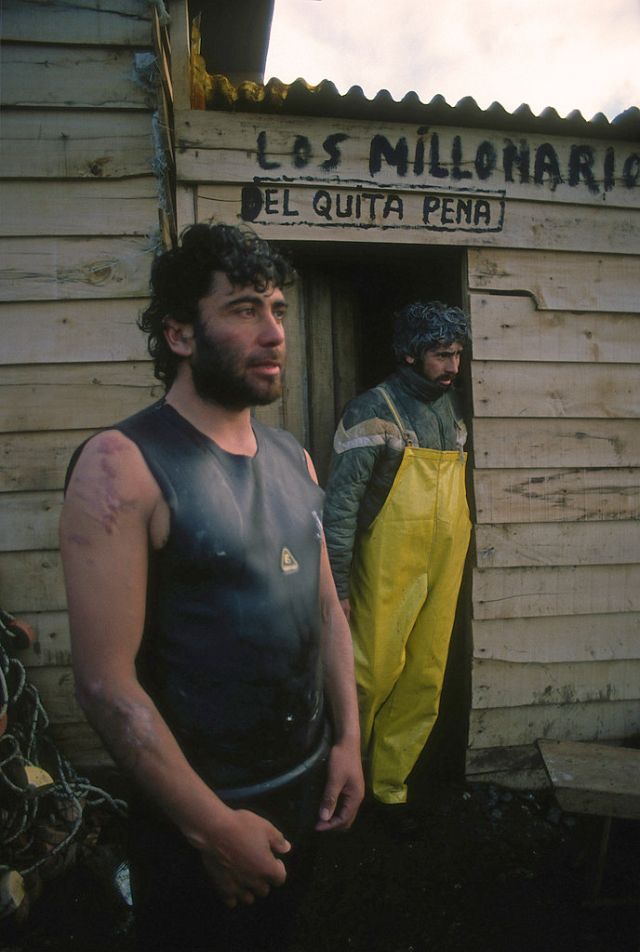
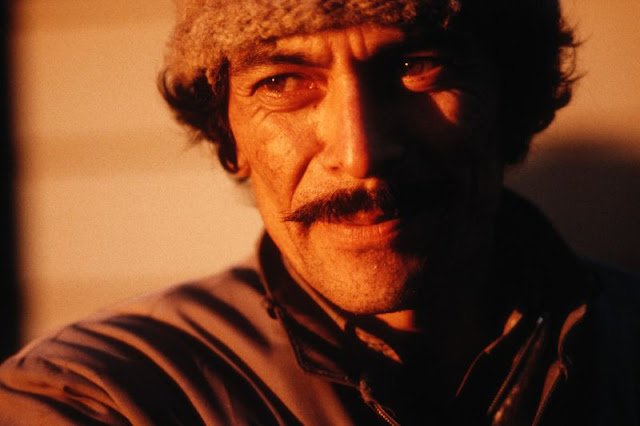
These amazing photos were taken by Marcelo Montecino that show what life in Chile looked like in 1988.

Ancud. Pescadores, 1988

Cartagena, 1988

Chiloe. Abalone fisherman, 1988

Chiloe. Abalone fishermen, 1988

Chiloe. Fisherman, 1988

December 16, 2019

Young People of Santiago, Chile in the Early 1970s Through Amazing Black and White Photos

Santiago is the capital and largest city of Chile as well as one of the largest cities in the Americas. It is the center of Chile's largest and most densely populated conurbation. The city is entirely located in the country's central valley. Most of the city lies between 500 m (1,640 ft) and 650 m (2,133 ft) above mean sea level.

Santiago's cityscape is shaped by several stand-alone hills and the fast-flowing Mapocho River, lined by parks such as Parque Forestal. The Andes Mountains can be seen from most points in the city. These mountains contribute to a considerable smog problem, particularly during winter. The city outskirts are surrounded by vineyards and Santiago is within an hour of both the mountains and the Pacific Ocean.

Santiago is also the cultural, political and financial center of Chile and is home to the regional headquarters of many multinational corporations.

These amazing black and white photos from E. S. that captured portraits of young people in Santiago, Chile from 1972 to 1974.


November 3, 2019

35 Color Snaps Capture Everyday Life of Concepción, Chile in the 1980s

Concepción is a city in central Chile and the core of the commune and metropolitan area of Greater Concepción, the country's second largest urban conurbation. It has a significant impact on domestic trade being part of the most heavily industrialized region in the country.

Its location is in the called Zona Centro Sur (Central South Zone), in the geographic center of the country, and it is the capital of the Concepción Province and Bío Bío Region. It sits about 500 km south of Santiago, the country's capital.

Greater Concepción (Gran Concepción, including Talcahuano, San Pedro de la Paz, Hualpén, Chiguayante, Penco, Tomé, Lota, Coronel, Hualqui and Concepción) is the second-largest conurbation in the country.

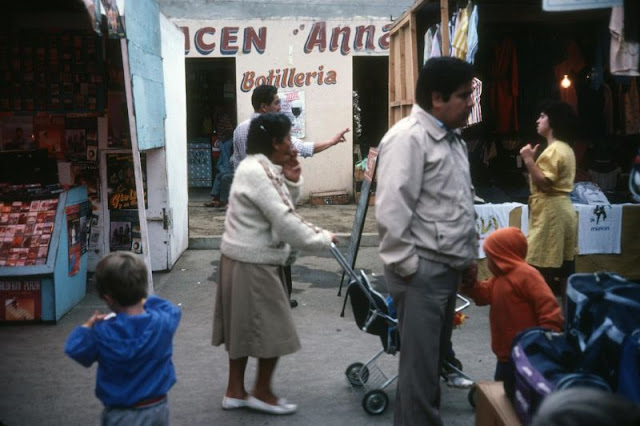
These fascinating color pics were taken by Michael G Spafford that show everyday life of Concepción, Chile in 1983 and 1985.


August 13, 2018

Survivor of 1972 Andes Plane Crash Recalled of Harrowing Experience When He Has to Eat the Human Flesh to Stay Alive

On Oct. 13, 1972, a Uruguayan air force plane, carrying the Old Christians Club rugby team, crashed in the Andes mountains of Chile. Facing starvation and death, the survivors reluctantly resorted to cannibalism. Among the 45 people on board, 28 survived the initial crash. After 72 days on the glacier, 16 people were rescued.

Survivors of 1972 Andes plane crash.

Survivors of 1972 Andes plane crash.

The flight carrying 19 members of a rugby team, family, supporters, and friends originated in Montevideo, Uruguay and was headed for Santiago, Chile. While crossing the Andes, the inexperienced co-pilot who was in command mistakenly believed they had reached Curicó, Chile, despite instrument readings indicating differently. He turned north and began to descend towards what he thought was Pudahuel Airport. Instead, the aircraft struck the mountain, shearing off both wings and the rear of the fuselage. The forward part of the fuselage careened down a steep slope like a toboggan and came to rest on a glacier. Three crew members and more than a quarter of the passengers died in the crash, and several others quickly succumbed to cold and injuries.

On the tenth day after the crash, the survivors learned from a transistor radio that the search had been called off. Faced with starvation and death, those still alive agreed that should they die, the others may consume their bodies so they might live. With no choice, the survivors ate the bodies of their dead friends.

Survivors of Flight 571 outside of the plane.

Survivors of Flight 571 outside of the plane.

Survivors of Flight 571 outside of the plane.

Roberto Canessa was a second-year medical student when the plane he had chartered with his rugby team mates crashed into the mountains. “Eating human flesh, you feel like you’re the most miserable person on the earth,” he said. “But in my mind, there was the idea that my friend was giving me a chance of survival that he didn’t have.”

Canessa broken his silence to tell his own story in a memoir, I Had To Survive. The specter of resorting to cannibalism haunts him still. “We had long since run out of the meagre pickings we’d found on the plane, and there was no vegetation or animal life to be found,” he recalled. “After just a few days we were feeling the sensation of our own bodies consuming themselves just to remain alive.”

Roberto Canessa in the early 1970s.

“The bodies of our friends and team-mates, preserved outside in the snow and ice, contained vital, life-giving protein that could help us survive. But could we do it?

August 12, 2018

50 Amazing Black and White Photos That Document Everyday Life of Santiago de Chile in the 1960s

Santiago is the capital and largest city of Chile as well as one of the largest cities in the Americas. It is the center of Chile's largest and the most densely populated conurbation. The city is entirely located in the country's central valley. Most of the city lies between 500 m (1,640 ft) and 650 m (2,133 ft) above mean sea level.

Chilean photographer Marcelo Montecino took these amazing black and white photos that documented everyday life of Santiago in the 1960s.

Angelito (little angel), Santiago, 1962

Asylum for the Blind, Santiago, Chile, 1962

Asylum for the Blind, Santiago, Chile, 196

Barrio Franklin, Santiago, Chile, 1962

Barrio Franklin, Santiago, Chile, 1962

September 27, 2017

The Hidden Secrets of the Moai: The Famous Easter Island Heads Also Have Bodies Too!

Practically everyone has seen the iconic images of the Easter Island heads. What you may not have known is that those Easter Island heads actually have hidden buried bodies. Archaeologists have uncovered the bodies associated with the heads and found interesting discoveries that further our knowledge of the Easter Island civilization and how they created the monoliths.


The Easter Island heads are known as Moai by the Rapa Nui people who carved the figures in the tropical South Pacific directly west of Chile. The Moai monoliths, carved from stone found on the island, are between 1,100 and 1,500 CE. A bit of an aside, but CE refers to the "Common Era" and sometimes replaces the use of AD in historical and archaeological communities.

The reason the bodies have been hidden underground for so long is that the statues were build on the side of a volcano, which helpfully erupted all over the statues and buried them up to their necks.

Archaeologists have studied the statues on the island for about a century, and have actually known about the hidden bodies since the earliest excavations in 1914. The first photographs of the hidden torsos emerged in 2012, two years after Jo Anne Van Tilburg, director of the Easter Island Statue Project, began excavating the monoliths with the help of local Rapa Nui people. These amazing pictures below show moment archaeologists discovered Easter Island statues were covered in tattoos:


March 27, 2017

The Lost Tribes of Tierra del Fuego: Rare and Haunting Photos of Selk'nam People Posing With Their Traditional Body-Painting

The Selk’nam, a stone-age hunting culture inhabited the Tierra del Fuego area of southern Argentina and Chile for 7,000 years. During those times the tribes lived nomadically and in tune with the land—hunting, gathering and fishing.

The Selk’nam had no chiefs, but were instead led by wise men (‘fathers of the world’) who were believed to possess spiritual power over people, weather and events. The tribe’s most sacred ceremony was the coming-of-age, or the ‘hain’. Adult male members of the tribe would be painted with red, black and white paint and don fur, down and bark costumes, impersonating much feared spirits. Over a period of days or weeks they would conduct a complex initiation to transition boys into manhood.

One of the last such ceremonies was performed in 1920 and recorded by the missionary, Martin Gusinde. When Gusinde was ordained as a priest in Germany in 1911, he hoped to travel to New Guinea to work as a missionary among exotic tribes. Instead, his superiors sent him to Chile to teach at the German school in Santiago. Within a few years, however, he found his calling at Chile’s Museum of Ethnology and Anthropology, carrying out expeditions to Tierra del Fuego in the far south of Chile and Argentina.

Gusinde first went to Isla Grande de Tierra del Fuego in December of 1918, filled with (in his own words) “indescribable enthusiasm” and “youthful dreams” of an encounter with archaic tribes. Gusinde’s haunting photographs of the Selk’nam, Yamana, and Kawésqar peoples present a way of life that was already on the brink of extinction when he visited the region in 1918–1924 and that has since ceased to exist.


October 18, 2016


FOLLOW US:
Facebook • Tumblr • Pinterest • Instagram

CONTACT US


Browse by Decades

Popular Posts

Advertisement

09 10