Bring back some good or bad memories


ADVERTISEMENT
Showing posts with label mugshots. Show all posts

December 13, 2023

The Original Peaky Blinders: Mugshots of the Gangs of Birmingham From the Early 20th Century

The Peaky Blinders, street-based Birmingham gang from the 19th century who slashed victims across the face with razor blades sewn in peaks of their caps. Gang members including David Taylor, who was jailed at the age of 13 for carrying a gun, displayed this classic look. Other Peakies included baby-faced Harry Fowles, Ernest Haynes, Stephen McNickle and Thomas Gilbert who were all jailed.

Mugshots of the real Peaky Blinders who operated in Birmingham, England in the early 20th century. Pictured from left to right are Harry Fowles, Ernest Hayles, Stephen McHickie and Thomas Gilbert.

Economic hardship in Birmingham led to a violent youth subculture. Poor youths frequently robbed and picked the pockets of men walking on the streets of slum areas of the city. These efforts were executed through assaults, beatings, stabbings, and manual strangulation. The origins of this subculture can be traced back to the 1850s, in a time where Birmingham’s streets were filled with gambling dens and youth playing rough sports. When the police started to crack down on these activities due to pressure from the higher classes, the youth fought back, banding together in what became known as “slogging gangs.” These gangs frequently fought the police, and assaulted members of the public walking in the streets. During the 1890s, youth street gangs consisted of men and boys between the ages of 12 and 30. The late 1890s saw the organization of these men into a soft hierarchy.

The most violent of these youth street gangs organized themselves as a singular group known as the Peaky Blinders. They were likely founded in Small Heath, possibly by a man named Thomas Mucklow.

After some gangsters attacked a man in 1890, they sent a letter to various national newspapers declaring themselves as members of this specific group. Their first activities primarily revolved around occupying favorable land, notably the communities of Small Heath and Cheapside, Birmingham. Their expansion was noted by their first gang rival, the Cheapside Sloggers, who battled against them in an effort to control land. The Sloggers originated in the 1870s and were known for street fights in the Bordesley and Small Heath areas – extremely poor slums of Birmingham.

The Peaky Blinders, after they established controlled territory in the late 19th century, began expanding their criminal enterprise. Their activities included protection rackets, fraud, land grabs, smuggling, hijacking, robbery, and illegal bookmaking. Historian Heather Shor of the University of Leeds claims that the Blinders were more focused on street fighting, robbery, and racketeering, as opposed to more organized crime.

The group was known for its violence, not only towards rival gangs, but also against innocent civilians and constables. Gang wars between rival gangs frequently erupted in Birmingham, which led to brawls and shootouts. The Peaky Blinders also deliberately attacked police officers, in what became known as “constable baiting.” Constable George Snipe was killed by the gang in 1897, as was Charles Philip Gunter in 1901. Hundreds more were injured and some left the force because of the violence.

Soon, the term “Peaky Blinder” became a generic term for young street criminals in Birmingham. In 1899, an Irish police chief named Charles Haughton Rafter was contracted to enforce local law in Birmingham. However, police corruption and bribery diminished the effectiveness of his enforcement for a time.


In addition to guns, the Peaky Blinders used an assortment of melee weapons, such as belt buckles, metal-tipped boots, fire irons, canes, and knives. In the case of George Eastwood, he was beaten by belt buckles. Percy Langridge used a knife to stab Police Constable Barker in June 1900. Firearms such as Webley revolvers were used, such as in the shooting and killing of a Summer Hill gang member by Peaky Blinder William Lacey in September 1905.

Gang members frequently wore tailored clothing, which was uncommon for gangs of the time. Almost all members wore a flat cap and an overcoat. The Peaky Blinders wore tailored suits usually with bell-bottom trousers and button jackets. Wealthier members wore silk scarves and starched collars with metal tie buttons. Their distinctive dress was easily recognizable by city inhabitants, police, and rival gang members. The wives, girlfriends, and mistresses of the gang members were known for wearing lavish clothing. Pearls, silks, and colorful scarves were commonplace.


The BBC television drama series Peaky Blinders, starring Cillian Murphy, Paul Anderson, Sam Neill and Helen McCrory, premiered in September 2013. It presents a fictional story in which the Peaky Blinders contend in the underworld with the Birmingham Boys and the Sabini gang, and it follows the gang based in post-World War I Birmingham’s Small Heath area. The gang had houses located in and around Birmingham, ranging from Longbridge to Sutton Coldfield. Many of the show’s exteriors have been filmed on location at the Black Country Living Museum.

December 12, 2023

The Story Behind the Infamous Mugshot of a Young Frank Sinatra in 1938

Frank Sinatra was arrested by the Bergen County, New Jersey sheriff in 1938 and charged with carrying on with a married woman (yes, you could get popped for that back then). The charge was later changed to adultery, and eventually dismissed.


This candid double mug shot depicts a young 23 year old Frank Sinatra when he was arrested by the Bergen County, New Jersey sheriff in 1938 and subsequently charged with seduction and adultery – a criminal offence at the time. Frank Sinatra was tagged with ‘Arrest 42799’ and this notorious mug shot. The charge was later changed to adultery, and eventually dismissed.

According to the FBI reports, “On the second and ninth days of November 1938 at the Borough of Lodi” and “under the promise of marriage” Sinatra ”did then and there have sexual intercourse with the said complainant, who was then and there a single female of good repute.” This, the charge stated, was ”contrary and in violation of the revised statute of 1937.” The charges were later dismissed when it was determined that the woman involved was married.

August 18, 2023

David Crosby’s Mugshot, 1982

David Crosby, founding member of The Byrds and Crosby, Stills & Nash was arrested by Dallas police in April 1982 and charged with drug and gun possession. Crosby, 40 at the time, ended up serving 11 months of a five-year sentence in a Texas state prison.

August 2, 2023

Jerry Garcia Mugshot, 1970

A January 1970 raid at a New Orleans motel resulted in the arrest of the Grateful Dead vocalist/guitarist and 18 other individuals. Police reported seizing an assortment of narcotics, including LSD, marijuana, and barbiturates.

Garcia’s arrest is referred to in “Truckin’”, a Dead song released later that year: “Busted, down on Bourbon Street. Set up, like a bowlin’ pin. Knocked down, it gets to wearin’ thin. They just won’t let you be.”

April 7, 2023

Billie Holiday Mugshot in May 1947

Jazz great Billie Holiday was photographed by Bureau of Prisons officials in May 1947. Holiday, 32 at the time, was locked up for eight months in the federal prison in Alderson, West Virginia on a drug conviction. She died in 1959 at age 44.

January 28, 2023

Mugshot of a Young Axl Rose in July 1980

An 18-year-old Axl Rose posed for the Lafayette, Indiana police mug shot in July 1980. This was one of the first of many misdemeanor bust for the future Guns N’ Roses frontman.


The photo of was found by John Jeremiah Sullivan, a writer on assignment for GQ. Sullivan explained the details of his discovery in the Paris Review:

“The most memorable trip I made in connection with Axl was to Lafayette, Indiana, where he grew up,” writes Sullivan. “I drove there hoping to trot dawn his oldest childhood friend, a man named Dana, who’d never been interviewed. Dana tamed out not surprisingly to be a very reclusive person, and although he did eventually meet with me, it took several days to coax him out. I spent them inventing little research projects. I visited the public library and found old yearbook pictures of Axl. I photographed the church where he sang in the choir. And lastly, on the morning of the day when Dana finally called me back, I went to the local police station. Did they have any records an Axl? No, they didn’t think so. Really? That seemed impossible. Would they mind checking under his many Indiana names? William Bruce Rose Jr.? William Bruce Bailey? Bill Bailey? W. Rose? A friendly lady officer agreed to help me out.”

“Sure enough, when I came back that evening,” Suilivan continues, “she had a whole folder of stuff. Arrest reports, warrants, and affidavits, as well as two treasures: mug shots that no one had ever seen. Axl’s first mug shots.”


January 22, 2023

James Brown Mugshot, 1988

James Brown posed for this South Carolina Department of Corrections mug shot in December 1988 after a jury found him guilty of aggravated assault, weapons possession, and failure to stop for police. The so-called Godfather of Soul was nailed for taking cops on a drug-fueled car chase between South Carolina and Georgia. Brown, 55 at the time, was sentenced to six years in state prison, but was released on parole after serving just over two years behind bars.

January 16, 2022

35 Candid and Stylish Mugshots From the Roaring Twenties

The Roaring Twenties was a golden era for criminals when rapid societal change led to the opening up of new illicit markets for entrepreneurial felons. Fast times bred new crimes creating policing challenges ranging from reckless joyriders to the emergence of the Mafia and razor gangs.

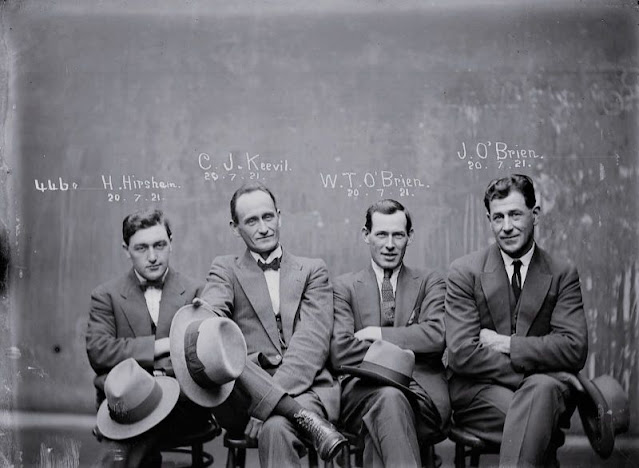
Hampton Hirscham, Cornellius Joseph Keevil, William Thomas O’Brien & James O’Brien, 1921

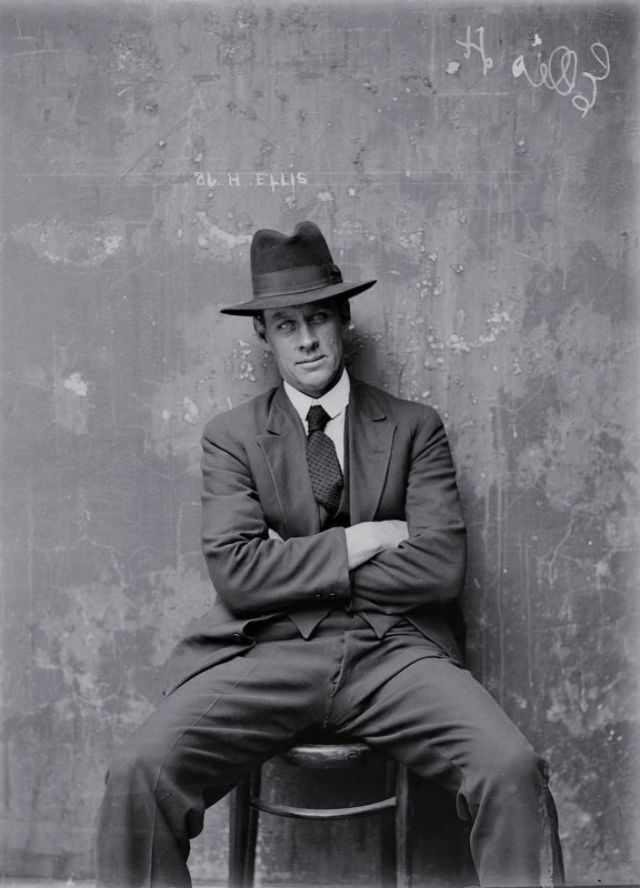
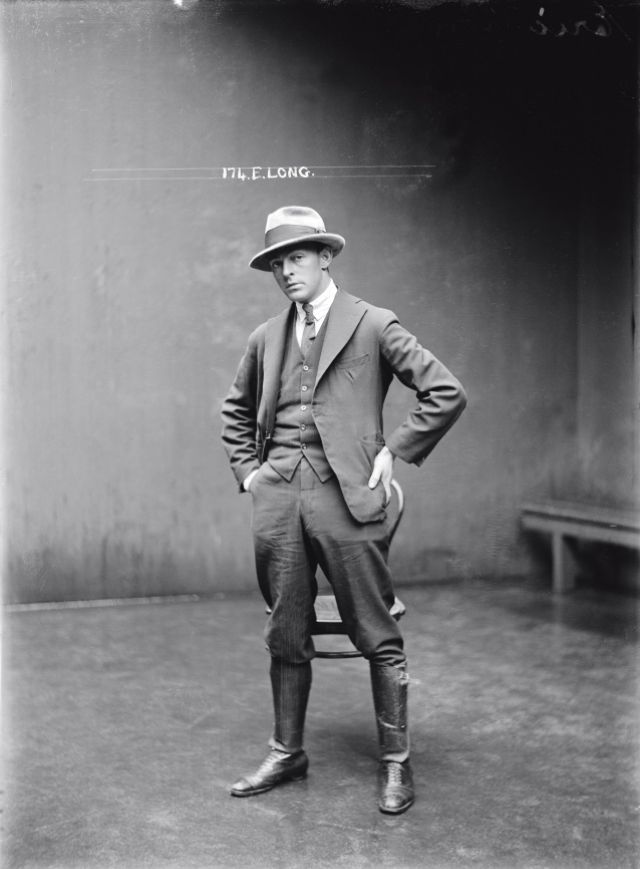
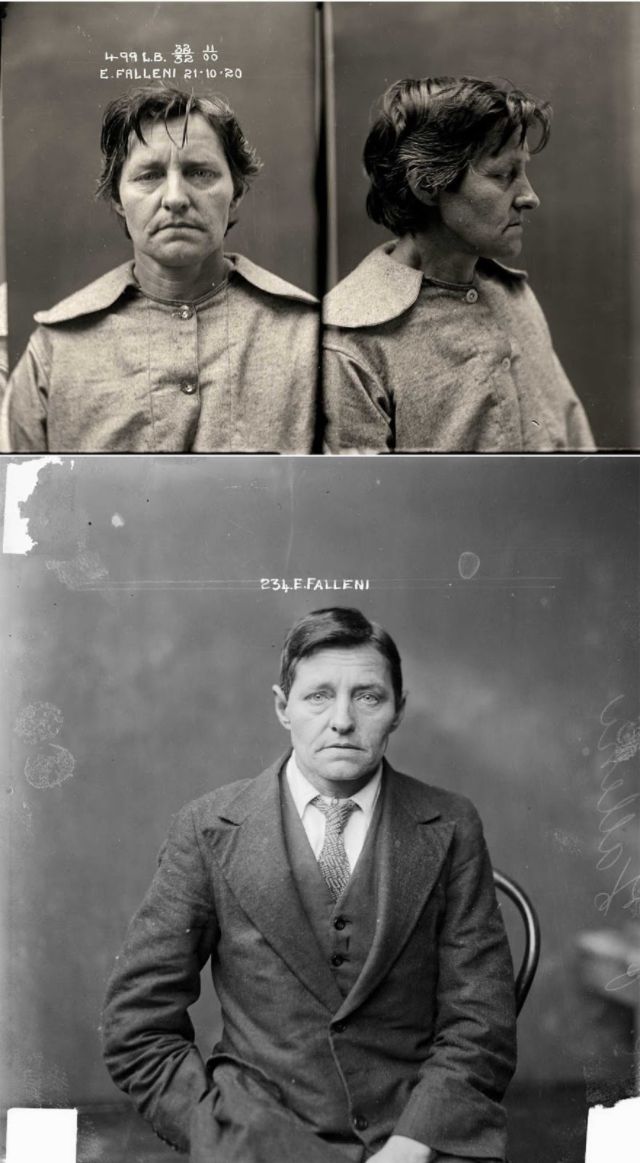
New South Wales Police Department photographers captured the zeitgeist of the era in these unexpectedly candid mug shots of cocaine sellers and addicts, sly-grog purveyors and small-time criminals, who frequented the cells of the Central Police Station in Sydney.

Herbert Ellis, 1920

William Frederick Long, circa 1920

Eugenia Falleni, 1920

Gilbert Cochrane Burleigh & Joseph Delaney, 1920

March 11, 2018

Extraordinary Mugshots of Turn-of-the-Century Prisoners

“Some years ago I discovered a cache of glass negative mug shots taken in the early 20th century; each negative was inscribed with the man’s name and alleged crime. In order to research the life of each man pictured in the 500 negatives, I spent the next three years traveling back and forth from New York to the small Northern California town where the photos were taken. I discovered the photographs were taken by Clara Smith, a town photographer more accustomed to taking images of brides and babies than newly arrested suspects. The only extant records of the men's crimes were the newspapers of the time, so I read through every copy of the daily newspaper(s) from 1901 to 1908 to find news of the men pictured in the images. The project resulted in the book, Prisoners, a collection of 70 images with accompanying narrative text on each subject.” — Arne Svenson

In Prisoners, New York artist and photographer Arne Svenson presents some two dozen portraits of turn-of-the-century prisoners, which the artist developed from found negatives. Each image (about one to two feet) is a diptych mug-shot (full face and profile), with the criminal's name and crime etched into the emulsion and visible above the subject's head. The crimes range from petty larceny to murder in various ages and races.


June 5, 2017

Was Kurt Cobain Once Arrested for Spray Painting “God Is Gay” on Trucks When He Was 19 Years Old? Not Exactly!


It’s hard to believe but it’s been 23 years since the death of Kurt Cobain, and the photo of his arrest has made the rounds with the incorrect wording at the bottom of the photo.

As a teenager, Kurt Cobain befriended a homosexual student at school, and suffered bullying from heterosexual students who concluded that Cobain was gay. In an interview he said that he liked having the identity of being gay because he did not like people and when they thought he was gay they left him alone. He stated, “I started being really proud of the fact that I was gay even though I wasn’t”. His friend tried to kiss him and Cobain backed away and told his friend he was not gay but would still be friends with him.

8th grader Kurt Cobain playing drums at an assembly at Montesano High School, 1981.

In a 1993 interview with The Advocate, Cobain claimed that he was “gay in spirit” and “probably could be bisexual.” He also stated that he used to spray paint “God Is Gay” on pickup trucks in the Aberdeen area. Police records show that Cobain was arrested for spray painting the phrase “ain’t got no how watchamacallit” on other vehicles. One of his personal journals states, “I am not gay, although I wish I were, just to piss off homophobes.”

April 7, 2017

24 Incredible Mugshots of Women Criminals From the 1920s

These mugshots show women criminals from the 1920s. They mostly came from Australia and New Zealand.

1. Ruth Young (1923. Aged: 43).


Ruth Young had a problem with alcohol and was often homeless. She had multiple convictions for drunkenness, vagrancy and petty theft.


2. Ruth Carruthers (1926. Aged: 28).


Convicted of false pretenses. Ruth Carruthers went on a criminal spree in 1926, using the art of persuasion to obtain goods and money from hapless shopkeepers. She was eventually convicted on four charges of false pretenses and sentenced to six months at Long Bay.


3. Philomena Mary Best (1927. Aged: 33).


Philomena Best stole silk and other goods valued at over 36 pounds (about $2000 today) from a Bourke shopkeeper in north-western New South Wales. She was convicted and sentenced to 12 months with light labor.


4. Pearl McFadden (1928. Aged: 18).


Pearl McFadden may have been supporting herself by working as a prostitute. Many sex workers were charged with vagrancy and having insufficient means of support, as it was a relatively easy charge to prove. McFadden was sentenced to six months with hard labor.


5. Myrtle Lee (1927. Aged: 35).


Myrtle Lee, described in the media as 'a well-dressed woman', stabbed Mary Moon twice at the residence of a Chinese man in Alexandria. The press emphasized the racial nature of the attack with a headline 'White and Yellow'. Lee was sentenced to six months gaol.

March 28, 2017

Incredible Colorized Images of Australia’s Most Notorious Female Criminals of the Early 20th Century

Mesmerizing colorized photos show the most notorious female criminals in 1920s Australia, including the fearsome London born razor-gang leader Matilda Devine.


These pictures are from a series of around 2,500 “special photographs” taken by the New South Wales Police Department photographers between 1910 and 1930. They were mostly taken in the cells at the Central Police Station, Sydney.

This series of expertly colorized pictures looks into the souls of their female counterparts Down Under, many of whom were British immigrants. The pictures have been colorized by Matt Loughrey of My Colorful Past.

Mrs Osbourne, location and details unknown, around 1919.

Matilda Devine, 27 May 1925, had 79 convictions for prostitution related offences including indecent language and offensive behaviour.

Alice Cooke at the Sydney Women’s Reformatory in 1922. By the time she was 24 Alice Cooke had created an impressive number of aliases and at least two husbands, and was convicted of bigamy and theft.

Barbara Turner, 10 October 1921, Central Police Station, Sydney. Con woman Barbara Taylor Turner was known as one of the greatest swindlers of the early 20th century, conning thousands of pounds out of local solicitors using six aliases.

Ellen Kreigher, who had just been arrested and charged with murder, 13 July 1923, Central Police Station, Sydney.

March 18, 2017

20 Amazing American Women Mugshots in the 1960s

The police mugshot photograph was developed as early as the mid-nineteenth century, and it has since developed as an iconic photographic type in its own right. Formulaic and recognized the world over, it was developed at a when the Victorian fascination of labelling and categorizing of people was at its height. Remarkably, the mugshot photograph has changed little in 150 years.

Since the mid-’90s, Manhattan-based graphic designer Mark Michaelson has collected over 10,000 vintage mugshots of everyday people from all over the country. Each closeup has a detail that caught the designer’s eye, from scars and bandages to crooked teeth and bizarre haircuts.

“I’m looking for the photos that move me for whatever reason,” Michaelson told the Daily News. “From things that are terribly funny to things that are terribly tragic.”

Michaelson has also released a book of these photographs. In theory, these photographs are formulaic and regular as we would expect from a mugshot. But in reality, every single one is unique - each face telling a different story.

When looking at these photographs, you can't help but imagine what sort of situations the arrested were involved in; faces look back at the camera smiling, blinking, scowling. It's also an amazing timeline of different fashions and hairstyles.


February 24, 2017

The Philadelphia Poison Ring – 21 Incredible Mugshots of Criminals in the Late 1930s

The Philadelphia Poison Ring was a murder for hire gang led by Italian immigrant cousins, Herman and Paul Petrillo who were involved in insurance scams, counterfeiting, and murder. The ring came to light in 1938 and the cousins were ultimately convicted of first degree murder and executed by electric chair in 1941.

A Russian-Jewish immigrant gang member, Morris Bolber, known as 'Louie, the Rabbi', turned state's evidence. Gang members, associates and 'dupes' (many of them Italian-born, superstitious women, dubbed 'poison widows' by an excited press) were brought to trial and mostly convicted to death sentences (commuted) or varying prison sentences.

One or two were found not guilty, notably the widow Stella Alfonsi, whose husband's 1938 death by poison brought the case to light, and who was successfully defended by the brilliant advocate Raymond Alexander Pace.

Here is a mugshot collection that shows criminal portraits of this gang in the late 1930s.


January 28, 2017

Wilhelm Brasse’ Mugshots: Photographer Took Up to 50,000 Chilling Photos in Auschwitz for the Nazis During World War II

There were images of living virtual skeletons; of prisoners standing shoulder-to-shoulder in striped uniforms; of people with deformities; of disembowelled victims of purported medical experiments. And there were tens of thousands of prisoner identification photos - three of each inmate.

Many of those photographs were made by a young man named Wilhelm Brasse. He took them because, like the more than 2 million other inmates who died or managed to survive at the Auschwitz-Birkenau concentration camp during World War II, he had no choice.

Wilhelm Brasse was compelled to take mug shots of the prisoners in Auschwitz, the Nazi extermination camp. “I tried to calm them,’ he later confided. He made studio portraits of the SS guards, too, and became popular with them, with a reputation for being able to put his subjects at ease. He told one officer to “sit comfortably, relax and think about your fatherland” before taking his picture. Brasse’s photographic skills certainly saved his life.


January 6, 2017

Czesława Kwoka, Age 14, Child Victim of Auschwitz, as Shown in Her Prisoner Identification Photo Taken in December 1942

Prisoner identity photographs, taken by Wilhelm Brasse, of Czeslawa Kwoka of Poland. According to the United States Holocaust Memorial Museum, Czeslawa arrived with her family at Auschwitz on Dec. 13, 1942, and died on March 12, 1943. She was 14. (Credit Auschwitz Museum, via Associated Press)

Czesława Kwoka was born in Wólka Złojecka, a small village in Poland, to a Catholic mother, Katarzyna Kwoka. Along with her mother (prisoner number 26946), Czesława Kwoka (prisoner number 26947) was deported and transported from Zamość, Poland, to Auschwitz, on 13 December 1942. On 12 March 1943, less than a month after her mother died (18 February 1943), Czesława Kwoka died at the age of 14; the circumstances of her death were not recorded. Kwoka was one of the "approximately 230,000 children and young people aged less than eighteen" among the 1,300,000 people who were deported to Auschwitz-Birkenau from 1940 to 1945.

After her arrival at Auschwitz, Czesława Kwoka was photographed for the Reich's concentration camp records, and she has been identified as one of the approximately 40,000 to 50,000 subjects of such "identity pictures" taken under duress at Auschwitz-Birkenau by Wilhelm Brasse, a young Polish inmate in his twenties (known as Auschwitz prisoner number 3444). Trained as a portrait photographer at his aunt's studio prior to the 1939 German invasion of Poland beginning World War II, Brasse and others had been ordered to photograph inmates by their Nazi captors, under dreadful camp conditions and likely imminent death if the photographers refused to comply.

These photographs that he and others were ordered to take capture each inmate "in three poses: from the front and from each side." Though ordered to destroy all photographs and their negatives, Brasse became famous after the war for having helped to rescue some of them from oblivion.

Such acts of courage as Brasse's and his colleagues enabled many like Kwoka not to become forgotten as mere bureaucratic statistics, but to be remembered as individual human beings.


FOLLOW US:
Facebook • Tumblr • Pinterest • Instagram

CONTACT US


Browse by Decades

Popular Posts

Advertisement

09 10