Bring back some good or bad memories


ADVERTISEMENT
Showing posts with label colorized. Show all posts

June 1, 2024

30 Beautiful Hand-Colored Photos of Ponta and Oen, the Two Popular Geisha in the Late 1890s

Ponta and Oen were popular Geisha during the 1890s and early 1900s. Many of these images were taken between 1895-1897 at Genrokukan Studio in Tokyo, run by Kajima Seibei (who became Ponta’s husband) and his brother, Seizaburo (Oen’s partner at the time).

Most of these images are from postcards published in Japan and the USA between 1900-1918. The majority of them are hand-colored collotypes.

"Teaching Songs", photo by Kajima Seibei, taken at his Genrokukan Studio, Tokyo, circa 1895-96. Geisha Ponta is seated at right

Geisha Oen and friend, photo taken at Kajima Seibei's Genrokukan Studio in Tokyo, 1895-97

Geisha Oen and friend, photo taken at Kajima Seibei's Genrokukan Studio in Tokyo, 1895-97

Geisha Oen and Ponta with a kakejiku (scroll), photo taken at Kajima Seibei's Genrokukan Studio in Tokyo, 1895-97

Geisha Oen with a drum, photo probably by Kajima Seibei at his Genrokukan Studio in Tokyo, circa 1895

January 29, 2024

Incredibly Colorized Portrait Photos Taken by Harris & Ewing in the Early 20th Century

Harris & Ewing Inc. was a photographic studio in Washington, D.C. established by George W. Harris and Martha Ewing. As a full service studio, it did portraits and also had a news photo service. Various museums and the Library of Congress have collections of their photographs.

Colorized portraits taken by Harris & Ewing in the early 20th century

On his retirement, Harris gave some 700,000 glass and film negatives to the Library of Congress. They are preserved as the Harris & Ewing Collection in the Prints and Photographs Division. Largely taken in and around Washington between 1905 and 1945, the photos portray people, events, and architecture. Many are scanned and online.

The City Museum of Washington, D.C. also has a large number of Harris & Ewing photographs, and others are held by the National Portrait Gallery and the Newseum. The Professional Photographers of America named its highest award after Harris.

These incredibly colorized photos from Rob van den Berg were taken by Harris & Ewing that show portraits of people from between the 1900s and 1930s.

Birth of the American flag, circa 1900s

Miss Billie Burke, circa 1900s

Miss E. Portner, circa 1900s

Miss Gregg, circa 1900s

Miss Ross F. R., circa 1900s

January 14, 2024

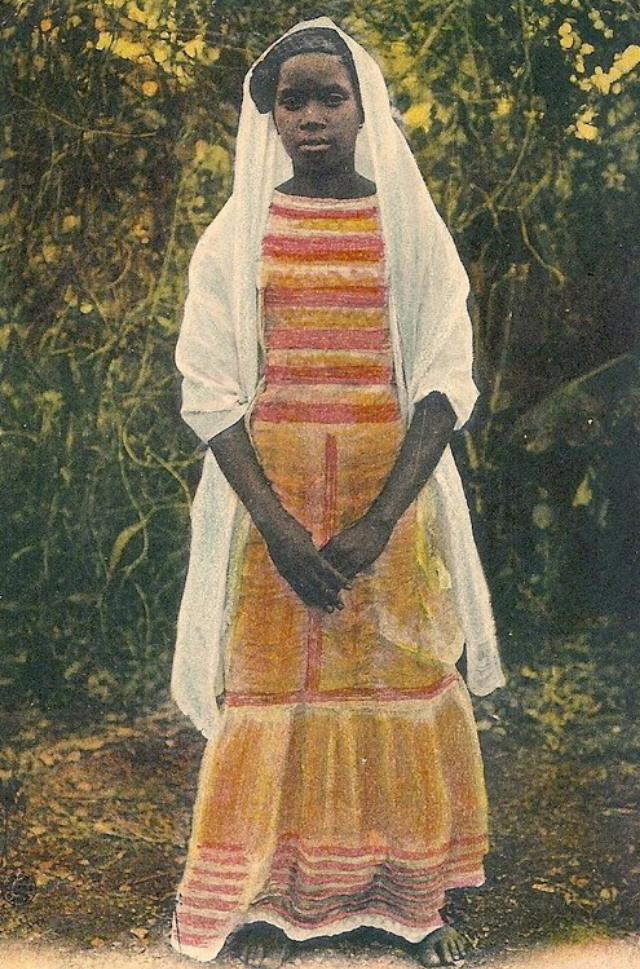
Amazing Colorized Portraits of Malagasy Women in Style From the Early 20th Century

Traditional dress in Madagascar is to wear a “lamba”. Which is two matching pieces of fabric that women wear – one around the waist or chest and one around the head or shoulders. These amazing pictures below show women’s 20th century style in Madagascar:


March 7, 2022

40 Incredibly Colorized Photos of Berlin in the Late 19th and Early 20th Centuries

The Industrial Revolution transformed Berlin during the 19th century; the city's economy and population expanded dramatically, and it became the main railway hub and economic center of Germany. Additional suburbs soon developed and increased the area and population of Berlin.

In 1861, neighboring suburbs including Wedding, Moabit and several others were incorporated into Berlin. In 1871, Berlin became capital of the newly founded German Empire. In 1881, it became a city district separate from Brandenburg.

In the early 20th century, Berlin had become a fertile ground for the German Expressionist movement. In fields such as architecture, painting and cinema new forms of artistic styles were invented.

Here below is a set of colored magic lantern slides from Rescued by Rover that shows street scenes of Berlin in the late 19th and very early 20th centuries.


November 23, 2021

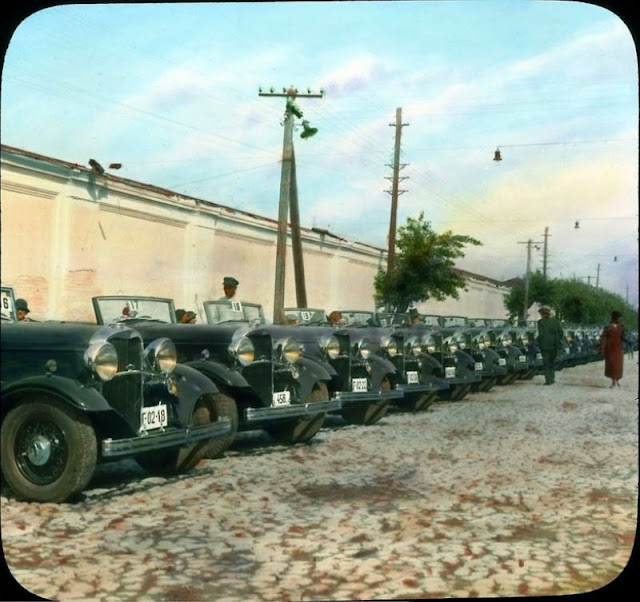
Moscow in 1931 Through Branson DeCou’s Lens

American photographer and travelogue lecturer Branson DeCou journeyed the world for thirty years before his death in 1941 at the relatively young age of 49.

DeCou was born October 20, 1892, in Philadelphia, a city with a long history of photographic invention, from the pioneer Langenheim brothers to the work of Thomas Eakins. The city also has a tradition of collecting and publishing photographs - the Library Company of Philadelphia, American’s oldest cultural institution, had exceptional holdings of photographic works well before 1900 - as well as active associations for professionals and amateurs such as the Philadelphia Photographic Exchange Club and the Philadelphia Photographic Society.

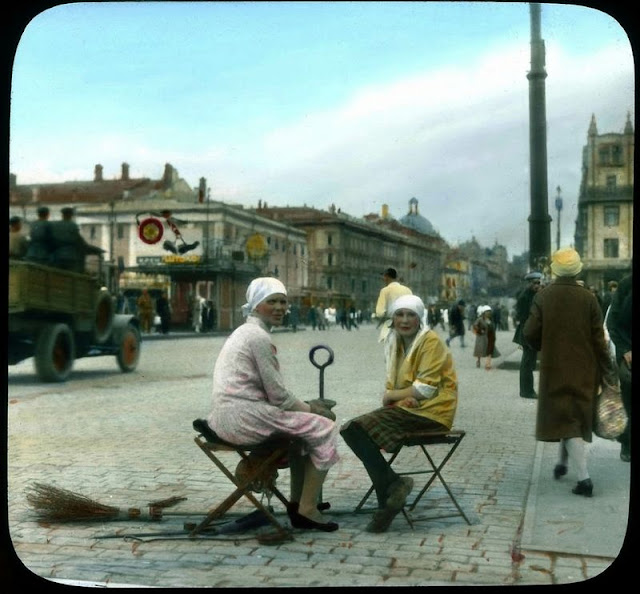
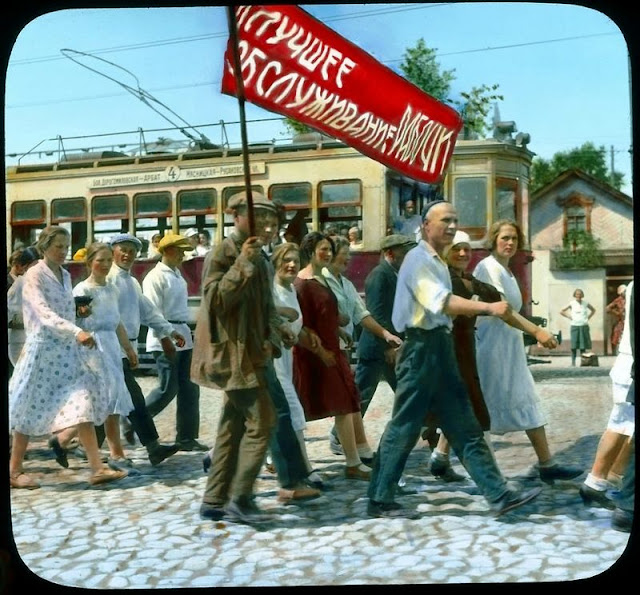
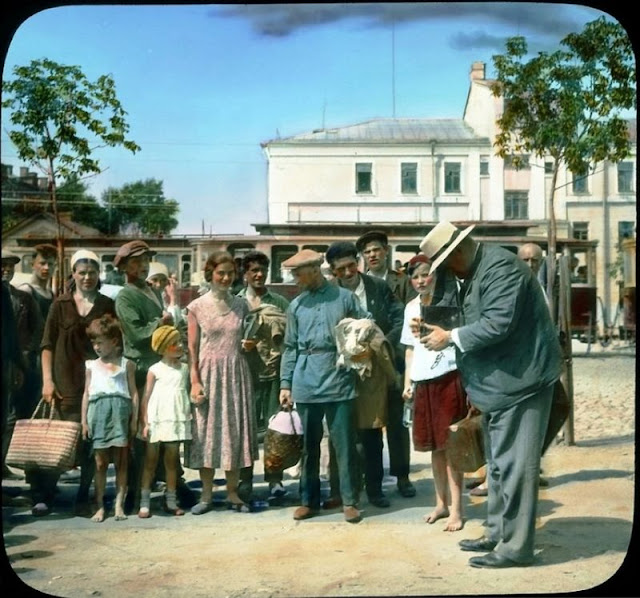
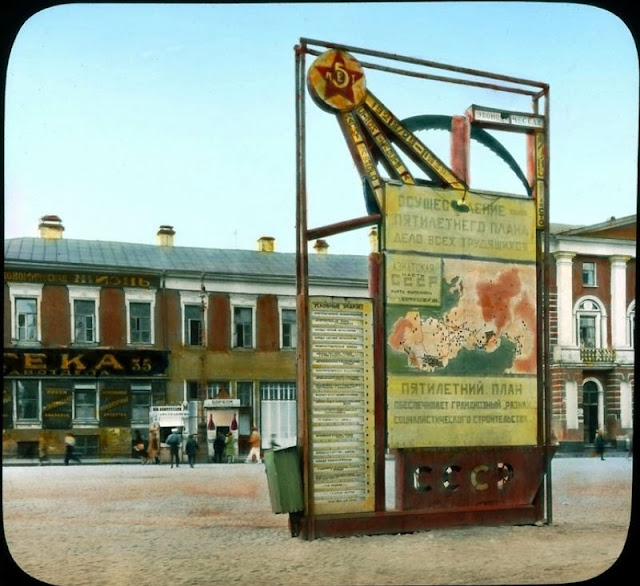
The photos below were taken by Branson DeCou that show street scenes of Moscow in 1931. They were later colored with aniline ink.

Moscow 1931

“Best service – to workers!”, Moscow 1931

A foreigner is surrounded by the Muscovites, Moscow 1931

A parking lot next to Leningrad railway station, Moscow 1931

Agitation on Soviet Square: “The 5-year plan ensures tremendous amplitude of socialistic construction”, Moscow 1931

November 17, 2021

Colorized Photos of Helsinki, Finland in the 1930s

Helsinki is the capital, primate, and most populous city of Finland. Located on the shore of the Gulf of Finland, it is the seat of the region of Uusimaa in southern Finland, and the most populous urban area in Finland as well as the country's most important center for politics, education, finance, culture, and research.

Helsinki is located 80 kilometers (50 mi) north of Tallinn, Estonia, 400 km (250 mi) east of Stockholm, Sweden, and 300 km (190 mi) west of Saint Petersburg, Russia. It has close historical ties with these three cities.

After Stockholm and Oslo, Helsinki is the third largest municipality in the Nordic countries. It has one of the world’s highest standards of urban living, and one of the world’s most livable cities.

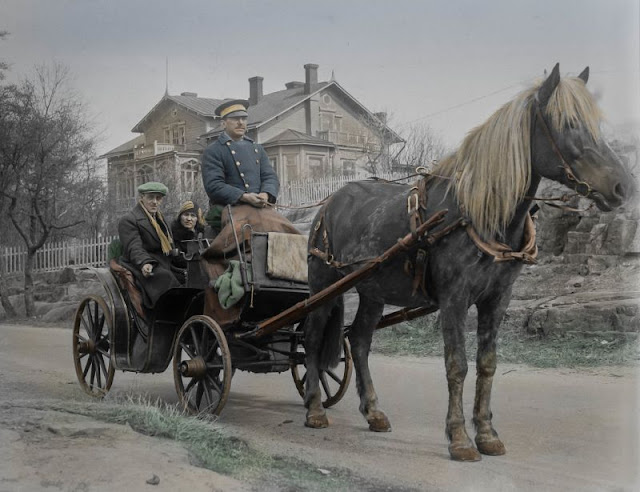
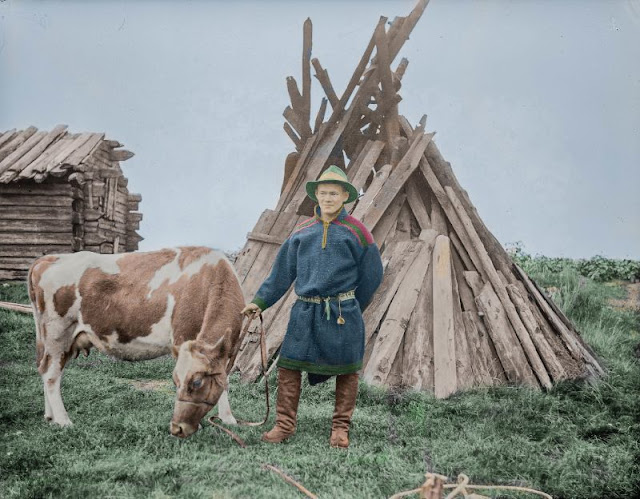
These vintage photos were colorized by Frank Hellsten that show what Helsinki looked like in the 1930s.

Horse and carriage in Helsinki, circa 1930

A Sami with his cow, 1930

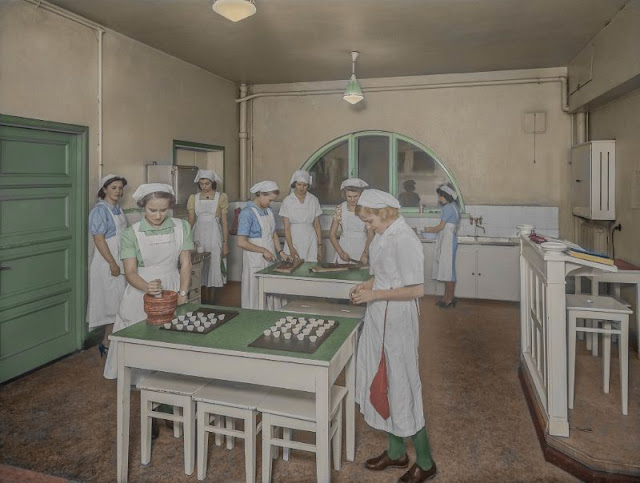
Girls from the private school Privata Svenska Flickskolan at a cooking lesson, Helsinki, circa early 1930s

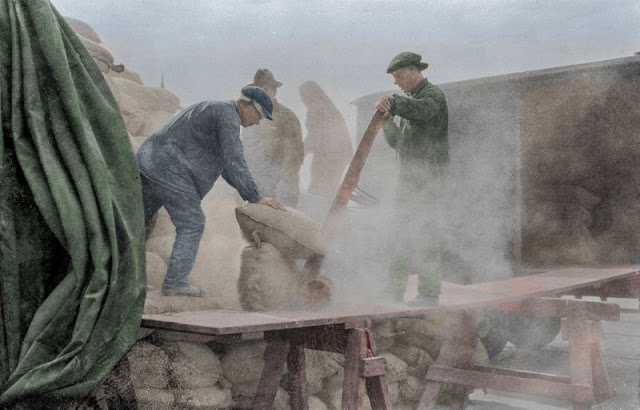
Longshoremen at port of Helsinki, 1930

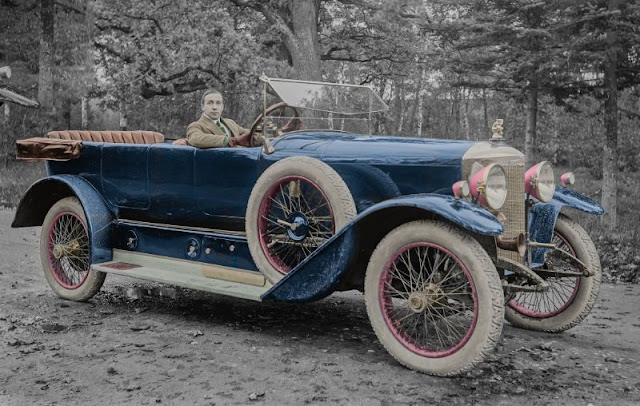
Photographer Constantin Grünberg driving a Daimler cabriolet in Helsinki, circa early 1930s

April 26, 2021

40 Incredible Colorized Photos Show What Life of the U.S. Looked Like in the 1930s and ’40s

The Great Depression was the worst economic downturn in the history of the industrialized world, lasting from 1929 to 1939. It began after the stock market crash of October 29, 1929, the “Black Tuesday”, which sent Wall Street into a panic and wiped out millions of investors.

Life of the U.S. in the 1930s and 1940s

Over the next several years, consumer spending and investment dropped, causing steep declines in industrial output and employment as failing companies laid off workers. By 1933, when the Great Depression reached its lowest point, some 15 million Americans were unemployed and nearly half the country’s banks had failed.

The end to the Great Depression came about in 1941 with America’s entry into World War II. America sided with Britain, France and the Soviet Union against Germany, Italy, and Japan. The loss of lives in this war was staggering.

The European part of the war ended with Germany’s surrender in May 1945. Japan surrendered in September 1945, after the U.S. dropped atomic bombs on Hiroshima and Nagasaki.

These incredible vintage photos were colorized by Lamont Cranston that revived life of the U.S. in the 1930s and 1940s.

Street kids at play, Georgetown, Washington D.C., Summer 1935

Street smart, Washington, D.C., 1935

Cigar store owner and his Indian, Manchester, New Hampshire, October 1936

Son of a woodcutter, Eden Mills, Vermont, August 1936

Steelworker listening to an unseen union organizer, Aliquippa, Pennsylvania, July 1936

January 15, 2021

Life During Edwardian Britain Through Striking Colorized Photos

The Edwardian era, later known as the ‘Golden Age’, promoted ‘leisurely’ time. Fondly remembered for long hazy summer days, with the rich enjoying endless garden parties and banquets.

The working class were treated as humans, not as machines. There remained a huge difference in the financial standing between the classes however.

The nation saw the demise of child labour. The Boy Scout movement, founded in 1907 by Lord Baden Powell, encouraged boys to have a sense of duty and good citizenship.

Working women were gaining more reputable jobs, like typists, enhancing the status of women in the workplace. The Suffragette movement, supporting the struggle for women to vote and hold office, gathered pace.

In 1906, the militant campaign began. Emmeline Pankhurst and her daughters founded the Women’s Social and Political Union. Women often resorted to violence, some went to prison, but the fight went on.

A set of striking colorized photos from Dutchsteammachine-archive that shows what life looked like during Edwardian Britain.


March 22, 2020

Haunting Colorized Photos Reveal the Devastation Caused by the Spanish Flu Which Killed at Least Fifty-Million

These seldom seen photographs, colorized for the first time, graphically depict the scale of the pandemic. The images reveal how doctors and nurses fought to save Spanish Flu sufferers in 1918. They show community centers and sports halls in the US converted into makeshift hospitals for the sick, while cinemas were closed and people wore face masks when they went to the park or took public transport.

“I have been colorizing for a long time as a hobby, which I started by coloring pictures for my family and friends, but my passion has grown into almost an obsession,” the colorizer, who wishes to remain anonymous, said in an interview. “It’s been over one-hundred years since the Spanish flu happened and I thought it was important to remember the millions of people who lost their lives.”

The disease, which broke out after the First World War, spread quickly and ravaged the globe, claiming between 20 million and 50 million lives.

A Kansas hospital during the Spanish flu pandemic of 1918 that still lives large in people’s imaginations.

Hospital beds crammed head to toe at the San Francisco Naval Training Station. They are occupied by soldiers.

Theatres and public spaces were shut down to help prevent the virus spreading in the Spanish flu outbreak in 1918.

A mask is worn by a street sweeper in New York in 1918. The admonition of the New York Health Board to wear masks to check the spread of influenza epidemic was: ‘Better ridiculous than dead’.

A conductor checks to see if potential passengers are wearing required masks in Seattle, 1918.

January 13, 2020

30 Incredible Vintage Photos of Warsaw Uprising Have Been Brought to Life After Colorized

The intricate process of coloring black and white photographs has been carried out by Mikołaj Kaczmarek. The photographs presented here come from collections of, among others, the Warsaw Rising Museum, the Polish Press Agency, the KARTA Center as well as private collections. They are part of an exhibition prepared by the IPN’s National Education Office entitled “Warsaw Uprising 1944. Battle for Poland”.


Artist Mikołaj Kaczmarek from Gostyń, Wielkopolska, has spent years painstakingly recreating some of the key moments of the Uprising. Now the breath-taking colorized images have earned his Facebook page, Mikołaj Kaczmarek – Kolor Historii, over 54K followers, who are drawn by the shocking immediacy that color brings to people and scenes that have been known only in black and white.

However, Kaczmarek admitted that his interest in history came as a surprise to him. “I was never particularly interested in history. In fact I nearly didn’t complete the year on two occasions.”

Kaczmarek first became interested in photo colorization when he saw the film Warsaw Rising, which told the story of the battle using colorized footage. “The film made a huge impact on me,” he told The First News. “They lived in a time of apocalypse and whether they wanted to or not they had to fight and they often died. The colorization made me realize that they were people just like us, they just happened to live at that time.”

“The first photo I tried was the girl next to a grave. When I finished, I was in shock – the past just came right out at me. You might see an image of a pretty girl that looks like it was taken a week ago, but she fought in the war and died,” he added.


The Warsaw uprising began on August 1, 1944 at 5 p.m. That moment is now named in the Polish history as “Godzina W” (the W hour) with W standing for Warsaw.

Approximately 45,000 members of the AK under commandment of general Antoni Chruściel “Monter” joined the combat. They were supported by 2,500 soldiers from other resistance movements, such as the National Armed Forces (Narodowe Siły Zbrojne, NSZ) and the communist People's Army (Armia Ludowa, AL). Only a quarter of the partisans had access to weapons, fighting against 25,000 German soldiers equipped with artillery, tanks, and air forces.

Within the first few days of the uprising, Polish forces took over several districts of Warsaw, including downtown and the Old Town. After the initial success of the AK, German troops gradually recaptured the city. They surrounded the Old Town and other areas. On September 2, after more than two weeks of combat, the last Polish soldiers left the Old Town through the sewers. Warsaw’s historical district was turned into ruins. In mid-September, the Red Army took Praga, the district of Warsaw on the east bank of the Vistula River, but did not cross the river to intervene.

Towards the end of September 1944, German forces took control over further parts of Warsaw, systematically destroying most of the city to the ground. On October 2, 1944, the uprising ended. The number of victims exceeded 180,000 people. More than 11,000 AK soldiers were captured as prisoners of war, including “Bór” and “Monter.” Soviet troops resumed their offensive much later, liberating devastated Warsaw on January 17, 1945.


FOLLOW US:
FacebookTumblrPinterestInstagram

CONTACT US


Browse by Decades

Popular Posts

Advertisement

09 10