Bring back some good or bad memories


ADVERTISEMENT
Showing posts with label South Africa. Show all posts

August 14, 2024

South Africa in the Early 1920s Through Vintage Found Photos

In the 1920s, life in South Africa was marked by economic hardship, racial segregation, and rising Afrikaner nationalism. White South Africans enjoyed relative prosperity, while Black South Africans faced significant social and economic disadvantages, with limited opportunities and restrictive laws.

Urban areas saw growth, with increased industrial activity, but there was widespread racial discrimination and social inequality. Rural areas struggled with economic instability, and there were growing tensions over labor rights and political representation.

These vintage photos were found by snelson951 that show what life looked like in South Africa in the early 1920s.


September 4, 2023

South African Railways in the Early 1980s Through Fascinating Photos

Rail transport in South Africa is an important element of the country’s transport infrastructure. All major cities are connected by rail, and South Africa’s railway system is the most highly developed in Africa. The South African rail industry is publicly owned.

These fascinating photos from Michel Huhardeaux were taken by his wife Nicole during their second trip to South Africa in 1980 and 1981.

Class 12A shunting at De Aar Station - South African Railways, 1980

Class 14R AIDA shunting in De Aar Station - South African Railways, 1980

Class 15F at Germiston (SA) Depot - South African Railways, 1980

Crew of an S1 Shunter at Germiston (SA) Station - South African Railways, 1980

Crew of an S1 Shunter at Germiston (SA) Station - South African Railways, 1980

August 23, 2022

35 Fascinating Vintage Color Photos Documented Life in Cape Town in the 1960s

Harrison Forman (1904-1978) was a prominent photojournalist, explorer, author, and fellow of the American Geographical Society. As a foreign correspondent, Forman’s images and articles appeared in the New York Times, Times of London, Life, Look, Collier’s, Harpers, and Reader’s Digest. 

Forman traveled the world with the eye of an anthropologist.  He was fascinated by the lives, culture, economies, governments and infrastructure of each place he visited.  Known in his heyday as the “Modern Day Marco Polo,” Forman was often the first Westerner to have access to the people and places he visited and seemed to always be in the right place at the right time, witnessing significant moments in history and documenting them with his photography. 

Take a look at life in Cape Town in the 1960s through these 35 beautiful and fascinating pictures taken by Forman:

Pedestrians crossing street

Malay boys in Cape Town

Women at slums in Cape Town

Cars parked across from Cape Town City Hall

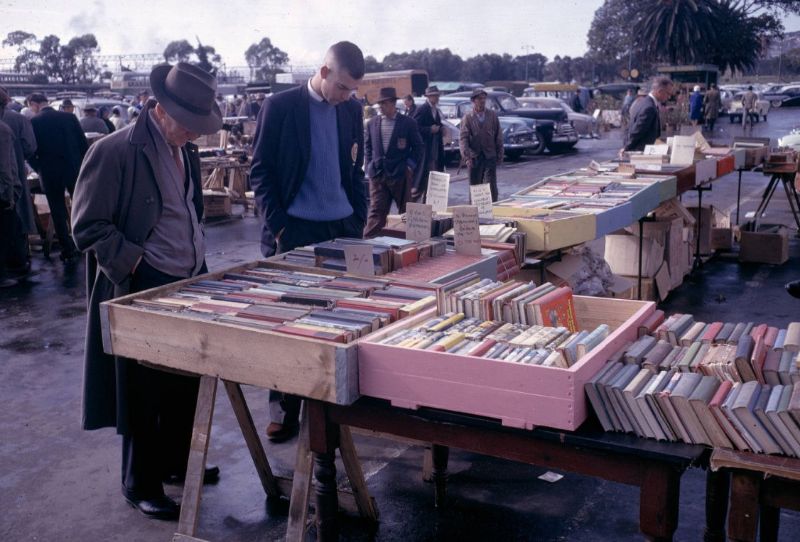
Books for sale at Cape Town market

March 22, 2022

Fascinating Vintage Color Snapshots From a Trip Through Africa in 1970

In 1970, British traveler and photographer Allan Hailstone took a trip from London to Africa that took in six cities and four countries. He traveled to Cape Town and back with stopovers in Cairo, Nairobi, Pretoria, Johannesburg and Salisbury in Rhodesia (now Harare in Zimbabwe).

“My arrival in Cairo was a culture shock, as it would be today, but I had experienced Morocco in 1960 and so I knew to some extent what sort of atmosphere to expect.” He told MailOnline Travel. “Rhodesia was fascinating because the country had declared itself independent of British rule in 1965, and the so-called Smith regime was regarded as illegal by the UK and one was advised not to visit. There were no UK consular links, and the only country friendly to it was South Africa. The only air link was from South Africa so I had to travel there from Johannesburg, then return to Johannesburg, rather than visiting it en route.

“South Africa existed under apartheid. I found the people intelligent and cultured. I remember that it was commonplace in Cape Town to see men playing chess in the street. The hotel where I stayed gives an example of the very cheap pricing. It was a luxury hotel, and I had a suite of rooms at £5 per night, which even then was ridiculously cheap. It had a closed-circuit TV in the lobby, which attracted much interest as ordinary TV did not exist.”

Take a look back at Africa in 1970 through these fascinating images. For more photographs, visit Hailstone's brilliant Flickr site.

Midan Tahrir (Liberation Square), Cairo

Cairo

Nile Hilton Hotel, Cairo

Cairo

Sunset over the Nile, Cairo

January 27, 2022

January 26, 1905: The World’s Largest Diamond Is Found in South Africa

On 26 January, 1905 during his routine inspection Frederick made an unexpected discovery changing the world of diamonds. It was on this historical day that he discovered the world’s biggest diamond. The diamond was then named the Cullinan after the owner of the mine, Sir Thomas Cullinan, who was visiting the mine on that particular day. A replica of this marvel can be seen at the Cape Town Diamond Museum. But, what happened to this rough diamond?

Sir Thomas Cullinan at Premier Mine, South Africa in 1905.

After Frederick had made the discovery, the large Cullinan rough diamond was taken to the mine office to be weighed. To everyone’s surprise, the stone weighed in at a whopping 3,106.75 carats (621.35 g) (21.9 ounces), making it the largest diamond ever to be found. Many experts believe that the Cullinan diamond was only a fragment of an even bigger stone that still needed to be discovered. This rumor caused sparks amongst the mining community, who hoped to find the other half of the stone.

The magnificent diamond was insured for R17 million before it was carefully transported to England. Here a Premier London agent named, Sigismund Neumann kept the large diamond for safe keeping. When they transported the large diamond, they had to take extreme measures to keep it safe. The Cullinan was sent in a plain box via parcel post while detectives from London were asked to transport a replica as a decoy publicly. After the Anglo-Boer War, the Transvaal government bought the diamond for R2.4 million. The Cullinan was then presented to King Edward VII of the United Kingdom as a gift of goodwill on his 66th birthday in 1907.

The Cullinan diamond was presented to King Edward VII.

The diamond was then entrusted to I. J. Asscher and Co where it was divided in various large stones. When the famous diamond cutter received the large diamond, he studied it for months. At first, it was difficult to cut the Cullinan, but after months of careful planning, Asscher divided the diamond into nine major stones, ninety-six smaller stones and about 19.5 carats of unpolished diamonds. The two largest diamonds weighing 1,977 carats and 1,040 carats respectively in the rough.

The two larger diamonds, known as the Cullinan I and Cullinan II, were given to King Edward VII. The polished Cullinan I (530.20 carats) is the biggest stone of the nine diamonds and the polished Cullinan II (317.40 carats) the second most significant. Today the stone is also referred to as The Star of Africa (Cullinan I) and The Lesser Star of Africa (Cullinan II).

The Cullinan I diamond, also known as the Star of Africa.

The Cullinan III and Cullinan IV.

Both of these breathtakingly beautiful stones are on display in the Tower of London as part of the Crown Jewels. The Cullinan III is pear-shaped and weighs 94.40 carats. The diamond was originally an ornament on top of Queen Mary’s Crown. Today Queen Elizabeth II can be seen wearing the Cullinan IV as a pendant-brooch.

The Cullinan IV is a cushion shape diamond that weighs 63.60 carats. The stone was previously placed in the band of Queen Mary’s crown, but today it can be seen as the top part of Queen Elizabeth II’s pendant-brooch.

The Cullinan V worn as a brooch by Queen Mary and Queen Elizabeth II.

The two largest Cullinan diamonds mounted in the Royal Regalia.

The Cullinan V is a triangular-pear shaped diamond and weighs 18.80 carats. First, it was worn as a brooch by Queen Mary but was then later used in the circlet of her crown as a substitute for the Koh-i-Noor (a famous colorless diamond that was found near Guntur, India). The Koh-i-Noor was utilized in the new crown for Queen Elizabeth in 1937. Today Queen Elizabeth II can be seen wearing it as a brooch.

The large Cullinan diamond that was discovered back in the 1900s has indeed become part of history. Not only is it the largest gem-quality diamond ever discovered, but it’s also part of the world’s most classic jewelry pieces. The Cullinan, in essence, is remarkable and will continue to amaze throughout history.

June 22, 2021

Beautiful Postcards of Cape Town in the 1960s

Cape Town is the second-most populous city in South Africa, after Johannesburg, and also the legislative capital of South Africa.

Cape Town in the 1960s

Colloquially named the Mother City, it is the largest city of the Western Cape province and forms part of the City of Cape Town metropolitan municipality. The Parliament of South Africa is situated in Cape Town. The other two capitals are located in Gauteng (Pretoria the executive capital where the Presidency is based) and in the Free State (Bloemfontein the judicial capital where the Supreme Court of Appeal is located).

The city is known for its harbor, for its natural setting in the Cape Floristic Region, and for landmarks such as Table Mountain and Cape Point. Cape Town is home to 49% of the Western Cape’s population.

Here below is a set of beautiful postcards from mallix that shows what Cape Town looked like in the 1960s.

Company Gardens, circa 1965

Kirstenbosch, circa 1965

Mailship in the Duncan Dock, circa 1965

Adderly Street, 1966

Camps Bay, 1966

September 20, 2020

Meet Jack the Baboon, Who Worked as a Railroad Signalman in the 1880s for Money and Beer, and Never Made a Mistake!

During the latter part of the 1800s, travelers to Cape Town, along the Port Elizabeth mainline railroad, frequently saw a curious sight as they entered the Uitenhage train station. The signalman operating the levers that set the signals in the control tower was a baboon named Jack.


Jack was the pet and assistant of double leg amputee signalman James Wide, who worked for the Cape Town–Port Elizabeth Railway service. James “Jumper” Wide had been known for jumping between railcars until an accident where he fell and lost both of his legs. To assist in performing his duties, Wide purchased a chacma baboon in 1881, and trained him to push his wheelchair and to operate the railways signals under supervision.

Jack was put in charge of the coal yard keys and also did the station’s gardening, until Wide learned that the baboon was skilled at operating signals. Jack learned each lever by name and was able to push them into position when a train approached at Uitenhage station. Wide would hold up one or two fingers (as a signal to the animal) and Jack would then pull the correct lever. Finally, Jack needed no instructions from his master and he really knew which lever to operate for each approaching train. Although the baboon was always under the eye of his master James Wide, Jack never made a mistake or required telling twice.


This way the baboon Jack became popular for his unusual act and was one of the sights of Uitenhage for many years, astonishing all the people who witnessed his unusual feat of operating railway signals. However, when a prominent lady complained about this to the railway authorities, both Jack and Wide were fired.

Nonetheless, upon pleading from James Wide, the system manager tested and verified the adeptness of baboon Jack at operating signals. Wide got his job back and Jack was also hired, becoming the only baboon in history to go to work for the railroad. From that day, the baboon was known as Jack the Signalman. For his labor, Jack was paid twenty cents a day, and half a bottle of beer each week. It is widely reported that in his nine years of employment with the railway company, Jack never made a single mistake.


After 9 years of living with Wide, Jack died in 1890 after developing tuberculosis. Jack’s skull is in the collection of the Albany Museum in Grahamstown.

January 12, 2020

Childhood Photos of the Rosenkowitz Sextuplets, the World’s First Surviving Sextuplets

Anyone living in Cape Town during the seventies knew about the six babies that were born on January 11, 1974. The three boys (David Peter, Grant Vincent, Jason Solomon) and three girls (Emma Louise, Nicolette Anne, Elizabeth Rebecca) were born by caesarian section.

The Rosenkowitz sextuplets were born at Mowbray Maternity Hospital, in Cape Town South Africa. Their total birth weight was 24 lb 1 oz (10.9 kg), with individual birth weights ranging from 2 lb 6 oz (1.1 kg) to 4 lb 6 oz (2.0 kg). They were the first sextuplets known to have been born alive anywhere in the world.

The sextuplets became instant celebrities with journalists from across the world clamoring to report on the challenges of caring for six newborns. Throughout their early childhood, their progress was closely followed by the South African media.


August 12, 2019

The Racist Signs of Apartheid: What South Africans Had to Look at Every Day for Four Decades

For decades, the country’s black majority was controlled by racist laws enshrining white supremacy. From 1948 through the 1990s, a single word dominated life in South Africa. Apartheid—Afrikaans for “apartness”—kept the country’s majority black population under the thumb of a small white minority. It would take decades of struggle to stop the policy, which affected every facet of life in a country locked in centuries-old patterns of discrimination and racism.

A sign common in Johannesburg.

The system was rooted in the country’s history of colonization and slavery. White settlers had historically viewed black South Africans as a natural resource to be used to turn the country from a rural society to an industrialized one. Starting in the 17th century, Dutch settlers relied on slaves to build up South Africa. Around the time that slavery was abolished in the country in 1863, gold and diamonds were discovered in South Africa.

That discovery represented a lucrative opportunity for white-owned mining companies that employed—and exploited—black workers. Those companies all but enslaved black miners while enjoying massive wealth from the diamonds and gold they mined. Like Dutch slave holders, they relied on intimidation and discrimination to rule over their black workers.

The mining companies borrowed a tactic that earlier slaveholders and British settlers had used to control black workers: pass laws. As early as the 18th century, these laws had required members of the black majority, and other people of color, to carry identification papers at all times and restricted their movement in certain areas. They were also used to control black settlement, forcing black people to reside in places where their labor would benefit white settlers.

Those laws persisted through the 20th century as South Africa became a self-governing dominion of the United Kingdom. Between 1899 and 1902, Britain and the Dutch-descended Afrikaners fought one another in the Boer War, a conflict that the Afrikaners eventually lost. Anti-British sentiment continued to foment among white South Africans, and Afrikaner nationalists developed an identity rooted in white supremacy. When they took control in 1948, they made the country’s already discriminatory laws even more draconian.

Racist fears and attitudes about “natives” colored white society. Though apartheid was supposedly designed to allow different races to develop on their own, it forced black South Africans into poverty and hopelessness. “Grand” apartheid laws focused on keeping black people in their own designated “homelands.” And “petty” apartheid laws focused on daily life restricted almost every facet of black life in South Africa.

These South African signs are examples of what was known as Petty Apartheid, which was the range of laws implemented by the National Party that placed detailed restrictions on the behavior of the different races in the country.

A woman sat in the wagon reserved for White people to protest against Apartheid, 1952.

Signs in English and Afrikaans, in Wellington railway station, South Africa, enforcing the policy of apartheid or racial segregation, 1955.

A sign common in Johannesburg, 1956.

White children paddling in a pond marked by a sign reading “For European Children Only,” 1956.

Signs in both English and Afrikaans in Johannesburg, 1957.

February 5, 2019

Early Photographs Reveal Daily Life at the Kimberley Diamond Mine in Its Heydays of the Late 19th Century

Kimberley, South Africa, is home to the world’s largest diamond mine, also known as the “Big Hole.” Dug by humans and so large it is visible from space, the pit has yielded some of the world’s largest diamonds and made the De Beers name famous worldwide.

The first diamonds here were found by Erasmus Jacobs on Colesberg Kopje by members of the “Red Cap Party” from Colesberg on the farm Vooruitzigt belonging to the De Beers brothers, in 1871. The ensuing scramble for claims led to the place being called New Rush, later renamed Kimberley in 1873. From mid-July 1871 to 1914 up to 50,000 miners dug the hole with picks and shovels, yielding 2,720 kilograms (6,000 lb; 13,600,000 carats) of diamonds.

In 1872, one year after digging started, the population of the camp of diggers grew to around 50,000. As digging progressed, many men met their deaths in mining accidents. The unsanitary conditions, scarcity of water and fresh vegetables as well as the intense heat in the summer, also took their toll. On 13 March 1888 the leaders of the various mines decided to amalgamate the separate diggings into one big mine and one big company known as De Beers Consolidated Mines Limited, with life governors such as Cecil John Rhodes, Alfred Beit, and Barney Barnato. This huge company further worked on the Big Hole until it came to the depth of 215 meters, with a surface area of about 17 hectares and perimeter of 1.6 kilometers.

Today, the Big Hole and its surrounds have been converted into a museum and tourist attraction. Visitors can go underground in a recreation of a mine shaft of the period and learn about the history of diamond mining in Kimberley, see historic memorabilia and buy diamonds slightly cheaper than usual. There is also a fascinating reconstruction of the ‘Old Town’ at the big hole that gives visitors an idea of what it was like to live there back in the town’s heydays of the late 1800s.

Very early photograph of Fleetwood Rawstorne’s Red Cap party of Miners working on Colesberg Kopje. This kopje was located on the De Beer Brothers farm Vooruitzicht. This kopje was the outer evidence of the ancient volcanic pipe and was to be mined down to the plain surface and then as an open cast mine to create the (Big Hole). In this photograph are all the tools of the trade -namely wheelbarrow, bucket, sieve, shovel and sorting table. A beard and red cap appears to have been de rigueur too.

An early photograph of diamond mining, Diamond Fields, Kimberley Mine, 1871.

‘Work Break’ – Early diamond mining days at New Rush (Kimberley). Loin-clothed black labourers sit down and around several tripots to eat. To the left of the image a small shaft has been sunken with an overhead gantry and winding gear. Sheets of corrugated iron prevent anyone falling into the shaft. The European Prospector sits astride his horse, while a fellow Miner appears to have a tethered baboon. Note the canvass tents used for sleeping quarters.

Kimberley Mine, 1872.

Kimberley Mine, ca. 1872-73.


FOLLOW US:
Facebook • Tumblr • Pinterest • Instagram

CONTACT US


Browse by Decades

Popular Posts

Advertisement

09 10