Bring back some good or bad memories


ADVERTISEMENT
Showing posts with label Myanmar. Show all posts

September 17, 2022

Myanmar in 1982 Through Fascinating Photos

Myanmar, formerly known as Burma, is a country in Southeast Asia. It is the largest country in Mainland Southeast Asia. Myanmar is bordered by Bangladesh and India to its northwest, China to its northeast, Laos and Thailand to its east and southeast, and the Andaman Sea and the Bay of Bengal to its south and southwest. The country’s capital city is Naypyidaw, and its largest city is Yangon (Rangoon).

Myanmar in 1982

For most of its independent years, the country has been engulfed in rampant ethnic strife and its myriad ethnic groups have been involved in one of the world’s longest-running ongoing civil wars.

Myanmar is very rich in natural resources, such as jade, gems, oil, natural gas, teak and other minerals, as well as also endowed with renewable energy, having the highest solar power potential compared to other countries of the Great Mekong Subregion. However, Myanmar has long suffered from instability, factional violence, corruption, poor infrastructure, as well as a long history of colonial exploitation with little regard to human development.

These fascinating photos were taken by Yves Galland that documented everyday life of Myanmar, mostly in Mandalay and Yangon in 1982.

Mandalay, Myanmar, 1982

Mandalay, Myanmar, 1982

Mandalay, Myanmar, 1982

Mandalay, Myanmar, 1982

Mandalay, Myanmar, 1982

November 28, 2021

Amazing Black and White Photos Capture Everyday Life of Burma in 1986

Myanmar, formerly Burma, is a country in Southeast Asia, the largest country in Mainland Southeast Asia and the 10th largest in Asia by area. The country is bordered by Bangladesh and India to its northwest, China to its northeast, Laos and Thailand to its east and southeast, and the Andaman Sea and the Bay of Bengal to its south and southwest. Its capital city is Naypyidaw, and its largest city is Yangon (Rangoon).

Myanmar is a country rich in jade and gems, oil, natural gas, and other mineral resources. It is also endowed with renewable energy; it has the highest solar power potential compared to other countries of the Great Mekong Subregion. The income gap in Myanmar is among the widest in the world, as a large proportion of the economy is controlled by supporters of the military government. As of 2020, according to the Human Development Index, Myanmar ranks 147 out of 189 countries in human development.

The name of the country has been a matter of dispute and disagreement, particularly in the early 21st century, focusing mainly on the political legitimacy of those using Myanmar versus Burma. Both names derive from the earlier Burmese Mranma or Mramma, an ethnonym for the majority Burman ethnic group, of uncertain etymology.

In 1989, the military government officially changed the English translations of many names dating back to Burma’s colonial period or earlier, including that of the country itself: Burma became Myanmar. The renaming remains a contested issue. Many political and ethnic opposition groups and countries continue to use Burma because they do not recognize the legitimacy of the ruling military government or its authority to rename the country.

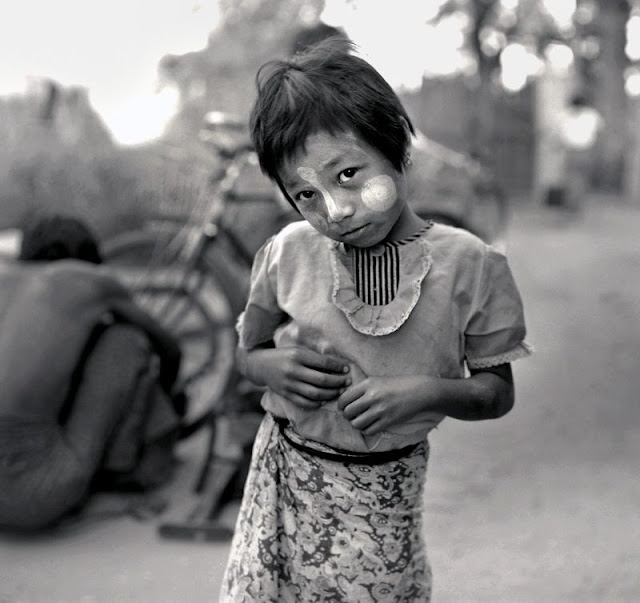
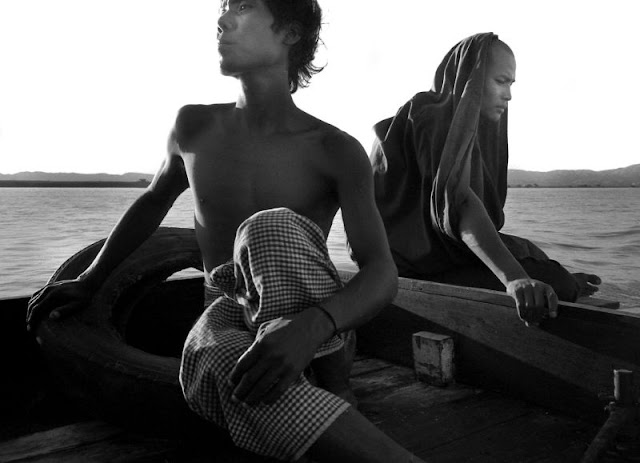
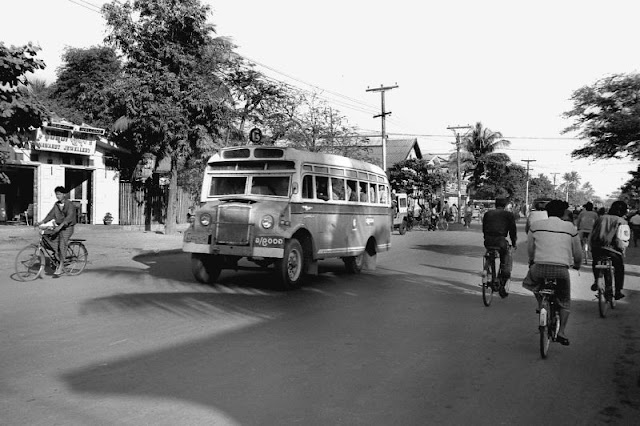
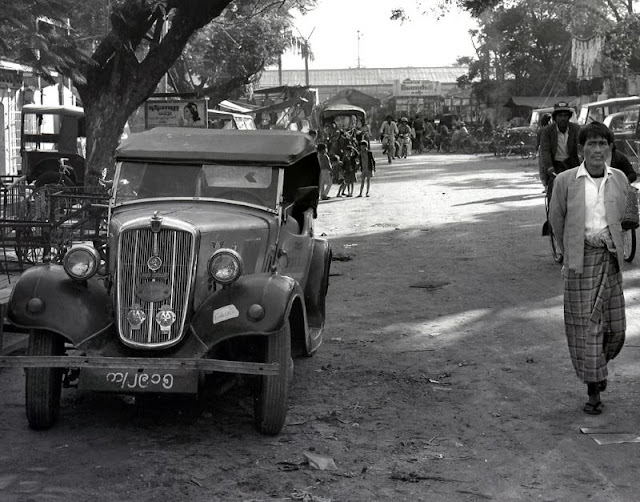
Just few years before renamed to Myanmar, these amazing black and white photos were captured by Dave Glass that show everyday life of Burma in 1986.
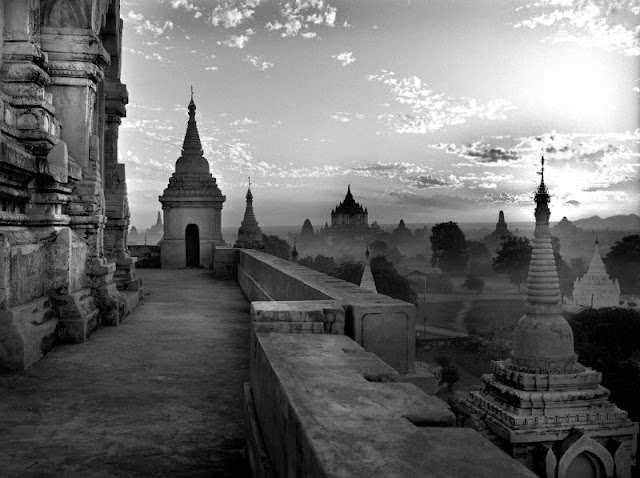
Bagan. Ananda Temple, Burma, 1986

Bagan. Young girl, Burma, 1986

Irrawaddy River, Burma, 1986

Mandalay public transit bus, Burma, 1986

Mandalay, Burma, 1986

March 20, 2021

35 Street Portrait Photos of Yangon Girls in the Early 1970s

Yangon, also known as Rangoon, is the capital of the Yangon Region and the largest city of Myanmar (also known as Burma). It served as the capital of Myanmar until 2006, when the military government relocated the administrative functions to the purpose-built capital city of Naypyidaw in north central Myanmar, and Myanmar’s most populous city and its most important commercial centre.


Yangon boasts the largest number of colonial-era buildings in Southeast Asia, and has a unique colonial-era urban core that is remarkably intact. The colonial-era commercial core is centered around the Sule Pagoda, which is reputed to be over 2,000 years old. The city is also home to the gilded Shwedagon Pagoda – Myanmar's most sacred and famous Buddhist pagoda.

Yangon suffers from deeply inadequate infrastructure, especially compared to other major cities in Southeast Asia. Though many historic residential and commercial buildings have been renovated throughout central Yangon, most satellite towns that ring the city continue to be profoundly impoverished and lack basic infrastructure.

These fascinating photos were taken by American photographer Nick DeWolf that show street portraits of Yangon girls in 1972.


December 30, 2019

33 Fascinating Photos Document Everyday Life of Markets in Mandalay (Burma) in 1971

Mandalay is a city and former royal capital in northern Myanmar (formerly Burma) on the Irrawaddy River. In its center is the restored Mandalay Palace from the Konbaung Dynasty, surrounded by a moat. Mandalay Hill provides views of the city from its summit, which is reached by covered stairway. At its foot, the Kuthodaw Pagoda houses hundreds of Buddhist-scripture-inscribed marble slabs.

Founded in 1857 by King Mindon, replacing Amarapura as the new royal capital of the Konbaung dynasty, Mandalay is the second-largest city in Myanmar, after Yangon. Located on the east bank of the Irrawaddy River, 716 km (445 mi) north of Yangon. It was Burma's final royal capital before the kingdom's annexation by the British Empire in 1885.

Today, Mandalay is the economic centre of Upper Myanmar and considered the centre of Burmese culture.

These fascinating photos from BU ICEAACH that documented everyday life of markets in Mandalay in 1971.


June 1, 2016

February 18, 2016

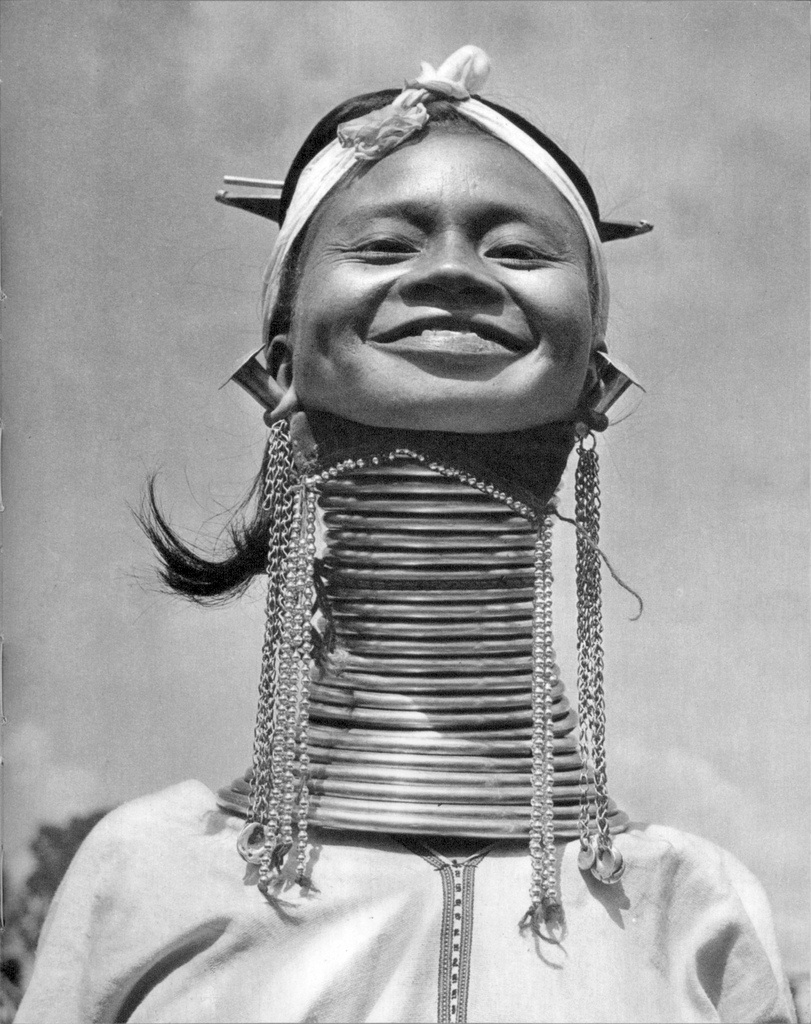
Kayan People: Incredible Vintage Photos of “Giraffe Women” in the 1950s

The Kayan Lahwi people, also known as Padaung, are an ethnic group with populations in Myanmar (Burma) and Thailand. Women of the Kayan tribes identify themselves by their forms of dress. Women of the Kayan Lahwi tribe are well known for wearing neck rings, brass coils that are placed around the neck, appearing to lengthen it. The women wearing these coils are known as "giraffe women" to tourists.


Girls first start to wear rings when they are around 5 years old. Over the years, the coil is replaced by a longer one and more turns are added. The weight of the brass pushes the collar bone down and compresses the rib cage. The neck itself is not lengthened; the appearance of a stretched neck is created by the deformation of the clavicle.

Many ideas regarding why the coils are worn have been suggested, often formed by visiting anthropologists, who have hypothesized that the rings protected women from becoming slaves by making them less attractive to other tribes. It has also been theorised that the coils originate from the desire to look more attractive by exaggerating sexual dimorphism, as women have more slender necks than men. It has also been suggested that the coils give the women resemblance to a dragon, an important figure in Kayan folklore. The coils might be meant to protect from tiger bites, perhaps literally, but probably symbolically.

Kayan women, when asked, acknowledge these ideas, and often say that their purpose for wearing the rings is cultural identity (one associated with beauty). Some amazing vintage photos of them below taken in the middle 1950s will give you a better idea.


FOLLOW US:
FacebookTumblrPinterestInstagram

CONTACT US


Browse by Decades

Popular Posts

Advertisement

09 10