Bring back some good or bad memories


ADVERTISEMENT
Showing posts with label Mexico. Show all posts

July 28, 2026

La Muerte Niña: Post-Mortem Portraits of Infants and Young Children in Mexico From the Late 19th and Early 20th Centuries

“La muerte niña” (the death of the child) refers to the Mexican tradition of post-mortem photography for deceased infants and children, a deeply rooted custom that peaked during the late 19th and early 20th centuries. Stemming from colonial art traditions, these photographs served as a final, permanent keepsake for families enduring high infant mortality rates. Unlike modern perspectives that view memento mori images with unease, Mexican families celebrated these children as “angelitos” (little angels) who died without sin and were believed to ascend straight to heaven to act as divine intercessors for the family.

Deceased children were rarely photographed in plain clothes or coffins. Instead, they were heavily stylized to reflect their transformation into angels. Children were often dressed in elaborate white gowns or costumed as specific saints, the Virgin Mary, or Christ figures. Crowns made of fresh flowers (coronas) and palm leaves were placed on their heads to symbolize purity, spiritual victory, and absolute innocence. Photographers placed small crosses, rosaries, or lilies in the child's hands to denote their unblemished souls.

The staging aimed to mimic sleep, life, or divine coronation rather than cold mortality. Infants were frequently nestled into beds or cushions surrounded by dense, towering floral arrangements. Propped up in chairs or held by their godparents and mothers, children were sometimes photographed with eyes chemically painted open or gently arranged to look awake. Parents and siblings often stood stoically beside the deceased child, displaying solemn dignity rather than open weeping, as outward grief was thought to hinder the angelito’s journey to heaven.

As photography studios expanded across Mexico during the Porfiriato era, the practice grew accessible to both wealthy elites and rural working classes. Prominent regional photographers, such as Romualdo García in Guanajuato and Juan de Dios Machain in Jalisco, documented hundreds of these rituals, leaving behind vast socio-historical archives. By the mid-20th century, shifts in Catholic mourning practices, the modernization of funeral industries, and improved healthcare led to the gradual decline of this unique photographic genre.


January 27, 2026

Nacho López’s Iconic 1953 Photographs of Maty Huitrón Walking the Streets of Mexico

Nacho López, Mexican photographer, decided to do a social-cultural experiment and asked actress Maty Huitrón to go to the market while he went back to get more roll, then he hide and took photos while he followed her, capturing the reactions of the men in January of 1953 and titled: “When a beautiful woman walks by Madero Street”.

Nacho López always sought to portray ordinary people and everyday situations in Mexico City, which was in the process of becoming a major metropolis. On more than one occasion, the actress has recounted that creating this series of images was a unique experience, as the photographer managed to capture her without asking her to undress or attempting to create a hypersexualized or ultra-feminine image.


November 8, 2025

Fidel Castro and Che Guevara in a Prison Cell in Mexico City, 1956 — Their First Photo Together

A young Cuban Marxist revolutionary, Fidel Castro (left), and Argentine Marxist revolutionary, Che Guevara (right), in Miguel Schultz Jail in Mexico City in June-July 1956. This photograph may be the first one showing Castro and Guevara together.


After Fidel Castro’s failed attack on the Moncada Barracks in Cuba in 1953, he was imprisoned and later released under amnesty in 1955. Castro then fled to Mexico, which had become a haven for Latin American revolutionaries. There, he began organizing a new expedition to overthrow Fulgencio Batista, the U.S.-backed dictator of Cuba.

It was in Mexico City in 1955 that Castro met Ernesto “Che” Guevara, an Argentine doctor and Marxist who had been traveling across Latin America. The two men quickly bonded over their shared anti-imperialist ideals and revolutionary goals. Guevara soon joined Castro’s group — the 26th of July Movement — as its physician and one of its most passionate fighters.

In June 1956, Mexican authorities raided a farmhouse in the town of Santa Rosa, near Mexico City, where Castro’s group was training and stockpiling weapons for their planned invasion of Cuba. The authorities arrested Fidel and Raúl Castro, Che Guevara, and several other Cuban exiles.

The group was charged with violating Mexico’s neutrality laws and possessing illegal weapons. They were held for several weeks in Miguel Schultz Prison (also called Palacio de Lecumberri in Mexico City). During their imprisonment, Che and Fidel shared a cell — this is the period captured in a few surviving photographs and accounts that describe their camaraderie and determination.

Thanks to lobbying and financial help from sympathetic contacts, notably Mexican politician Carlos Prío Socarrás (a former Cuban president in exile), the men were released after about a month in prison.

Once freed, they resumed preparations for their invasion. By late November 1956, they secretly boarded the yacht Granma with 82 fighters and sailed from Tuxpan, Mexico, to Cuba. Although the landing was disastrous, only a dozen men survived the initial ambush, it marked the beginning of the Cuban Revolution, which would triumph in 1959.

September 14, 2025

26 Amazing Vintage Photographs of People Posing With Olmec Colossal Heads in Mexico

The Olmec colossal heads are stone representations of human heads sculpted from large basalt boulders. They range in height from 3.8 to 11.2 ft (1.17 to 3.4 meters). The heads date from at least 900 BCE and are a distinctive feature of the Olmec civilization of ancient Mesoamerica. All portray mature individuals with fleshy cheeks, flat noses, and slightly-crossed eyes; their physical characteristics correspond to a type that is still common among the inhabitants of Tabasco and Veracruz. The backs of the monuments are often flat.

The first documented discovery of an Olmec colossal head was in 1862, when José María Melgar y Serrano reported finding a large stone head at the site of Tres Zapotes in Veracruz. However, this finding didn’t garner widespread attention until archaeologist Matthew Stirling excavated the same head in 1938. Stirling’s work spurred the first major archaeological investigations into the Olmec culture, leading to the discovery of more heads and other monumental works.

To date, 17 confirmed colossal heads have been found at four main sites within the Olmec heartland –– San Lorenzo Tenochtitlán: 10 heads; La Venta: 4 heads; Tres Zapotes: 2 heads; La Cobata: 1 head.

The colossal heads were sculpted from single, massive basalt boulders. The stone was quarried from the Sierra de los Tuxtlas mountains, located up to 93 miles (150 km) away from the sites where the heads were found. The process of quarrying and transporting these boulders, some of which weigh over 40 tons, was a monumental undertaking that required an immense amount of human effort and logistical skill. It is believed that the Olmec used a combination of human power, wooden sleds, log rollers, and rafts on rivers to move the stones.

Once at the workshop, the boulders were carved using hard stone tools, as the Olmec did not have metal tools. The heads often have flattened backs, and some were even re-carved from older monuments, such as stone thrones, indicating a practice of repurposing and honoring previous rulers. Each head possesses unique and individualized facial features, suggesting they were portraits of specific people rather than idealized figures or gods.

Scholars believe the colossal heads were symbols of political power and authority. They were likely displayed in ceremonial centers such as San Lorenzo, La Venta, and Tres Zapotes, reinforcing the presence of ruling elites. Some researchers suggest they may have been tied to ancestor veneration, while others connect them to ritual games or cosmic symbolism.

The Olmec colossal heads are not only a remarkable artistic achievement but also a crucial historical record, offering a glimpse into the complex society, political structure, and belief systems of Mesoamerica's first major civilization. Their legacy and influence can be seen in later cultures, such as the Maya and the Aztecs, who also commemorated their rulers with monumental stone sculptures.


August 12, 2025

35 Historic Postcard Photos From the Mexican Revolution

Hundreds of commercial and amateur photographers recorded imagery during the tumultuous Mexican Revolution (Revolución Mexicana), which began in 1910 with an uprising led by Francisco I. Madero (1873–1913) against Porfirio Díaz (1830–1915), the President of Mexico.

Many of the photos were printed on postcard stock and marketed by commercial photographers to soldiers and civilians on either side of the international border between Mexico and the United States. Other photographic postcards in this collection created by amateur photographers document their personal experience in the conflict.

Military funeral in tent-camp at Fort Bliss (prior to First World War). Troop B, 15th Cavalry, 1910-14

Military funeral en route to Ft. Bliss post cemetery (prior to First World War). Troop B, 15th Cavalry, 1910-14

On the firing line, February 8, 1911

Efectos del bombardeo, 1914

5000 U.S. troops in Military Parade, El Paso, 1915

December 13, 2024

Vintage Centro Universitario México Sport Uniforms Anyone?

Vintage group photos of Centro Universitario México basketball teams from the 1980s, when they abbreviated all over their sports uniforms:


The Centro Universitario de México (CUM) in the 1980s was an influential educational institution in Mexico City, known for its commitment to high-quality education and emphasis on comprehensive student development. Founded in 1954, the school aimed to prepare students academically, socially, and morally, with a strong foundation in values.

CUM was recognized for its rigorous academic programs that prepared students for higher education. The institution offered various levels of education, from elementary to high school (primaria to preparatoria), and was known for fostering critical thinking and academic discipline.


The 1980s saw an emphasis on well-rounded education, and CUM encouraged participation in arts, sciences, and sports. Students were often involved in academic competitions, cultural events, and sports tournaments.

The school’s basketball team, as well as teams for other sports like soccer and volleyball, were highly active in interscholastic leagues. CUM’s basketball team, in particular, played a significant role in regional tournaments and fostered a sense of school pride.

These activities not only strengthened the athletic skills of students but also helped them develop teamwork and leadership qualities.

August 6, 2024

Mexico in the Early 1950s Through Wonderful Color Slides

In the early 1950s, Mexico experienced significant change. Miguel Alemán Valdés was president, focusing on modernization and economic growth. The country saw rapid industrialization, urban expansion, and infrastructure development, boosting economic prosperity. Urban areas expanded, leading to improved infrastructure and amenities, while traditional rural lifestyles persisted.

Mexican cinema, music, and literature gained prominence, reflecting both traditional and modern influences. Overall, the period was marked by modernization efforts, economic progress, and cultural vibrancy.

These wonderful photos from Tom Lehman were taken by Orpha Leatherman that show everyday life in Mexico in the early 1950s.

Indians going to Patzcuaro market, Mexico, 1950s

Big house or apartment, woman at 2nd floor window balcony, Mexico, 1950s

Brick building with no roof, graffiti, Mexico, 1950s

Bridal couple, Mexico, 1950s

Burros on a street of Taxco, Mexico, 1950s

April 25, 2024

Fascinating Photos Capture Street Scenes of Tijuana in the Late 1980s

Tijuana is the largest city in the state of Baja California located on the northwestern Pacific Coast of Mexico. Tijuana is the municipal seat of the Tijuana Municipality and the hub of the Tijuana metropolitan area. It has a close proximity to the Mexico–United States border, which is part of the San Diego-Tijuana metro area.

Tijuana in the 1980s was a vibrant and dynamic city known for its border culture, nightlife, and tourism. It experienced rapid growth during this time, becoming a popular destination for visitors from both Mexico and the United States.

The city’s proximity to the US border made it a hub for trade, commerce, and entertainment, leading to the development of a unique blend of Mexican and American influences. However, it also faced challenges such as urbanization, population growth, and issues related to drug trafficking and organized crime.

These fascinating photos were taken by Rob56 that show street scenes of Tijuana in 1989.

A view down the main street, Tijuana, 1989

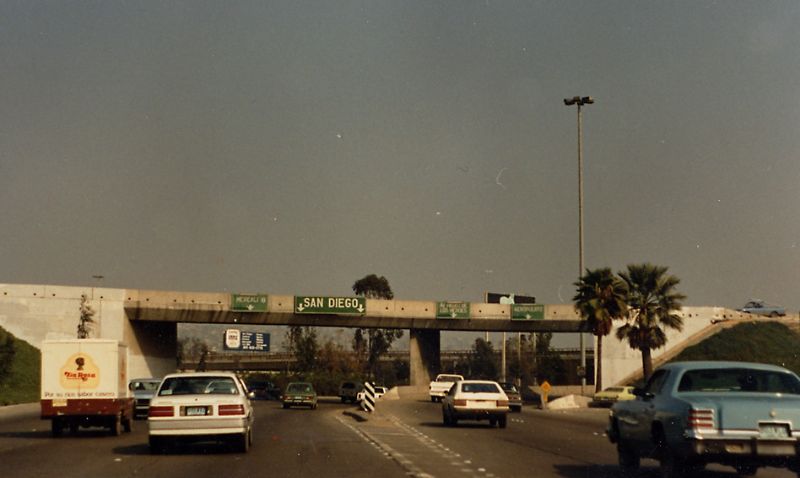
A bridge on the Highway between the U.S. Mexico Border and Tijuana, 1989

A street scene from Tijuana, 1989

A street scene from Tijuana, 1989

A view from the cab down the main street, Tijuana, 1989

March 8, 2024

30 Vintage Photographs Capture Life Inside the Black Palace Prison in Mexico, 1950

The Palacio de Lecumberri, also called the Black Palace, was known as a place from which it was impossible to escape. Legend has it that the only person who’d ever successfully done so was Pancho Villa, but after two years at Lecumberri, with the help of his wife, managed to do just that.

Palacio de Lecumberri is located at the North East border of Mexico City’s Federal District. The building was used as a prison from 1900–1976, and as the Country’s National Archive from 1980 onwards.

In 1950, the number of incarcerated Americans was around one-fifth of today’s levels. Prison is not designed to be pleasant, but the Black Palace was so dangerous, dirty and degraded as to inspire LIFE to describe it “an animal cage for great and petty criminals who … murdered each other in knife brawls and lived in depravity in overcrowded cells.”

Following a crime wave in 1949, the prison administration brought in a new warden to oversee the 4,000 inmates, who were living in a facility built for half that number. Colonel Francisco Linares introduced a militaristic management style while maintaining some of the prison’s unusual freedoms: City postmen brought letters directly to cells, wealthier inmates could employ other inmates as servants and conjugal visits were permitted—for male inmates only—with the intention of preventing homosexual activity.

As for the female prisoners, who made up 10% of the population and three dozen of whom were mothers, many found better nutrition and education within the prison’s walls than in their impoverished lives outside of prison.

Linares openly eschewed penal pedagogy, resorting to special measures for what he deemed a special situation. “We can’t run an Alcatraz, a Leavenworth or a Sing Sing here,” he explained. “We have to run this place a la Mexicana.”


February 13, 2024

Vintage Found Photos of a Mexican Bullfighting in 1958

Bullfighting is a physical contest that involves a bullfighter attempting to subdue, immobilize, or kill a bull, usually according to a set of rules, guidelines, or cultural expectations.

There are several variations, including some forms which involve dancing around or leaping over a cow or bull or attempting to grasp an object tied to the animal's horns. The best-known form of bullfighting is Spanish-style bullfighting, practiced in Spain, Portugal, Southern France, Mexico, Colombia, Ecuador, Venezuela, and Peru. The Spanish Fighting Bull is bred for its aggression and physique, and is raised free-range with little human contact.

The practice of bullfighting is controversial because of a range of concerns including animal welfare, funding, and religion. While some forms are considered a blood sport, in some countries, for example Spain, it is defined as an art form or cultural event, and local regulations define it as a cultural event or heritage. Bullfighting is illegal in most countries, but remains legal in most areas of Spain and Portugal, as well as in some Hispanic American countries and some parts of southern France.

Here below is a set of vintage photos from Shane Egan that shows a Mexican bullfighting in November 1958.


January 11, 2024

40 Vintage Photos of Xochimilco From Between the 1920s and ’40s

Xochimilco is a borough of Mexico City. The borough is centered on the formerly independent city of Xochimilco, which was established on what was the southern shore of Lake Xochimilco in the precolonial period.

Today, the borough consists of the 18 barrios, or neighborhoods, of this city along with 14 pueblos, or villages, that surround it, covering an area of 125 km2 (48 sq mi). The borough is in the southeastern part of the city and has an identity that is separate from the historic center of Mexico City, due to its historic separation from that city during most of its history.

Xochimilco is best known for its canals, which are left from what was an extensive lake and canal system that connected most of the settlements of the Valley of Mexico. These canals, along with artificial islands called chinampas, attract tourists and other city residents to ride on colorful gondola-like boats called trajineras around the 170 km (110 mi) of canals. This canal and chinampa system, as a vestige of the area’s precolonial past, has made Xochimilco a World Heritage Site.

These vintage photos from smallcurio that captured Xochimilco from between the 1920 and 1940s.


FOLLOW US:
FacebookTumblrPinterestInstagram

CONTACT US


Browse by Decades

Popular Posts

Advertisement

09 10