Bring back some good or bad memories


ADVERTISEMENT
Showing posts with label Melbourne. Show all posts

February 4, 2025

The Amazing Story of Running Legend Cliff Young, the 61 Year Old Farmer Who Won the World’s Toughest Race in 1983

Every year from between 1983 and 1991, Australia held 543.7-mile (875-kilometer) endurance racing from Sydney to Melbourne. It is considered among the world’s most grueling ultra-marathons. The race takes five days to complete and is normally only attempted by world-class athletes who train specially for the event. These athletes are typically less than 30 years old and backed by large companies such as Nike.


In 1983, a man named Cliff Young showed up at the start of this race. He was 61 years old and wore overalls and work boots. To everyone’s shock, Cliff wasn’t a spectator. He picked up his race number and joined the other runners. The press and other athletes became curious and questioned Cliff. They told him, “You’re crazy, there’s no way you can finish this race.” To which he replied, “Yes I can. See, I grew up on a farm where we couldn’t afford horses or tractors, and the whole time I was growing up, whenever the storms would roll in, I’d have to go out and round up the sheep. We had 2,000 sheep on 2,000 acres. Sometimes I would have to run those sheep for two or three days. It took a long time, but I’d always catch them. I believe I can run this race.”

When the race started, the pros quickly left Cliff behind. The crowds and television audience were entertained because Cliff didn’t even run properly; he appeared to shuffle. Many even feared for the old farmer’s safety. All of the professional athletes knew that it took about 5 days to finish the race. In order to compete, one had to run about 18 hours a day and sleep the remaining 6 hours. The thing is, Cliff Young didn’t know that!

When the morning of the second day came, everyone was in for another surprise. Not only was Cliff still in the race, he had continued jogging all night. Eventually Cliff was asked about his tactics for the rest of the race. To everyone’s disbelief, he claimed he would run straight through to the finish without sleeping.


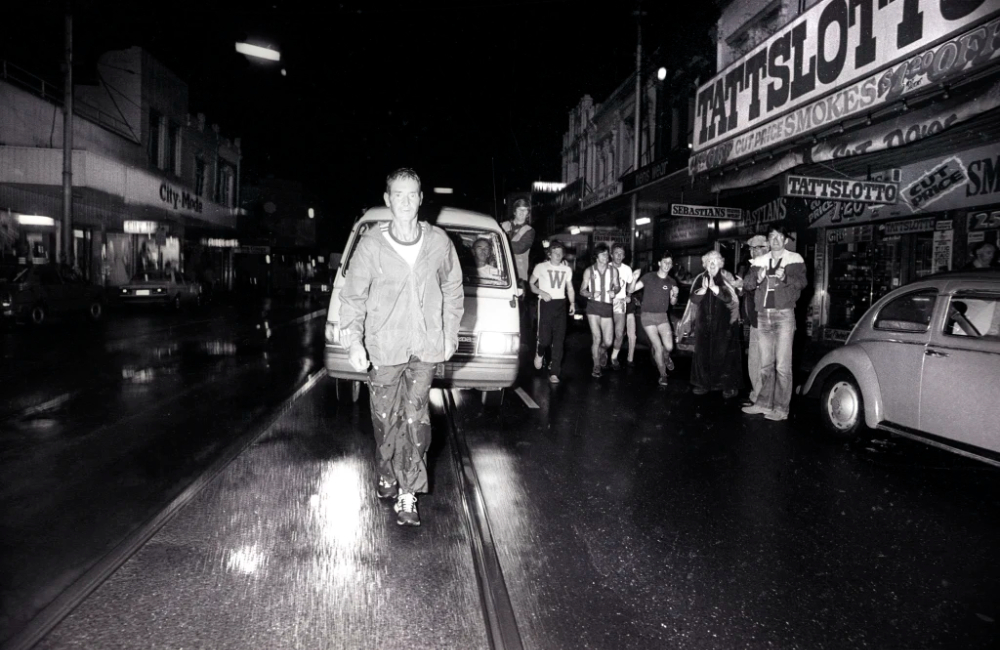

Cliff kept running. Each night he came a little closer to the leading pack. By the final night, he had surpassed all of the young, world-class athletes. He was the first competitor to cross the finish line and he set a new course record.

November 17, 2024

Horse-Drawn Melbourne Fire Engine Converted to Motor Drive, 1914

In July 1914 the oil fired Steamer at MFB Station 38 South Melbourne was motorized with the addition of an Itala car converted to a tractor and designated as Car 23. The conversion was carried out at the MFB Workshops.


This bizarre vehicle was built by shortening a heavy touring car, by moving its rear axle to just behind the gearbox, removing the rear wheels, and fixing it to the chassis side-members. The rear springs were reversed and rested on the front axle of the fire engine. That is the middle set of wheels visible; they were chain-driven from what had been the car rear axle.

The original front axle of the fire-engine swiveled, and this was presumably retained to avoid a long rigid wheelbase, so it was effectively an articulated vehicle. It was built because there had been a spate of serious accidents when people tried to tow fire-engines with cars.

June 27, 2023

Photos of Swedish High Jumper Gunhild Larking at the 1956 Summer Olympics in Melbourne

Sultry beauty Gunhild Larking, 20, Sweden’s entry for the high jump, nervously waiting for her turn to compete at the Olympic Games. She got no medal in the high lump at Melbourne but LIFE photographer George Silk, bless him, happily voted her two full rolls of his film.


Larking competed at the 1952 Summer Olympics, 1954 European Athletics Championships and 1956 Summer Olympics and placed ninth in 1952 and fourth in 1954 and 1956. She won five consecutive national titles from 1952 to 1956.


May 26, 2022

50 Amazing Photos of Melbourne’s Buildings Taken by Peter Wille in the 1960s

Peter Wille (1931–71) had an unflagging passion for architecture. Emigrating from Ceylon (now Sri Lanka) with his wife during the 1950s, he settled in the newly developed suburb of Mount Waverley, in Melbourne’s south-east.

Wille was employed by the firm Smith, Tracey, Lyon & Brock as an architectural draftsman, and he also contributed to the architectural journal Building ideas. In his spare time, he photographed buildings across Melbourne, particularly in pockets of the south-east, compiling a vast archive of more than 6000 meticulously annotated color slides.

In 1955, Wille began corresponding with architect Robin Boyd. Over the next 15 years, they developed a friendship centered on sharing and critiquing ideas. On 16 November 1971, Wille was killed in a tragic road accident while out photographing a building. His death came only one month after that of Robin Boyd.

Peter Wille’s carefully compiled archive is not only a significant record of a critical period in Australian architecture, it also illustrates one person’s love of the buildings, environment and ideas that surrounded him.

These amazing photos from Monash Public Library Service were taken by Peter Wille that show architecture and construction of Melbourne in the 1960s.

View from north of Deakin Hall, Monash University, Clayton, 1962

House on corner of Bruce Street and Wiaktun Crescent, Mount Waverley, Chancellor & Patrick, 1962

34 Waimarie Drive, Mount Waverley, designed by Geoffrey Woodfall, 1963-64

A.N.Z. Bank, Ferntree Gully Road, Notting Hill, 1963

House, 32 Amber Grove, Mount Waverley, 1963

January 11, 2022

Circus, Fairs and Markets in the 1970s Through Fascinating Black and White Photos

Fair, temporary market where buyers and sellers gather to transact business. A fair is held at regular intervals, generally at the same location and time of year, and it usually lasts for several days or even weeks. Its primary function is the promotion of trade.

Circus, fairs and markets in Melbourne, Australia in the late 1970s

Historically, fairs displayed many different kinds of products in specific commodity or industrial groupings. The older specialty fair evolved into the more modern trade show. Participation in contemporary trade shows is confined to exhibitors representing one industry or even just specialized segments of an industry.

These fascinating black and white photos were taken by Simon Nowicki that show circus, fairs and markets in Melbourne, Australia in 1977 and 1978.

Lennon Brothers Circus, 1977

Lennon Brothers Circus, 1977

Lennon Brothers Circus, 1977

Lennon Brothers Circus, 1977

Lennon Brothers Circus, 1977

November 19, 2021

36 Vintage Photos of Melbourne in the 1970s

Melbourne is the capital and most-populous city of the Australian state of Victoria, and the second-most populous city in both Australia and Oceania. The city occupies much of the northern and eastern coastlines of Port Phillip Bay and spreads into the Mornington Peninsula and the hinterlands towards the Yarra Valley, the Dandenong and Macedon Ranges.

Melbourne is home to many of Australia’s best-known landmarks, such as the Melbourne Cricket Ground, the National Gallery of Victoria and the World Heritage-listed Royal Exhibition Building. It is also considered one of the world’s most livable cities.

The Melbourne Airport, also known as the Tullamarine Airport, is the second-busiest airport in Australia, and the Port of Melbourne is the nation's busiest seaport. Its main metropolitan rail terminus is Flinders Street station and its main regional rail and road coach terminus is Southern Cross station. It also has Australia’s most extensive freeway network and the largest urban tram network in the world.

These vintage photos captured street scenes of Melbourne in the 1970s.

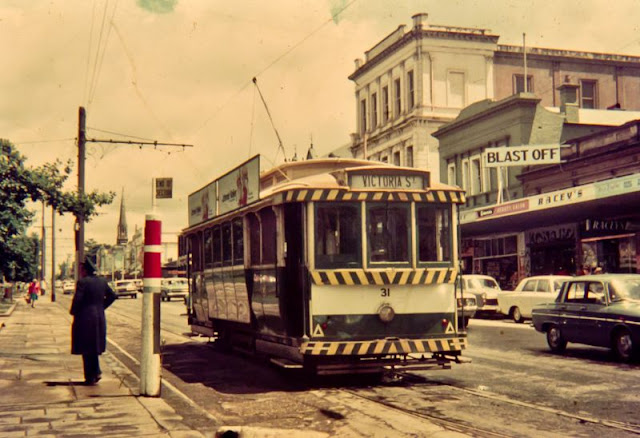
Melbourne tram, 1970

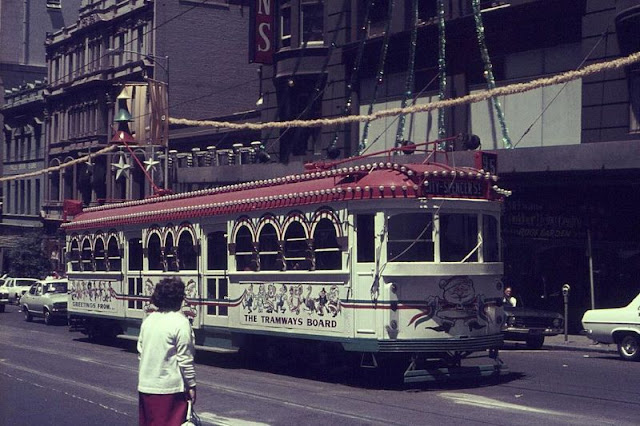
Bourke Street, Melbourne, 1970

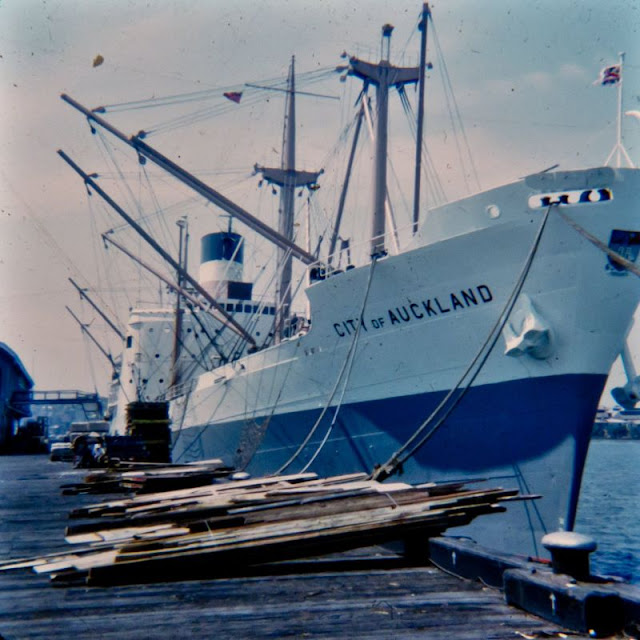
City of Auckland Ship at Melbourne dock, 1970

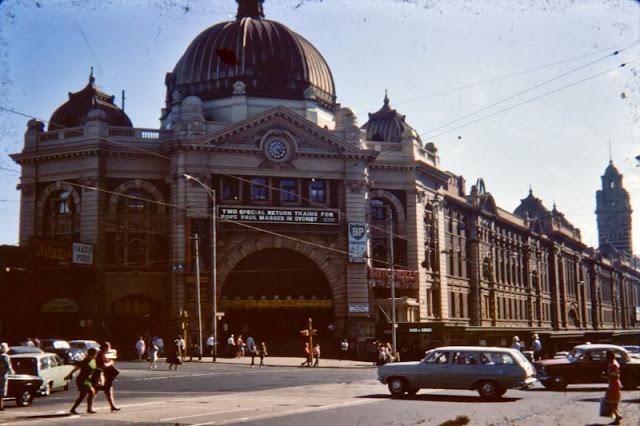
Flinders Street station, Melbourne, 1970

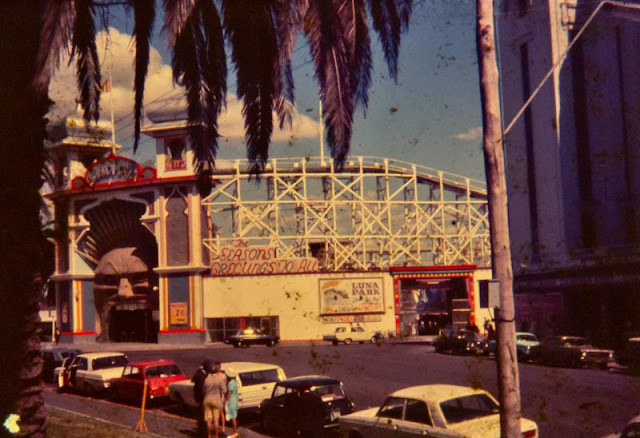
Luna Park, Melbourne, 1970

September 4, 2020

Studio Portrait Photos of Beautiful Girls of Melbourne in the 1920s

The GSV holds a collection of over 300 photos donated by Clyde Snape. They appear to have been developed several decades ago from a professional photographer's negatives that were damaged by mould. They appear to be reject photos or test photos.


These vintage photos were taken around 1920 that show portraits of beautiful girls probably in Melbourne, Victoria.


July 26, 2020

Melbourne’s First Cable Tram Service, 1885

The Melbourne tram network began in 1884 with the construction of the Fairfield Horse Tramway. However, the purpose of the line was to increase land prices in the area, and it soon closed during the depression in 1890. The first genuine attempt to construct a tramway network was the construction of the Richmond cable tram line by the Melbourne Tramway & Omnibus Company in 1885.

Melbourne’s first cable tram service; between Bridge Road, Richmond, and Spencer Street via Flinders Street, November 11, 1885.

Over the next few years, 16 more cable tram lines were constructed, as well as numerous other horse tramways. The depression of the early 1890s slowed further expansion of the cable network. The first electric tram line was the Box Hill and Doncaster tramway which opened in 1889. This was a pioneering line in what was then the countryside and thus didn't receive much patronage. It closed in 1896.

The next attempt at an electric tramway was Victorian Railways’ St Kilda to Brighton line, which opened in 1906. Later that year, the North Melbourne Electric Tramway and Lighting Company opened lines to Essendon and Maribyrnong. Many local councils formed their own tramway trusts and built tramways within their own constituency. The most successful of these was the Prahran and Malvern Tramway Trust.

Operating from 1885 until 1940, Melbourne’s cable tram system was the fourth biggest in the world, with about 75 km of double track, 17 inner-suburban routes, and 600 cable car and trailer sets. Cable trams depended for their motive power on a cable in a slot between the rails, kept moving by an engine house along the route. In the first car (the dummy), the driver (the gripman) worked the levers that gripped the cable to make the tram move. Passengers could ride in the dummy, but apart from the roof it was quite open. To warn passengers to hold on when the tram departed from a straight line, the gripman usually called “mind the curve!” The second car was more like a conventional small tram, but was only a trailer, pulled along by the dummy.

November 13, 2019

A Papier-Mache Cow is Being Tied to the Car by a Field Officer in the Women’s Land Army, Melbourne, 1944

A papier-mache cow, used for milking demonstrations at the Werribee experimental farm, being tied on to the luggage carrier of Mrs Mellor’s car for transport to the farm. Mrs Mellor is Field Officer in charge of the Women’s Land Army Mont Park training depot.

A papier-mache cow on Mrs Mellor’s car, 1944. (Photo: Australian War Memorial collection)

The Australian Women’s Land Army (AWLA) was an organization created in World War II in Australia to combat rising labour shortages in the farming sector. The AWLA organized female workers to be employed by farmers to replace male workers who had joined the armed forces.

The AWLA was formed on 27 July 1942 and was modeled on the Women’s Land Army in Great Britain. It was overseen by Lieutenant General Carl Jess. When Japan joined the Axis in 1941 male agricultural labour was recruited into the Australian military to defend the country. To meet the shortfall in rural labour, state and private women’s land organizations began to form under the jurisdiction of the Director General of Manpower. The AWLA disbanded on 31 December 1945. In 1997, many members became eligible for the Civilian Service Medal.

The minimum age for recruits was 18 with a maximum of 50 years of age. Women had to be either of British origin or immigrants from Allied nations. AWLA women were generally recruited from urban areas and were often unskilled in rural work. Members were given farming instruction and undertook work in primary industries, rather than any domestic duties at the hostels in which they were lodged in farming areas. The AWLA reached its peak enrolment in December 1943, with 2,382 permanent members and 1,039 auxiliary members. Women in the AWLA worked an average 48-hour week, with pay starting at the AWLA minimum wage of 30 shillings a week. Permanent members were also entitled to sick pay. As was common at the time, Women in the AWLA were paid much less than their male counterparts for the same work. Members of the AWLA covered a variety of agricultural labours, including vegetable and fruit growing, pig and poultry raising, and sheep and wool work.

A member of the Australian Women’s Land Army milking a cow on a mixed farm at Sturt, South Australia in 1943. (Photo: Smith, D. Darian/State Library of South Australia)

The AWLA was planned to function in two divisions:
  • Full-time members: These enrolled for continuous service for 12 months (with the option of renewal); such members were to receive appropriate badges, distinctive dress uniform, working clothes, and equipment.
  • Auxiliary members: These were available for periods of not less than four weeks at nominated times of the year; such members were to be used for seasonal rural operations, and to receive a badge, working clothes, and essential equipment on loan.

January 5, 2019

40 Fascinating Photos That Capture Street Scenes of Melbourne in the Early 1980s

Melbourne is the capital and most populous city of the Australian state of Victoria, and the second most populous city in Australia and Oceania. The city occupies much of the coastline of Port Phillip bay and spreads into the hinterlands towards the Dandenong and Macedon ranges, Mornington Peninsula and Yarra Valley.

As a leading financial centre in the Asia-Pacific region and ranks 20th in the Global Financial Centres Index, Melbourne is home to many of the best-known cultural institutions in the nation, such as the Melbourne Cricket Ground, the National Gallery of Victoria and the World Heritage-listed Royal Exhibition Building.

The city also has the most extensive freeway network in Australia and the largest urban tram network in the world. It is ranked as one of the most liveable cities in the world.

Here below is a fascinating photo collection from pszz that shows street scenes of Melbourne from 1981 to 1983.

Flinders Street, Melbourne

Fun by the river, Melbourne

Hilton, Melbourne

HMAS Hobart, Melbourne

Large black anchor at Port Phillip Bay, Melbourne

July 29, 2018

Vintage Aussie Cars: An American Man Took These Cool Pics of Classic Cars on Melbourne Streets From 1974 to 1976

American retired man of U.S Postal Service JOHN LLOYD took these cool pictures that show classic cars on Melbourne streets from 1974 to 1976 when he lived there.

Used car lot in Footscray, Melbourne, 1974

EH Holden 1964, Melbourne, 1974

EK Holden 1961, 1975

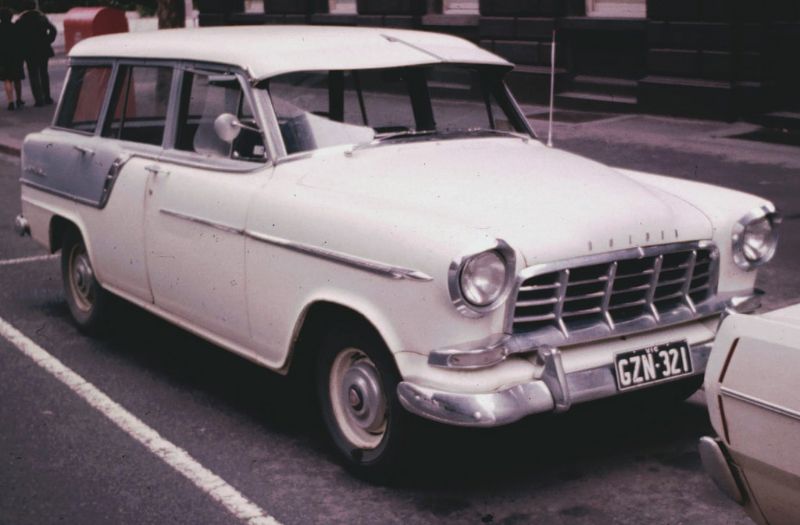
FC Holden from 1958 on the street, 1974

FJ Holden in a parking lot (car park) at the drag races, Calder Raceway, near Melbourne, 1974


FOLLOW US:
Facebook • Tumblr • Pinterest • Instagram

CONTACT US


Browse by Decades

Popular Posts

Advertisement

09 10