Bring back some good or bad memories


ADVERTISEMENT
Showing posts with label Liverpool. Show all posts

April 15, 2026

In 1949, the O’Hare Family From Liverpool Had 15 of Their 16 Children Between the Ages of 0 and 17

The O’Hare family of Liverpool gained national attention in 1949–1950 as one of Britain’s largest families in the immediate postwar years. Henry O’Hare (born 1911) and his wife Marjorie (née Clare, born around 1910) lived in a large four-storey house on Radnor Place, off West Derby Road, in the Anfield area. Henry worked as an upholsterer (including on car interiors and even early televisions), while Marjorie managed the household.

They married in 1932 after meeting on a double date. Over the next two decades, they had 17 children in total, though one (Maureen, twin to Frank) died in infancy, leaving 16 surviving children at the time of their fame. The family included five sets of twins, a remarkable occurrence with no noted history of multiples in either parent’s background. In June 1949, 15 of the 16 children ranged in age from newborn/infant to about 17, creating an extraordinarily tight age span (roughly one birth every 13 months on average). This made headlines and earned them descriptions like “superfamily” in contemporary media.


Life in the O’Hare household was a masterclass in organization amid Britain’s postwar austerity. Rationing was still in effect, yet the family managed impressive consumption: weekly, they went through 9 pounds of sugar, 6 pounds of butter, 10 pints of milk, eight 2lb loaves of bread (often described as “eight loaves a day”), and 15 pounds of potatoes. Henry earned £7 10s a week, supplemented by 5s family allowance per child—reportedly the largest such allowance in Britain at the time.

Meals were communal events around a large table Henry built himself. Breakfast featured a big pot of tea and stacks of toast; dinner was ladled out by Henry, with children expected to stay seated until everyone finished. Chores were shared: older girls washed up, children made beds, and everyone pitched in. Henry was handy, he cut the boys’ hair, made clothes and shoes (especially for bank holidays), and handled practical tasks around the house. Bedrooms were shared (sometimes 3–4 per bed in the early years), and nappies even doubled as towels due to shortages.

Despite the challenges of food rationing, housing in a recovering city, and tight finances, the family emphasized that they “never went hungry.” Nina (fifth eldest, about 10 during the filming) later recalled warm memories like new wellies and socks provided during snowy weather, large Sunday roasts that could feed 30 when extended family visited, and the constant smell of food cooking. There were hardships too—one wartime Christmas in Loughborough involved eating pet rabbits (unbeknownst to the children at first), leading to tears.


In early 1950, British Pathé filmed a short newsreel titled Big Family at their Anfield home. The 90-second black and white clip (issued February 6, 1950) showed everyday scenes. The plummy narrator highlighted the scale: 16 children “complete with four sets of twins” (noting the fifth set had lost one). The family attended a screening at the Carlton cinema in Tuebrook as honored guests.

The O’Hares symbolized resilience and vitality in a Britain still rebuilding after WWII—food shortages, bombed-out neighborhoods, and economic strain contrasted with their bustling, life-filled home. Later family members (like Nina, interviewed in 2014) spoke emotionally about the footage, noting it wasn’t always easy but fostered strong bonds, resourcefulness, and a sense of abundance through love and routine. Henry died in 1971 and Marjorie in 1978; both are buried in Anfield Cemetery.


Today, the story lives on through the digitized Pathé film, old photos from June 1949 showing the large group, and local Liverpool recollections. It offers a vivid snapshot of working-class family life in 1940s–1950s Britain: crowded but close-knit, rationed but resourceful, and full of everyday heroism.

September 12, 2024

Before the Beatles: Rarely Seen Photos of the Quarrymen Performing at Liverpool’s Casbah Coffee Club

The Casbah Coffee Club was a rock and roll music venue in the West Derby area of Liverpool, England, that operated from 1959 to 1962. Started by Mona Best, mother of early Beatles drummer Pete Best, in the cellar of the family home, the Casbah was planned as a members-only club for her sons Pete and Rory and their friends, to meet and listen to the popular music of the day. Mona came up with the idea of the club after watching a TV report about the 2i’s Coffee Bar in London’s Soho where several singers had been discovered.

The Quarrymen—John Lennon, Paul McCartney, George Harrison, and Ken Brown—went to the club to arrange their first booking, to which Mona agreed, but said she needed to finish painting the club first. All four took up brushes and helped Mona to finish painting the walls with spiders, dragons, rainbows and stars. In addition to the four boys’ artistic contributions, Cynthia Powell, later to become Cynthia Lennon, painted a silhouette of John on the wall, which can still be seen today. The group often played at the Casbah as other venues, like the Cavern Club, had a jazz-only policy at that time.

The Quarrymen played a series of seven Saturday night concerts in the Casbah for 15 shillings each, starting on August 29, to October 1959, featuring Lennon, McCartney, Harrison and Brown, but without a drummer, and only one microphone connected to the club’s small PA system. The opening night concert was attended by about 300 local teenagers, but as the cellar had no air-conditioning, and people were dancing, the temperature rose until it became hard to breathe. After the success of the first night, Mona gave the Quarrymen a residency, and paid the whole group £3 a night. Every Saturday thereafter, queues lengthened onto the street, which was financially good for Mona, as she charged one shilling admission on top of the annual membership fee. As there was no amplification, Lennon later persuaded Mona to hire a young amateur guitar player called Harry to play a short set before the Quarrymen, but this was only so they could use his 40-Watt amplifier.

Other artists and groups like Cilla Black, Rory Storm and the Hurricanes, the Searchers and Gerry & the Pacemakers later played in the club. The Black Jacks became the resident group at the Casbah, although the Quarrymen occasionally played there again and often visited. Even though the membership list later spiraled to over a thousand, Mona closed the club on 24 June 1962, with the Beatles as the last group to perform.


July 31, 2024

The Beatles During the Lybro Jeans Photoshoot, April 1963

In 1963, Lybro Jeans, a Liverpool clothing company, asked if The Beatles would endorse their product. It was The Beatles first (and last) venture into the world of commercial advertising, and they reluctantly agreed to a photoshoot.

The original photos came to light in 2004, when photographer Richard Cooper unearthed the pictures in an old file and remembered the shoot on which he worked as a young 20-year-old apprentice at a photo studio in Liverpool’s “African Chambers.” The photos formed the basis of drawings used on the final advertisements, whereas the actual photographs remained with the photographer until he brought them to public attention in 2004. Five photographs have been published: one group shot and one photo of each Beatle.

Cooper said: “They look moody but they were very relaxed and amused about the whole business. It was at the shoot that John announced to the other members of the group that they would be number one by the end of the week, a fact they took completely in their stride. They stayed until the pictures were developed and made their comments about each one”.


In 1963, a Liverpool jeans company, Lybro Limited, asked if The Beatles would advertise their jeans. The request may either have come through the group’s manager, Brian Epstein – or through their friend at the Cavern Club, DJ Bob Wooler. The advertising agency behind the campaign was Millican Advertising Limited, operating from Liverpool 3.

Some time in spring or early summer 1963, The Beatles were photographed for the advertisement. The photos weren’t used as is, but formed the basis of drawings, which appeared in ads for the jeans.

The Lybro Factory was located in Liverpool on Mount Vernon Road. According to Photographer apprentice Richard Cooper, the photo shoot occurred on the week their third single, “From Me To You” reached number one in the UK. This would turn out to be the only non-musical product endorsement The Beatles agreed to venture in throughout their career, other than their own merchandise.

June 23, 2024

Pop Stars From Liverpool, 1963

Brian Epstein pictured with some of the groups he manages on June 18, 1963. These are three of the most listened-to bands of the early 1960s: The Beatles, Gerry and the Pacemakers, Billy J Kramer and the Dakotas. Between them they sold 2,000,000 records in six months.

On Paul McCartney’s 21st birthday, before the notorious party at Auntie Gin’s house, Brian hosted a quieter get together at his house. These photos were taken at Childwall Five Ways, a short distance from his house.


December 9, 2023

Stunning Portraits of Liverpool People Taken by Rob Bremner in the 1990s

Rob Bremner’s photographs captured the mood of Liverpool during the turbulent Thatcher years, highlighting the everyday life and positive spirit of the people – the colorful and casual fashions and local characters who were proud of their city.
“I know how to take portraits in the sense that I’ll look for a background and people, but basically, I just ask people if I can take their photo. Obviously, you’re hanging around the same area, so you get to know people.”
Rob Bremner is a British social and documentary photographer born in Wick, in the North of Scotland. Whilst studying in Wallasey, Rob became acquainted with photographers Tom Wood and Martin Parr. He would help out in Tom’s darkroom and spend his weekends following Tom and Martin around the faded resort of New Brighton as they documented the area.

Rob was later accepted on to David Hurn’s Documentary Photography course in Newport, Wales. It was around this time he started to photograph the Everton and Vauxhall areas of Liverpool. Rob Bremner’s iconic photographs in his Merseyside 1980s-90s series capture the mood of the times, but also the everyday life and enduring spirit of the people.


August 24, 2023

Rare Photographs of the Beatles Playing at the Cavern Club in 1961, Shortly Before They Were Famous

Two previously unseen photos of the Beatles have been found in 2022, showing the band playing at the Cavern Club in Liverpool in 1961, shortly before they shot to fame.


The images were captured in July 1961, more than a year before the band released their debut single “Love Me Do.” They show John Lennon and Paul McCartney at the microphone, with George Harrison on guitar and a partially obscured Pete Best, the group’s original drummer.

Paul Wane, managing director at Tracks, told CNN that the photos were taken by a fan who followed the band in the early 1960s and had a camera, which was unusual for the time.

“Not many people had cameras back then,” Wane told CNN. “That’s why there are so few shots of the Beatles in the Cavern. There’s very, very, very few. He followed the Beatles at some of the very early gigs. He was on speaking terms with them.”

Wane said the photographer is still alive and lives in the suburbs of Liverpool, but doesn’t want his name in the public domain. Although the anonymous photographer lost the negatives of the photographs, he still has the original contact sheet from the roll of film.

The photos are believed to have been taken during a lunchtime gig and it was one of these daytime performances where manager Brian Epstein would discover them. Epstein ran a music store just around the corner from the Cavern Club.

“I was immediately struck by their music, their beat, and their sense of humor on stage—and, even afterward, when I met them, I was struck again by their personal charm. And it was there that, really, it all started,” Epstein later said about the band’s performance.

July 10, 2023

Before Hole, Courtney Love Lived in Liverpool in 1982 When She Was 17

At the age of 17 – before Hole, before meeting Kurt Cobain – Courtney Love took a trip to Liverpool. She described the months she spent in the city in 1982 as “one of the most important things of my existence.” Love has said that Liverpool was a great place to learn how to be a rock star.

Courtney Love in Liverpool in 1982. (Photo: Robin D Bradbury/Confingo)

Love’s parents, Linda Risi and Hank Harrison, met at a party for Dizzy Gillespie in San Francisco in 1963. “We were doing tons of acid,” Harrison recalled, “changing sex partners, and tripping out.” Apparently, he managed The Warlocks in 1965 before they became the Grateful Dead. Risi, then 19, came from a wealthy family. Love’s grandparents provided her with a trust fund of $500 a month. This paid for the trip to Liverpool.

On July 9, 1964, Risi gave birth to Love Michelle Harrison – later known as Courtney. But Risi and Harrison fought, and, after they divorced, in 1970, a custody battle ensued. Risi and one of Harrison’s girlfriends testified that he had given his daughter LSD when she was four.

By the end of 1973 Risi had moved to New Zealand, leaving Love behind. She was just eight. She finally ended up in an institution for wayward teenagers, after being caught shoplifting. By the time she was 17 she had decided to leave behind her unhappy San Francisco childhood, and in 1981 she set off for Ireland. She moved into a squat in Dublin and started hanging out at the music venue McGonagles, where she collided with the postpunk Liverpool scene.

The Teardrop Explodes played Dublin in December. According to Bernie Connor, who was mates with Julian Cope and sold T-shirts on the tour, Love passed the monitor engineer a note for Julian. “Are you married?” it said. “So Courtney comes back to the hotel,” continues Connor, “attaches herself, and gravitates a little closer to Julian with every passing minute.”

Cope gave Love and her best friend Robin Barbur his Liverpool address and said they could stay, neglecting to mention he wouldn’t be there. They soon moved in to a “horrible” flat on Princes Avenue. Love recorded it all in her diary, from the “textured tawny-beige-green and brown-silver and white-old-human wallpaper” to “swirlfudgesludgepatterned earth tones carpet”.

Courtney Love in Sefton Park, in Liverpool, around 1982. (Photo: Robin D Bradbury/Confingo)

It possibly didn’t feel like it, as they sat in their coats in a cold, dimly lit flat on the edge of Toxteth, but Love and Barbur were in the right place at the right time. In April 1982 John Peel broadcast a BBC Radio 1 show live from Liverpool. The week-long extravaganza fueled and celebrated the scene that so thrilled the girls. It was a time of energy and ambition, with bitchiness galore.

While the sharp-tongued Pete Burns, later of the band Dead or Alive, was often at the center of the acrimony, one feud, between Julian Cope and Ian McCulloch, has had a staggering shelf life. The pair haven’t had a good thing to say about each other in the four decades since. In Liverpool, making music and making enemies went hand in hand – a lesson that would stand Love in good stead.

David Balfe at the Liverpool label Zoo was keen to launch a female version of Soft Cell, so he lent her a synthesiser and a four-track recorder. She didn’t know how to use them, but his enthusiasm galvanized her. As for the compositions, it seems her sludge-coloured flat came in handy. “I went on about porridge,” she recalled, “because all we had was porridge.” Although she describes the songs as stupid, they at least reflected her life in Liverpool. One of the first numbers was an ode to Cope, with a chorus beginning: “Julian, Julian, where have you been?”

Love once once said: “Before Liverpool, my life doesn’t count. Ian McCulloch and Julian Cope taught me a great deal. I owe them a lot. Liverpool had been a great school to become a rock star.”

October 7, 2022

35 Black and White Photos of the UK School Students’ Strike in 1985

The Youth Training Scheme (YTS) was set up by the government in 1983 claiming to offer workplace training for 16-17-year-olds on a voluntary basis.

However, as with apprenticeships today many employers took advantage of the scheme to use young people as full-time workers paying less than £30 per week, with no guarantee of a job at the end.

In 1985 the government threatened to make the scheme compulsory, and take unemployment benefits away from any young people refusing to participate: similar to today’s workfare schemes. At that time a majority of children left school at 16.

London based-photographer David Sinclair took these photos that documented the strike of school students in 1985.
“As many as 10,000 school students in Liverpool went on strike against YTS conscription in 1985. The Labour Party Young Socialists helped to organize the demo but no one had any idea so many would turn up. Labour Counsilers had to steward it.

The kids met at St Georges Hall and a demo was meant to go through town to the Pier Head but the kids just heard Pier Head and ran straight down Dale St bypassing the town centre. Terry Fields MP addressed the rally. Goverment minister Tom King postponed the bill for a year but YTS conscription was brought in by Thatcher.”


September 10, 2022

55 Amazing Black and White Photos Capture Street Scenes of Liverpool in the 1980s

Liverpool is a city and metropolitan borough in Merseyside, England. It is the tenth largest English district by population and its metropolitan area is the fifth largest in the United Kingdom.

In the 19th century, Liverpool was a major port of departure for English and Irish emigrants to North America. It was also home to both the Cunard and White Star Lines, and was the port of registry of the ocean liners RMS Titanic, RMS Lusitania, RMS Queen Mary and RMS Olympic.

In 2019, Liverpool was the fifth most visited UK city. It is noted for its culture, architecture and transport links. The city is closely associated with the arts, especially music; the popularity of the Beatles, widely regarded as the most influential band of all time, led to it becoming a tourist destination.

Natives of Liverpool, and some longtime residents, are formally referred to as Liverpudlians but are often called Scousers in reference to Scouse, a local stew made popular by sailors in the city, which is also the most common name for the local accent and dialect.

These amazing black and white photos were taken by David Sinclair that show what Liverpool looked like in the 1980s.

Athol St

Back of Great Homer St

Berni Inn, Pier Head

Birds Eye, Kirkby

Birkenhead Kwik Save and Iceland

March 25, 2022

Liverpool Cock Tugs

There was a period of time when smaller boats were used by ships, these were called cocks, or cockboats, and the people in charge of them were called coxswains, which is now a term used in rowing. Screw towing is moving ships with tugs and lighterage is when you transfer cargo from a larger ship to a smaller one.

Cock Tugs –– Liverpool Screw Towing & Lighterage Co. –– 28 Brunswick St. Liverpool, 1928.

The River Mersey has seen a large number of tugs from varying fleets in operation – the days of seeing tugs from Alexandra Towing, Liverpool Screw Towing (the Cock tugs), Rea Towing, Lamey, Furness Withy and others are long gone.

February 20, 2022

Poignant Photos of Liverpool in the 1980s

The 1980s were a time of turmoil and upheaval for Liverpool. Unemployment and economic instability led to widespread disquiet, culminating in public shows of resistance such as the 1981 Toxteth Riots. Liverpool also elected its first Labour council in 1983, who promised to stand up for what they saw as unjust cuts under the Thatcher government. 

However, the people of Liverpool were strong in the face of this upheaval, and glimpses of light can be found in dark times. As the official photographer for the Militant, Sinclair’s stunning images show a city that refused to lie down in the face of adversity. 

Dave Sinclair was born in 1959 in Walton, Liverpool. By 1980, he was studying Art at Liverpool Polytechnic, where he developed an interest in the Liverpool urban landscape. Surrounded by derelict factories and docks, Dave started documenting his surroundings, processing and printing in black and white in a darkroom he built himself. He soon realised that photography was what he wanted to do for a living. His photographs have been featured in several exhibitions, including ‘The Dockers’ which was exhibited in London Liverpool and extensively abroad, The ‘School Student Strike’ at the Bluecoat in Liverpool and ‘Thatcher, Liverpool and the 80s’ in Shoreditch.

‘Liverpool in the 1980s’ pays tribute to the constancy of the Liverpudlian spirit. From citywide protests to intimate portraits, this volume is a unique insight into the recent history of one of Britain’s most inspirational cities.


October 10, 2021

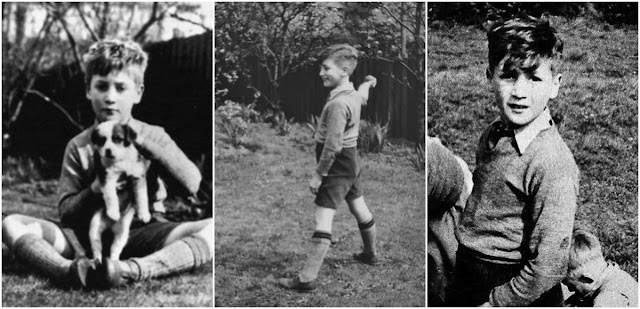
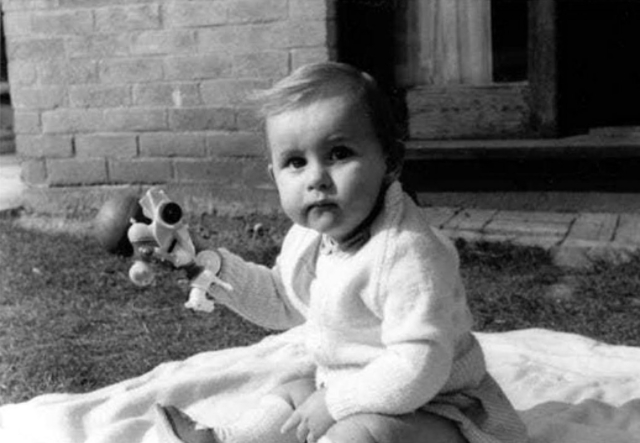
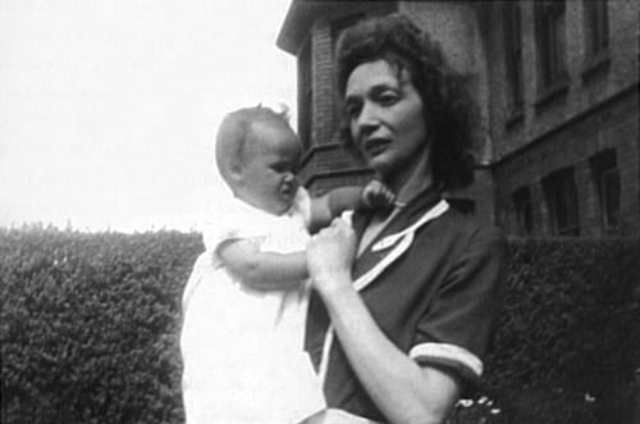
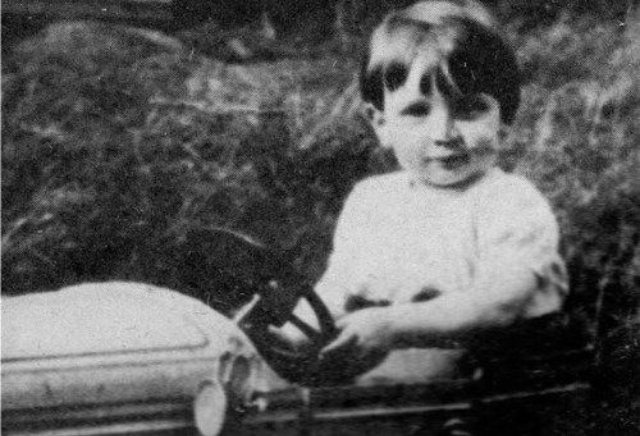
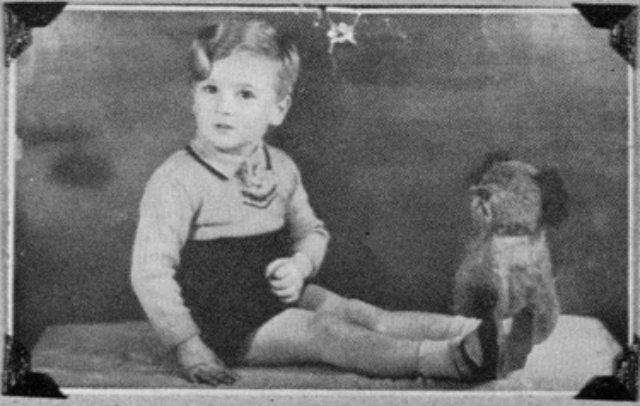
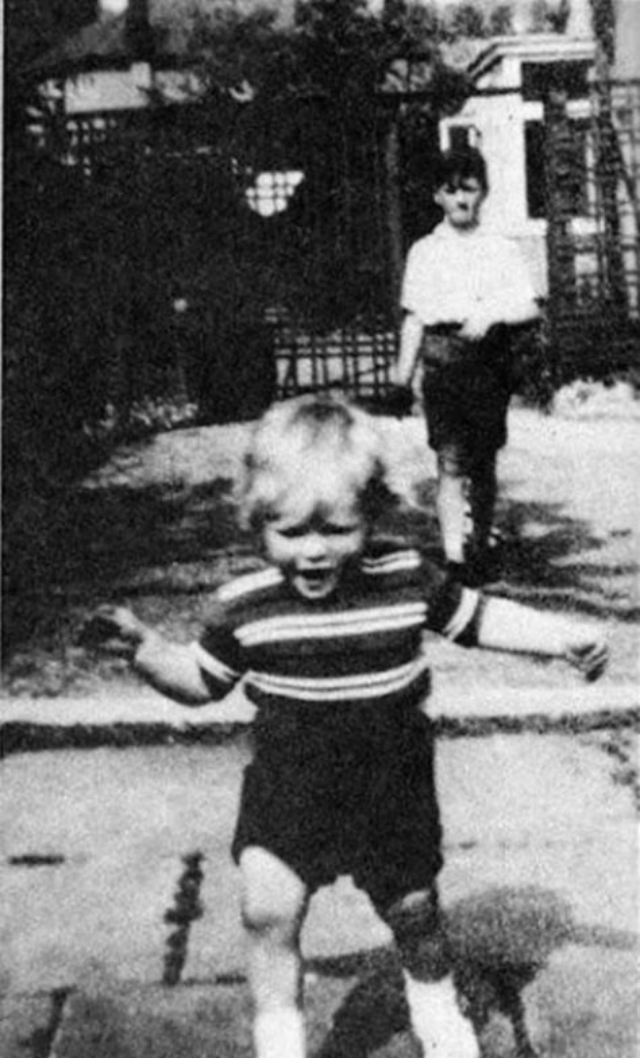
33 Adorable Childhood Photos of John Lennon From Between the 1940s and Early 1950s

With bombs falling around the hospital, John Lennon was born on October 9, 1940, in the midst of World War II. His parents named him John Winston Lennon after his paternal grandfather, John “Jack” Lennon, and Prime Minister Winston Churchill. His father, Alfred Lennon, was a merchant marine and was absent at John’s birth, as he would be for much of John’s childhood.


Lennon’s childhood was unsettled, with an absent father and a mother who simply couldn’t handle motherhood. After the age of four, Lennon didn’t even live with his mother, instead living with his childless Uncle George and Aunt Mimi. The two were a stern, but loving influence on Lennon throughout his childhood, though Mimi did what she could to discourage Lennon’s love of music. It was she who famously told him, “The guitar’s all very well, John, but you’ll never make a living out of it.”

Lennon’s mother was more supportive of his musical interest, in fact, it was Julia who bought the guitar for him. Though Lennon didn’t live with his mother, he remained close to her, regularly visiting her house where the two would listen to Elvis Presley records and pluck chords on the banjo, ukelele, and guitar.

Julia was also a frequent visitor at her sister’s house, where she spent mornings drinking tea with Mimi and chatting with her son. After one of these tranquil visits, tragedy struck. As Julia crossed the street to head home one day, she was struck and killed by a passing car. John was sixteen years old when his mother died, and he carried the weight of the tragedy with him for the rest of his life.

At the time Julia died, Lennon was already having trouble in school. He was smart, no doubt about that, but his wit and attitude got him into trouble with teachers. He created comics of teachers and fellow students in a work he titled “The Daily Howl,” and detention sheets from Quarry Bank High School show that Lennon once received three detentions in one day, with offenses over the years ranging from fighting in class, to sabotage, to “just no interest whatsoever.”

In September 1980, Lennon commented about his family and his rebellious nature:
“A part of me would like to be accepted by all facets of society and not be this loudmouthed lunatic poet/musician. But I cannot be what I am not ... I was the one who all the other boys’ parents – including Paul's father – would say, ‘Keep away from him’ ... The parents instinctively recognized I was a troublemaker, meaning I did not conform and I would influence their children, which I did. I did my best to disrupt every friend’s home ... Partly out of envy that I didn’t have this so-called home ... but I did ... 
“There were five women that were my family. Five strong, intelligent, beautiful women, five sisters. One happened to be my mother. [She] just couldn’t deal with life. She was the youngest and she had a husband who ran away to sea and the war was on and she couldn’t cope with me, and I ended up living with her elder sister. Now those women were fantastic ... And that was my first feminist education ... I would infiltrate the other boys’ minds. I could say, ‘Parents are not gods because I don’t live with mine and, therefore, I know.’”


FOLLOW US:
Facebook • Tumblr • Pinterest • Instagram

CONTACT US


Browse by Decades

Popular Posts

Advertisement

09 10