Bring back some good or bad memories


ADVERTISEMENT
Showing posts with label Indonesia. Show all posts

February 23, 2026

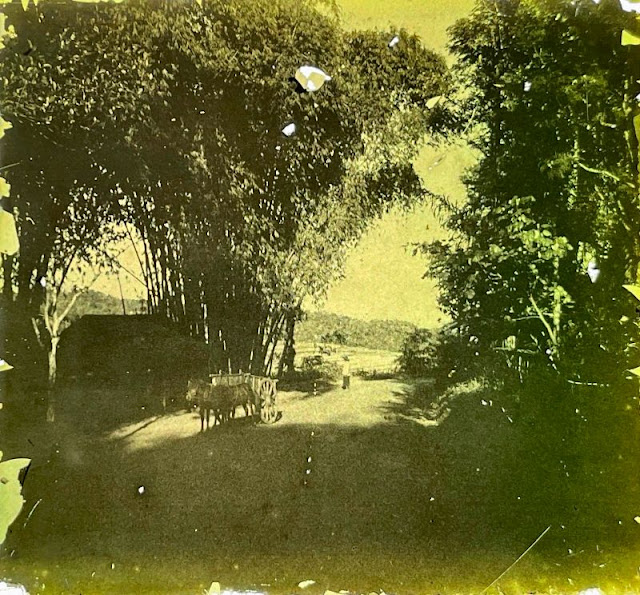
Everyday Life in Early 20th-Century Indonesia Through Vintage Photos

Everyday life in early 20th-century Indonesia, then known as the Dutch East Indies, was a complex tapestry of colonial influence and enduring indigenous traditions.

In the burgeoning urban centers like Batavia (now Jakarta) and Surabaya, the streets were a bustling mix of horse-drawn carriages, early motorcars, and traditional vendors, set against a backdrop of grand Indo-European architecture. For the majority of the population in rural areas, life remained deeply rooted in communal agriculture and the rhythmic cycles of the rice harvest, where local markets (pasar) served as the vital heartbeat of social and economic exchange. This era was also a period of profound social transition, as the rise of education and the “Ethical Policy” began to foster a new class of intellectuals, planting the early seeds of national consciousness.

Despite the rigid colonial hierarchies, the period is remembered for its vibrant cultural fusion, seen in everything from the popular Keroncong music to the diverse culinary landscape that defined the East Indies’ unique identity. These vintage photos, via Wolfgang Wiggers, capture everyday life in Indonesia from the early 20th century, offering a rare and intimate look at a bygone era.

Somewhere in Indonesia, 1906

Street on Ambon, Indonesia, 1906

"Son of Crown Prince in Palace Grounds, Yogyakarta", Java, Indonesia, 1910

A Canal at Batavia (Jakarta), Indonesia, 1910

A Gamelan, an Indonesian musical ensemble featuring a variety of instruments, Indonesia, circa 1910

May 26, 2023

Jakarta in the 1990s Through Fascinating Photos

Jakarta is the capital and largest city of Indonesia. Lying on the north-west coast of Java, the world’s most populous island, Jakarta is the largest city in Southeast Asia, and serves as the diplomatic capital of ASEAN.

The city is the economic, cultural, and political centre of Indonesia. Although Jakarta extends over only 664.01 km2 (256.38 sq mi) and thus has the smallest area of any Indonesian province, its metropolitan area covers 9,957.08 km2 (3,844.45 sq mi), which includes the satellite cities Bogor, Depok, Tangerang, South Tangerang, and Bekasi. It is also the largest urban area in Indonesia and the second-largest in the world (after Tokyo).

Jakarta ranks first among the Indonesian provinces in the human development index. Jakarta’s business and employment opportunities, along with its ability to offer a potentially higher standard of living compared to other parts of the country, have attracted migrants from across the Indonesian archipelago, making it a melting pot of numerous cultures.

These fascinating photos were captured by Kent Clark that show everyday life of Jakarta in the 1990s.

Jakarta expressions

Jakarta cyclists

British International School

Buffalo boy

Chicken, rice and music with street musicians Novi and Chandra

March 3, 2022

35 Autochrome Photos of Indonesia in the Early 20th Century

These photos from Carl Guderian are of Bandung and other parts of Java during the early 20th century, when Indonesia was still a Dutch colony.

The photos appear to document one or two visits by an unknown Dutch family to relatives who apparently lived in Senen, a district of Jakarta (then Batavia), in 1911 and 1912, then lived in Bandung on Riouwstraat (now Jalan R.E. Martadinata) 51, 53, or 55, in 1923 and 1924. (Famed Dutch cabaret performer Wim Kan lived in Riouwstraat 53 or 55 from 1939 until the Japanese conquest in 1942). The houses bear the names ‘SUNNY HOMES’.

The photographer was clearly a rich amateur, as the compositional quality rarely rises above the level of holiday snapshots. However, he or she at least knew enough to take long enough exposures (about 30 times that of monochromes) to get clear images, almost all outdoors and in strong sunlight.


March 10, 2021

Amazing Photos Capture Everyday Life of Bali in the Early 1950s

Bali is a province of Indonesia and the westernmost of the Lesser Sunda Islands. East of Java and west of Lombok, the province includes the island of Bali and a few smaller neighboring islands, notably Nusa Penida, Nusa Lembongan, and Nusa Ceningan.


The provincial capital, Denpasar, is the most populous city in the Lesser Sunda Islands and the second-largest, after Makassar, in Eastern Indonesia. Bali is Indonesia’s main tourist destination. It is also renowned for its highly developed arts, including traditional and modern dance, sculpture, painting, leather, metalworking, and music.

Bali is part of the Coral Triangle, the area with the highest biodiversity of marine species especially fish and turtles. In this area alone, over 500 reef-building coral species can be found. For comparison, this is about seven times as many as in the entire Caribbean.

These amazing photos from The International Center for East Asian Archaeology and Cultural History (ICEAACH) that captured everyday life of Bali in 1952.


December 9, 2020

35 Fascinating Photos Capture Everyday Life of Indonesia in the Early 1970s

Indonesia is a country in Southeast Asia and Oceania, between the Indian and Pacific oceans. It consists of more than seventeen thousand islands, including Sumatra, Java, Borneo (Kalimantan), Sulawesi, and New Guinea (Papua).

Indonesia is the world's largest island country and the 14th-largest country by land area, at 1,904,569 square kilometres (735,358 square miles). It is also the world's 4th-most populous country as well as the most populous Muslim-majority country. Java, the world's most populous island, is home to more than half of the country's population.

Indonesia has 34 provinces, of which five have special status. The country's capital, Jakarta, is the second-most populous urban area in the world. The country shares land borders with Papua New Guinea, East Timor, and the eastern part of Malaysia. Other neighbouring countries include Singapore, Vietnam, the Philippines, Australia, Palau, and India's Andaman and Nicobar Islands.

Despite its large population and densely populated regions, Indonesia has vast areas of wilderness that support one of the world's highest levels of biodiversity. The country consists of hundreds of distinct native ethnic and linguistic groups, with the largest one being the Javanese.

These Fascinating color photos were taken by gcosserat that show everyday life of Indonesia in 1971.

Bogor

Bogor

Bali port for Java

Bali. Besakih

Bali. Besakih

October 4, 2020

25 Vintage Portraits of Balinese Dancers From the Early 20th Century

Balinese dance is an ancient dance tradition that is part of the religious and artistic expression among the Balinese people of Bali island, Indonesia. Balinese dance is dynamic, angular and intensely expressive.


Balinese dancers express the stories of dance-drama through the bodily gestures including gestures of fingers, hands, head and eyes. The dancers move their necks from side to side as if there necks were made of rubber necks. Their movements tend to be both precise and stylized, with an emphasis on finger and hand movements. Dancers generally dance independently and don’t touch one another. Dances are fixtures of festivals and they are often accompanied by gamelan music.

There are many Balinese dances. Among them are the the Baris (“Warrior Dance”), with martial arts style moves; Janger, a sitting dance with swaying movements performed by groups of men and women; the Pendet, a simple dance often performed before making an offering at a temple; and topeng, mask dances. Bebalihan (entertainment dance) refers to the dances performed for audiences and tourists. Many new Bebalihan are created yearly or even monthly. These dances are categorized as Kontemporer or contemporary dance and usually performed in social events.


November 28, 2018

33 Color Snaps That Capture Everyday Life of Bali, Indonesia in the Early 1950s

Bali is a province of Indonesia and an island on the westernmost of the Lesser Sunda Islands. Located on the east of Java and west of Lombok, the province includes the island of Bali and a few smaller neighbouring islands, notably Nusa Penida, Nusa Lembongan and Nusa Ceningan.

The provincial capital, Denpasar, is the most populous city in the Lesser Sunda Islands and the second largest in Eastern Indonesia after Makassar. Bali is the only Hindu-majority province in Indonesia, with 83.5% of the population adhering to Balinese Hinduism.

These amazing color snapshots from Found Slides that captured everyday life of Bali in 1952.

Bali. Arranging New year offerings, 1952

Bali. Balinese beauty, 1952

Bali. Balinese dwelling, 1952

Bali. Balinese dwelling, 1952

Bali. Balinese man of Sanur, 1952

September 20, 2018

45 Beautiful Pictures That Capture Everyday Life of Indonesia in 1975

Indonesia is a sovereign state in Southeast Asia, between the Indian and Pacific oceans. It is the world's largest island country, with more than thirteen thousand islands, the 14th largest by land area and the 7th largest in combined sea and land area. It is the world's 4th most populous country as well as the most populous Muslim-majority country. Java, the world's most populous island, contains more than half of the country's population.

The capital of Indonesia is Jakarta, which is the second most populous urban area in the world. The country shares land borders with Papua New Guinea, East Timor, and the eastern part of Malaysia. Other neighbouring countries include Singapore, Vietnam, the Philippines, Australia, Palau, and India's Andaman and Nicobar Islands.

These beautiful pictures were taken by Canadian traveler Blake Smith that captured everyday life of Indonesia when he made a trip from Timor to Java in 1975.

Downtown Denpasar, Bali

Colorful movie billboards on Denpasar street, Bali

Beach near Ende, Flores island

Beach, Ende, Flores island

Ende, Flores island

August 22, 2014

35 Wonderful Photographs That Capture Daily Life of Indonesia in 1972

Born in Amsterdam in 1936, renowned photographer Co Rentmeester first made his name in the world of sports—but not behind the lens. Rentmeester began with a career in rowing; he won the bronze in the double scull at the 1959 European Rowing Championships with his rowing partner Peter Bakker, and he came fifth at the 1960 Summer Olympics. However, soon he would become more famous for documenting historic events than for participating in them: shortly after his stint at the olympics, Rentmeester moved to Los Angeles to begin studying photography.

After graduating from the Art Centre College of Design, Rentmeester started his career freelancing at one of the most sought-after gigs in photography: LIFE Magazine. His first assignment was covering the Watts riots, six days of looting, guerilla fighting and arson that broke out in 1965 in response to an incident of police racism. His dramatic photographs of the scenes earned him his first accolades as a photojournalist and he was asked to join the LIFE staff full time.

In 1965, Rentmeester travelled to Asia, where he spent the next few years mainly focussing on the Vietnam War, capturing life in the war-torn country and documenting the experiences of an American tank crew in the heat. It was here that he took an image of an M84 tank gunner looking through a gunsight, which won him World Press Photo of the Year in 1967. It was the first color photograph to win the award.

Rentmeester was wounded by a Vietcong sniper near Saigon and returned to the US in 1972, where he continued working as a photojournalist and advertising photographer. The award-winning photographer has taken many other acclaimed photos through his career, including a series on his travels through Indonesia. We take a look at some of his best color photographs:


FOLLOW US:
Facebook • Tumblr • Pinterest • Instagram

CONTACT US


Browse by Decades

Popular Posts

Advertisement

09 10