Bring back some good or bad memories


ADVERTISEMENT
Showing posts with label Hamburg. Show all posts

September 20, 2025

Photograph of the Oldest House in Hamburg, Germany, Taken in 1898

This was once the oldest building in Hamburg, Germany. It was built in 1504 and was demolished in 1910. The photo was taken from 1898.


Built in 1504, the house stood as a unique survivor of centuries of urban change, including the Great Fire of 1842 and the extensive urban development that swept through the city in the late 19th and early 20th centuries. It was a half-timbered structure, a style that was once common in Hamburg but became increasingly rare as the city modernized.

In the late 19th century, with a growing population and the need for new infrastructure, Hamburg underwent a massive redevelopment. The Gängeviertel district, where the house was located, was particularly targeted for demolition and reconstruction. This was part of a larger push to create a modern city, with wider streets and commercial buildings.

Despite its historical significance and protests from the public, the decision was made to demolish the house. On December 8, 1910, the nearly 400-year-old building was torn down in a matter of hours. Its demolition was a symbol of the city’s commitment to progress, but it also represented the permanent loss of a tangible link to Hamburg’s medieval past.

April 20, 2024

Rare Photographs of Hamburg, Germany in the 1920s

The 1920s were a vibrant time for Hamburg, Germany. It was a period of economic growth, cultural innovation, and social change. The city was a bustling hub of trade, with its port being one of the busiest in Europe. Hamburg also had a thriving nightlife scene, with jazz clubs, cabarets, and theaters attracting both locals and tourists. However, it was also a time of political unrest, with the rise of the Nazi Party casting a shadow over the city’s cultural and social landscape. Overall, the 1920s marked a dynamic and influential period in Hamburg’s history.


November 23, 2022

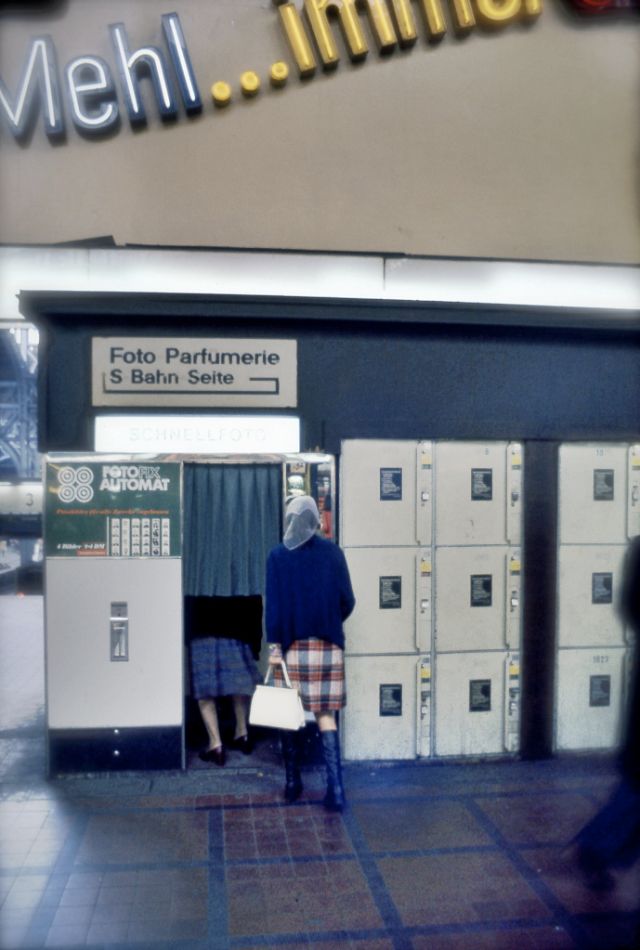
Hamburg in 1976 Through Amazing Vintage Photos

Hamburg is the second-largest city in Germany after Berlin, as well as the overall 7th largest city and largest non-capital city in the European Union. The city lies on the River Elbe and two of its tributaries, the River Alster and the River Bille. One of Germany's 16 federated states, Hamburg is surrounded by Schleswig-Holstein to the north and Lower Saxony to the south.

Hamburg is Europe’s third largest port, after Rotterdam and Antwerp. The city is the seat of Germany’s oldest stock exchange and the world's oldest merchant bank, Berenberg Bank. It is also a major European science, research, and education hub, with several universities and institutions.

Hamburg is a major international and domestic tourist destination. Hamburg’s rivers and canals are crossed by around 2,500 bridges, making it the city with the highest number of bridges in Europe. Aside from its rich architectural heritage, the city is also home to notable cultural venues such as the Elbphilharmonie and Laeiszhalle concert halls. It gave birth to movements like Hamburger Schule and paved the way for bands including the Beatles. Hamburg is also known for several theaters and a variety of musical shows. St. Pauli’s Reeperbahn is among the best-known European entertainment districts.

These vintage photos were taken by Mats Örn that show street scenes of Hamburg in 1976.

Hamburg Central Station, Hamburg, Germany, April 1976

Hamburg Central Station, Hamburg, Germany, April 1976

Hamburg Central Station, Hamburg, Germany, April 1976

Hamburg Central Station, Hamburg, Germany, April 1976

Hamburg Central Station, Hamburg, Germany, April 1976

October 8, 2022

An Introduction of Swedish Gymnastics for Women in 1900s Hamburg

Titled an ‘Introduction of Swedish Gymnastics for Women’, these images were taken by German photographer Heinrich Hamann (1883 – 1975) between 1902 and 1910.

A keen gymnast himself, Hamann had just the right eyes to capture the athletes in action. Here, we see these women, in the “new gym clothes”, exercising in a sports hall and on the Heiligengeistfeld in St. Pauli quarter in Hamburg.


August 27, 2022

30 Vintage Black and White Photos Capture Streets of Hamburg in the Early 1970s

Heinrich Klaffs began taking pictures in 1970. From 1972 to 1974 he worked as a freelance photographer for a daily newspaper, then became an editor until 2010. 

From St. Georg to Speicherstadt and Deichstraße, these photographs of the streets of Hamburg were taken by Klaffs in 1971 and 1972. For more fascinating pictures, make sure to visit his Flickr site or website.


September 19, 2021

Vintage Photographs Show German Women Practicing Swedish Gymnastics in Hamburg From the Early 20th Century

These photographs were taken between 1902 and 1910 by Heinrich Hamann in Hamburg, Germany. As a keen gymnast, Hamann portrayed many athletes in action. Here, German women exercising Swedish Gymnastics in a sports hall and on the Heiligengeistfeld (German: “field of the Holy Spirit”) in Hamburg’s St. Pauli quarter.


During the 19th century, Swedish Gymnastics became one of the main models of physical education in the Western world. Swedish Gymnastics (also known as the Swedish Movement Cure) was founded in the early 19th century by poet, student of theology and European languages Pehr Henrik Ling (1776–1839).

There were two experiences that brought Ling to the world of Physical Culture. Firstly, as a response to Sweden losing territory to Russia during the Napoleonic Wars, Ling the poet began exploring Viking mythology (which was common with the ‘Romantics’ of the time) and decided the nation had degenerated physically from its past ‘glories’. Secondly, whilst studying languages in Denmark, Ling undertook Fencing classes and realized the physical conditioning sessions greatly improved the health of some gout that was in his arm.

Subsequently he decided to familiarize himself with Nachtegall’s Danish Gymnastics and upon returning to Sweden, Ling taught Fencing and began developing the Swedish Gymnastics system. Ling’s Gymnastics were a ‘lighter’ floor style utilizing only the ‘Swedish Bars’ apparatus (invented by Ling) and exercises were chosen for their influence on the body and health. The Swedish Gymnastics system also included manual therapy techniques.


February 25, 2021

18-Year-Old Teddy Boy George Photographed by Friend Jurgen Vollmer in 1961 at Rabenstraße Stop in Hamburg

Jurgen Vollmer captured these images of George Harrison with wind-blown, slicked back hair during and after a ferry ride on Hamburg Lake in Spring 1961. By this time, The Beatles had adopted the brushed forward hairstyle worn by Vollmer, Astrid Kirchherr and Klaus Voormann. Vollmer recalled: “...occasionally George would comb his hair forward, but always combed it back again. He said the Rockers gave him funny looks.”

In 1960, Astrid Kirchherr took some superlative photos of The Beatles in Hamburg. She took none at all in 1961, scaling back her work to help out Reinhart Wolf. His other assistant Jurgen Vollmer made up for it. Early in this second visit he asked George to go out with him for a few hours for a solo session, and George agreed, slipping into his leather jacket and greasing back his quiff. The others showed their intrigue with nods and winks. They knew Jurgen had a crush on George; he sometimes wore an I LIKE IKE badge he’d altered to read I LIKE GEORGE. “It was chemical,” said Jurgen. “I liked George the most. He was very quiet and shy, like me, and also a dreamer.”

This was an experimental day, because Jurgen had never done a photo session before. He was using a Rolleicord camera borrowed from Wolf, probably the same one Astrid had used for her first shoot. The results were similarly excellent. He fired off a role of twelve black-and-white photos on the Alster ferry, and eight more frames on the landing stage at Winterhuder Faehrhaus, and George’s character and youth shine fresh from the spring images.


June 14, 2020

The Story of August Landmesser, the Lone German Who Refused to Give a Nazi Salute on June 13, 1936

On June 13, 1936, the Blohm + Voss shipyard in Hamburg, Germany held a ceremony to launch its latest sailing vessel, the 295-foot barque Horst Wessel, named for a Nazi activist who was killed by communists in 1930 and treated as a martyr as part of party propaganda.

The event was headlined by a speech from Deputy Führer Rudolf Hess with Adolf Hitler at his side. Wessel’s mother christened the ship with a bottle of champagne, and the assembled crowd of workers and onlookers gave an enthusiastic Nazi salute.

Except for one.

August Landmesser was 26 years old when he stood in the crowd with his arms defiantly and conspicuously crossed over his chest.

August Landmesser refused to do the “Sieg Heil” salute during a Nazi rally at the Blohm & Voss shipyard in Hamburg on June 13, 1936.

In 1931, hoping it would help him get a job, Landmesser joined the Nazi Party. In 1935, when he became engaged to Irma Eckler (a Jewish woman), he was expelled from the party. They registered to be married in Hamburg, but the Nuremberg Laws enacted a month later prevented it. Their first daughter, Ingrid, was born on October 29, 1935.

In 1937, Landmesser and Eckler tried to flee to Denmark but were apprehended. She was again pregnant, and he was charged and found guilty in July 1937 of “dishonoring the race” under Nazi racial laws. He argued that neither he nor Eckler knew that she was fully Jewish, and was acquitted on May 27, 1938 for lack of evidence, with the warning that a repeat offense would result in a multi-year prison sentence. The couple publicly continued their relationship, and on July 15, 1938 he was arrested again and sentenced to two and a half years in the Börgermoor concentration camp.

The first and only photo of the family, June 1938. Although it was forbidden for them to meet, they appeared together in public and put themselves at exceptional risk.

Eckler was detained by the Gestapo and held at the prison Fuhlsbüttel, where she gave birth to a second daughter, Irene. From there she was sent to the Oranienburg concentration camp, the Lichtenburg concentration camp for women, and then the women’s concentration camp at Ravensbrück. A few letters came from Irma Eckler until January 1942. It is believed that she was taken to the Bernburg Euthanasia Centre in February 1942, where she was among the 14,000 killed; in the course of post-war documentation, in 1949 she was pronounced legally dead, with a date of April 28, 1942.

Portrait of Irma Eckler.

Meanwhile, Landmesser was discharged from prison on January 19, 1941. He worked as a foreman for the haulage company Püst. The company had a branch at the Heinkel-Werke (factory) in Warnemünde. In February 1944 he was drafted into a penal battalion, the 999th Fort Infantry Battalion. He was declared killed in action, after fighting in Croatia on October 17, 1944. Like Eckler, he was legally declared dead in 1949.

August Landmesser in 1935.

Their children were initially taken to the city orphanage. Ingrid was later allowed to live with her maternal grandmother while Irene went to the home of foster parents in 1941. Ingrid was also placed with foster parents after her grandmother’s death in 1953.

The marriage of August Landmesser and Irma Eckler was recognized retroactively by the Senate of Hamburg in the summer of 1951, and in the autumn of that year Ingrid assumed the surname Landmesser. Irene continued to use the surname Eckler.

September 12, 2018

20 Amazing Photos That Capture Street Scenes of Hamburg in the Early 1910s

Hamburg is the second-largest city of Germany as well as one of the country's 16 constituent states. The city lies at the core of the Hamburg Metropolitan Region which spreads across four German federal states.

Situated on the river Elbe, Hamburg is home to Europe's second-largest port and a broad corporate base. It remains an important financial center, the seat of Germany's oldest stock exchange and the world's oldest merchant bank, Berenberg Bank.

Hamburg is also a major European science, research, and education hub, with several universities and institutions. Among its most notable cultural venues are the Elbphilharmonie and Laeiszhalle concert halls. It gave birth to movements like Hamburger Schule and paved the way for bands including The Beatles.

Hamburg is also known for several theatres and a variety of musical shows. St. Pauli's Reeperbahn is among the best-known European entertainment districts.

Here below is an amazing photo collection from pellethepoet that shows street scenes of Hamburg over 100 years ago.

The underground station at Rathausmarkt, Hamburg

Anberg No. 8, Hamburg

Breiter Gang, Hamburg

Corner Meßberg and Fischertwiete, Hamburg

Courtyard in the Breitengang, Hamburg

March 28, 2018

Rare and Extraordinary Vintage Photographs of Hamburg in the Early 1910s

Hamburg, city and Land (state), located on the Elbe River in northern Germany. It is the country's largest port and commercial centre.

Prior to the constitutional changes in 1919 it formed a civic republic headed constitutionally by a class of hereditary grand burghers or Hanseaten. The city has repeatedly been beset by disasters such as the Great Fire of Hamburg, exceptional coastal flooding and military conflicts including WW II bombing raids. Historians remark that the city has managed to recover and emerge wealthier after each catastrophe.

Here's a collection of 15 rare and extraordinary vintage photographs that capture street scenes of Hamburg in the early 1910s. The photos were taken mostly in 1910 and 1911.


September 15, 2017

Vintage Photographs of Cafe Lehmitz and Its Customers in a Hamburg's Red-Light District in the 1960s

Cafe Lehmitz, a beer joint at the Reeperbahn, was a meeting point for many who worked in Hamburg's red-light district: prostitutes, pimps, transvestites, workers, and petty criminals.

Anders Petersen was 18 years old when he first visited Hamburg in 1962, chanced upon Cafe Lehmitz, and established friends that made an impact on his life. In 1968 he returned to Lehmitz, found new "regulars," renewed contact, and began to take pictures.

“Lehmitz was the first thing I did seriously. It filled me up,” Petersen said. “I really identified with these people and their situation, this group who were outside society. I respected them. I felt very strongly about them.”

His photographs have become classics of their genre. Their candidness and authenticity continue to move the viewer. The solidarity evident in them prevents voyeurism or false pity arising vis-a-vis a milieu generally referred to as "asocial." The "other" world of Cafe Lehmitz, which no longer exists in this form, becomes visible as a lively community with its own self-image and dignity.


FOLLOW US:
Facebook • Tumblr • Pinterest • Instagram

CONTACT US


Browse by Decades

Popular Posts

Advertisement

09 10