Bring back some good or bad memories


ADVERTISEMENT
Showing posts with label Guest blogger. Show all posts

January 27, 2019

The Past in Focus: 200 Fascinating Vintage Travel Photographs Are Being Restored

Two-hundred obscure photographs that have been buried in archives around the world are being brought to new life by Diana Metzinger, a young woman from Cleveland, who is restoring the images for her crowdfunding project The Grand Tour which will be running until February 4th on Kickstarter.

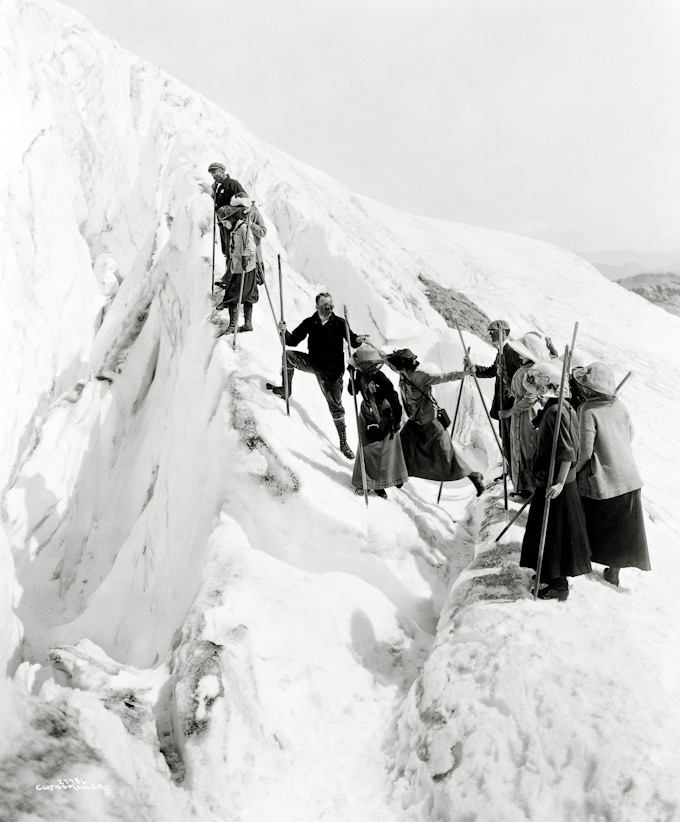
Climbing Paradise Glacier in Mt. Rainier National Park, Washington, ca. 1911-1920. (Photo by Curtis & Miller/National Photo Company)

S.S. Paris, Ocean Liner, ca. 1890s. (Photo by John S. Johnston/Detroit Publishing Company Collection)

View of Venice, Italy, ca. 1890s. (Photochrom/Library of Congress)

One of the unrestored images: Railroad train at the Paris Exposition, 1889. (Tissandier Collection)

Traveling by reindeer, Archangel, Russia, ca. 1890s. (Detroit Publishing Company Collection)

Last year, she chose to unearth 100 rarely-seen historic images for a restoration project entitled The Past in Focus. This campaign received so much positive feedback from backers that Diana decided to release a second edition, as well as create this new project focusing strictly on travel photography. “The support I received from the Kickstarter community was tremendous and humbling, too. I never realized that so many people were interested in seeing these rare photos restored!”

December 12, 2018

Old Family Photos: Should I Keep Them?

A guest post by Yeshua Quijano

I visited my parents’ home a few weeks ago and decided to clean my old room. I was re-acquainted with the younger version of myself.

I saw old letters and notes from friends and more-than-friends, old toys I refused to let go back then but forgot because I eventually outgrew them, books that I have read so many times I have lost count, clothes that are no longer in fashion, or if I’m being honest, no longer fit me; most importantly, photos - a lot of them!


I had a ball looking through all of them one by one. I relished the nostalgic feeling of every event, trip, occasion, and even just an ordinary day.

Being a part of my family means loving taking photos and posing for them. Way before selfies were invented, our family has always loved memorializing events by taking pictures. A gathering or an out of town trip will never be complete without a family picture.

During sophomore year, I had an elective class which was Photography. We were not allowed to use digital cameras (They were relatively new and expensive back then, so my parents didn’t allow me to bring ours either).

I took a photo of our school grounds during a particularly rainy day and I captured it right before the heavy rain poured. My teacher called my attention and told me how beautiful it was and how much he liked it.

He wanted to buy it, but I said I’ll show it to my mom first and give it back to him. I guess I never got around to doing that because I saw that picture in our photo box.

That made me feel sad. I mean, had I given the picture to my teacher, maybe it would have been appreciated more (maybe even framed and hung somewhere), instead it just sits inside a box that no one really pays much attention to. This got me thinking, “What should we do with old family or any old photos?”

While looking through the photos, I decided to call the rest of the family to come sit with me so we could all look at them together as a family.

Now that my siblings and I are all grown up and each have their own lives, we rarely get together because of varying work schedules. It was a beautiful afternoon because we got to spend it all together reliving the good old days and weekend where we had nowhere to be but home.

The following day, we had a family gathering together with my mother’s side of the family, so I decided to bring some old photos with my cousins in it. My younger cousins were so happy to see they were in some pictures they don’t even know were taken, while the older ones could not believe how young or thin they once were.

Old photos make a good bonding opportunity for families. You get to share stories and laughter together like these memories were only just yesterday.

When my brother first brought his girlfriend to meet us, the first thing they did together was look at old at old photos. Aha! Now I know why they were disorganized inside the box.

Anyway, looking at old photos make for a good conversation starter or topic - especially if you want to know someone at a more personal level. It is the perfect opportunity to share personal stories without feeling awkward. After all, pictures are worth a thousand words and some require a whole of explanation.

After looking at the photos, I decided to organize all of them. When I opened the boxes of photos, they were literally all over the place. They weren’t placed inside properly. So, I categorized them into occasions - birthdays, baptisms, Christmases, New Year’s Eves, family outings, random get togethers, graduations and other school events, and ordinary day photos.

I separated them with an index card specifying a certain category. That way, it would be easier to look for a certain photo when the need arises.

A few years back, we were affected by a strong typhoon. My cousin’s house was hit with flood and they lost almost all their family photos (Thank goodness pictures were the only thing they lost).

I remember him saying that he has been holding off on digitizing their family photos and because their albums were submerged in water, he can no longer do it. I still remember the sound of regret in his voice.

With this in mind, I decided to pick out photos that are extra memorable, especially the ones where the family is complete or really memorable.

I decided that while I cannot digitally store all of them (because there are literally thousands of them), I can choose some that I want to store digitally. This can be a tedious process as it involves long hours of scanning and uploading to your drive of choice, but it is all worth it.

Knowing that my cousin’s wedding is just around the corner, I was tasked by another cousin of ours to set aside photos of occasions and the trips we all went on together as kids and teenagers, until the most recent ones. She told me she was going to make an audio-visual presentation as part of the program.

I have always thought that audio-visual presentations are loving displays of your journey with a certain person or people. With the rise of same day edits, I still love it when old photos are shared because it only goes to show how far a person has come.

Building on the audio-visual presentation, I was able to come up with the perfect wedding gift for my cousin. I have always wanted a reason to get photo books done, but cannot seem to find any. I am going to use our old family photos and gift it to my cousin as he begins to grow his very own collection of family photos. These old photos will also be a good way for him to introduce the rest of his family to his children, don’t you think? Only now, it will come in the form of this gorgeous and luxurious book that contain memories that will last forever.
Yeshua Quijano
Milk Books Scholarships Manager
+1 (424) 389 3485
Head Office: Ironbank, Suite, 404/150 Karangahape Rd, Auckland, 1010
www.milkbooks.com
October 23, 2018

Epic Book About Renovation and History of the VW Beetle From 1941

Volkswagen Beetle is not just an ordinary car, it's an icon. More than 21 million of these cars have been sold since the start of its production in the 1940s until the end of 2003. It has become the most produced car without any significant change in design in the history.


The Czechs can boast with the oldest surviving Beetle. This Beetle is now parked in the garage of the veteran lover Ondrej Brom who was working on the demanding restoration of this gem for several years. Restoration is finally done and everything about the restoration process, history of this specific car and VW history is written in black and white in 350 page book which is now offered via Kickstarter.

The poor thing was beaten up and repaired many times during the socialism in Czechoslovakia when parts were rare but the final result of over 5 years of renovation is simply mind blowing!


Chapter One
LOVE AT FIRST SIGHT

“I have met with this car for the first time in 1988 when I was still a student,” recalls Ondrej. “I have noticed this car at my brother's friend Ladislav Rojka. The poor thing was parked beneath a giant tree, under the layer of clay halfway through the wheels. It was an ungrateful and sad sight.”

Nine years later, when he found out that the wreck is for sale, he immediately rushed there. He had only four thousand Czech crowns in his wallet.

"The price was 60 thousand Czech crowns. So I asked the owner if he could wait until I get to the bank. Thank God he agreed,” says Ondrej.


Chapter Two
THE HISTORY UNRAVELED BY THE POLICE TECHNICIAN

He had no idea what an unique car he acquired when he purchased the wreck of this Beetle. He knew he was the new owner of the original KdF war type, but further information about his car remained a mystery. There were no production labels to be found, let alone a body number that could reveal more.

In order to find out the history of this Beetle, Ondrej had to literally do the detective work. He searched for a ways he could recover the serial number of the car from the body that was covered by many layers of the paint. He consulted with experts, tried special X-rays, even tried to call the Ministry of the Interior. Eventually, he remembered that he has a friend with the criminal police who worked as a technician.


Layers of pains and asphalt hiding everything from the body number to the original black paint.

“My police technician friend came to my workshop with a number of strange things - variety of test tubes and containers full of liquids, droppers and brushes - I felt like in a small chemical lab. He gradually applied the chemicals to the hood of the car. Me and my wife were watching and examining the location where the serial number should be,” recalls Ondrej.

Eventually, the number 20 revealed under the layers of the paint. After the long dive in the archives it was clear, the first owner of this KdF was the famous Berlin composer Paul Lincke, who lived in Marianske Lazne, Czech republic since 1943. However, all the Sudetenland Germans including him, were relocated after the WWII. But the car remained in Czechoslovakia and was taken by the state health official Zdenek Krasny. Tesar family owned the car after him.

“Unfortunately the fate of Lincke's car between 1958 and 1997 can not be documented well. What I have learned from the memories of Antonin Tesar the younger is that the sale of the car happened sometime in 1958. However, I was not able to find out who bought the vehicle. Everything is under the dust of times and fog of a strange totalitarian times in Czech republic,” says Ondrej about the history of the car.

Paul Carl Emil Lincke, first owner of the car back in 1941.


August 26, 2018

What Was It Like to Be an Artist in USSR

A guest blog post by Goda Smilingyte from Art Goda
The powerful and secluded empire of the Soviet Union is already a history. The communist state that held 15 countries under totalitarian regime controlled every aspect of it’s citizens life. But communists and their spy agency KGB were not able to destroy creativity of the artists, so they used their talents for the purposes of propaganda and brain washing. Not everyone obeyed the regime and my father, painter and sculptor Aloyzas Smilingis-Elis was one of those who stood against the system. Here are a few interesting facts from his biography that shaped his creative path while Lithuania was under occupation of the Soviets.

Aloyzas Smilingis-Elis at his studio in Uzupis (Vilnius), 1975.

Want a Good Life? Portray the Communist Leaders

This was the simple rule for the artists. Making sculptures of Lenin, painting the “noble” life of leaders, socialist icons, happy workers and heroic soldiers guaranteed profitable commissions, good studios, necessary materials and tools. Those, who did not want to serve the system had to make their own way in life. My father never created a single piece that would serve communist ideals and is proud about it today: “I have never made a Lenin in my life!”, he says. So he did not get anything from the authorities. Most artists were dependent on state commissions and had to serve the system, so they could earn money. But my father refused to play a part in the occupants theatre. He was what we call a freelancer these days.

Most artist's grew beards as a sign of resistance. Riding a motorcycle was an expression of freedom.

There was no way to get good quality equipment for stone carving and all granite sculptures were handmade using simple tools and a self made hammer. The artists used to make those tools themselves, quite often from spare parts of tractors.


Studio in an Abandoned Chapel

Creator of bronze and large monumental stone sculptures is definitely not able to work without a studio, but a creative mind always finds a way out. Elis heard about abandoned chapel in Didziokai village (Moletai region) and thought that he could live and work there. Religion was forbidden, so a lot of beautiful churches and chapels were tuned into warehouses or abandoned and left to ruin.

My Dad renovated the nineteenth century chapel, cleaned it’s surroundings and decorated it with large monumental sculptures. This place became his studio, his gallery and the place where our family would spend summers and weekends.


XIX chapel became artist’s studio, he renovated it with his own hands.

Soon the chapel became a very popular attraction. I remember people visiting it everyday, even busses full of tourists came to take a look around. People came for art and wanted to meet the artist as the rumours about him spread wide and fast. The chapel was an oasis for creative minds, bohemian parties, a meeting place for artists and also a pain in the lower part of the body for the communist authorities.


Making Money and Dealing With KGB

As my father did not get much state commissions, the major income source of our family was from large memorial sculptures. These were commissions from people who wanted to have nice monuments for their loved ones who passed away. It was a seasonal work as my father could only work outside when the weather was warm and dry — spring and summer. Winters were dedicated to painting and skiing. Our neighbour, related to KGB as it appeared later, could not understand this. Nobody in the family had a decent job, we were skiing the whole winter, but somehow lived in a nice place and even had a car!

Our family was not rich, but home full of art looked luxurious. We had old antique furniture, because we were not able to buy new stuff for home as my parents did not have “normal” jobs.

Besides, we had family connections in USA and all this was very suspicious. One day my father got arrested without any reason and was questioned at KGB. The main question during the interrogation was “Whom are you working for?”. Luckily my father was a member of the Artists Union, had some recognition and references, so they let him go.


Scandal Over a Nude Torso

Private property and religion were not the only things with zero tolerance in the Soviet Union. Any kind of nudity, even if it was art, was not accepted. People even joked that sex did not exist in Soviet times. But sometimes, somehow, artists would meet people in the government who had common sense and gave them a chance to create amazing artworks.

Granite torso of a “Bather” caused a scandal and vandalism attacks in 1984.

This was the case with a 2,7 m granite torso of a “Bather” that my father created for Panevezys city. It was built near the river in 1984 and nicely decorated a cosy park. This is one of the few scandals my father got into, but I think probably the most famous one. Local press called the sculpture vulgar and indecent, people were furious and there was a number of vandalism attacks over the artwork. But the sculpture survived it all and continues to bathe peacefully in the park.


Meeting With the “Enemy” — the USA

After establishing a long lost connection with members of our family residing in USA, my father decided to visit them. The procedure of getting permits to leave the Soviet Union in the times of Cold War was quite complicated, but the interesting part is not about getting a visa and permission to leave. Now it sounds funny, but my Dad received strict instructions from a KGB agent how to behave in the land of “enemies”. Everything happened like in the film about spies. He had to meet the agent privately and they spoke in a car. Elis was told not to talk much about USSR, he could only say positive things about the Soviets and most importantly, was not allowed to talk to the press.

First thing he did in USA? Gave numerous interviews for television and newspapers. The media was really interested to talk to an artist from a Soviet Union. I guess if an artist from North Korea visited the Western world today, the interest would be quite similar. The funny thing is that Soviets never found out about these interviews, because it was not possible to monitor the media at the time.


Wine With Willem De Kooning During the Cold War

The artist’s visit to USA was full on coincidences, discoveries and tension. Visiting museums and galleries in New York had a huge influence towards his attitude to art. But most influential of all were my fathers meetings with famous abstract expressionist Willem de Kooning.

Aloyzas Smilingis-Elis and Willem de Kooning.

He was visiting his cousin Dorothy Barnes and her husband Clarence Barnes in Long Island and the stay took longer than initially planned. During the Cold War both USA and USSR fiercely protected their airspaces and number of incidents with planes being shot down happened. My father was visiting USA when one of such incidents took place, suddenly all flights connecting USA and USSR were canceled and he could not get home. He was stuck in East Hampton for about three months, but this unpleasant situation led to inspiring and interesting meetings with Willem De Kooning who had a studio nearby. My Father often visited his studio and they discussed art over the glass of wine. These meetings were a source of inspiration and after coming back from USA, my father never painted a realistic painting again. Abstract expressionism remains his major passion until today.


Breaking the Boundaries - Guernsey’s Auction of Soviet Art

The first time my fathers art was exhibited in the West was after meeting with Mr Arlan Ettinger, the president of Guernsey’s auction who was travelling around USSR and selecting artworks for the first auction of Soviet art to be held in New York. Mr Ettinger was really fond of my father’s work, so he brought 9 of his sculptures to USA and selected one of them on the cover of the auction catalogue.


Guernsey's auction catalogue, 1988.

The photograph of the same sculpture now illustrates the development of the auction on it’s website, next to Willem de Kooning’s painting. It is unbelievable that the auction of Soviet art could take place in New York in 1988 and one can only imagine the challenges that auction organisers had to face. It was a real breakthrough and that is how my father’s works landed in the homes of USA collectors for the first time.

So being an artist in USSR was not easy, but no regime could bend down the creative spirit. Number of artists have made their way without serving the regime, many had to choose emigration in order to protect their families and those who stayed were always at risk and under strict surveillance.

Aloyzas Smilingis-Elis still resides and creates art in Lithuania at his private house where he has a studio now. He is represented by Art Goda online art boutique in Switzerland.


FOLLOW US:
Facebook • Tumblr • Pinterest • Instagram

CONTACT US


Browse by Decades

Popular Posts

Advertisement

09 10