Bring back some good or bad memories


ADVERTISEMENT
Showing posts with label Georgia. Show all posts

August 30, 2024

Vintage Postcards of the Big Oak Tree in Thomasville, Georgia From the Early 1900s

The Big Oak is a large live oak (Quercus virginiana) located in Thomasville, Georgia, in the United States at the corner of Crawford Street and Monroe Street. The Big Oak is one of many historic landmarks located in Thomasville. The Big Oak was one of the earliest trees registered with the Live Oak Society. Registered by P.C. Andrews in 1936, the Big Oak was the forty-ninth live oak registered. At the time of registration, the Big Oak’s girth was 21 feet 6 inches.

The Big Oak dates back to circa 1680, which makes it one of the oldest live oaks in the country. The Thomasville live oak has been recognized several times for its long lifespan by various societies, including the International Society for Agriculture in 1987. The tree has been able to withstand human encroachment for centuries, and remains a major landmark in Thomasville today.

The property on which the tree stands was once owned by Mr. and Mrs. John Albert Chastain. The Chastain family owned this property from 1906 until the mid-1960s. The Chastains raised their family in a home under this large live oak for nearly sixty years. Mr. Chastain’s mother remembers a time when the Big Oak was standing in a pond, rather than the lot Mr. Chastain remembers.

In 1966, Mrs. Elisabeth Ireland Poe and the city of Thomasville, purchased the property and turned it into a public park. Mrs. Poe was famous in Thomasville for her ownership of Pebble Hill Plantation from 1936 until her death 1978. Mrs. Poe was dedicated to preserving the history and heritage of Thomasville and thus purchased the property along with the city. Also in 1966, a donation of a historic Victorian-style gazebo was made by Mrs. Otto Carter of Meigs, Georgia. This type of gazebo is a rare find in the present day, unless it has been re-fabricated in the Victorian Style. Estimates in 1968 by Thomasville architect Robert Jinright indicated that the cost of building such a gazebo would reach $10,000. The gazebo was restored and remains a focal point of the property today. At a 1969 Commission meeting, a proposal was made by the Thomasville Garden Club to allocate a $5,000 fund, known as the Walter Hildebrand fund, to the beautification of the property. After a unanimous decision by the Board to appropriate the funds, the Garden Center used the money to construct a lattice-work brick wall on two sides of the property. This wall is referred to by members of the community as "The Living Wall."

The lot on which the Big Oak stands was dedicated to the memory of Mrs. Elisabeth Ireland Poe on February 7, 1982 by the city of Thomasville. The Big Oak once received a distinguished visitor in 1958. On a hunting visit to Thomasville with colleague George M. Humphrey, Dwight Eisenhower stopped by to take a photograph of the tree on his way to the airport. The President reportedly asked his driver to stop while he took a photograph. He then exited the vehicle, stood on the porch of Mrs. Rudolph Keyton, took his photograph and returned to his car.

As of 2019, the spread of the tree is 169 feet, the height is 72 feet, and the circumference of the trunk is 27.9 feet.


August 11, 2024

Wonderful Photographs Capture Everyday Life in Georgia in the 1970s

This selection of photos were taken by Erhard K in 1977 for a photo travel report. Photographed in color, they provide a fascinating glimpse of everyday life in Soviet-era Georgia, as well panoramic shots of Tbilisi landmarks and photos of cars, trucks and buses...

Georgia, 1977.

Cars on a Georgian highway in 1977.

A Georgian fruit and vegetable market in 1977.

A Georgian market in 1977.

The Parliament building in Tbilisi, 1977.

July 31, 2024

Vintage Photographs of Water Collectors in Tbilisi, Georgia in the 19th Century

The water from the Mtkvari River in Tbilisi was used for drinking, sanitation and irrigation from the earliest times of the founding of the city. In 1862, a small centralized filtered water supply network, known as the Korganovi Enterprise, was created but most of the city’s inhabitants continued to rely on unfiltered water collected from the river that was then sold from large leather containers.

Collecting water from the river in the 19th century

Water collectors in the 19th century

Water collector in the 19th century

Selling water from large leather containers in the 19th century

A water seller in the 19th century

A water seller in the 19th century

Selling water in the 19th century

July 20, 2024

Rare Vintage Photos of Khevsur Warriors in Their Traditional Armor From the Early 20th Century

Khevsureti is a historical-ethnographic region in eastern Georgia. Khevsurs are the branch of Kartvelian (Georgian) people located along both the northern and southern slopes of the Great Caucasus Mountains. By the conventional definition of the Europe-Asia boundary as following the watershed of the Greater Caucasus, Khevsureti is geographically a European part of Georgia.

The territory of Khevsureti, together with the neighboring area of Pshavi, was known to medieval writers under the joint designation Pkhovi or in the Georgian language. Chronicler Leonti Mroveli mentions that after the conversion of the King Mirian III of Iberia and the Queen Nana into Christianity in the early 4th century, St. Nino continued to preach among Georgian highlanders including Pkhovi.

Medieval Georgia was never able to establish a typical feudal system. The civil code of the community remained based on the ancient traditions and values. Children of the noble families and lords were brought up by the families of peasants who were known for their wisdom and human qualities. These people introduced youth to their culture, history, traditions and all aspects of human knowledge and experiences based on Christian Orthodox values.

Historically, Georgian highlander communities enjoyed a degree of autonomy. Khevsurs never accepted local lords; they elected their leaders or Khevisberi and council of elders and submitted themselves only to the monarch. They were exceptional warriors with traditional Georgian qualities of courage, openness and honesty, fraternity, independence and love of freedom, who were often promoted as royal bodyguards. Kings regarded them as reliable guardians of the Caucasus Mountains and the northern border of the kingdom. In the battles Khevsurs wore flags adorned with crosses and considered themselves permanent members of the army of the sacred flags and guardians of Georgian Kings.

The Khevsur men, dressed in chain mail and armed with broadswords, wore garments full of decoration made up of crosses and icons, which served as a means of protection according to Christianity which Georgia adopted early in 4th century. Greek historian Herodotus notes that the Caucasian highlanders of that time, were brilliant knitters and embroiders of their dress or Chokha, which wore out but never faded from frequent usage. Young girls started knitting at the age of 6-7, but men studying and military training, because according to their tradition women were deprived from education and higher social status. They had a strict system of physical training in martial arts preserved as a Khridoli martial art, and which is a part of the rich Georgian military tradition.


April 28, 2022

American Prospects: Beautiful Color Pictures of Life in America in the 1970s and 1980s

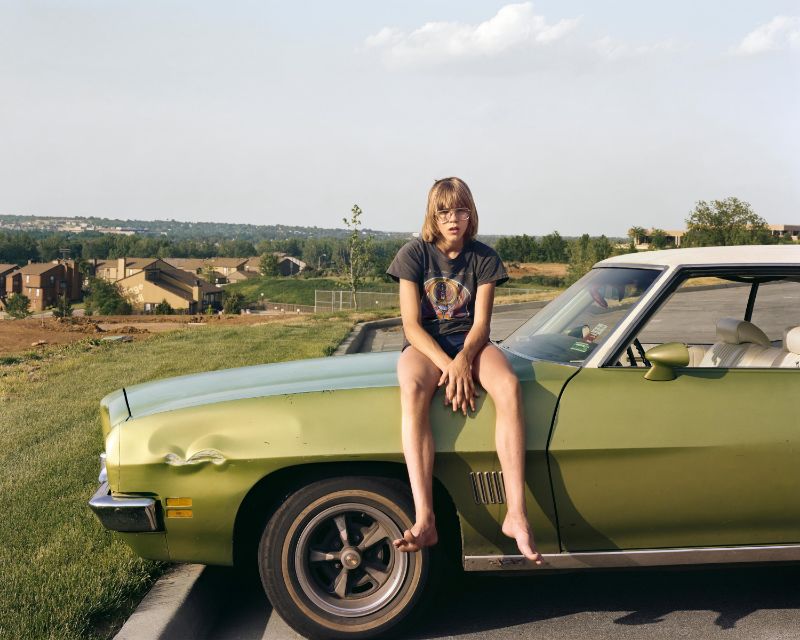
Joel Sternfeld was born in New York City in 1944, and earned a BA in Art from Dartmouth College. Sternfeld began taking photographs in 1970 having studied the colour theory of artists Johannes Itten and Josef Albers. Early work included street photography on small and medium format cameras. 

In 1978, Sternfeld embarked on a road-trip which traversed the United States. Using an 8 x 10 inch camera, Sternfeld photographed the communities, culture, landscapes and quotidian life he encountered along the way.

Kansas City, Kansas, May 1983

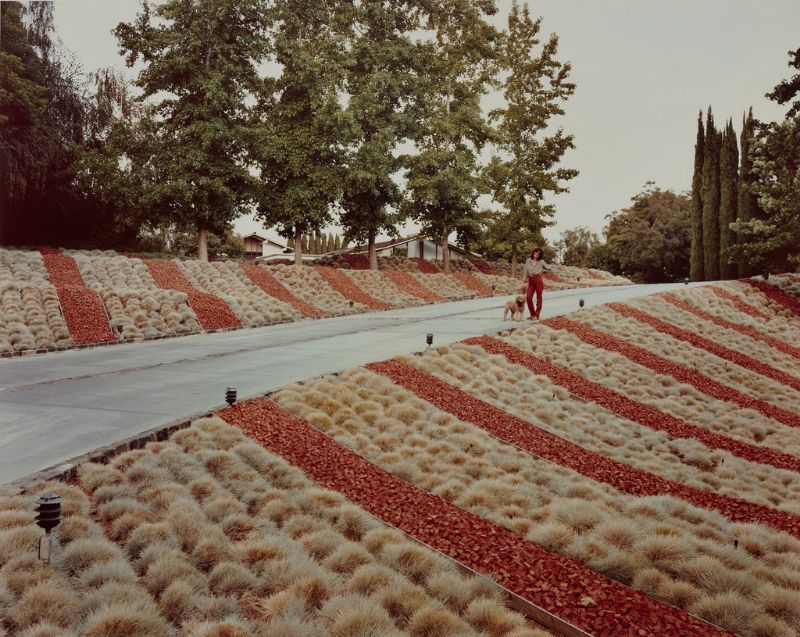
American Prospects is seen as a continuation of the American documentary tradition established in the 1930s by Walker Evans and continued by Robert Frank twenty years later. Sternfeld expanded the trajectory of the medium by photographing scenes rich in implied narrative, which were also distinct in their colour and composition. Laced with a touch of irony, his photographs from the project explore American identity in a thought-provoking yet humorous manner. 

His masterful use of colour heightens the tensions in these comic depictions of everyday life in America. First exhibited at the Museum of Modern Art, New York and then published in book form in 1987, American Prospects is regarded as one of the most influential bodies of photographic work from this period. Sternfeld’s later work has continued to experiment with colour and put it to use in documenting everyday events and the people he encounters. 

McLean, Virginia, December 1978

The Space Shuttle Columbia Lands at Kelly Air Force Base, San Antonio, Texas, March 1979

Beverly Hills, California, May 1979

Beverly Hills, California, May 1979

September 25, 2020

35 Fascinating Photos of Republic of Georgia in the Mid-Late 1970s

Georgia is a country in the Caucasus region of Eurasia. Located at the crossroads of Western Asia and Eastern Europe, it is bounded to the west by the Black Sea, to the north by Russia, to the south by Turkey and Armenia, and to the southeast by Azerbaijan. The capital and largest city is Tbilisi.

Republic of Georgia in the mid-late 1970s

Georgia covers a territory of 69,700 square kilometres (26,911 sq mi). It is a unitary parliamentary republic, with the government elected through a representative democracy.

By the 1980s, an independence movement was established and grew, leading to Georgia’s secession from the Soviet Union in April 1991. For most of the following decade, post-Soviet Georgia suffered from civil conflicts, secessionist wars in Abkhazia and South Ossetia, and economic crisis.

Georgia is a developing country and ranks 70th on the Human Development Index. The country is a member of the United Nations, the Council of Europe, and the GUAM Organization for Democracy and Economic Development.

These fascinating photos were taken by Erhard K. that show street scenes of Georgia in the mid-late 1970s.

Batumi street scenes

Gori. Stalin Monument

Abkhazia. Probably Pitzunda at Gagra's

Abkhazia. Probably Pitzunda at Gagra's

Abkhazia. Probably Pitzunda at Gagra's

July 18, 2020

Old Car City: The Biggest, Rustiest Car Graveyard in the World With More Than 4,000 Classic Cars

Nestled in a north Georgia forest, more 4,000 classic cars decorate 32 acres that have been turned into a junkyard museum. Owner Walter Dean Lewis’ parents started the business in 1931 as a general store that also sold auto parts. Lewis grew the collection, which had just 40 cars in the 1970s, over time.

Old Car City is the world’s largest known classic car junkyard attracting thousands of tourists who want to take a trip down memory lane. “Well this junkyard used to be our living. But now it’s turned into art, nature and history. And that’s what people come for,” said Lewis.

In the 30 or 40 years that many of the cars have never moved, trees now grow through them and, in some cases, even lift them off the ground.

Among the many artifacts here, you’ll even find the last car Elvis Presley bought back in 1977. One of Lewis’ more popular vehicles is a 1946 Ford truck used in Murder in Coweta County, a 1983 film starring Johnny Cash and Andy Griffith.

Those who spend time here understand that to live well is to practice the art of living. “It’s something that you’re most likely not to see anywhere else.”

A tree grows through the back of a pickup truck as it sits at Old Car City, the world’s largest known classic car junkyard.

Trees grow over cars at Old Car City.

A car sits at Old Car City.

A 1948 Oldsmobile 98 convertible sits at Old Car City.

The steering wheel of a 1948 Oldsmobile 98 convertible is seen while sitting at Old Car City.

June 2, 2020

Here’s the Earliest Known Image of Enslaved African Americans, ca. 1850s

A quarter plate daguerreotype believed to be the earliest known image of African American slaves with cotton was purchased by the Hall Family Foundation on behalf of The Nelson-Atkins Museum of Art in November 2019. The estimate for the image was between $100,000–150,000, but bidding for the rare photograph was furious, bringing the price up to $324,500.

An image of the Gentry daguerreotype with the frame removed. Unknown maker, American. Slaves on cotton plantation, ca. 1850. Daguerreotype, quarter plate. (Gift of the Hall Family Foundation)

Though its exact provenance may never be known, this daguerreotype is believed to depict the rural Greene County, Georgia plantation of Samuel T. Gentry (1798-1873). Gentry moved to Greene County from South Carolina sometime between 1820 and 1830. By 1830 his family included six white members, and three enslaved African Americans.

While other Gentrys lived in Georgia at the time this image was taken, Federal Slave Schedules from 1850 and 1860 indicate a mere handful were slave holders. And only one – Samuel T. Gentry – (sometimes listed as “Saml”) owned at least 10 slaves, the number depicted in this daguerreotype. From 1850 to 1860, Gentry owned between fifteen and eighteen men, women, and children.

At the time of this writing, the Gentry daguerreotype is the only known antebellum image showing enslaved African Americans displaying cotton, the agricultural product that dominated the economy of the Southern states and elevated a land-owner class through its cultivation. While other images showing the juxtaposition of enslaved African Americans and cotton are known from the Union occupations of coastal Georgia and the Carolinas, this image predates them.

Unknown maker, American. Slaves on cotton plantation, ca. 1850. Daguerreotype, quarter plate. (Gift of the Hall Family Foundation)

More importantly, the Gentry daguerreotype documents slavery in a far more humble setting than the large coastal plantations depicted in post-Civil War images taken by Samuel Cooley and other photographers who accompanied the Union Army. In these Sea Island plantations, hundreds of slaves were owned by a small class of planter elites, providing their families with access to luxuries only dreamed of by the vast majority of Georgians. While this is the vision most Americans have of the antebellum south, the Gentry daguerreotype depicts a different reality.

At the beginning of the Civil War, only 37% of Georgia’s free families owned slaves; about 15% of these families owned more than 20, and the vast majority owned six slaves or fewer. The 1860 Federal Slave Schedule enumerates 8,398 slaves in Greene County, with 53 slaveholders owning more than 35 slaves each (about 35% of the total). The remaining slaves were distributed among 524 owners. Gentry is listed as owning real property valued at $2,900, and personal property valued at $12,000; presumably this latter figure incorporates the value of his eighteen slaves. Samuel Gentry was no mere yeoman farmer, but neither was he a member of the upper stratum of the planter class. In a world where wealth was measured by land and slaves, Gentry was simply a man who was striving for more; he was clearly “on his way up” the socio-economic ladder.

It is probable that Gentry commissioned this photograph to document his prosperity. The photographer carefully posed the scene so that the family “wealth” is clearly on display: ten enslaved African Americans are visible in the picture, with several displaying baskets of cotton perched atop their heads. Cotton – the production of which was made possible by Gentry’s slaves – is an integral part of the tableau.

Gentry himself is believed to be the man in the top hat at the left of the plate. He leans on a cane, held in his left hand. Below his knees movement is clearly visible – perhaps a dog jumping and straining at a leash? Such a denizen would hardly be a surprising element of plantation life, where the threat of violence was an everyday part of enslavement.

The two-story building at center also figures prominently as a symbol of the Gentry family wealth. While not an imposing mansion, it is an integral element of the scene. The end of the structure visible to the viewer lacks windows, suggesting an original two story building constructed of logs and later covered by lap board. The front and rear galleries are high and inset beneath the broken slope of the roof, the double-wing structure of which is commonly found in Georgia. The rows of tall, narrow posts on either side of the structure may have served as temporary supports for the roof, anticipating the later addition of a more elegant colonnade, or just as likely were a cost-sensitive attempt to refine the façade.

The log building in the foreground at right features half-dovetail notching, a construction technique prevalent throughout much of the south in the early and mid-nineteenth century. Short boards nailed end-to-end cover the upper logs of the exterior, suggesting an attempt to dress the cabin to match the residence, though not at the expense of using long milled boards; the lower portion of the cabin reveals its original character. This outbuilding contrasts with the main house and, whether as a smokehouse or slave cabin, adds to the rural nature of the scene.

A large well enclosed by unpainted planking is visible in the foreground indicating that the residence lacked a cistern, a means of capturing water used by homes of a grander manner. The scale of the crank mechanism is large and features two handles, indicating the well had been deeply dug to reach a water-table consistent with an upland setting. This simple but necessary feature contrasts with the residence. No attempt has been made to present it as anything other than a functional element of daily life.

The daguerreotype captures Gentry’s rural status and achievements. Between 1830 and 1860, his slave-holdings had increased from three to eighteen. This increase in wealth allowed him to cover his two-story log cabin with white painted clapboard, add a new roofline and build two large overhanging galleries supported by rudimentary columns to add dimension and vertical importance to the building’s appearance. And yet, as the log outbuilding and crude well proclaim, Gentry’s socioeconomic status was impossibly distant from the wealthiest planters.

The world that Gentry and his family occupied forever changed with the Civil War and the Emancipation Proclamation. Two of Gentry’s sons, Samuel Jr. and Robert A., enlisted in the Greene Light Guards, serving in Company I of the 8th Georgia Infantry. Little is known of Samuel Jr.’s service; Robert was wounded twice and served the entirety of the war. At war’s end both returned to a much diminished economic reality. By 1870 Samuel Jr. was a tenant farmer living with a wife and daughter in nearby Hancock County with personal property valued at $375. Robert remained in Greene County, farming and caring for a family and his elderly father. By this time the family owned real estate valued at $2500 and personal property valued at $500. Samuel Sr. died in 1873.

(via Cowan's Auctions)

May 26, 2020

Striking Photo of Football Fans Wearing Masks During a Game at Georgia Tech in Atlanta Due to the 1918 Pandemic

A century ago, college sports in the United States was hit hard by the Spanish flu pandemic. Games were canceled and some schools were forced to call off their seasons.

And this vintage image below is striking: Fans watching a college football game in the midst of a pandemic, wearing masks with a smidge of social distance between them on row after row of bleacher seats.

Football fans wear masks during a 1918 game at Georgia Tech in Atlanta, Georgia. (Photo by Thomas Carter, via Georgia Tech Alumni)

While times are unique, it’s not the first time sports has been affected by a pandemic. “The virus is on a similar time track,” said Andy McNeil, a Georgia Tech graduate and mechanical engineer. “History does repeat itself.”

McNeil has had the image in his office for years. A note on the back of the picture reads “Georgia Tech during 1918 pandemic.” McNeil’s great-grandfather, Thomas Carter, took the picture.

McNeil first found the images as a child. When he rediscovered them later, he had the originals blown up so he could frame them. It’s been a talking point for years as people inquired about the pictures. An era that once seemed unimaginable, now a reality.

“When the coronavirus started, I was like, ‘Wow, I had a family member who lived through this’.”

McNeil’s great-grandfather, Carter, loved adventure. Hoping to learn more about the Flu Pandemic in 1918, McNeil listened to old tapes his family had produced. In them, were interviews with Carter.

He was smart – graduating from Georgia Tech. But also daring. He would cling onto the back of cars traveling through downtown Atlanta. He built a boat and smuggled libations into the country during the prohibition. Perhaps attending a football game during a pandemic was seen just as daring.

“People understood the ramifications of the Spanish Flu at that time,” McNeil said. “Would he be alive if he didn’t wear a mask? Who knows.”

During the deadly second wave of the 1918 pandemic, Georgia Tech still managed to play seven games, six at home and one on the road that was rescheduled for Pitt. It was the only game that was modified because of the pandemic. The team, led by John Heisman, played games in front of fans.

In 1918, Georgia Tech played almost a complete football schedule during the Spanish Flu outbreak that killed more than 675,000 in the US. (Photo by Thomas Carter, via Georgia Tech Alumni)

Society has come so far in some ways. The world is currently rushing to produce a vaccine for COVID-19, yet the image of a football game in 1918 mirrors what life looks like today, with many people donning face coverings.

“It’s a dose of reality,” McNeil said. “Before coronavirus, I couldn’t imagine being at Georgia Tech with a mask on. A pandemic never crossed my mind. It’s a reality that history repeats itself, and we can get through it, but we have to do the right thing.”

McNeil doesn’t claim to be an expert. But he’s frustrated when he sees people not wearing face coverings, which is recommended by the CDC. Perhaps if everyone did, the pandemic would end sooner. Consequent waves would wane. And sports could return sooner than later.

“My great-grandfather lived a full life, he made it through,” McNeil said. “Hopefully that inspires people that everything will be okay, eventually.”

(via 13 WTHR Indianapolis)

March 14, 2019

58 Fascinating Photographs That Capture Street Scenes of Georgia in the 1970s

Georgia is a country in the Caucasus region of Eurasia with Tbilisi being the capital and largest city. Located at the crossroads of Western Asia and Eastern Europe, it is bounded to the west by the Black Sea, to the north by Russia, to the south by Turkey and Armenia, and to the southeast by Azerbaijan. Georgia covers a territory of 69,700 square kilometres (26,911 sq mi)

Georgia is a member of the United Nations, the Council of Europe, and the GUAM Organization for Democracy and Economic Development. It contains two de facto independent regions, Abkhazia and South Ossetia, which gained very limited international recognition after the 2008 Russo-Georgian War. Georgia and most of the world's countries consider the regions to be Georgian territory under Russian occupation.

A fascinating photo collection from Erhard K. that captured street scenes of Georgia in the 1970s.

Batumi street scenes, Adjara, 1975

Batumi, Adjara, 1975

Georgian market, 1975

Georgian Military Road, 1975

Metechi Brücke, Tbilisi, Georgia, 1975

May 21, 2018

“Death Leap From Blazing Hotel” – The Story Behind the Photo Taken by an Amateur Photographer That Won the 1947 Pulitzer Prize

This is the site of the worst hotel fire in US history. In the predawn hours of December 7, 1946, the Winecoff Hotel fire killed 119 people. The 15 story building still stands adjacent to this marker. At the time, this building had neither fire escapes, fire doors, nor sprinklers. For two and a half hours, Atlanta firefighters and others from nearby towns battled valiantly in the cold to save the majority of the 280 guests. But their ladders reached only to the eighth floor, and their nets were not strong enough to withstand jumps of more than 70 feet. Therefore, numerous guests died on the sidewalks and in the alley behind the building. Thirty of the 119 victims were among Georgia’s most promising high school students, who had come to Atlanta to attend the YMCA’s Youth Assembly at the Capitol. The Winecoff fire became the watershed event in fire safety. Within days, cities across America began enacting more stringent safety ordinances. The fact that the Winecoff fire remains the worst hotel fire in US history is testimony to its impact on modern fire safety codes.

Among the dead were the owner, W. F. Winecoff, and his wife, found in their luxury suite on the 14th floor.

It was later established that the fire had been started by an arsonist.

On the night of the Winecoff Hotel fire, Arnold Hardy, a 26 year old Georgia Tech graduate student, was still up at 4.00am after taking his date home and catching the trolley back. Hardy worked in the research lab and physics department of the Tech and lived in a rooming house near the hotel. He was also a keen amateur photographer.

Hearing sirens, he rang the fire department and said “Press photographer. Where’s the fire?” He was told “Winecoff Hotel.” He caught a cab there with his Speed Graphic camera and five flashbulbs. He was the first photographer there.

Guests at the hotel were jumping out of windows in panic and were falling from makeshift ropes of bedsheets.

Hardy took some shots of the front of the building and the faces of the doomed in the windows and, down to his final flashbulb (one had exploded in the cold night air), Hardy decided to try for a picture of a falling or jumping guest. When his viewfinder found a dark-haired woman falling midair at the third floor, her skirt billowing, he snapped the shutter open for 1/400th of a second.


“I looked up, raising my camera. A woman was plummeting downward. As she passed the third floor, I fired, using my last flashbulb.”
With his photography completed, Hardy heard a fireman and policeman at a drugstore across the street discussing calling the store owner so they could obtain medical supplies. He told them to break the door open. When they said they wouldn’t he kicked it open himself. Although he was arrested, the Red Cross moved into the store to set up a first-aid station and make sandwiches and coffee for the firemen.

Hardy was led off to jail. Upon being released on his own recognizance, he headed for the darkroom at the Tech research search lab. He developed his film and struck out for the Associated Press office downtown. The AP offered him $150 for exclusive rights to his pictures. He said he wanted $300 and received it. The final photograph, the one of the jumping woman, was reprinted around the world the following day and was on magazine covers for weeks.

The fire had killed 119 people and drawn international coverage as the worst hotel fire in the history of the world. A few months later, Hardy became the first amateur photographer to win the Pulitzer Prize.

“It wasn’t just a lucky snapshot,” his son, Glen Hardy, told the Journal-Constitution. “It was technically a very complicated photograph to take. He had to consider lighting, temperature. He was working hard to get that photograph, to capture a moving object in pitch black darkness. He tweaked his camera to its limits.”

Hardy’s son added, “One thing he took great pride in is that after his photograph was published worldwide, fire codes were changed all over the country and maybe the world.”

The AP gave Hardy a $200 bonus the day after the fire, but he has never received another cent for its frequent use.

The “jumping lady” was Daisy McCumber, a 41-year-old Atlanta secretary who, contrary to countless captions, survived the 11-story jump. She broke both legs, her back, and her pelvis. She underwent seven operations rations in 10 years and lost a leg, but then worked until retirement. She died in 1992 aged 87, having never revealed even to family that she was the woman in Hardy's photo.

Hardy, a mechanical engineer, retired in 1993 and sold his business of the manufacture of medical X-ray equipment to his son. He retired from amateur photography decades earlier, shortly after realising his photos would always be measured against his Pulitzer Prize winner.
“It upset me so much that of all those trucks--there were about 18 in the front of the building I saw only two nets. I thought to myself, ‘I’d love to take a picture that would just stir up the public to where they would do something about this and equip every truck in the city with a net.’”

“The trapped victims were descending ropes of blankets and bed sheets in desperate attempts to reach the fully extended ladders.” (On hearing a bystander shriek) “I looked up, raising my camera. A woman was plummeting downward. As she passed the third floor, I fired, using my last flashbulb.”
Hardy’s photograph, the horror it depicted and its rapid, wide distribution were some of the main reasons for the rapid upgrade of fire codes nationwide.


FOLLOW US:
FacebookTumblrPinterestInstagram

CONTACT US


Browse by Decades

Popular Posts

Advertisement

09 10