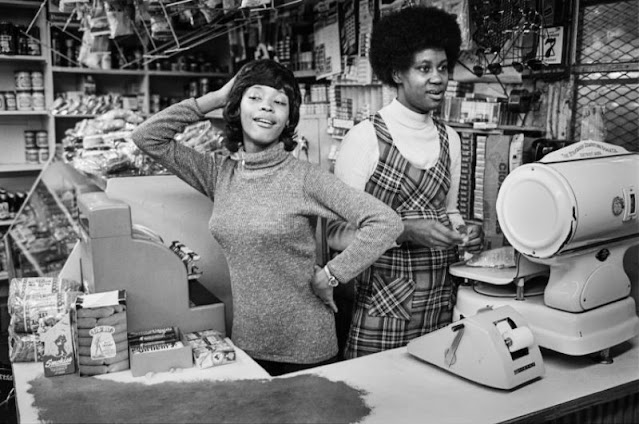
Bring back some good or bad memories


ADVERTISEMENT
Showing posts with label Detroit. Show all posts

May 7, 2023

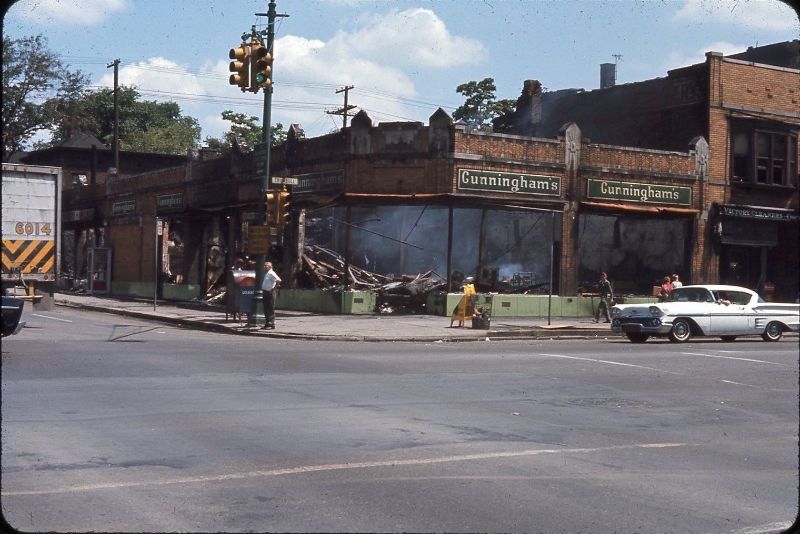
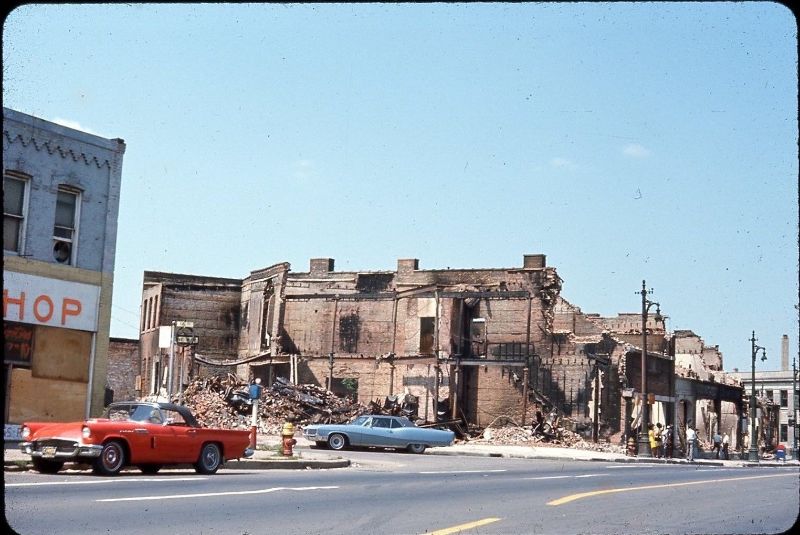
Fascinating Photos Capture Street Scenes of Detroit After the Riot 1967

The 1967 Detroit Riot, also known as the 12th Street Riot or Detroit Rebellion, was the bloodiest of the urban riots in the United States during the “Long, hot summer of 1967”. Composed mainly of confrontations between black residents and the Detroit Police Department, it began in the early morning hours of Sunday July 23, 1967, in Detroit, Michigan.

The precipitating event was a police raid of an unlicensed, after-hours bar, known as a blind pig, on the city's Near West Side. It exploded into one of the deadliest and most destructive riots in American history, lasting five days and surpassing the scale of Detroit's 1943 race riot 24 years earlier.

Governor George W. Romney ordered the Michigan Army National Guard into Detroit to help end the disturbance. President Lyndon B. Johnson sent in the United States Army’s 82nd and 101st Airborne divisions. The riot resulted in 43 deaths, 1,189 injured, over 7,200 arrests, and more than 400 buildings destroyed.

The scale of the riot was the worst in the United States since the 1863 New York City draft riots during the American Civil War, and it was not surpassed until the 1992 Los Angeles riots 25 years later.

These fascinating color photos were taken by Kevin Mueller that show street scenes of Detroit after the riot in 1967.

Grand River and 16th, Detroit, July 30, 1967

Pingree Street, Detroit, July 30, 1967

Trumbull, Detroit, July 30, 1967

Blaine Street, Detroit, July 30, 1967

Detroit, July 30, 1967

March 26, 2022

Steel Barrel Tested in 200-Foot Drop, 1933

An eighteen-story plunge in Detroit, Michigan, tested the strength of a new-type beer barrel in 1933. Made of steel, the barrel was filled with water and carried to the eighteenth floor of a hotel.

It would really suck if someone picked that moment to walk out to their car.

Here it was dropped from a window, plunging more than 200 feet to a hard-packed gravel parking space at the rear of the building. The barrel is said to have survived the shock without springing a leak, although the side was badly dented.

In a second test, another barrel was not even dented by the long drop, according to the manufacturer.

March 2, 2022

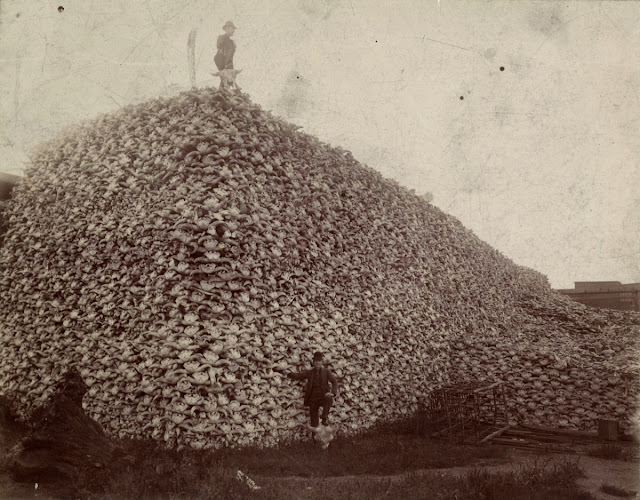
Men Standing With Pile of American Buffalo Skulls at Michigan Carbon Works in Rogueville, 1892

The most famous photograph of bison extermination is a grisly image of a mountain of bison skulls. It was taken by an unknown photographer outside of Michigan Carbon Works in Rougeville, Michigan, in 1892. At the close of the 18th century, there were between 30 and 60 million bison on the continent. By the time of this photograph, that population was reduced to only 456 wild bison.

In 1892, bison skulls await industrial processing at Michigan Carbon Works in Rogueville (a suburb of Detroit). Bones were used processed to be used for glue, fertilizer, dye/tint/ink, or were burned to create “bone char” which was an important component for sugar refining. (Burton Historical Collection, Detroit Public Library)

Increased colonization of the West led to the large-scale slaughter of bison. The arrival of white settler hunters with their weapons, as well as growing market demand for hides and bones, intensified the killing. Most herds were exterminated between 1850 and the late 1870s.

The photograph shows the massive scale of this destruction. A man-made mountain emerging from the image’s grassy foreground, the pile of bones as appears part of the landscape. The image can be read as an example of what Canadian photographer Edward Burtynsky has called “manufactured landscapes.”

The Rougeville photograph is often used to illustrate the scale of bison extermination. It appears in conservation publications, magazines, films and recent protest memes. The photograph has become an icon of this animal’s slaughter. But this photograph is more than just a symbol of human-caused destruction and hubris. Analyzing the image with multiple lenses illustrates a history of relationships.

February 8, 2022

John G. Zimmerman: American in Black and White

In 1952, renowned American photographer John G. Zimmerman moved to Atlanta. During his time there he shot a series of noteworthy assignments for Ebony depicting the lives of African Americans in the Midwest and the Jim Crow south. These photographs are a lesser-known yet notable part of Zimmerman’s early work. The subject matter ranges from the first all black supermarket in Detroit, boxing legend Joe Louis, to sharecropper Matt Ingram’s quest for justice.

The Center for Photographic Art states: “the work of John G. Zimmerman, one of the 20th century’s most wide-ranging and innovative photojournalists, helped generate a golden age in magazine photography. Zimmerman grew up in Torrance, California, developing and printing film in the family kitchen and darkroom. A three-year high school photography program with Hollywood cinematographer Clarence A. Bach prepared him for his first job as a staffer at Time magazine. Following that assignment he spent several years freelancing for Life and Ebony magazines, creating groundbreaking images of the lives of African Americans in the Midwest, and in the deeply segregated, pre-Civil Rights south.”

Take a look at Zimmerman’s work in the 1950s through 18 black and white photographs below:

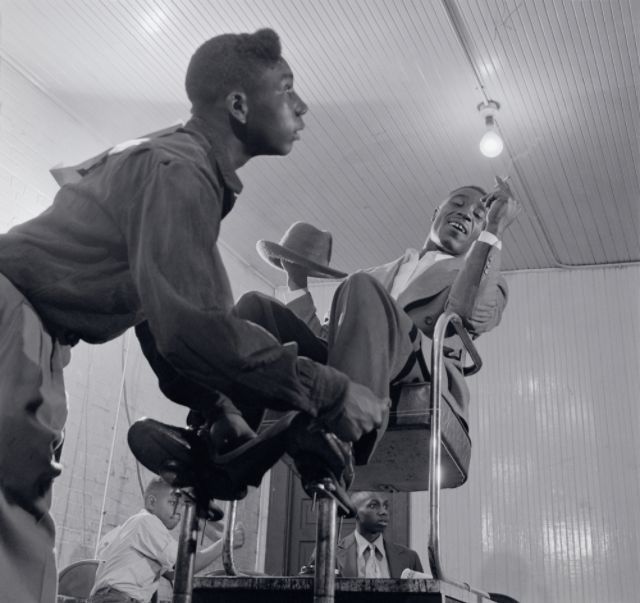
Curtis Phillips, winner of the Shoe Shine Contest, Wilson, North Carolina, 1952.

Department store, 1953.

Jumping rope, Tennesse, 1953.

Swimming hole, Tennessee, 1953.

Matt Ingram, wife Linward and their children pray before dinner, Yanceyville, North Carolina, 1953.

January 30, 2022

Around Michigan in the Late 1970s

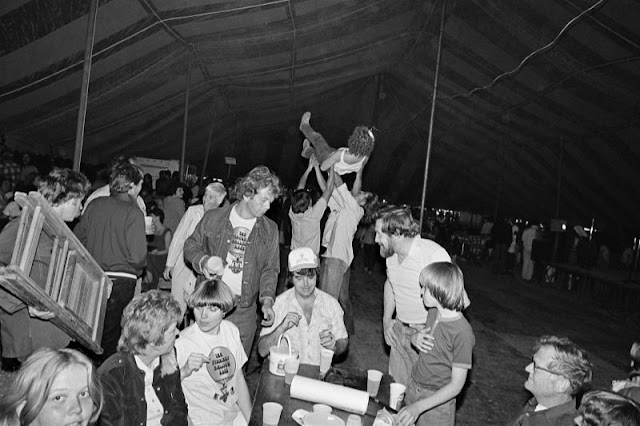
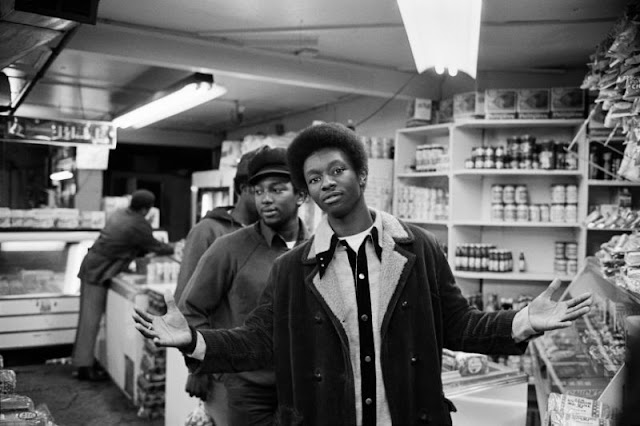
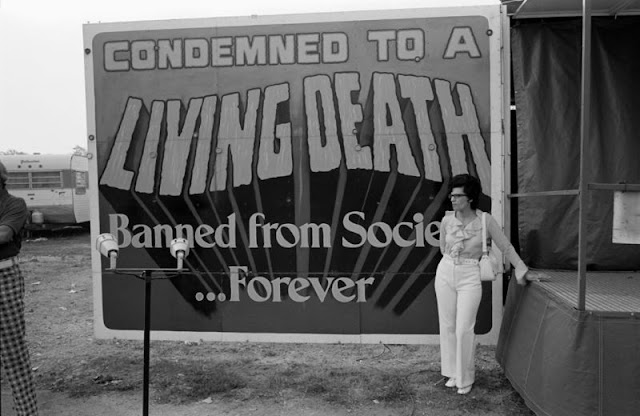
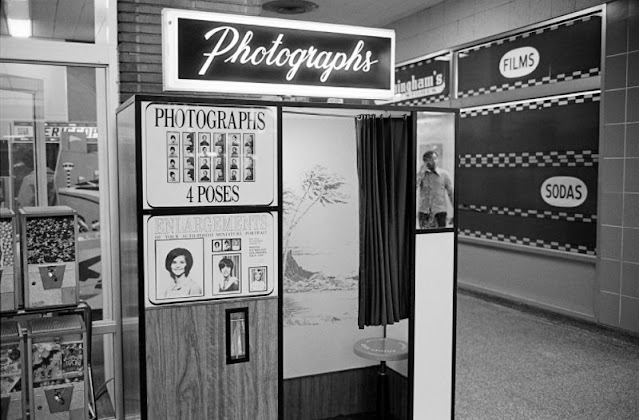
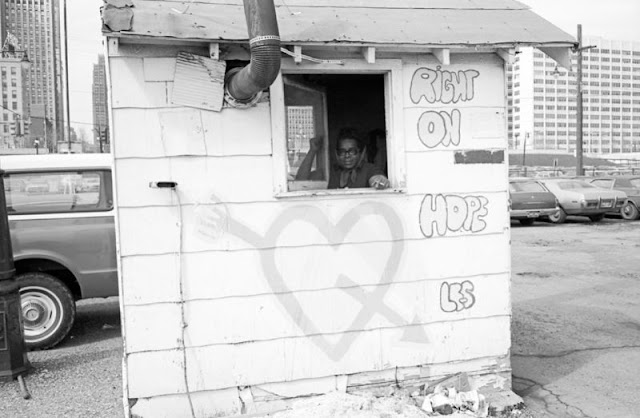
From Detroit to Whitmore Lake, these pictures were taken by Don Hudson, an experienced amateur photographer based in South Lyon, Michigan, in the late seventies.

Pinckney, 1979

In 1972, after three years in university, Hudson decided to get serious about his love of photography and enrolled in the Detroit Society of Arts and Crafts, now called College for Creative Studies. “It was there that I began to study the history of photography and look seriously at the major practitioners of the game.” Said Hudson. “The FSA photographers, and in particular Walker Evans and Russell Lee, made a big impression. Their straight-on, literal-looking, richly informed images, began to resonate with me as to how a camera can record the visual world. 

“At the same time, Winogrand’s and Friedlander’s more personal response to the documentary look of the straight camera image, and their almost architectural construction of the photograph,” he continued, “began telling me that one should be careful about how that camera can transform what we are looking at, and what we can derive as to meaning.”

Take a look back at life around Michigan in the late 1970s through these fascinating black and white pictures. For more photographs, visit Hudson's brilliant Flickr site.

Ann Arbor, 1977

Detroit, 1977

Detroit, 1977

Detroit, 1977

January 23, 2022

Fascinating Black and White Photos of Detroit, Michigan in 1973

These pictures were taken by Don Hudson, an experienced amateur photographer born on December 29, 1950 in Detroit, Michigan, during his student days at the Detroit Society of Arts and Crafts, now called College for Creative Studies. 

“After dithering around in liberal arts at a university, in 1972 I decided to commit myself to what I really loved, photography.” Said Hudson. “As it turned out, I only stayed two years, but probably the most important thing I learned during that time was the ability to imagine a lifetime engagement with the photographic experience.”

Take a look back at life in Detroit in 1973 through these fascinating black and white pictures. For more photographs, visit Hudson's brilliant Flickr site.


November 23, 2021

Amazing Vintage Photographs of Fountain of Ice on Washington Boulevard in Detroit From the Early 20th Century

One of the unique features of Detroit in winter is the famous ice fountain on Washington Boulevard. Several jets of water are allowed to play all winder, and the result is a massive berg of ice which sometimes reaches a height of nearly thirty feet, and contains many tons of the crystal.

The tradition of forming ice sculptures in the city dates back to at least the early 1900s. These amazing vintage photographs show winter scene on Washington Boulevard in Detroit from between the 1900s and 1920s.


October 31, 2020

It’s a Car! It’s a Motorcycle! it’s Bi-Autogo!

A 3,200-lb. motorcycle with training wheels, a V8 engine and enough copper tubing to provide every hillbilly in the Ozarks with a still, the Scripps-Booth Bi-Autogo was the daft experiment of James Scripps-Booth, an heir of the Scripps publishing fortune and a self-taught — or untaught — auto engineer.

The Bi-Autogo was essentially a two-wheeled vehicle, carrying its considerable heft on 37-in. wooden wheels. At slow speeds, the driver could lower small wheels on outriggers to stabilize the vehicle so it wouldn’t plop over. This is not a case of the advantage of hindsight; this was obviously a crazy idea, even in 1913. The Bi-Autogo does enjoy the historical distinction of being the first V8-powered vehicle ever built in Detroit, so you could argue it is the beginning of an even greater folly.


July 9, 2020

The Smallest Gas Station in the World

Detroit Lakes may be a small, quaint community that is regionally famous for things like its lakes and kicked-back, relaxed living. But decades ago, the city was known around the world for what was known as the “smallest gas station in the world.”

The teeny-tiny pit stop in Detroit Lakes.

In 1937 the tiny station was featured in “Ripley’s Believe it Or Not” publication (before it became a TV show) and was also featured in a 1949 issue of “Science and Mechanics” magazine.

The smallest gas station in the world was owned by J.M. Sauer and his sons, Roy and Lee. The inside of the gas station was so tiny that it had only enough room for one person; however, it did have a much larger room downstairs. A trap door in the little gas station featured a spiral staircase that went down into a larger space where there was a bathroom and a storage area for things like bulk oil.

It is noted that the station was robbed of $750 in 1925. Despite that though, business appeared to be good. The station also happened to be located conveniently close to the bus station at the time, which meant bus drivers were often filling up there, while tourists took the opportunity to get photos of the “world’s smallest gas station”.

Business began to dry up for the Standard station when gas started being rationed and hard to get as World War II approached. The Sauer brothers went off into the service, and at that point, the station closed. When the brothers returned from service, the tried to buy the tiny gas station back, but Standard instead chose to sell it to the city for $500. It was then tore down in 1950.

The smallest gas station in the world was located right in downtown Detroit Lakes, next to the bus stop. (Photo courtesy of Becker County Historical Society)

Standard Oil sold to the city of Detroit Lakes for $500; the city then tore it down. (Photo courtesy of Becker County Historical Society)

Brothers Roy and Lee Sauer, stand by the tiny gas station they helped start up with their father, J.M. Sauer. The brothers closed the station before heading off into the service. They tried to buy it afterwards, but with no luck. (Photo courtesy of Becker County Historical Society)

But the story of the world’s smallest gas station didn’t die that day; The Lake Region Builders Association rebuilt a replica of the station for just over $1,000. It still sits down in the lower level of the Becker County Historical Society, all shiny red and exactly the size of the building that once put Detroit Lakes on the world map.


(via Detroit Lakes Tribune)
April 15, 2018

66 Fascinating Photos That Capture People at Michigan State Fair in 1973

The Michigan State Fair is an annual event originally held by the state of Michigan in Detroit and currently operated by the private entity Michigan State Fair LLC in the Suburban Collection Showplace in the Metro Detroit suburb of Novi.

The first official Michigan State Fair was held in 1849 in Detroit, Michigan. Subsequent fairs were held in other cities until it received its permanent home in 1905 at the Michigan State Fairgrounds in Detroit.

Who doesn't love and remember attending the Michigan State Fair when it rolled in to town every August, occupying that sprawling stretch just north of Grand Circus Park at Woodward and Eight Mile? These fascinating black and white photos were taken by Joey Harrison that bring you back the Michigan State Fair in 1973.


December 31, 2017

Elvis Presley Signing an Autograph for a 12-Year Old Madonna in 1970?

It's being discussed on internet, the picture below has surfaced on some Elvis fan sites and it's been taken in September 11, 1970 in front of the Olympia of Detroit. Many thinks this is the young Madonna in her home city. But we don't know...


According to Brian's Elvis Corner, Elvis Presley arrived in Detroit late Friday for his Olympia concert performance with all the mystery, intrigue and excitement of a top presidential visit. The aura around him, personified by his presence and created by his management, can knock you over.

Presley emerged from his limousine at 4:40 p.m. and moved toward the service entrance of the Detroit Hilton, where his troupe had rented 75 rooms. He was dark black hair, black outfit with blue shirt and that cool, cool, almost laughing, almost sullen look behind silver-rimmed blue shades.

About 40 spectators - mostly girls in their early 20s from the nearby Auto Club office - surged around him. First there were squeals, then pushing. Elvis' guards tried to clear the way. He stopped. Autographs.

Elvis didn't say anything to the girls. He didn't have to. A sleepy look, the half smile and a well-practiced lip twitch did the trick...


More photos from Elvis' show in Detroit on September 12, 1970:


May 16, 2017

18 Amazing Photos Show Street Scenes of Detroit, Michigan in the 19th Century

Detroit is the most populous city in the U.S. state of Michigan, the fourth-largest city in the Midwest and the largest city on the United States–Canada border. It is the seat of Wayne County, the most populous county in the state.

Detroit is a major port on the Detroit River, a strait that connects the Great Lakes system to the Saint Lawrence Seaway. The Detroit Metropolitan Airport is among the most important hubs in the United States. The City of Detroit anchors the second-largest economic region in the Midwest, behind Chicago, and the thirteenth-largest in the United States. Detroit and its neighboring Canadian city Windsor are connected through a tunnel and various bridges, with the Ambassador Bridge being the busiest international crossing in North America.

Founded on July 24, 1701 by the French explorer and adventurer Antoine de la Mothe Cadillac and a party of settlers, during the 19th century, Detroit became an important industrial hub at the center of the Great Lakes region. Take a look these photos amazing to see street scenes of this city in the 19th century.

Firemen of the Phoenix Steam Fire Engine Company No. 3, Detroit, circa 1965

Cadillac Square, facing eastward, shows the collection of market stalls lined up behind the new Soldiers' and Sailors' Monument, 1872

 Larned Street in 1879

 Jefferson Avenue in the 1880s

Michigan Ave. in Corktown, Detroit in the 1880s


FOLLOW US:
FacebookTumblrPinterestInstagram

CONTACT US


Browse by Decades

Popular Posts

Advertisement

09 10