Bring back some good or bad memories


ADVERTISEMENT
Showing posts with label Crimea. Show all posts

February 15, 2024

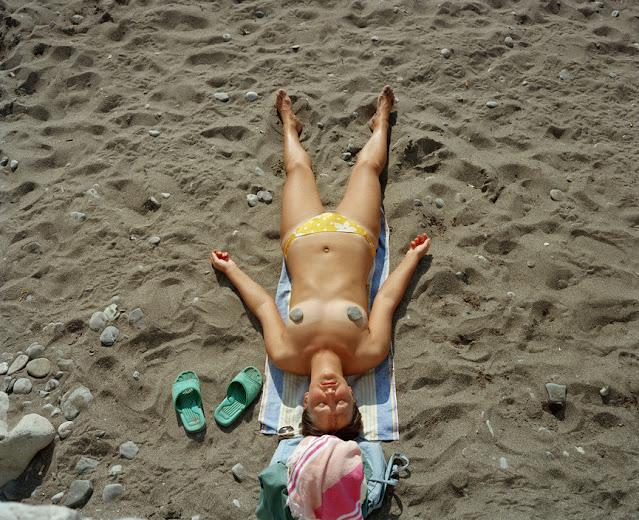
In 1995, Martin Parr Visited Yalta, Crimea, to Capture a Post-Soviet Beach Holiday

In the summer of 1995 the British photographer Martin Parr, traveled to Yalta, he had for himself called the “Russian Riviera.” And in this series, you will see all the variety, which could offer the tourist Yalta almost three decades ago – the Crimean beaches, noise waterfront girls topless, giving Brezhnev, local bandits, pensions and sedate family vacation.

In Parr’s images we can almost smell the salt air, feel the warmth of the sun, and can keenly recall that particular feeling of a beachy endless summer. The photographs invoke nostalgia for sunny days full of hope that Ukrainians are holding onto dearly at the moment.

Martin Parr was born in Epsom, Surrey, UK, in 1952. When he was a boy, his budding interest in the medium of photography was encouraged by his grandfather George Parr, himself a keen amateur photographer. Parr studied photography at Manchester Polytechnic, from 1970 to 1973. Since that time, he has worked on numerous photographic projects. He has developed an international reputation for his innovative imagery, his oblique approach to social documentary, and his input to photographic culture within the UK and abroad.

In 1994 Martin Parr became a full member of Magnum Photographic Cooperative. He developed an interest in filmmaking, and has started to use his photography within different genres, such as fashion and advertising. Parr holds the Guiness World Record for having the largest simultaneous photography exhibition. He has published over 120 books of his own work and edited another 30.



June 26, 2017

The Very Earliest War Photography: Rare and Amazing Photographs of Crimean War by Roger Fenton, 1855

The Crimean War (1853-1856) stemmed from Russia’s threat to multiple European interests with its pressure of Turkey. After demanding Russian evacuation of the Danubian Principalities, British and French forces laid siege to the city of Sevastopol in 1854. The campaign lasted for a full year, with the Battle of Balaclava and its “Charge of the Light Brigade” among its famous skirmishes. Facing mounting losses and increased resistance from Austria, Russia agreed to the terms of the 1856 Treaty of Paris. Remembered in part for Florence Nightingale’s work for the wounded, the Crimean War reshaped Europe’s power structure.


Roger Fenton's Crimean War photo series is the first historic attempt to portray war campaign with the help of new magic photo media, then still in its infancy. Sent as a replacement for the Richard Nicklin, a civilian photographer, who was lost at sea, along with his assistants, photographs, and equipment, when their ship sank during the hurricane that stuck the harbor at Balaklava on November 14, 1854.

Fenton spend March-June 1855 in Crimea as an official campaign photographer, payed by the British government, recording participants and landscapes for posterity. These records never managed to capture battles, explosions, devastations, wounds, blood and tears, partly due to the limitations of photographic techniques of the period, but also because of official wish to glamorize the war and shift public attention away from government and military mismanagement, for which Crimean campaign became infamously known.

With the end of the Crimean War, quite modest public interest in Fenton's photos quickly faded away, in 1862 he left photography for good, dying several years later, financially broken and almost forgotten. In our days, however, historians unanimously recognize Fenton's remarkable accomplishments not only for his keen artistic eye and seminal role in establish photography as an artistic endeavor, but also honor him as one of the first professional war photographers.

The valley of the shadow of death. Dirt road in ravine scattered with cannonballs. One of the most famous photos of the Crimean campaign.

Captain Bathurst, Grenadier Guards.

Cornet Henry John Wilkin, 11th Hussars.

Field train, horse artillery. Horse team pulling a gun carriage.

Two officers of the 47th Regiment.


FOLLOW US:
FacebookTumblrPinterestInstagram

CONTACT US


Browse by Decades

Popular Posts

Advertisement

09 10