Bring back some good or bad memories


ADVERTISEMENT
Amsterdam etiketine sahip kayıtlar gösteriliyor. Tüm kayıtları göster

13 Aralık 2025

John Lennon and Yoko Ono Waiting for Maid to Make Bed During “Bed-In for Peace” in 1969

In March 1969, John Lennon and Yoko Ono captured global attention with their famous “Bed-In for Peace” in Amsterdam, a week-long protest against war and violence. The couple, newly married, took residence in a flower-scented Presidential Suite at the Hilton Hotel, planning to remain in bed as a statement of peaceful resistance. Their aim was to use this unusual form of protest to draw attention to the world’s conflicts and advocate for love and nonviolence.

This specific photograph, taken by Charles Ley and published in the Daily Mirror on March 26, 1969, perfectly captures the contrast between their symbolic activism and everyday life. The couple had to momentarily get out of bed so that the hotel maid, Maria de Soledade Alves, could change the sheets. This humorous interruption highlighted the reality of their high-profile protest while staying in a luxury hotel.


The article with the headline “Beatle John and Yoko are forced out of their £20-a-day bed by Maria, the hotel maid.” It reads:

BEDMATES John Lennon and Yoko Ono, like many a visionary and revolutionary before them, discovered yesterday that being out of this world can have its little difficulties.

Suddenly, in their flower-scented £20-a-day Presidential Suite above Amsterdam, they found that high-thinkers occasionally have to compromise with more down-to-earth mortals ... such as hotel maids.

Suddenly, the serenity of Day Two of the Great Lennon Lie-in was interrupted by a rival “happening”: The Changing of The Bed Linen. And Beatle John and his Japanese bride had to get out of bed.

John and Yoko, who married last Thursday, took to their bed “as a protest against war violence in the world.” They planned to stay tucked up for seven days.

But that was before Maria de Soledade Alves, a Portuguese maid at Amsterdam's Hilton Hotel, came on the scene with a pile of new linen. Yoko, in a high-necked, old- fashioned white nightie, fled to a chair.

When Maria moved on to another room, the 28-year-old Beatle and his 34-year-old wife hopped happily back into bed.

To turn their backs on the world and peacefully contemplate the skyline of Amsterdam.

Pictures by CHARLES LEY

5 Mayıs 2024

In 1969, a Teenage Photographer Used a Fake Press Pass to Shoot John and Yoko’s “Bed-In”

Knowing their March 20, 1969, marriage would be a huge press event, John Lennon and Yoko Ono decided to use the publicity to promote world peace. They spent their honeymoon in the presidential suite (Room 702) at the Amsterdam Hilton Hotel for a week between March 25 and 31, inviting the world’s press into their hotel room every day between 9 a.m. and 9 p.m. Govert De Roos was only 15 at the time, but managed to make it inside the room despite his age.

Govert De Roos and the photographer holding up one of the famous photos he shot in the location he shot it from.

“In those days I just had one goal in life, I wanted to be a photographer,” De Roos recalled. “I read in the paper that they were giving a press conference, so I thought, ‘I have to get into that room.’”

De Roos managed to sneak in by making his own fake press pass. The teen brought a phony press card he made to the hotel and stood in line to get into the room as a photojournalist. Luckily for De Roos, his fake pass worked and he managed to shoot a series of career-defining photos of the bed-in.

“I think the security guys thought, ‘okay let him go,’” he said.

The fake press card Govert De Roos brought to the hotel.

Due to the couple’s very public image, the Amsterdam bed-in was greeted by fans, and received a great deal of press coverage. Following the event, when asked if he thought the bed-in had been successful, Lennon became rather frustrated. He insisted that the failure of the press to take the couple seriously was part of what he and Ono wanted: “It’s part of our policy not to be taken seriously. Our opposition, whoever they may be, in all manifest forms, don’t know how to handle humor. And we are humorous.”

After their nonconformist artistic expressions such as the nude cover of the Two Virgins album, the press were expecting them to be having sex, but instead the couple were just sitting in bed, wearing pyjamas—in Lennon’s words “like angels”—talking about peace with signs over their bed reading “Hair Peace” and “Bed Peace.”

After seven days, they flew to Vienna, Austria, where they held a bagism press conference.


10 Ağustos 2023

Bob Marley Live at Jaap Edenhal, Netherlands, 1976

Bob Marley and the Wailers performing live at Jaap Edenhal, Netherlands on June 13, 1976. These amazing photographs, taken by Lex Van Rossen (1940–2007), document Marley performing in the Netherlands for the very first time. The photos are particularly noteworthy because they show guitarist Earl “Chinna” Smith on-stage with the band. Chinna toured with the Wailers as guitarist on the 1976 tour.


8 Haziran 2023

30 Amazing Black and White Photos Capture Scenes of the Kinkerstraat, Amsterdam in 1992

The Kinkerstraat is a street in Amsterdam-West, part of the Kinkerbuurt. The street was named in 1881 after the poet and lawyer Johannes Kinker (1764-1845). The street is an extension of the Elandsgracht and runs from the Nassaukade to the Kostverlorenvaart, where the Kinkerbrug forms the connection with the Postjesweg.

Halfway down the street is the market in Ten Katestraat. The streets in the area were named after writers and poets. Due to their poor condition, some residential blocks on the south side of the street were demolished in the 1970s and 1980s and replaced by new buildings as part of urban renewal.

Tram line 7 has been running through the street since 1905. Line 17 was added in 1914 and line 23 in 1921. With an interruption from 1956 to 1962, when line 17 was operated as a bus line, the line has remained here, as has line 7, which has been a regular presence in the city for over a century now.

These amazing black and white photos were taken by Dutch photographer Patrick van den Hurk that show street scenes of the Kinkerstraat in 1992.


6 Şubat 2023

Bob Marley on a Riverboat Tour in Amsterdam, Netherlands, 1976

Bob Marley and the Wailers arrived at Schiphol Airport for a small stay in Amsterdam before their show at Jaap Edenhaal on June 13, 1976. Here are some photographs of Bob and the band on a tour boat in the city, this was Bob Marley’s very first appearance in the Netherlands.


15 Mayıs 2022

Some Black and White Photographs Capture Street Scenes of Amsterdam in 1981

These pictures of Amsterdam in 1981 were taken by Simon Nowicki, a street photographer who has practiced the art of photography for over 35 years. His works are influenced by the likes of Henry Cartier-Bresson, Paul Strand, Robert Frank, Lee Friedlander and Rennie Ellis. 

More fascinating photographs of daily lives could be found at Nowicki's amazing Flickr site.


24 Nisan 2022

Incredible Vintage Photos of Amsterdam’s People in the 1960s and 1970s

Eduard van der Elsken (1925–1990) was a Dutch photographer and filmmaker. His imagery provides quotidian, intimate and autobiographic perspectives on the European zeitgeist spanning the period of the Second World War into the nineteen-seventies in the realms of love, sex, art, music (particularly jazz), and alternative culture.

He described his camera as “infatuated,” and said: “I’m not a journalist, an objective reporter, I’m a man with likes and dislikes.” His style is subjective and emphasizes the seer over the seen; a photographic equivalent of first-person speech.

Over the course of his 40-year career, Van der Elsken took around 100,000 photographs, “collecting my kind of people.” Take a look at these incredible pictures of the people of Amsterdam taken by Van der Elsken in the 1960s and 1970s:


23 Nisan 2022

Fascinating Color Snapshots of Europe Taken By an American Backpacker in the Late 1970s

These pictures were taken by LA-based writer Pat Saperstein during her trips to Europe in the late 1970s. 

“I thought you might be interested to share some of my color slides from Europe in the late 1970s and early 1980s when I was a college backpacker,” wrote Saperstein. “I traveled to Europe as a teenaged backpacker in 1977 and 1979 and then lived in Paris in 1983, taking Kodachrome slides during that time.”

Take a look at Paris, Brindisi, London, Amsterdam, Greece and other places through these fascinating snapshots:


7 Şubat 2022

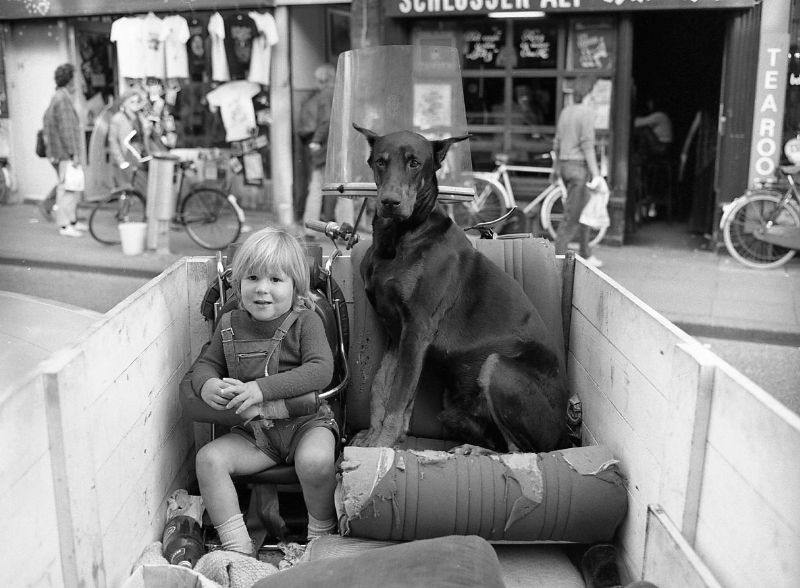
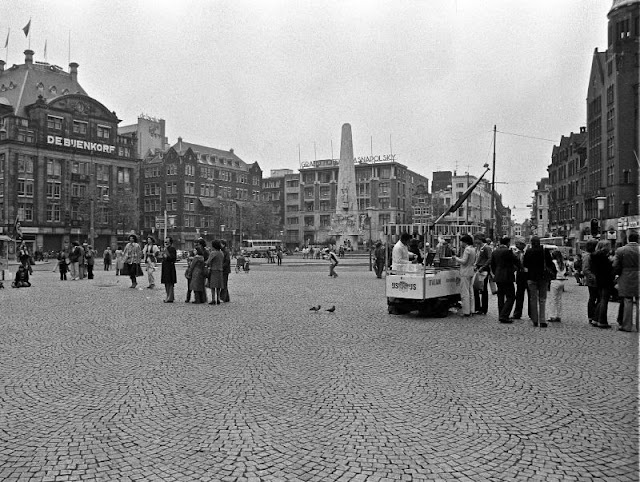
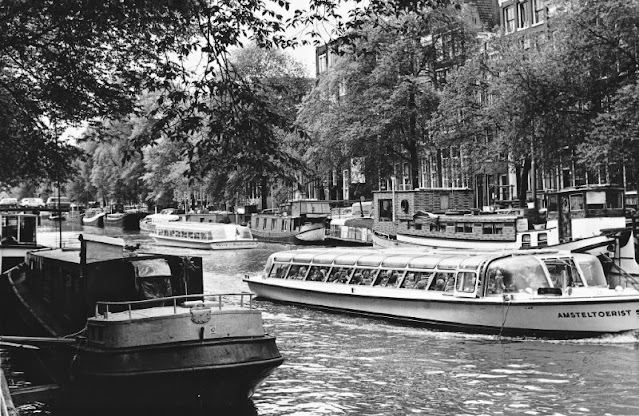
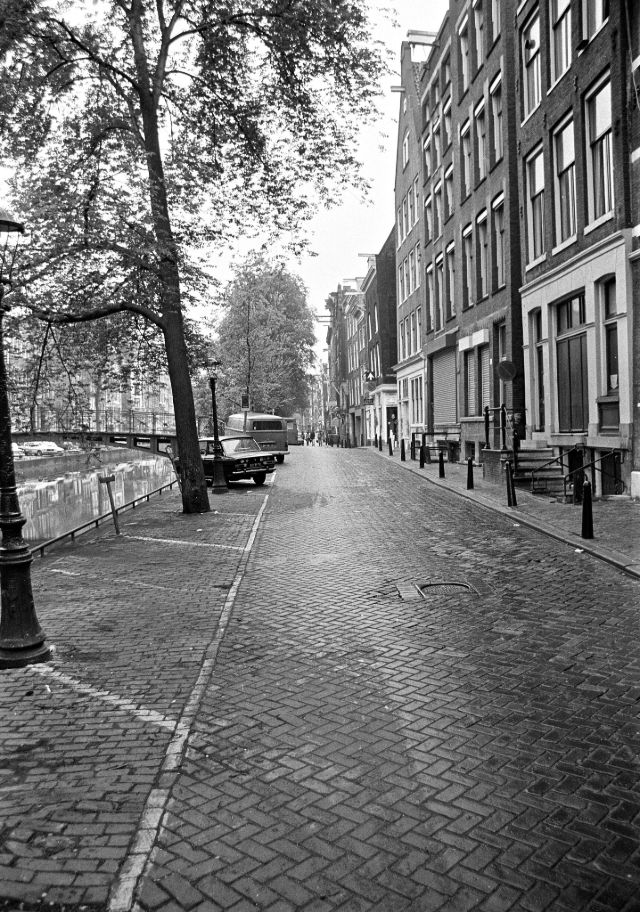
Black and White Photos Capture Street Scenes of Amsterdam in the 1970s

Throughout the 1970s, Amsterdam experienced rapid development. To reduce the use of automobiles, city planners have favored public transportation. Trams remain the primary transportation mode in inner Amsterdam, while buses play a critical role in outer districts. A high-speed metro line opened in 1976, and a new fast rail line to Schiphol was opened in 1988.

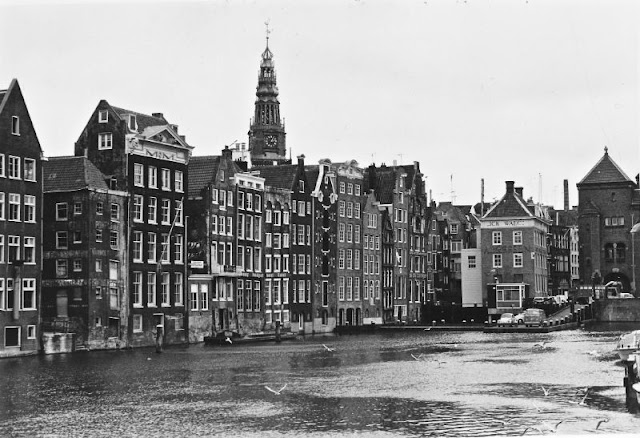
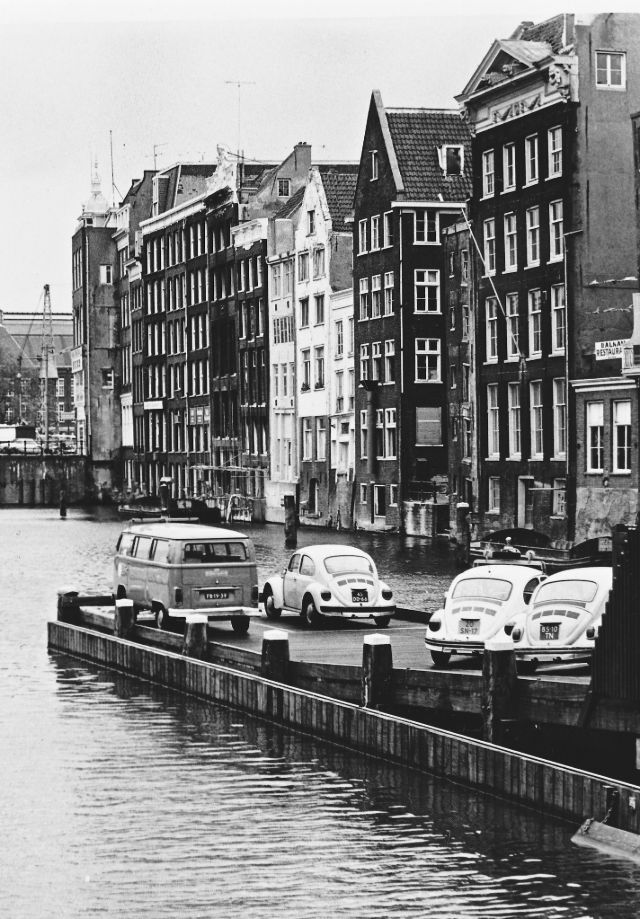
The cultural revolution of the 1970s made Amsterdam the magisch centrum (magical centre) of Europe. A tolerant attitude toward soft drugs made the city a favorite haunt of hippies. There were many radical movements in the 1970s, some highly political and rigidly structured, but many played out in street theatre, satirical and playful.

These black and white photos were taken by pszz that show what Amsterdam looked like in the 1970s.

Ice cream seller, Amsterdam

Amsterdam canal tour

Amsterdam canal

Amsterdam canal

Amsterdam canal

20 Aralık 2021

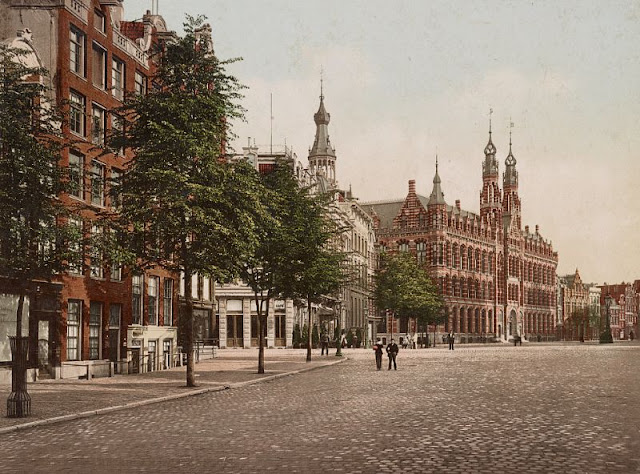
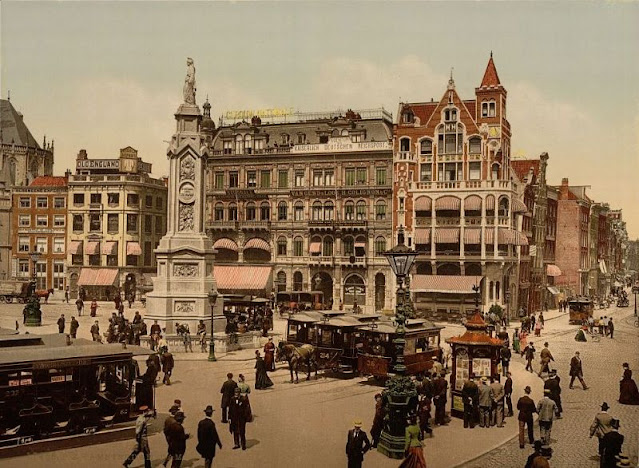
20 Amazing Photochrom Prints of Amsterdam From the Late 19th Century

The 17th century is considered Amsterdam’s Golden Age, during which it became the wealthiest city in the western world. Ships sailed from Amsterdam to the Baltic Sea, North America, and Africa, as well as present-day Indonesia, India, Sri Lanka, and Brazil, forming the basis of a worldwide trading network. Amsterdam’s merchants had the largest share in both the Dutch East India Company and the Dutch West India Company. These companies acquired overseas possessions that later became Dutch colonies.

The end of the 19th century is sometimes called Amsterdam’s second Golden Age. New museums, a railway station, and the Concertgebouw were built; in this same time, the Industrial Revolution reached the city. The Amsterdam–Rhine Canal was dug to give Amsterdam a direct connection to the Rhine, and the North Sea Canal was dug to give the port a shorter connection to the North Sea. Both projects dramatically improved commerce with the rest of Europe and the world.

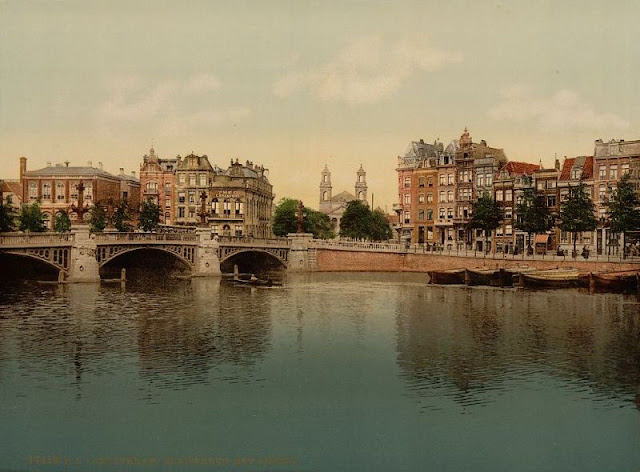
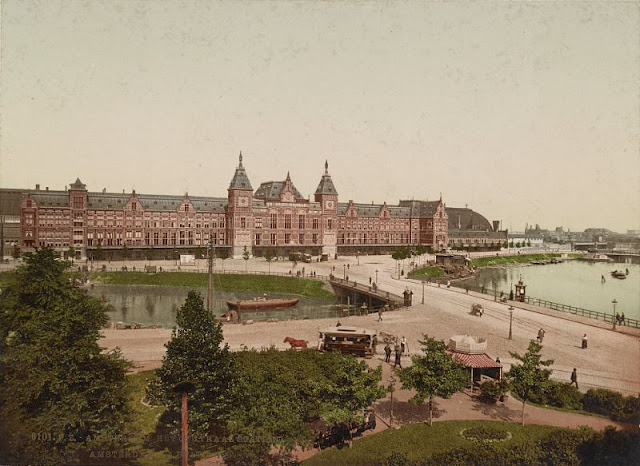
Here below is a set of amazing Photochrom prints from Library of Congress that shows street scenes of Amsterdam around 1890.

Amsterdam. Blue bridge and the Amstel River, circa 1890

Amsterdam Centraal Station, circa 1890

Amsterdam Post Office, circa 1890

Amsterdam. Dam Square with the Nieuwe Kerk (New Church) on the left, circa 1890

Amsterdam. De Waag or weighing house at right, originally a gate in the city walls and now a subway station, Nieuwmarkt, circa 1890

2 Ekim 2021

Amazing Vintage Photographs of Amsterdam Taken by George Hendrik Breitner From the 1890s to the 1910s

George Hendrik Breitner (September 12, 1857 – June 5, 1923) was a Dutch painter and photographer. An important figure in Amsterdam Impressionism, he is noted especially for his paintings of street scenes and harbors in a realistic style: wooden foundation piles by the harbor, demolition work and construction sites in the old center, horse trams on the Dam, or canals in the rain. Breitner saw himself as “le peintre du peuple”, the people’s painter, and preferred to work with working-class models: laborers, servant girls and people from the lower class districts.

By 1890, cameras were affordable, and Breitner became very interested in this particular instrument that could help provide reference materials for his paintings. The discovery in 1996 of a large collection of photographic prints and negatives made it clear that Breitner was a talented photographer of street photography. He took various pictures of the same subject, from different perspectives or in different weather conditions. On other occasions, Breitner used photography for general reference, to capture an atmosphere, a light effect or the weather in the city at a particular moment.

Take a look at these 28 stunning vintage black and white photographs of the streets and people of Amsterdam from the 1890s to the 1910s taken by Breitner:


FOLLOW US:
FacebookTumblrPinterestInstagram

CONTACT US


Browse by Decades

Popular Posts

Advertisement

09 10