Bring back some good or bad memories


ADVERTISEMENT
Showing posts with label Israel. Show all posts

August 30, 2023

Jerusalem in the 1970s Through Fascinating Photos

Jerusalem is a city in Western Asia, on a plateau in the Judaean Mountains between the Mediterranean and the Dead Sea. It is one of the oldest cities in the world, and is considered holy to the three major Abrahamic religions—Judaism, Christianity, and Islam.

Both Israelis and Palestinians claim Jerusalem as their capital; Israel maintains its primary governmental institutions there, and the State of Palestine ultimately foresees it as its seat of power. Neither claim, however, is widely recognized internationally.

These fascinating photos were taken by Andrey Zeigarnik that show street scenes of Jerusalem in the 1970s.

Jerusalem, 1972

Jerusalem, Temple Mount from North-East, 1972

Kidron Valley, Jerusalem, 1972

Via Dolorosa, Jerusalem, 1972

Aerial view of Temple Mount, Jerusalem, 1973

July 12, 2021

Rare Photos Capture Street Scenes of Tel Aviv in the Late 1930s and Early ’40s

Tel Aviv is the most populous city in the Gush Dan metropolitan area of Israel. Located on the Israeli Mediterranean coastline, it is the economic and technological center of the country. If East Jerusalem is considered part of Israel, Tel Aviv is the country’s second most populous city after Jerusalem; if not, Tel Aviv is the most populous city ahead of West Jerusalem.

Tel Aviv is a beta+ world city and is ranked 41st in the Global Financial Centres Index. It has the third- or fourth-largest economy and the largest economy per capita in the Middle East. The city has the 31st highest cost of living in the world.

A “party capital” in the Middle East, Tel Aviv has a lively nightlife and 24-hour culture. It has been called The World’s Vegan Food Capital, as it possesses the highest per capita population of vegans in the world, with many vegan eateries throughout the city.

After the 1947–1949 Palestine war, Tel Aviv began the municipal annexation of parts of Jaffa, fully unified with Jaffa under the name “Tel Aviv” in April 1950, and was renamed to “Tel Aviv-Yafo” in August 1950.

Tel Aviv and Jaffa were later merged into a single municipality in 1950, two years after the Israeli Declaration of Independence, which was proclaimed in the city. Tel Aviv’s White City, designated a UNESCO World Heritage Site in 2003, comprises the world’s largest concentration of International Style buildings, including Bauhaus and other related modernist architectural styles.

Here below is a set of rare photos from aussiejeff that shows street scenes of Tel Aviv from the late 1930s to early 1940s.

Looking south along Allenby Road (now Allenby Street) at the intersection with King George Street, Tel Aviv, Palestine (now Israel), circa 1937

Great Synagogue looking south on Allenby Road (now Allenby Street), Tel Aviv, Palestine (now Israel), circa 1937

Looking east along Boulevard Rothschild (now Rothschild Boulevard) near the intersection with Herzl Street, Tel-Aviv, Palestine (now Israel), circa 1937

Looking north along Ben Jehuda Road (now a street) from the intersection with what is now Sderot Ben Gurion, Tel Aviv, Palestine (now Israel), circa 1937

Looking north along Ben Jehuda Road (now Ben Yehuda Street) near the intersection with Allenby Road, Tel Aviv, Palestine (now Israel), circa 1937 2

September 6, 2020

These Are the World’s Oldest Masks Ever Discovered, And Are Estimated to Be 9000 Years Old!

In 1983, a small team of archaeologists led by Harvard prehistorian Ofer Bar-Yosef, excavated a recently looted cave in the southern Judean Desert. Known as Nahal Hemar, the site appears to have been used to store thousands of objects from an ancestor cult. The scientists uncovered rope baskets, wooden beads, shells, flint knives, figurines carved from bone, human skulls decorated with molded asphalt, and embroidered textiles that may once have been ritual costumes.


They also found fragments of two stone masks, approximately 9,000 years old, which now belong to the Israel Antiquities Authority. Strands of hair, preserved for thousands of years in the dry climate, were stuck to the masks in clumps.

Other Neolithic masks have also been unearthed in the area as well. The rare stone artifacts were sculpted by early farmers whose immediate ancestors had given up hunting and gathering and settled in the Judean Hills, the location of the modern city of Jerusalem, and in the fringes of the nearby Judean Desert.

Weighing in at one or two kilograms apiece, each of the artifacts represents a oval visage with glaring ocular cavities, toothy maws, and a set of holes along the outer edge. They were likely painted in antiquity, but only one has remnants of pigment. Each of them is unique, and possibly depicts individuals. Some of the faces are old, others appear younger. One is a miniature, the size of a brooch. They may represent ancestors venerated as part of an early Stone Age religion.


May 25, 2020

May 24, 1991: During Operation Solomon, the World Record for the Most Passengers on a Commercial Airplane is 1,122

Operation Solomon was a covert Israeli military operation to airlift Ethiopian Jews to Israel from May 24 to May 25, 1991. Non-stop flights of 35 Israeli aircraft, including Israeli Air Force C-130s and El Al Boeing 747s, transported 14,325 Ethiopian Jews to Israel in 36 hours.

The operation set a world record for single-flight passenger load on May 24, 1991, when an El Al 747 carried 1,122 passengers to Israel (1,087 passengers were registered, but dozens of children hid in their mothers’ robes). Planners expected to fill the aircraft with 760 passengers. Because the passengers were so light, many more were squeezed in. Five babies were born aboard the planes.


The operation was overseen by the Prime Minister at the time, Yitzhak Shamir. It was kept secret by military censorship. Operation Solomon was sped up with tremendous help from the American Association for Ethiopian Jews (AAEJ). In 1989, the AAEJ accelerated the process of the Aliyah because Ethiopian-Israeli relations were in the right place. Susan Pollack, who was the director of the AAEJ in Addis Ababa, fought for Operation Solomon to happen sooner rather than later. Israel, who had a gradual plan for this operation, and the US were given a graphic report from Pollack that informed both countries of the terrible conditions that the Ethiopian Jews were living in.

The organization went right ahead and got transportation like buses and trucks to have the people of Gondar quickly come to Addis Ababa.To get the Jews in Addis Ababa, many of the Jews that came from Gondar had to venture hundreds of miles by car, horses, and by foot. Some had things taken by thieves on the way, and some were even killed. By December 1989, around 2,000 Ethiopian Jews made their way by foot from their village in the Gondar highlands to the capital and many more came to join them by 1991.

In order to accommodate as many people as possible, airplanes were stripped of their seats, and up to 1,122 passengers were boarded on a single plane. May 24, 1991, also happened to be a Friday which falls on Shabbat for Jews. On Shabbat, the Jewish Sabbath, transportation is not used. This made it easier to complete the operation. The Jewish Religious Law mentions that one can break the Sabbath traditions if it is for saving lives.

Many of the immigrants came with nothing except their clothes and cooking instruments, and were met by ambulances, with 140 frail passengers receiving medical care on the tarmac. Several pregnant women gave birth on the plane, and they and their babies were rushed to the hospital. Before Operation Solomon took place, many of the Jews there were at a high risk of infection from diseases, especially HIV. The Jews that were left behind had an even higher risk at the infection because the rate of it kept increasing. After a few months, around 20,000 Jews had made their way over. While they were there, they were struggling for basic resources like food and warmth. They thought they would see their families right away.

Between 1990 and 1999, over 39,000 Ethiopian Jews entered Israel.


April 22, 2020

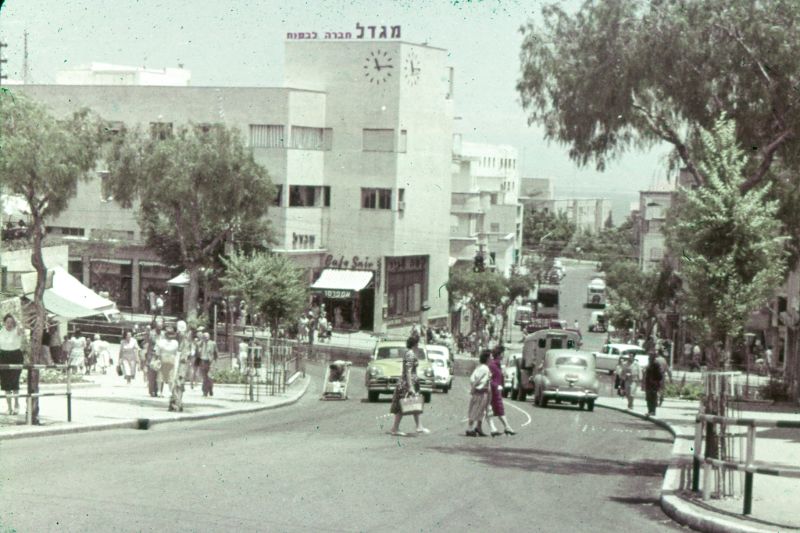
Israel in the 1950s Through Amazing Color Pics

When the War of Independence ended, the newly founded State of Israel was home to 872,000 citizens. They included some 700,000 Jews and about 150,000 Moslems, Christians, and Druze.

For Israel, the 1950s were its formative years. It was a decade of concerted national effort to forge a state and nation like any other member of the family of nations. These were years of civil mobilization, mass aliyah, austerity, insecure borders, and hostile neighbors, as well as another war that ended in a victory that was seen as an expression of the young state’s strength and fortitude.

These amazing color pics from Kerst de Jong that show what Israel looked like in the 1950s.


April 20, 2020

Human Torpedo in Use by the Israeli Commando Unit, 1967

Human torpedoes or manned torpedoes are a type of diver propulsion vehicle on which the diver rides, generally in a seated position behind a fairing. They were used as secret naval weapons in World War II. The basic concept is still in use.

The name was commonly used to refer to the weapons that Italy, and later (with a larger version) Britain, deployed in the Mediterranean and used to attack ships in enemy harbors. The human torpedo concept has occasionally been used by recreational divers.

Israeli manned torpedo, 1967.

A typical manned torpedo has a propeller, hydroplanes, a vertical rudder and a control panel with controls for its front rider. It usually allows for two riders who sit facing forwards. It has navigation aids such as a compass, and nowadays modern aids such as sonar and GPS positioning and modulated ultrasound communications gear. It may have an air (or other breathing gas) supply so its riders do not have to drain their own apparatus while they are riding it. In some the riders’ seats are enclosed; in others the seats are open at the sides as in sitting astride a horse. The seat design includes room for the riders’ swimfins (if used). There are flotation tanks (typically four: left fore, right fore, left aft, right aft), which can be flooded or blown empty to adjust buoyancy and attitude.

The concept of a tiny manned submarine carrying a bomb was developed and patented by a British naval officer in 1909, but was never used during the First World War. The Italian Navy experimented with a primitive tiny sub carrying two men and a limpet mine as early as 1918 and this craft did have some success. The first truly practical human torpedo was the Italian Maiale (nicknamed the “pig” because it was difficult to steer) used in the Second World War.

Manned torpedo, called Maiale, at the Museo nazionale della scienza e della tecnologia Leonardo da Vinci of Milan.

The Maiale was electrically propelled by a 1.6 horsepower (1.2 kW) motor in most of the units manufactured, with a top speed of 3 knots (5.6 km/h) and often required a travel time of up to two hours to its target. Two crewmen in diving suits rode astride, each equipped with an oxygen rebreather apparatus. They steered the craft to the enemy ship. The “pig” could be submerged to 15 meters (49 ft), and hypothetically to 30 meters (98 ft), when necessary. On arrival at the target, the detachable warhead was released for use as a limpet mine. If they were not detected, the operators then rode the mini sub away to safety.

Development began in 1935 but the first 11 were not completed until 1939 by San Bartolomeo Torpedo Workshops in La Spezia, Italy and a larger number followed. The official Italian name for the majority of the craft that were manufactured was Siluro a Lenta Corsa (SLC or “Slow-running torpedo”). Two distinct models were made, Series 100 and then (in 1942) Series 200 with some improvements. At least 50 SLCs were built by September 1943.

A maiale in Taormina, Sicily.

In operation, the Maiale torpedo was carried by another vessel (usually a conventional submarine), and launched near the target. Most manned torpedo operations were at night and during the new moon to cut down the risk of being seen. Attacks in 1940 were unsuccessful but in 1941, the Italian navy (Regia Marina) successfully forced the harbor of Alexandria and damaged the two British battleships HMS Queen Elizabeth and HMS Valiant, as well as the tanker Sagona. This feat encouraged the British to develop their own torpedo “chariots”.

The last Italian model, the SSB (for Siluro San Bartolomeo, “San Bartolomeo Torpedo”) was built with a partly enclosed cockpit, a more powerful motor and larger 300 kg (660 lb) warhead (up from the earlier SLC’s 220 and 250 kg (490 and 550 lb) warheads). Three units were made but not operationally used because Italy surrendered in 1943.

A captured Kaiten torpedo at the USS Bowfin Museum in Hawaii.

The first British version of the concept was named the Chariot manned torpedo. Two models were made; Mark I was 20 feet (6.1 m) long while Mark II was 30 feet (9.1 m) long, both suitable for carrying two men. Later versions were larger, starting with the original X-class submarine, a midget submarine, 51 feet (16 m) long, no longer truly a human torpedo but similar in concept. The X-Craft were capable of 6.5 knots (12.0 km/h) on the surface or 5.5 knots (10.2 km/h) submerged. They were designed to be towed to their intended area of operations by a full-size 'mother' submarine.

A Mk.I Chariot (minus warhead), 3 March 1944, Rothesay. (© IWM)

Chariot Mk 1 and crew. 3 March 1944, Rothesay.

The German navy also developed a manned torpedo by 1943, the Neger, intended for one man, with a top speed of 4 knots (7.4 km/h) and carrying one torpedo; the frequent technical problems often resulted in the deaths of operators. Roughly 40 of these were made and they did manage to sink a few ships. The later Marder (pine marten in English) was about 27 feet (8.2 m) long and more sophisticated and could dive to depths of 27 meters (89 ft) but with very limited endurance. About 500 were built.

A Neger with its operator being launched, ca. 1944–45.

(via Wikipedia)

May 12, 2018

Old New Land: The Story Behind the First Photograph of the Founding of Tel Aviv, 1909

Over 100 years ago, some 66 Jewish families congregated on the sand dunes of what would become Tel Aviv, the first Hebrew city in a British colony called Palestina. Using seashells to divide the land between them, these families changed the course of history. This is the strange story of how Tel Aviv was born and built.

April 11th, 1909: About 100 people participated in a lottery to divvy up a 12-acre plot of sand dunes. These dunes pictured here would later become the city of Tel Aviv.

The same area in 1911

On April 11, 1909, 66 Jewish families gathered on a desolate sand dune to parcel out the land by lottery using seashells. This gathering is considered the official date of the establishment of Tel Aviv. The lottery was organised by Akiva Arye Weiss, president of the building society. Weiss collected 120 sea shells on the beach, half of them white and half of them grey. The members’ names were written on the white shells and the plot numbers on the grey shells. A boy drew names from one box of shells and a girl drew plot numbers from the second box. A photographer, Avraham Soskin, documented the event. Within a year, Herzl, Ahad Ha’am, Yehuda Halevi, Lilienblum, and Rothschild streets were built; a water system was installed; and 66 houses (including some on six subdivided plots) were completed.

Tel Aviv’s first water tower and home to the founding collective’s offices.

The moment was captured on film by Abraham Suskind. In the iconic image, members of the collective can be seen standing where Tel Aviv’s famous Rothschild Boulevard now sits. According to legend, the man standing behind the group, on the slope of the sand dune, is Shlomo Feingold who opposed the idea, allegedly telling the others: “Are you mad! There’s no water here.”
“One day, it was in 1909, I was roaming with the camera in one hand and the tripod on my other arm, on my way from a walk through the sand dunes of what is today Tel Aviv to Jaffa. Where the Herzliah Gymnasium once stood I saw a group of people who had assembled for a housing plot lottery. Although I was the only photographer in the area, the organizers hadn’t seen fit to invite me, and it was only by chance that this historic event was immortalized for the next generations.” – Avraham Soskin on his most famous photograph.
The name Tel Aviv is from Sokolow’s translation of the title of Theodor Herzl’s Altneuland (“Old New Land”) based on the name of a Mesopotamian site mentioned in Ezekiel 3:15: “Then I came to them of the captivity at Tel Abib, that lived by the river Chebar”. It embraced the idea of a renaissance in the ancient Jewish homeland. Aviv is Hebrew for “spring”, symbolizing renewal, and Tel is a mound made up of the accumulation of layers of civilization built one over the other symbolizing the ancient.

Building Tel Aviv, circa 1920s

Tel Aviv 1922

Herzl Street then and now

December 7, 2016

21 Amazing Vintage Photos of Israeli Students Learning After World War II

A small collection of 21 amazing vintage photo from Yoel's archive shows us Israeli students learning after the Second World War. Although there were many difficulties, these children still always kept smiles on their faces, these classes seemed always exciting.


March 7, 2015

Wonderful Color Photos of Children Celebrating Purim in Israel in 1955

As the Jewish holiday is celebrated around the world, here is a collection of wonderful photos of Jewish children acting out a costume drama during the celebration of Purim in Israel. These photographs were taken by LIFE photographer Alfred Eisenstaedt in 1955.


February 19, 2014

Wonderful Color Photographs Capture Daily Life in Israel in 1955

These wonderful photographs were taken by LIFE photographer Alfred Eisenstaedt in 1955.

Jewish children acting out a costume drama during the celebration of Purim. Israel. 1955.

Jewish boy reading from the Torah during the celebration of Purim. Israel. 1955.

Orthodox Jews burning bread in observance of Mosaic Passover law. Israel. 1955.

Unltra orthodox Hassidic Jews dancing in the streets to celebrate Purim. Mea Shearim, Israel. 1955.

Scythe carrying Jewish collective farm workers offering grain during the celebration of Passover. Herzelia, Israel. 1955.

Young Jews during the celebration of Purim. Israel. 1955.

(Photos by Alfred Eisenstaedt, via LIFE photo archive)


FOLLOW US:
FacebookTumblrPinterestInstagram

CONTACT US


Browse by Decades

Popular Posts

Advertisement

09 10