Bring back some good or bad memories


ADVERTISEMENT
Showing posts with label India. Show all posts

July 1, 2026

Princess Diana Posing Alone in Front of the Taj Mahal, India in 1992

Princess Diana was famously pictured alone on a bench in front of the Taj Mahal, India’s stunning monument to love, when she was visiting the country with Prince Charles in February 1992.


Unknown to the outside world, the Prince and Princess of Wales were already spending much of their time in the UK at separate residences, with Diana based at Kensington Palace and Charles preferring to be at Highgrove in Gloucestershire. Ten months after that photo was taken, they would announce their formal separation.

This is how the Daily Mirror’s royal editor James Whitaker reported that Taj Mahal visit at the time.
Wistful Princess Diana lingered alone yesterday at the Taj Mahal, the world’s most beautiful monument to love. And afterwards Diana, parted from Prince Charles for the day, said intriguingly: “It was a very healing experience.” Asked what she meant, Diana replied: “Work that out for yourself.”

But it seemed clear that the princess was saddened by the absence of her husband, who was visiting an architecture school and making a speech to industrialists. She told Professor Mukund Rawat, who showed her around India’s white marble wonder: “It would have been better if both of us had been here. But my husband has to be in Delhi.”

Before the couple’s engagement, eleven years ago this month, Charles visited the Taj and said he hoped to return one day with his wife. But the prince couldn’t find time to be at Diana’s side yesterday when she spent more than an hour at the classic building dedicated by a grief-stricken emperor to his beloved dead wife. So the princess created her own poignant reminder of the royal wish that didn’t come true.

Waving her staff aside, she sat in silent solitude for five long minutes on the same Taj bench where Charles posed for a photo in 1980. And before leaving the Taj, she wrote in the visitors’ book: “A beautiful monument.”

Professor Rawat said: “It would have been better if both the prince and princess had come to the Taj Mahal. This is a monument that should have been felt and experienced by both. When I mentioned this to the princess she agreed. I did not ask why the prince had not come. I was not supposed to ask. But I felt she was a little sad he was not there.”


July 29, 2025

35 Stunning Portraits of People in Kerala, India Taken by Egon von Eickstedt in the 1920s

Egon von Eickstedt was a German physical anthropologist who conducted expeditions to India, Ceylon (Sri Lanka), and Burma in the 1920s, specifically between 1926 and 1929. During this time, he took approximately 12,000 photographic images and collected 2,000 objects, focusing on Adivasi (indigenous) communities. His work in India included studies in South India, and specifically Kerala, where he documented and photographed indigenous people, including Dalit communities. He was particularly interested in what he termed “primitive peoples” and their cultural practices.

Eickstedt’s research was driven by his theories on racial classification, and he aimed to validate his anthropological theories through measuring and photographing India’s indigenous population. He later published his findings in works such as “Rassenkunde und Rassengeschichte der Menschheit” (Ethnology and the Race History of Mankind), where he classified human populations into various “races” and types. His photographs and collected artifacts were intended to support his “racial history of mankind” theories.

It is important to note that Eickstedt’s anthropological work is viewed through the lens of racial anthropology prevalent in his time, and he later became a leading racial theorist in Nazi Germany. His photographic collection, while extensive, is embedded in a colonial and racial context, reflecting asymmetric power relations between the anthropologist and the subjects.


December 17, 2024

40 Vivid Color Photos Capture Everyday Life in Rajasthan, India in the Mid-1980s

In the 1980s, Rajasthan was a land of contrasts, with its vibrant culture and ancient heritage juxtaposed against the backdrop of significant social and political change. The state, known for its deserts, forts, and palaces, was still largely rural, with agriculture playing a central role in the economy. However, the decade saw gradual shifts in its economic landscape, with tourism beginning to emerge as an important industry due to the state’s historical and architectural significance.

The 1980s were also a time of infrastructural development, including the expansion of road networks and the establishment of more educational institutions. However, economic challenges such as water scarcity and unemployment remained persistent concerns.

The decade saw a growing middle class in urban areas like Jaipur and Udaipur, although much of the rural population continued to live in poverty. These vivid color photo were taken by Chris Protopapas that show everyday life in Rajasthan in 1985.

Jaipur, Rajasthan, India, 1985

Jaipur, Rajasthan, India, 1985

Jaipur gate, Rajasthan, India, 1985

Jaipur. Broom vendor, Rajasthan, India, 1985

Jaipur. Cows, Rajasthan, India, 1985

December 4, 2024

In Colonial India, Locals in Himalayas and Punjab Region Had Used Inflated Bullock Skins as Boats to Cross Rivers

In Colonial India, locals in Himalayas and Punjab region had used inflated bullock skins as boat service to carry passengers across rivers. The technique of using inflated animal skins as a floating raft has been practiced for centuries across cultures, from Babylon to China, from Tibet to Egypt. India too adopted this brilliant ancient technique.

The skin from the animal is taken in one piece and all orifices in the skin are closed except in one leg which is kept open for inflation. Then the boatman inflates the skin through that opening in the leg by blowing from his mouth. The skins have been made air-tight and inflated with air just as we inflate a floating device. As many of these skins are desired are fastened together by poles so that the ferry boat can be made any size.
 
Charpoys can be erected on top of the inflated skins to provide comfortable rides to passengers. The boatman would keep paddling the stream with his limbs steering it in the right direction and keep blowing air during the journey.

The boats made of inflated animal skins would also be known locally as ‘drea’ or ‘mussuck,’ The force of the stream would push these one-of-a-kind boats to their desired destination.

In the early 1900s, American school teacher, traveler, and photographer, James Ricalton, went to India and traveled extensively throughout the subcontinent, documenting and recording the lives, culture and customs of the natives through photography. The story was published in 1913 in The Herald of Gospel Liberty, titled “A Year’s Journeying Through India,” where he described this amazing transportation experience on the Sutlej River.
“We are on the left bank of the Sutlej, looking up stream. Upon our right is a mass of rock such as forms the channel of this stream, which is rockbound throughout. It is strong and rapid, narrow and deep.

“Like the Bramapootra, the Ganges and _ the Indus, the Sutlej has its origin in Thibet at an elevation of twenty thousand feet above the sea. Think of a descent of such magnitude and what a waste of waterpower ...  but here only the dreas can cross.

“A drea is an inflated bullock-skin used as a boat. There are four of them before us on the shore. I have crossed this river several times on these inflated bullock-skins, and I am sure that underwriters would call the operation extra hazardous.

“The method is briefly this: the drea-man, after inflating the skin by blowing into one of tie hind legs, places it on the water, and places himself on his stomach athwart the skin, with his feet in the water. He holds a short paddle in his hands.

“The method is briefly this: the drea-man, after inflating the skin by blowing into one of tie hind legs, places it on the water, and places himself on his stomach athwart the skin, with his feet in the water. He holds a short paddle in his hands.

“The intending passenger sits erect astride the drea-man. This gives a very precarious equilibrium. The drea is exceedingly buoyant; the stability is that of a floating cylinder; feet and paddle in the water on either side form a very insignificant bilgekeel.

“Paddling with the feet and with the real paddle gives the propelling power. An ounce of misplaced avoirdupois on either side insures a plunge into the deep and wrathful Sutlej.

“When many passengers or much cargo are to be taken across, 2 skins are bound together with sticks, producing greater stability. I've seen hill-women with babies on their backs sit astride the drea-man in the reguiar fashion and cross this swift stream from this very point.

“The skin, for this purpose, is taken from the animal in one piece and all openings in it are closed, except the one leg which is left open for inflation.

“These drea-wallahs can drive the skins across the river during high floods when the best swimmer would be helpless in the powerful current.

“An unusual testament to human innovation.”


May 10, 2024

India’s First ‘Selfie’ Was Taken by a Tripura King Back in 1880

Maharaja Bir Chandra Manikya, an enthusiastic photographer was the first king of India to organize an annual photographic exhibition at his palace in Tripura. His wife Maharani Khuman Chanu Manmohini Devi was also an amateur photographer. Maharaj took this picture with the help of a black lever attached to a triggering device used a long wire shutter control and is believed to be the first ‘selfie’ in India.

Photo of Maharaja Birchandra, King of Tripura with his queen Maharani Manamohini taken by the king himself, 1880.

History tells us that in the 19th century, there was Maharaja Bir Chandra Manikya and his queen Maharani Khuman Chanu Manmohini Devi. The couple were passionate about the arts and photography, and the Maharaja was, in fact, the second royal to possess a camera, the first being Raja Deen Dayal of Indore.

While the Maharaja harbored a love for photography, he was also a wonderful architect and is credited with planning modern Agartala. It is said that he was a forward-thinking monarch and encouraged reforms in Tripura, while encouraging people to think of new ideas.

The picture you see above is said to be taken around 1880 and portrays the king and queen in close embrace. On closer observation, you’ll find that the king’s hand rests on a small device on the right. The device not only resembles a lever, but also functions like one. It’s connected by a long wire to the camera. Pull the lever and voila! Your picture has been taken. This is how the king and queen captured this sweet moment between the two, without the need for anyone to be present in the room.

During that time, Calcutta was a hub for the arts and all materials for developing a picture had to be sourced from the city. However, Bir Chandra decided that to nurture his passion for photography and capture his queen, he would build his own darkroom where he could develop pictures. The process flourished and soon, the king also had props decorating the studio to have a variety of backdrops as and when a picture required it. The visionary king was also the one who introduced the first Daguerreotype photography in India.

Bir Chandra was quite the photo enthusiast, and he introduced his wife Monmohini to the art. And she was a natural. She also enjoyed processing and printing the photographs they captured.

Portrait of Manmohini Devi, ca. 1880.

Along with his personal dealings with photography, the Maharaja also set up a Camera Club of the Palace of Agartala, which exhibited the photographs taken by the royal couple. Then, in May 1890, the Photographic Society of India printed a letter about the club written by Bir Chandra, along with images sent by the Tripura royals.

Bir Chandra died in 1896 and Monmohini in 1905, but the pioneering royal couple has left a lasting legacy, with many of their descendants making notable contributions to the field. Three of their sons- Samarendra Chandra Dev Burman, Radha Kishore and Brajendra Kishore – were photographers of repute.

September 25, 2023

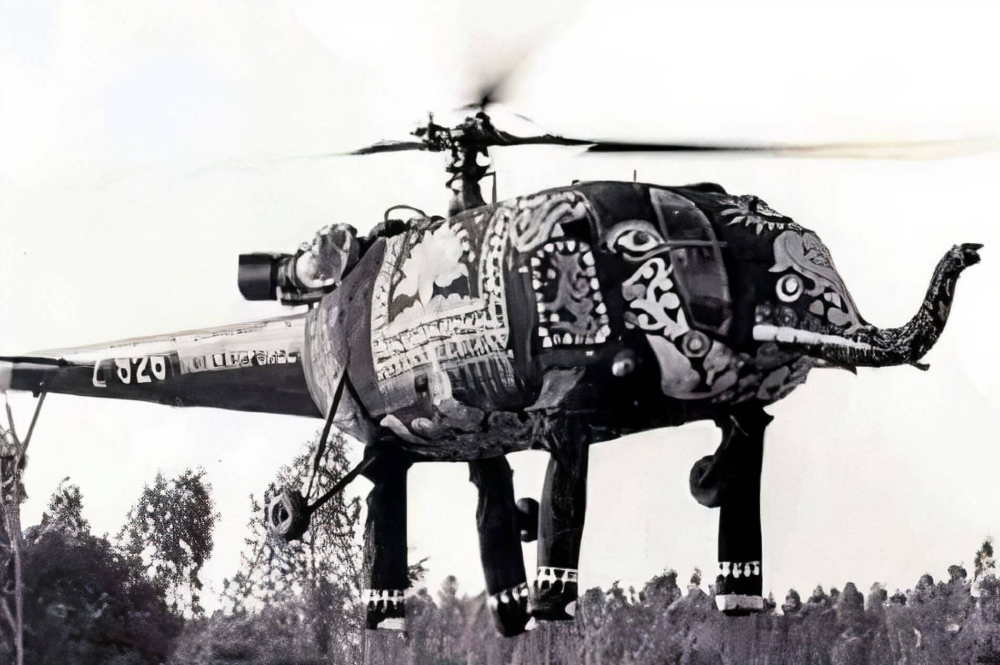
Flying Elephant: Chetak Helicopters Used by Indian Air Force for Ceremonial Flyovers in the 1970s

The exact date is difficult to pinpoint. Some claim that the legend of India’s ‘dancing elephant helicopters’ started in 1977 when the first one of its kind took to the air. Others say that it began earlier. Whatever the case, these colorful adaptations, designed to display military might, industrial strength and the country’s cultural diversity, have entered popular folklore.


But to find the origins of these so-called ‘flying elephants’, it is necessary to go back to 1969. In that year, India started building a licensed version of the popular French Aérospatiale Alouette III. It was manufactured by HAL and named Chetak – after a warhorse belonging to the 16th century King Maharana Pratap. The name meant devotion, bravery and resistance to occupation.

By modern standards, the Chetak is a light utility helicopter at best. But at the time it was an impressive machine. More than 300 of them were built – not including the original French Alouette IIIs purchased by India – mostly serving with the Indian Air Force (IAF), and it was only in the 2010s that the service began to consider replacing them. A participant in many local conflicts, the aircraft became something of an icon in India, akin to the Vietnam War-era Bell UH-1 in the US or the Mil Mi-8 in the post-Soviet countries.

However, it wasn’t until the annual Republic Day parade, held in New Delhi at some point in the 1970s, that the Chetak was lifted into stardom.

On January 26, soldiers marched along the Rajpath Boulevard, tanks rumbled by, and trucks carried performers showcasing all kinds of impressive stunts. There were few surprises until an unexpected guest appeared – a flying elephant.

It was one of the helicopters belonging to IAF Helicopter Unit No. 116. According to some accounts, the unit was still equipped with original French Alouette IIIs, which could, in theory, mean it was the late 1960s. The entire body of the aircraft was covered in richly decorated textiles, complete with four hollow ‘legs’, two massive ‘ears’, a pair of ‘tusks’, and a massive ‘trunk’.

The aircraft created a furore in the crowd, and rightfully so. One of the national animals of India, and a powerful symbol of its might, the elephant was a spectacular sight to behold, even though all the dressed-up helicopter could do was fly slowly in a straight line.

The ‘modification’ was done by one of IAF’s tailors by attaching pieces of fabric. Even the canopy was enclosed, leaving just narrow slits to see through, and the pilot would not dare to accelerate beyond 110 kilometers per hour (70 mph) for the fear of losing the decals and possibly damaging the machine.

Over the years, there have been further examples of Chetaks being dressed up as animals. While unusual helicopters don’t show up in other Republic Day parades in the late 1970s and the 1980s, there are several photos floating around the internet, likely from other events.

(via AeroTime)

September 4, 2023

During World War II, the Taj Mahal Covered With Bamboo as a Camouflage Against Aerial Bombing

In 1942, the British placed bamboo scaffolding over the dome of the Taj Mahal to protect it from German and Japanese bombers. The purpose of the scaffolding was to make Taj Mahal look like nothing but a bamboo stockpile from inside of a bomber plane flying miles above. Keep in mind that back then there was no high precision GPS, and satellite imagery.

While the images here only show the dome of Taj Mahal covered with a thick layering of bamboo scaffolds, it was said that the entire Taj Mahal was eventually covered in bamboo, but the government did not allow any photographers to take images of the final scaffold cover. The same thing was done when India was fighting a war against Pakistan in 1965 and 1971.


January 8, 2023

Fascinating Photos Capture Street Scenes of Mumbai in the Mid-1990s

Mumbai, also known as Bombay — the official name until 1995, is the capital city of the Indian state of Maharashtra and the de facto financial centre of India. It is the second-most populous city in India after Delhi and the eighth-most populous city in the world.


Mumbai is the centre of the Mumbai Metropolitan Region, the sixth most populous metropolitan area in the world. It lies on the Konkan coast on the west coast of India and has a deep natural harbor. In 2008, Mumbai was named an alpha world city.

Mumbai is the financial, commercial, and the entertainment capital of India. The city houses important financial institutions and the corporate headquarters of numerous Indian companies and multinational corporations. It is also home to some of India’s premier scientific and nuclear institutes. The city is also home to Bollywood and Marathi cinema industries. Mumbai’s business opportunities attract migrants from all over India.

A series of slides from MartinJSnelling mainly featured Mumbai’s homeless and street children. The photos were taken by James Sturgess while visiting his wife’s family.


October 28, 2022

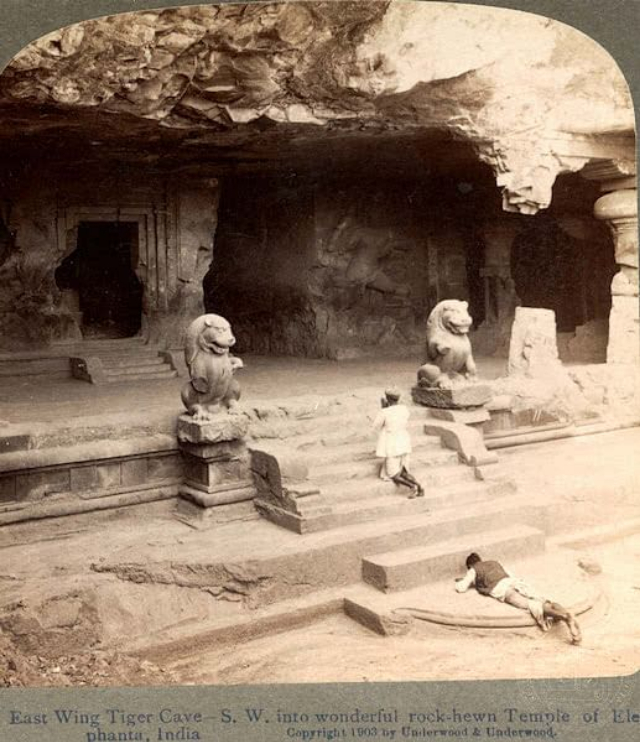
28 Amazing Vintage Photographs of India From the 1900s

India has always been a country of contrasts and of incredible beauty. These 28 photographs, taken between 1900-1908, are not only interesting because they bring to life a past that doesn’t exist any more, but also because the people and places in these photos prove that India has always been a country that is gloriously, exhilaratingly alive.


May 7, 2022

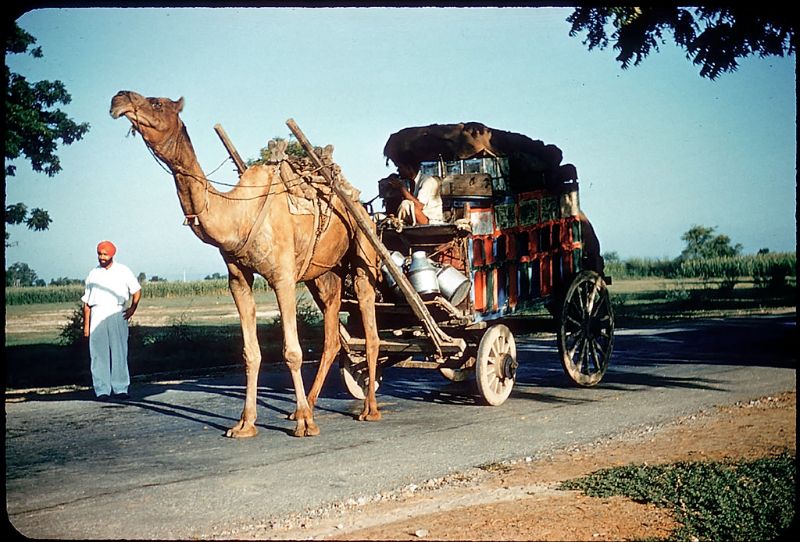
Everyday Life of India in the Mid-1950s Through Amazing Color Photos

India held its first national elections under the Constitution in 1952, where a turnout of over 60% was recorded. The National Congress Party won an overwhelming majority, and Jawaharlal Nehru began a second term as Prime Minister. President Prasad was also elected to a second term by the electoral college of the first Parliament of India.

The 1950s was the era when India took all the wrong turnings: Towards socialism, big dams and vast industrial plants, non-alignment, bureaucratic babuworship. But the truth is, as usual, more complex.

These amazing color photos from jcator that documented everyday life of India in 1955.


March 16, 2022

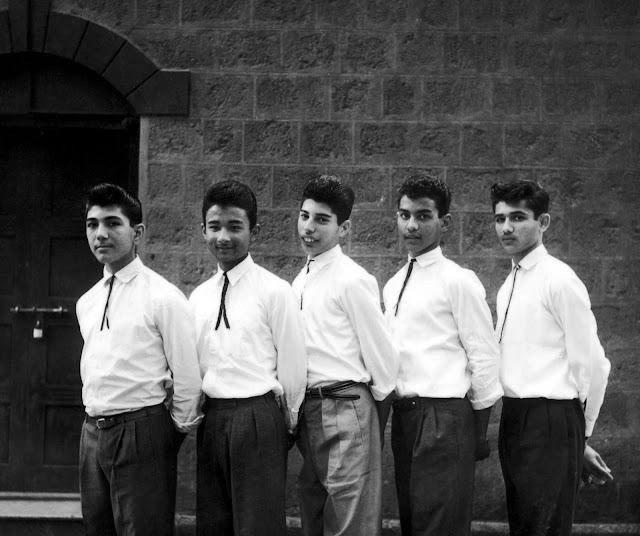
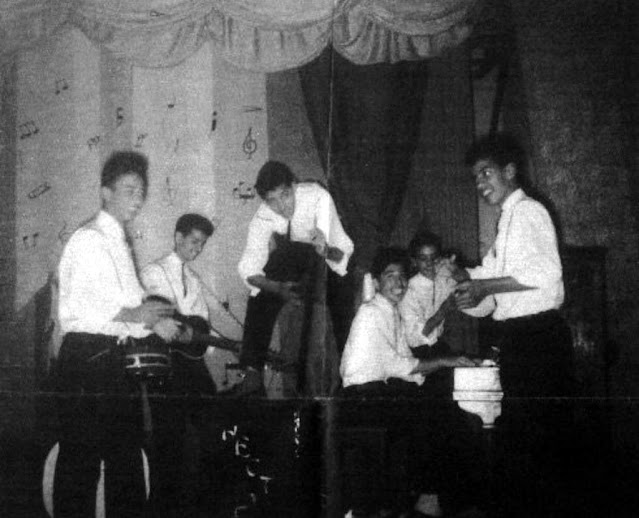
The Hectics, the First Band of Freddie Mercury

Before he was the legend. Before he filled arenas with cheering fans and anthemic hits. Before there was Queen, or even Freddie Mercury, there was Farrokh Bulsara, a quiet boy born to Parsi parents in the British protectorate of Zanzibar (now in Tanzania) and dispatched to boarding school in a hill station not far from Bombay.

In 1958, Freddie and four of his friends – Bruce Murray, Derrick Branche, Farang Irani, and Victory Rana – decided to form a band together. They called themselves The Hectics. The school-band was formed while all five were students at St. Peter’s School, Panchgani, an English boarding school in Panchgani, near Bombay (now Mumbai), India.


Inspired by Elvis Presley and Fats Domino, they performed at school events singing versions of well-known rock & roll names, but their music was not well seen in that conservative environment.

But the truth is that, although very introverted by then it was visible that the singer could transcend completely when interpreting and giving voice to the music. Incidentally, his shyness for days has been recalled by his biographer, Lesley-Ann Jones, who described him in an interview as a “very well-educated and respectable” man, but also “very shy”, despite the ease with which was on stage.

It remains to be said that in 1963, he was then 17 years old, when Farrokh left India, towards England, The Hectics ended. The other four members of the group lost touch with their timid vocalist, and only a few years later – according to one of them, Victory Rana – they would recall the discreet Bulsara to the extravagant Mercury upon hearing his unique voice.


In 2016, Rock star’s Panchgani school bandmates recalled ‘Bucky’ in an interview:

Freddie Mercury is considered to have been one of the most flamboyant showmen in rock ‘n’ roll history. Were there any early signs of that in his performances with The Hectics?

Victory Rana: Freddie was very shy, but once he started playing his piano, he became a completely different person. But I don’t remember him as being any kind of showman – not at that age, anyway.

Subash Shah: Yes, Freddie was very shy. But he was also “a born show-off”, and his entire personality would transform once he was performing. To give you one example: one evening, as teenagers, we were walking on a beach in Zanzibar. Music was playing and Freddie spontaneously started to do the twist, the popular dance move of the time. It was such a mesmerizing performance that the next thing we knew was that a group of conservative local girls, wearing burqas, had formed a circle around Freddie and began to twist with him. That was the power of his showmanship, even back then.

Did he display any signs of future greatness back then? Any indications of the shape of things to come?

Victory Rana: To be quite frank, no. Yes, Freddie had a lot of talent, and he was very passionate about his piano playing. But who could say, based on that, that he’d grow up to be the megastar that he became?

Farang Irani: His parents were good solid middle-class Parsis with middle-class values. His father was an accountant in Zanzibar, and he wanted Freddie to become an accountant or a lawyer.


FOLLOW US:
FacebookTumblrPinterestInstagram

CONTACT US


Browse by Decades

Popular Posts

Advertisement

09 10