Bring back some good or bad memories


ADVERTISEMENT
Showing posts with label Bulgaria. Show all posts

June 20, 2023

Utroba Cave, Located in the Rhodope Mountains of Bulgaria, Was Carved by Hand Over 3000 Years Ago

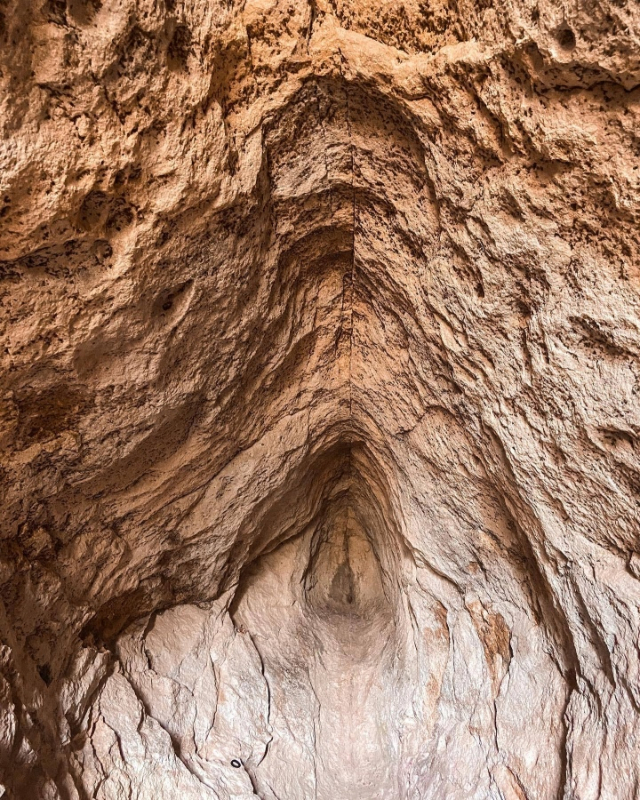
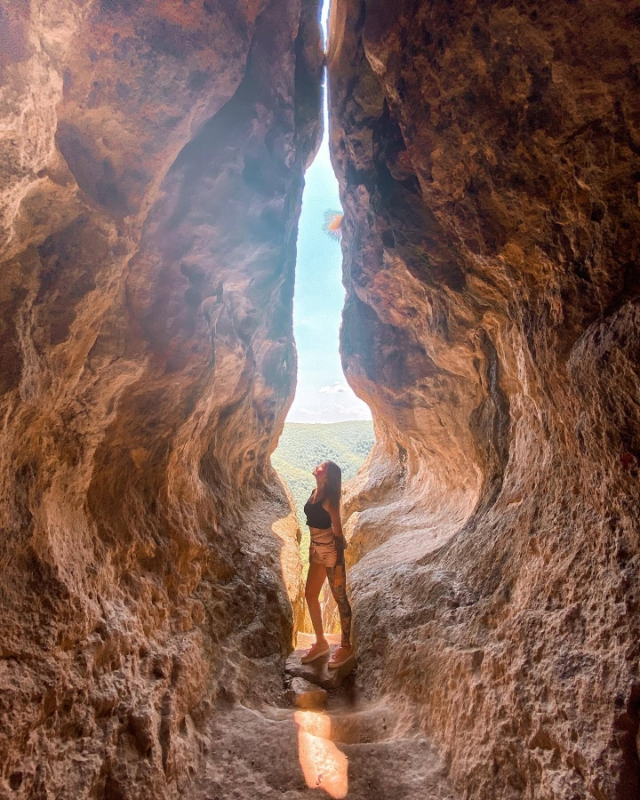
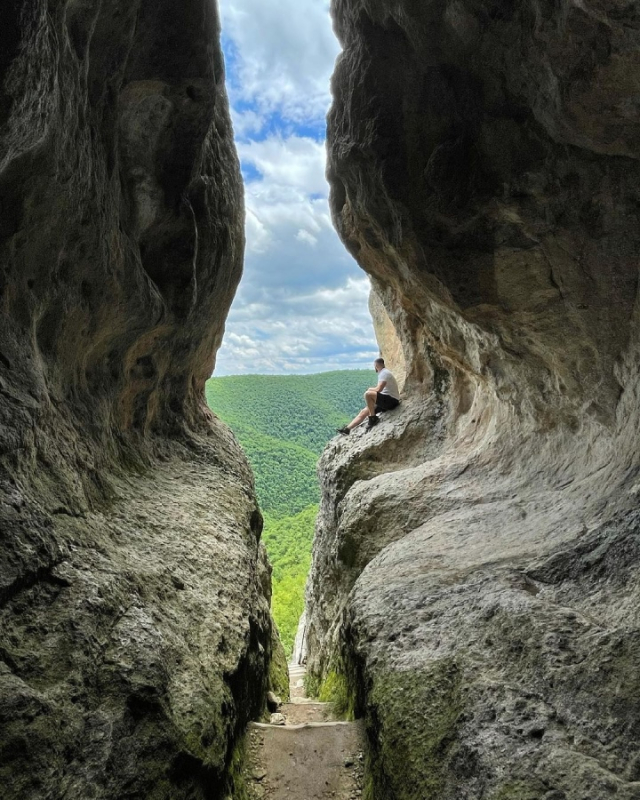
Carved by hand more than 3000 years ago, it was rediscovered in 2001. The Utroba Cave, also known as Womb Cave, is a prehistoric cave sanctuary in Kardzhali Province, Bulgaria.


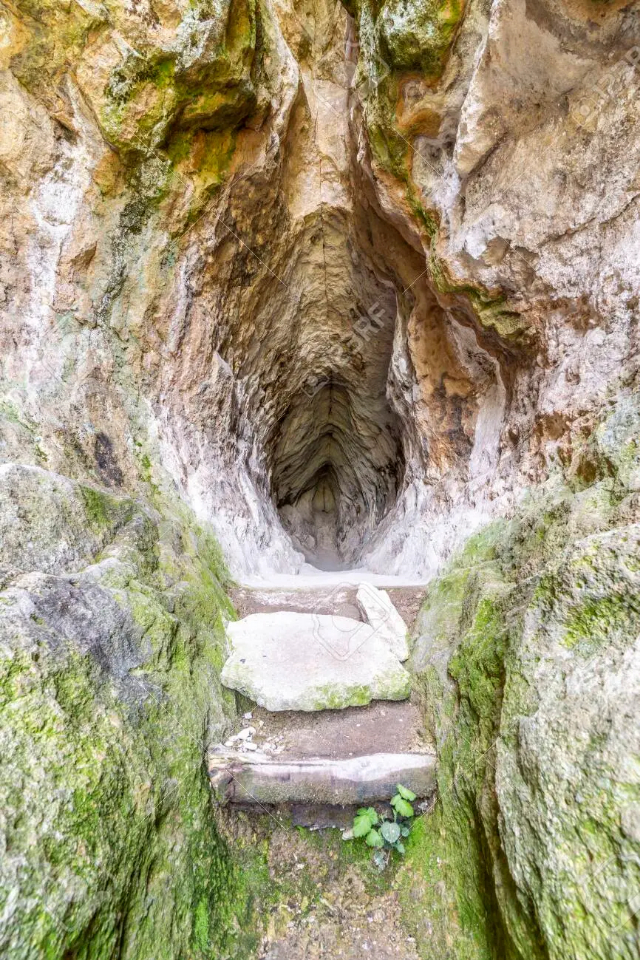
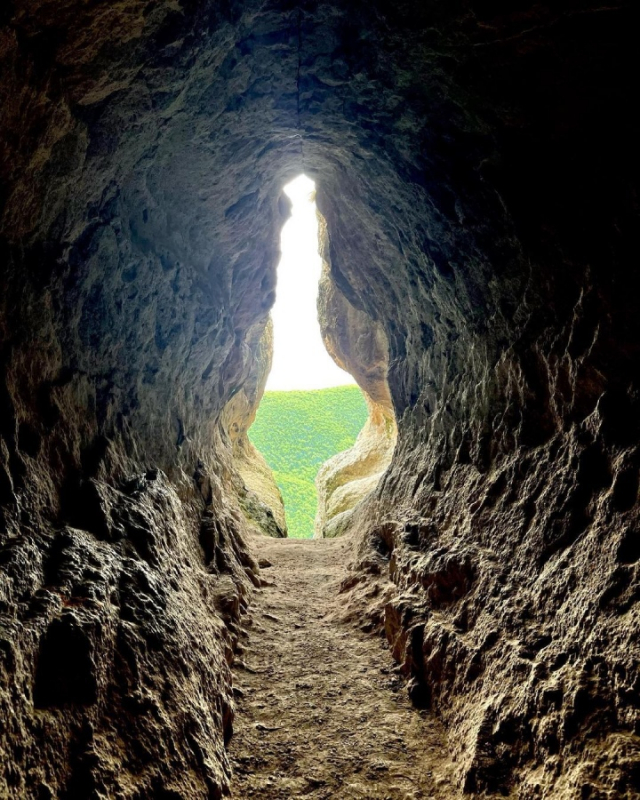
The cave is located 20 kilometers from the city of Kardzhali near the village of Ilinitsa and it dates to 480 BC. It is also referred to as “The Cave Womb” or “Womb Cave” because the entrance is the shape of a vulva. The inside of the cave resembles a uterus. Researchers believe that the entrance to the cave was a slit, which was then widened by humans. The entrance to the cave is 3 meters (9.8 ft) tall and 2.50 m (8.2 ft) wide and inside the cave there is a 1.3 m (4.3 ft)-tall altar which has been carved.

Archaeologists believe that the cave and altar were used by the Thracians. There are several Thracian sanctuaries found in Bulgaria. They believe that it was used as a fertility shrine for the Thracians. The “cult” places of the Thracians are usually located at the top of mountains and they have running water. There is also constantly flowing water at the Utroba Cave, which flows from the cave to the foothills.

There is an opening in the ceiling which allows the light into the cave. The light creates a phallus shape every day at noon, but it only reaches the altar on one day of the year. In the middle of the day at certain time of year the light which is in the shape of a phallus penetrates deep into the cave all the way to the altar. In February or March the light takes the shape of a phallus and enters a hole at the altar: the light then flickers for 1-2 minutes. The penetrating and flickering light is thought to symbolize fertilization.

Even today, there are childless couples who go to the cave hoping it will help them conceive a child.


May 14, 2022

Beautiful Photos Capture Everyday Life of Polyanovo, Bulgaria in the 1970s

Polyanovo is a village in Aytos Municipality, in Burgas Province, in southeastern Bulgaria. The village has 393 inhabitants. Most inhabitants are ethnic Turks (95%).

These beautiful photos were taken by Ali Eminov that documented everyday life and portraits of people in Polyanovo, Bulgaria who are mostly his friends and relatives during the 1970s.

Planting tobacco, Polyanovo, Bulgaria, 1971

Work in the village, Polyanovo, Bulgaria, 1971

Cemal and Metin, Polyanovo, Bulgaria, 1971

Durdugül and Sandy, Polyanovo, Bulgaria, 1971

Mom with Mümine's family, Polyanovo, Bulgaria, 1971

September 23, 2020

Street Scenes of Sofia in the 1960s Through Amazing Photos

Sofia is the capital and largest city of Bulgaria. The city is situated in the eponymous valley at the foot of the Vitosha mountain in the western part of the country. It is built west of the Iskar river, and has many mineral springs, such as the Sofia Central Mineral Baths.


Being in the centre of the Balkans, Sofia is midway between the Black Sea and the Adriatic Sea, and closest to the Aegean Sea. It has a humid continental climate.

The city is the 13th largest city in the European Union. It is surrounded by mountains, such as Vitosha by the southern side, Lyulin by the western side, and the Balkan Mountains by the north, which makes it the third highest European capital after Andorra la Vella and Madrid.

Being Bulgaria’s primate city, Sofia is home of many of the major local universities, cultural institutions and commercial companies. The city has been described as the “triangle of religious tolerance”. This is due to the fact that three temples of the three world major religions—Christianity, Islam and Judaism—are situated within one square: Sveta Nedelya Church, Banya Bashi Mosque and Sofia Synagogue. This triangle was recently expanded to a "square" and includes the Catholic Cathedral of St Joseph, Sofia.

Here below is a set of amazing vintage photos from Flickr members that shows street scenes of Sofia in the 1960s.


August 13, 2020

An 2000-Year-Old Thracian Chariot With Horse Skeletons Found in the Village of Karanovo, Bulgaria

A 4-wheel chariot with horses in a tomb of a Thracian Aristocrat from the 1st Century A.D. The chariot has four big wheels with a diameter of 4 feet (1.2 meters), embellished richly with silver coated small figures of Eros and riding mythical creatures with bodies of panthers. The skeletons of 2 horses and a dog were discovered next to the chariot.


In November 2008, a team of archaeologists led by Veselin Ignatov, of the Istoricheski muzej Nova Zagora, a museum in Bulgaria, discovered the 2,000-year-old wooden chariot. It was covered in bronze and would have been decorated with scenes from Thracian mythology that are now difficult to see. Its exact age is uncertain and may be closer to 1,800 years old.

This is one of the very few cases where archaeologists can trace the entire pattern of ritual practices accompanying burials of prominent Thracian people who believed in a better after-life. The deceased were to be laid with all the objects they needed during their lifetime. The richer and nobler the dead person, the more exuberant the burial gifts.

The bronze-plated wooden chariot is decorated with scenes from Thracian mythology - the god Eros, a jumping panther and a mythological animal with the body of a panther and the tail of a dolphin. It has wheels 4 feet in diameter. Four wheeled chariots are an extremely rare find, and this one is particularly notable because of the large diameter of its wheels.


The presence of wood in an archaeological site is usually connected with its usage in different activities: construction, instruments of production, etc. Well preserved wooden parts of chariots were found for the first time in the territory of Bulgaria.

Table pottery, glass vessels, well-preserved wooden and leather objects, some of which may have been horse harnesses, and other gifts were also discovered at the funerary mound. All artifacts were used for the funeral of a wealthy Thracian aristocrat.

August 1, 2020

Vintage Photo of a Little Girl Riding a Taxidermy Bear, 1983

So the little girl is riding a three eyed bear, but what the heck is that animal next to it?


The photograph was taken by a street photographer at a resort in Sozopol, Bulgaria in 1983. This was a popular tourist “attraction” back then.

Sozopol is an ancient seaside town located 35 km south of Burgas on the southern Bulgarian Black Sea Coast. Today it is one of the major seaside resorts in the country, known for the Apollonia art and film festival (which takes place in early September) that is named after one of the town’s ancient names.

(Image courtesy of @missbiliana)

March 16, 2017

Everyday Life of Bulgarians in the 1970s Through an American Professor's Lens

Ali Eminov is a Nebraska-based emeritus professor of Anthropology who was born in Bulgaria, escaped into Greece in 1960, and came to United States in December, 1960.

Ali took these beautiful snapshots to document everyday life and portraits of people in Polyanovo, Bulgaria who are mostly his friends and relatives during the 1970s. The images of people at a housewarming, working in the village, planting tobacco, roasting lamb...


July 1, 2012

46 Vintage Photographs Capture Everyday Life of Gypsies of Western Europe From Between the 1930s and 1960s

Paul Almásy (Budapest, 1906 – Paris, 2003) compiled photos of all people and all classes, including the various ethnic and social marginal groups.

Below you can see dramatic photos of the Gypsies in Europe, Netherlands, from the 1930s to the 1960s, which we are accustomed to only from Romania, Bulgaria or Yugoslavia.

So, did they live in so archaic conditions in Western Europe even only two generations ago? Nothing just misery, poverty and much more...


FOLLOW US:
Facebook • Tumblr • Pinterest • Instagram

CONTACT US


Browse by Decades

Popular Posts

Advertisement

09 10