Bring back some good or bad memories


ADVERTISEMENT
Showing posts with label Barcelona. Show all posts

March 17, 2025

Barcelona in the 1990s Through Captivating Black and White Photos

Barcelona in the 1990s was a city undergoing significant transformation, both culturally and architecturally. The 1992 Summer Olympics acted as a catalyst for modernization, rejuvenating the city’s infrastructure and coastline. Iconic projects like the construction of the Olympic Village and the revitalization of the waterfront reshaped Barcelona’s image on the global stage.

Culturally, the city was a vibrant hub, blending traditional Catalan identity with an openness to global influences. The arts scene flourished, and the city became a melting pot of creativity, with emerging music, design, and fashion movements.

The 1990s marked a period of optimism and growth, as Barcelona transformed into one of Europe’s most dynamic and influential cities, setting the stage for the 21st century. These captivating photos were taken by PointOmega, showcasing everyday life in Barcelona during the 1990s.

Fountain in Plaça de Sant Agustí Vell, Barcelona, early 1990s

Seat 127, Barcelona, 1990

La Villa Olímpica, Barcelona, 1991

Plaça de Catalunya, Barcelona, 1991

Bar Kentucky, Barcelona, 1992

November 20, 2022

35 Lush Kodachrome Slides of Spain in the 1950s

Below is a mixture of gorgeous 35mm Kodachrome slides taken by tourists in Spain in the 1950s.

From Madrid, Toledo, Mallorca to Barcelona, Valencia, Cádiz, take a trip around Spain in the fifties through these 35 lush images. For more fascinating vintage pictures, visit gbfernie5's Flickr site.

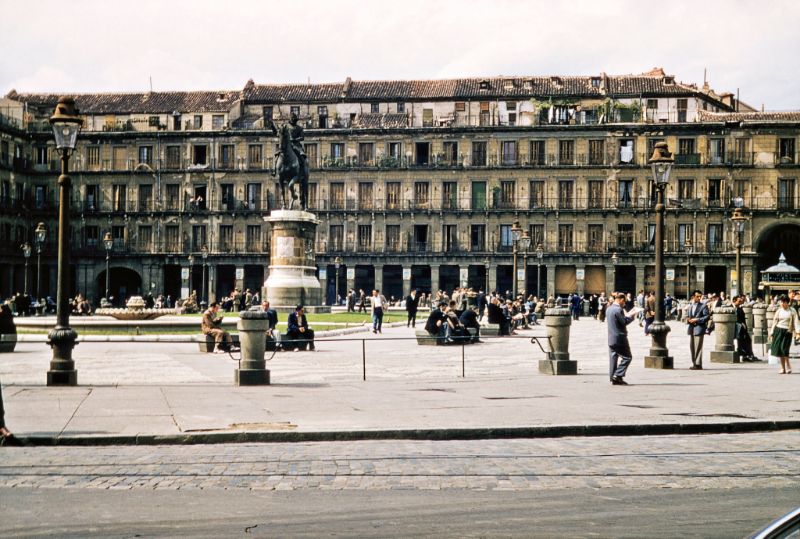
Plaza Mayor, Madrid.

Bridge of Sighs (Pont dels Sospirs), Carrer Bisbe, Gothic Quarter, Barcelona.

At the Southern end of Carrer de Jaume II, Palma, Mallorca.

La Manuel Alpargatera Shop, Poble Espanyol, Barcelona.

Plaça de l'Ajuntament, Valencia.

October 30, 2022

30 Black and White Photos Capture Street Scenes of Barcelona in 1990

Barcelona is a city on the coast of northeastern Spain. It is the capital and largest city of the autonomous community of Catalonia, as well as the second most populous municipality of Spain. Barcelona is the fifth most populous urban area in the European Union after Paris, the Ruhr area, Madrid, and Milan. It is one of the largest metropolises on the Mediterranean Sea, located on the coast between the mouths of the rivers Llobregat and Besòs, and bounded to the west by the Serra de Collserola mountain range, the tallest peak of which is 512 metres (1,680 feet) high.

Barcelona in 1990

Barcelona is a major cultural, economic, and financial centre in southwestern Europe, as well as the main biotech hub in Spain. As a leading world city, Barcelona’s influence in global socio-economic affairs qualifies it for global city status (Beta +).

Barcelona is a transport hub, with the Port of Barcelona being one of Europe’s principal seaports and busiest European passenger port, an international airport, Barcelona–El Prat Airport, which handles over 50 million passengers per year, an extensive motorway network, and a high-speed rail line with a link to France and the rest of Europe.

These fascinating black and white photos were taken by Fraser Pettigrew that show street scenes of Barcelona in 1990.

At the Zurich Bar, Plaça de Catalunya, Barcelona, May 1990

At the Zurich Bar, Plaça de Catalunya, Barcelona, May 1990

At the Zurich Bar, Plaça de Catalunya, Barcelona, May 1990

At the Zurich Bar, Plaça de Catalunya, Barcelona, May 1990

Bar Los Amigos, Besòs, Barcelona, May 1990

April 13, 2022

37 Rare and Amazing Photographs of Barcelona, Spain From the 1870s

Barcelona is a city on the coast of northeastern Spain. It is the capital and largest city of the autonomous community of Catalonia, as well as the second most populous municipality of Spain.

From the 15th to 18th centuries Barcelona entered a period of decline, while it struggled to maintain its economic and political independence. This struggle ended in 1714, when the city fell to the Bourbon troops and Catalonia’s and Catalans' rights and privileges were suppressed.

A period of cultural recovery began in the mid-19th century with the arrival of the development of the textile industry. During this period, which was known as the Renaixença, Catalan regained prominence as a literary language.

At the end of the 19th and beginning of the 20th century, Barcelona became one of the cities where the modernist movement developed with more strength and personality. Painters, designers and architects left an indelible mark on the city that has forever marked the idiosyncrasy of Barcelona.


March 9, 2022

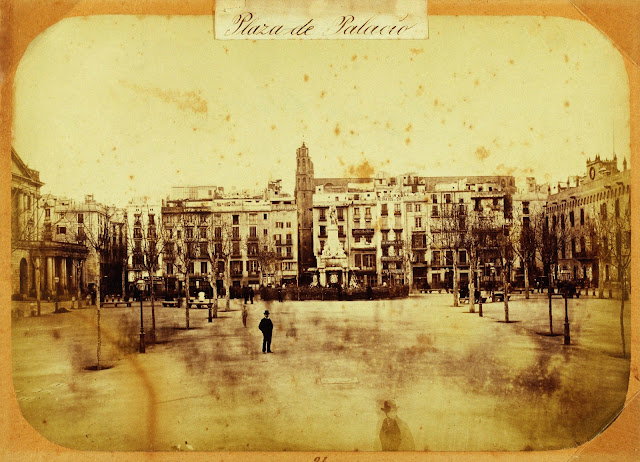
The First Photograph Ever Taken in Barcelona, 1839

It was not only the first photograph ever taken in Barcelona, but in the whole of the Iberian peninsula. It was taken on November 10, 1839 from a terrace of Pla de Palau, in an act open to the public. The photograph was then raffled to raise funds, and this is when it became lost. 175 years later, it is unknown whether it still exists and who may have it.


The story dates back to the beginning of 1839 when the artist Louis Daguerre presented the first official photographic process in history at the Academy of Sciences in Paris. It was named the daguerreotype and through various chemical and light processes, it was possible to capture an image. The invention seemed like something out of science fiction at that time, and left everyone present absolutely astounded.

A Catalan academic (his name is unknown) from the Royal Academy of Science and Arts of Barcelona, attended this presentation, and once he saw the camera, he did everything possible to acquire one.

Negotiations to purchase this ‘magic’ apparatus and take it to Barcelona went quickly, and before the end of the year, on November 10, 1839, the public were asked to participate in that historic moment at Pla de Palau. This location was chosen as it was the most modern setting of Barcelona of the time.

Through an advertisement, he called for public participation of the event that would start at 11 am and last 60 or 70 minutes depending on the atmospheric conditions and the power of the sun and they would be accompanied by a military band. He would also explain the daguerreotype technique to all those present. The image was finally captured from the terrace of the building of Carrer General Castaños 2-A (a square is named after the event). Afterwards, as it had been announced, the photo was raffled in its corresponding frame.

175 years later, the name of the lucky winner and what he or she did with the image, is still a mystery. Nevertheless, the advertisement did hint at what would be taken: “the first view to be taken will include the Llotja building and the attractive block of casa Xifré”.


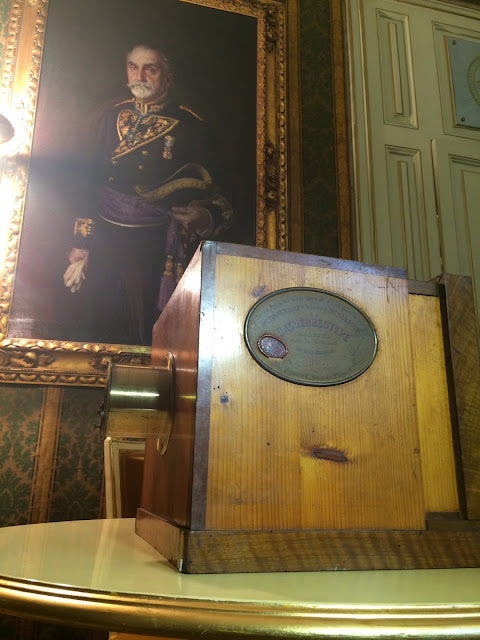
The first camera has however been preserved. It was kept for many years at the Fabra Observatory, and it is now one of the treasures of the Royal Academy of Science and Arts.

June 14, 2020

Amazing Black and White Photos Capture Street Scenes of Barcelona in the Mid-Late 1970s

Born 1949 in Badalona, Barcelona, Spanish photographer Manel Armengol studied journalism in Barcelona. Since 1971, he has been making photojournalism independently so he is among the photographers who made photographic reports of the social movements against Francoism in his last years of government and that were distributed abroad through the CIS agency since in Spain there was censorship.


Armengol's work as a photojournalist continued to carry out different reports around the world until, at the beginning of the eighties, he had to abandon active photojournalism due to an accident. own reports of author photography, also dedicating to give lectures at universities.

His works have been exhibited in Spanish cities such as Madrid, Barcelona, Valencia, and also in cities of Venezuela or Japan. His publications include: El jardí dels guerrers (1987), Voices of water, Memories of Winds (2001), Herbarium (2007), and Terrae (2009).

These amazing black and white photos are part of his work that Manel Armengol captured street scenes of Barcelona from 1976 to 1979.


April 1, 2018

Stunning Photographs of 1950s Barcelona Discovered by an American Tourist at Flea Market

Tom Sponheim, from Seattle, visited Els Encants market during his trip to Barcelona in the summer of 2001. Whilst browsing the stalls, he stumbled across a box of brown envelopes containing a series of negatives. Due to a keen interest in old photography, Sponheim purchased the envelopes for the equivalent of $3.50. Upon his return to America and a closer examination of the negatives, he realised he had come across something very special.

The collection of images captured Barcelona residents on the streets during the 1950s, providing an intriguing insight into daily life during the Franco era. Given the political climate, the photographs were notably provocative. “They depict the real life of real people, sometimes revealing aspects of poverty and despair that were really quite subversive during a dictatorship,” said Sponheim.

Over the years, he grew more curious about who the photographer was and how the images had ended up in the flea market. When he heard about Vivian Maier—a nanny from Chicago who left behind over 100,000 secret photographs, hidden in storage—he decided to take action. In an attempt to find out more about the enigmatic images, Sponheim set up a Facebook page ‘Las Fotos Perdidas de Barcelona’ (The Lost Photos of Barcelona) in 2010. Before long, the page gained thousands of followers and hundreds of comments from people offering information about where the photos were taken, and even some clues towards the identity of the subjects. “It’s amazing what social media can achieve!” he exclaimed.

Despite the page’s popularity however the identity of the photographer remained unknown until Barcelona-based photographer Begoña Fernández stumbled upon the page in 2017. Awed by the beauty of the pictures, she set upon a fervent quest to get to the bottom of the mystery.

After days and nights of squinting at background details, Fernández identified an elementary school where many of the photos were taken. From there, she uncovered a posting about a 1962 photo contest, with suggested shooting locations that matched some of the lost images. Further digging led her to visit the archives of the Agrupació Fotográfica de Catalunya, one of the area’s oldest photography associations.

Flipping through the dusty pages of an old magazine, she had a flash of recognition — a photo from Tom Sponheim’s Facebook page. Captioned Fervor, the image of a woman deep in prayer won fourth place in a 1961 contest. The photographer: Milagros Caturla.

According to Mashable, Caturla was the seventh of ten children and had trained as a teacher but worked as an administrator. She was a passionate photographer, keeping a darkroom in her apartment and winning a number of local contests and awards before her death in 2008.


March 4, 2017

29 Fantastic Color Photos Captured Tramways of Barcelona in the 1960s

Historically, the city of Barcelona, in the Spanish autonomous community of Catalonia, had a large tramway network. The city's first tram line opened in 1872, but almost all of these historic lines had closed by 1971, being replaced by buses and by the expanding Barcelona Metro.

These fantastic photos documented the operation of tramways in Barcelona in 1963 and 1964.


September 30, 2015

30 Amazing Photographs Portrayal Everyday Life in the Red-light District of Barcelona From Between the 1950s and ’60s

The most acclaimed chronicler of Catalan culture, Joan Colom (born 1921) is one of the most important Spanish photographers of the second half of the twentieth century. Here’s a collection of 30 amazing black and white photographs, including his best known images of the 1950s and ’60s, taken somewhat clandestinely in the red-light district of Barcelona’s famous Barrio Chino.


September 19, 2015

25 Interesting Black and White Photographs Capture Everyday Life in Barcelona From Between the 1960s and 1970s

Colita, born Isabel Steva in Barcelona in 1940, is one of the most renowned names in contemporary Catalan photography. While she learned the trade of photography studying under Oriol Maspons, Julio Ubiña and Xavier Miserachs, she soon branched out into her own individualistic style.

From 1963 to 1975 she focused on creating a series of portraits of Flamenco dancers and singers. Since she is linked with the Catalan cultural movements of the era, she is considered the official photographer of Barcelona’s Gauche Divine, a movement of writers, photographers, models, architects, film directors, and many other professionals who began to stand out in that area in their respective fields. Her photographs display an inspiring frankness and humor.

Barcelona, 1964

Barcelona, 1965

Barcelona, 1969

Barcelona, 1978

Maria del Mar Bonet, 1976

May 17, 2014

Marina Ginesta, a 17-Year-Old Communist Militant, Overlooking Barcelona From Hotel Colón During the Spanish Civil War


Marina Ginesta, a 17-year-old communist militant, overlooking Barcelona from Hotel Colón. The rifle she is carrying is M1916 Spanish Mauser. It was manufactured at famous Oviedo factory in Spain for the Spanish Army. She worked as a translator for a Soviet journalist of Pravda during the Spanish Civil War. She was a member of Juventudes Socialistas Unificadas (Socialist Youth), the youth organization mainly directed by Partido Comunista de España (PCE, Communist Party of Spain). Despite her initial involvement she quickly grew disillusioned with the path that the Stalinists were taking. Marina remained a militant throughout the rest of the war and was drawn to other groups at that time such as the anti-Stalinist P.O.U.M (which George Orwell was a member of) and the Anarchist C.N.T. This photographs was taken by Juan Guzman (who was born Hans Gutmann in Germany before going to Spain where he photographed the International Brigades). Date of the photo: July 21, 1936.

Marina did not know about the photo until 2006, although the iconic image was printed and circulated everywhere, serving as cover for the book “Thirteen Red Roses’ by Carlos Fonseca, and was also along with dozens of other photographs in the book “Unpublished images of the Civil War” (2002) with introduction by G. Stanley Payne.

She was identified by Garcia Bilbao who read the memoirs of Soviet correspondent of Pravda Mikhail Koltsov, with whom the young girl appears in another photo. Garcia Bilbao found that Jinesta Marina, with J, which was identified by Guzman in the caption was actually Marina Ginesta, an exile who lived in Paris translating French texts.

Marina Ginesta, the iconic girl of the Spanish Civil War, died January 6, 2014 in Paris, aged 94. (via Historic Photographs)

December 16, 2012


FOLLOW US:
FacebookTumblrPinterestInstagram

CONTACT US


Browse by Decades

Popular Posts

Advertisement

09 10