Bring back some good or bad memories


ADVERTISEMENT

September 30, 2022

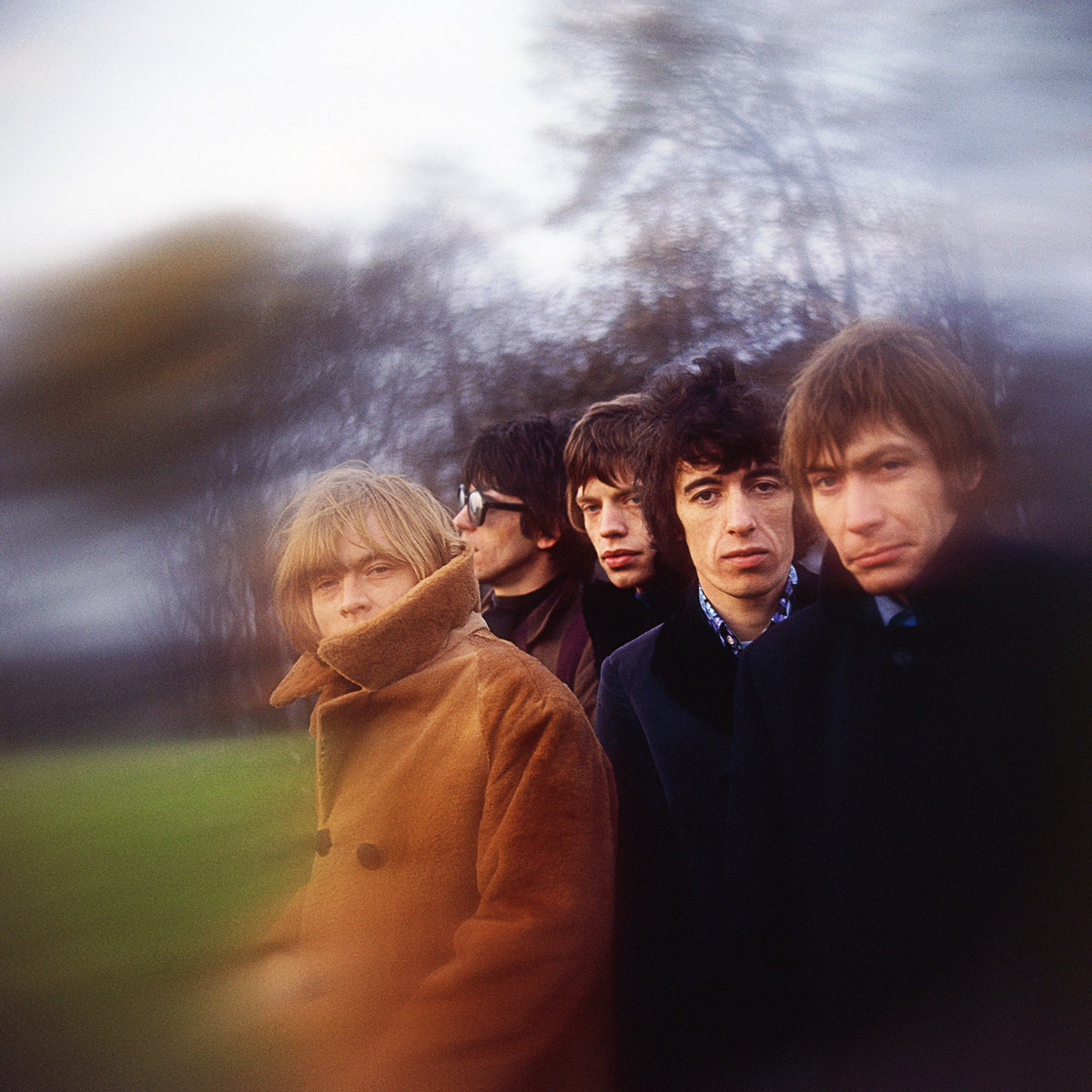
The Rolling Stones During the ‘Between the Buttons’ Cover Session at Primrose Hill in London, 1966

Between the Buttons was the fifth British and seventh American studio album of the Rolling Stones. It was the first Stones album ever to use identical cover art for both album versions. Released in the UK on January 20, 1967 and in the US on February 11, 1967 it is also the first Rolling Stones album cover to have a splash of natural color. It’s a cover that people remember, the Stones in overcoats on a cold day. It’s a little trippy.

The photo shoot for the album cover took place in November 1966 on Primrose Hill in North London. The photographer was Gered Mankowitz, who also shot the band photos for the cover of Out of Our Heads. The shoot took place at 5:30 in the morning following an all night recording session at Olympic Studios. Using a home-made camera filter constructed of black card, glass and Vaseline, Mankowitz created the effect of the Stones dissolving into their surroundings. The goal of the shoot was, in Mankowitz’s words, “to capture the ethereal, druggy feel of the time; that feeling at the end of the night when dawn was breaking and they'd been up all night making music, stoned.”

Mankowitz said, “I think I contributed a lot when I did the cover of the album Between the Buttons. My contribution in the earlier sessions was based more on an honesty, a desire to communicate something about the Stones as people and not try and mask their personalities with any sort of technical or theatrical embellishments. I think that that’s why (their manager) Andrew (Loog Oldham) liked the pictures and why the band were happy to work with me for such a long period of time, because I photographed them as they were. And then when it came to Between the Buttons, I felt confident enough as a photographer and in my relationship with them to actually make a contribution... I don’t think I did a conceptual cover until, you know, late in ’66 when I did Between the Buttons.”

This was an era when album covers were becoming a true artform. Gazing at the images could enhance the listening experience. The synestesia of listening to a new album while cover gazing and turning on was “a thing” for many a Stones fan. Mankowitz said, “I recognized the importance of the record cover as it was as the fan’s primary link with the band. I always treated it as an artform while working within the limitations. And there were limitations; record companies printed the images on the same cardboard used for toilet rolls. Yet in many ways I think myself and other photographers working at that time set down a blueprint for the album cover, one which is still in use by music photographers today.”

The back cover of Between the Buttons is dominated by a six-panel cartoon accompanied by a rhythmic poem drawn by drummer Charlie Watts. When Watts asked Oldham what the title of the album would be, he told him it was “between the buttons,” a term meaning “undecided.” Watts gave the phrase to the title of his cartoon which in turn became the title of the album. On the album cover itself, the band name and album title appear on the buttons on Watts’ overcoat. Often difficult to see, this text was included blown-up on a hype-sticker affixed to original US pressings and would also be added to the bottom corners of the artwork for several CD and LP reissues.

Keith Richards said, “Between the Buttons was the first record we made when we hadn’t been on the road and weren’t shit-hot from playing gigs every night. Plus, everyone was stoned out of their brains... Between the Buttons was the first time we took a breath and distanced ourselves a little from the madness of touring and all. So, in a way, to us it felt like a bit of a new beginning. But not everybody was in great shape. Brian was starting to be wonky at the time.” In 1969 Mick Jagger added, “Between the Buttons is my least favorite Stones album. I didn’t like none of it. I can't even remember doing it.”


Everyday Life of Osaka in the 1970s Through Amazing Black and White Photos

Osaka is a designated city in the Kansai region of Honshu in Japan. It is the capital of and most populous city in Osaka Prefecture, and the third most populous city in Japan, following Tokyo and Yokohama. It is also the largest component of the Keihanshin Metropolitan Area, which is the second-largest metropolitan area in Japan and the 10th largest urban area in the world.

Osaka is a major financial center of Japan, and it is recognized as one of the most multicultural and cosmopolitan cities in Japan. The city is home to the Osaka Exchange as well as the headquarters of multinational electronics corporations such as Panasonic and Sharp. Osaka is an international center of research and development and is represented by several major universities, notably Osaka University, Osaka Metropolitan University, and Kansai University.

Famous landmarks in the city include Osaka Castle, Osaka Aquarium Kaiyukan, Dōtonbori, Tsūtenkaku in Shinsekai, Tennōji Park, Abeno Harukas, Sumiyoshi Taisha Grand Shrine, and Shitennō-ji, one of the oldest Buddhist temples in Japan.

These amazing black and white photos were taken by Soyokaze Ojisan that documented everyday life of Osaka in the 1970s.


Audience After a Neil Young Concert, Philadelphia, 1973

A view from the stage at The Spectrum in Philadelphia after a Neil Young show in 1973. Neil Young chose a cropped and faded version for the Time Fades Away album cover.


The cover art for the album Time Fades Away by Neil Young.

(Photos by © Joel Bernstein)

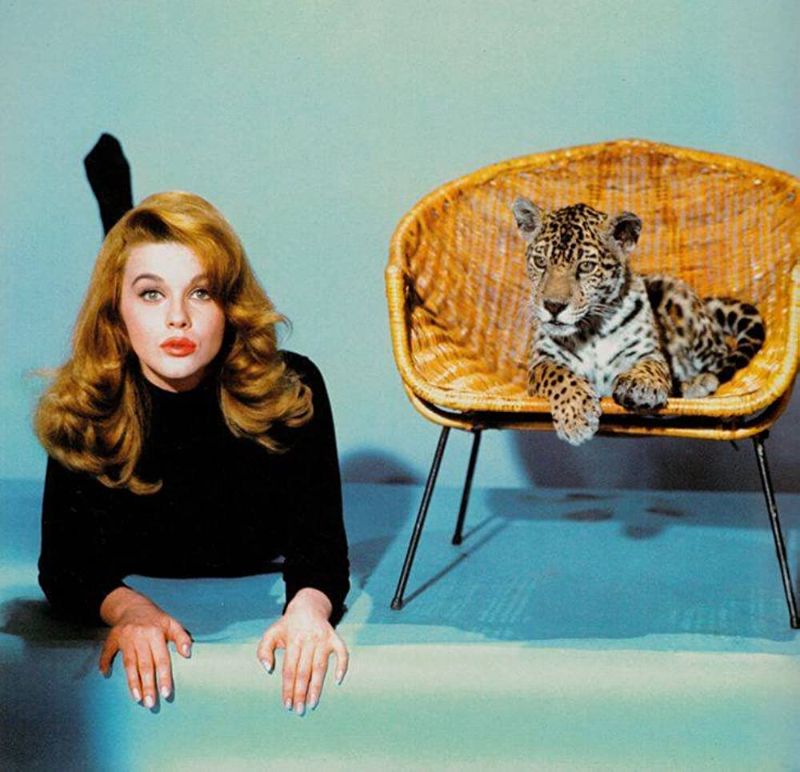
Photos of Ann-Margret During the Filming of “Kitten with a Whip” (1964)

Kitten with a Whip is a 1964 American crime drama film directed by Douglas Heyes, who co-wrote the screenplay with Whit Masterson, a pseudonym for writers Robert Allison “Bob” Wade and H. Bill Miller, who also wrote the novel on which the film is based under the name Wade Miller. The film stars John Forsythe, Ann-Margret, Peter Brown, Patricia Barry and Richard Anderson.


The film was made to publicize Ann-Margret as a serious actress. Her previous films, Viva Las Vegas and Bye Bye Birdie, were of the musical genre and did little to highlight her dramatic skills. Her management signed her to several different films at this time, each with a top Hollywood studio, and she was not consulted on the projects they had chosen for her. In interviews, Ann-Margret made the best of the situation, claiming she was hoping to distance herself from her “new Marilyn Monroe” image.

Decades later, the film would be selected for riffing in a 1994 episode of Mystery Science Theater 3000. Kevin Killian’s 2008 book of poetry Action Kylie features “Kitten with a Whipe”, a poem inspired by the film and featuring its two main characters.

These vintage photos captured portraits of Ann-Margret during the filming of Kitten with a Whip in 1964.


September 29, 2022

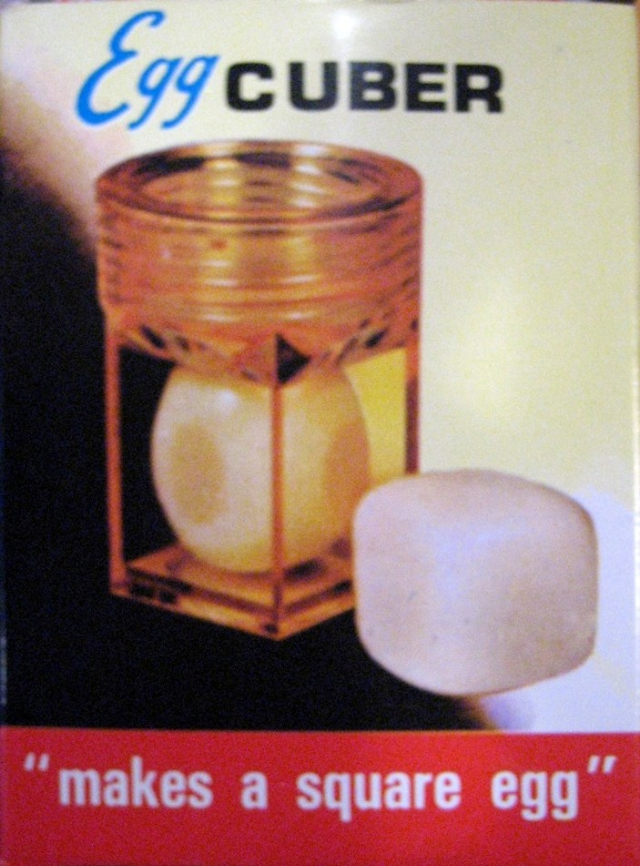
1970s Egg Cuber to Make Square Eggs

This egg cuber was made in 1977. There’s no doubt it is one of the most pointless items ever invented – unless you’re paranoid about them rolling off your plate, who the heck needs to square their hard boiled eggs? And would you serve these with squared bagels? It is good for some laughs, though – especially that poor chicken letting some expletives fly on the packaging!


(Images via Andrew Huff)

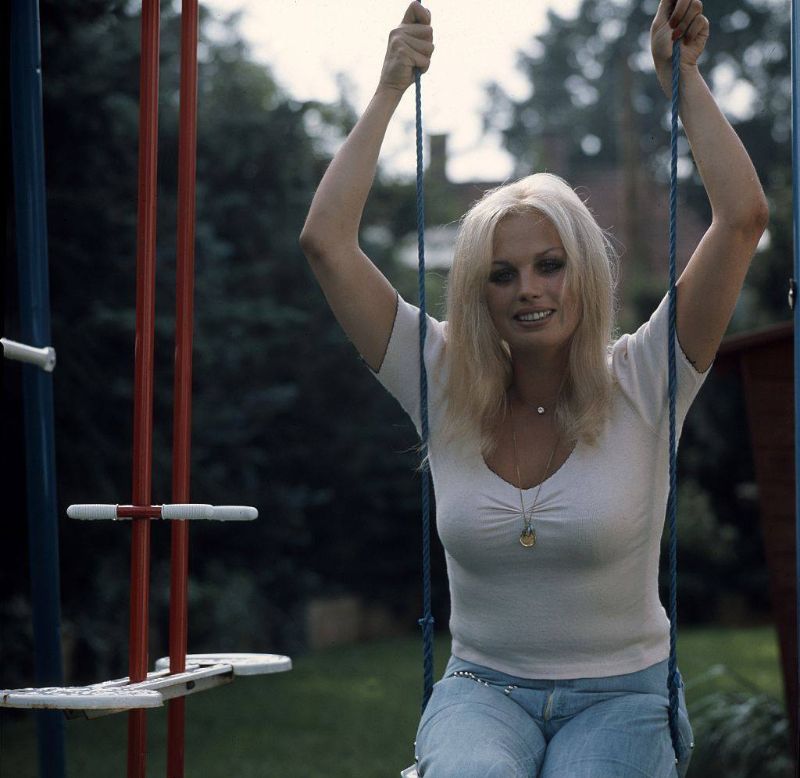
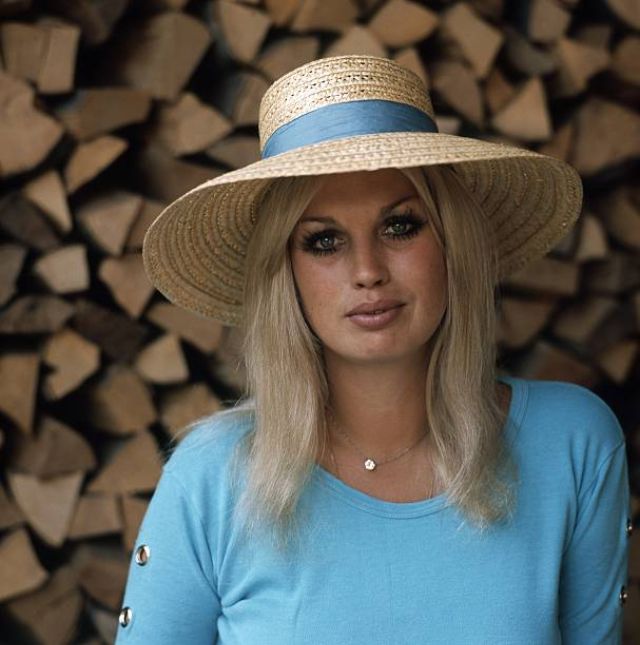
“The German Jayne Mansfield”: 30 Fabulous Photos of Barbara Valentin in the 1960s

Born 1940 as Ursula Ledersteger in Vienna, Austrian actress Barbara Valentin was best known for playing prominent roles throughout the 1970s in films directed by West German filmmaker Rainer Werner Fassbinder.


Nicknamed “the German Jayne Mansfield” for being part of many erotic thrillers early in her career, Valentin went on to establish herself as a character actress by collaborating with Fassbinder. She also played important roles in television series, such as Berlin Alexanderplatz, Der ganz normale Wahnsinn, and SOKO 5113.

During the 1980s, Valentin lived with British singer and record producer Freddie Mercury at an apartment in Munich, Germany. She supported organizations that fought against AIDS and remained friend with Mercury at the time of his death from AIDS.

Valentin passed away in 2002 at the age of 61 after suffering a stroke. Take a look at these fabulous photos to see portraits of young Barbara Valentin in the 1960s.


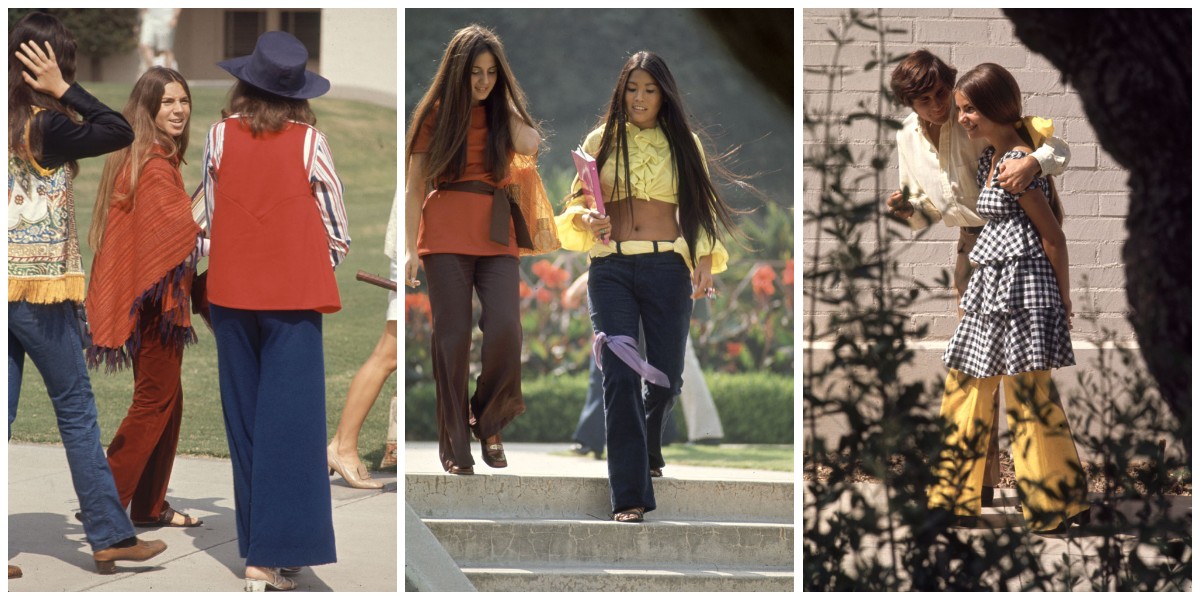
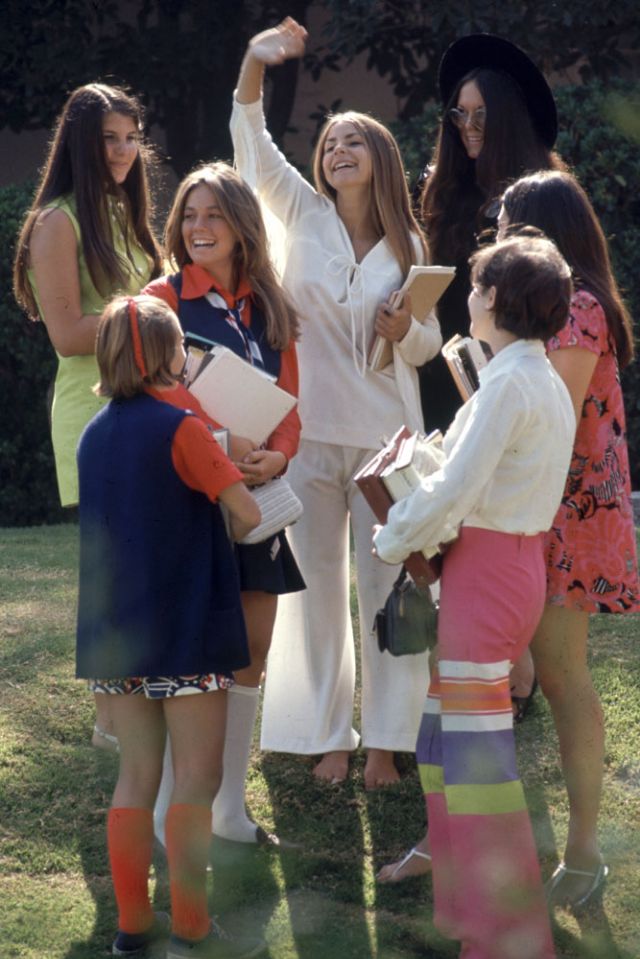
Feelin’ Groovy: Fascinating Vintage Color Pictures of High School Fashion Across America in 1969

“The latest rule in girls’ high school fashion,” LIFE magazine proclaimed in 1969, “is that there isn’t any.”

In contrast to the popular fashions and styles of certain decades the Gibson Girl of the 1890s and early 1900s, the flapper of the Roaring Twenties, the “New Look” of the Fifties there was no single reigning style in the 1960s. Even as the slim-cut trousers and shift dresses of the late Fifties crept in, Mod miniskirts and go-go boots found their way over from London to mingle with the bell-bottomed jeans and fringed vests of the latter part of the decade. By 1969, the fashion choices of tens of millions of young American men and women were as variegated and ever-evolving as the world around them.


A “freaky new freedom,” LIFE called it. Was it ever!

Cultural transformation was an irresistible force during the Sixties, and across America and around the globe civil rights, women’s and gay liberation, the sexual revolution and, of course, the explosive soundtrack of R&B, soul and rock and roll informed everything from politics to fashion.

Students at Woodside High in California, 1969.

By 1969, America’s youth had not only soaked in more visual and auditory stimuli in a few years than most previous generations combined, but had re-imagined virtually all of that input in the form of sartorial self-expression. Take a look back through these fascinating pictures taken by LIFE photographer Arthur Schatz:

Student Rosemary Shoong at Beverly Hills High School, wearing a dress she made herself, 1969.

Beverly Hills High classmates showed off their fashions, 1969.

High school teacher Sandy Brockman wore a bold print dress, 1969.

Nasenformer “Zello” (Zello Noseformer!), an Old-Timey German Nose-Error-Correcting Contraption From the 1930s

This delightful vintage German contraption will cure your nose erros (Potato Nose, Saddle Nose, Duckbill Nose, Wide Nose, Pointy Nose, Long Nose, Hook Nose and Slant Nose) and give you a “Greco-Roman Normal Form” in short order. All for 7-10 marks!


Text: SUCH NOSE ERRORS and similar will be quite significantly improved with the orthopedic nose former “Zello”. The new and improved Model 20 exceeds all others. Double-layered padding clings exactly to the anatomical structure of the nose so that the affected nasal cartilage is normal-shaped in a short time. (Bone deformities are not.) Most warmly recommended by Royal Court Advisor Dr. G. von Eck, M.D. and other medical authorities. 100,000 “Zello” in use. Price 5 Marks, 7 Marks, and 10 Marks and a 10% surcharge for a doctor’s visit. (A model or impression is desired.) Specialist L. M. Baginski, Berlin W. 126, WInterfeldstr.
According to The Atlantic, Zello was just one of several quirky inventions from German entrepreneur and marketing specialist Leo Maximilian Baginski. Baginski quit his first job following a mercantile apprenticeship to market and sell an all-purpose bottle cap he designed. Successful, Baginski went on to acquire a pharmaceutical company before leaving the day-to-day operations of his company to his sisters while he fought in World War I. With the war over, Baginski returned to what he knew best, inventing and marketing. He put out a massage device and the Spalt tablet for menstrual pain before accusations of employing forced laborers landed Baginski in the Buchenwald concentration camp.

Beautiful Photos of the Mercedes-Benz SSK

The Mercedes-Benz SSK (W06) is a roadster built by German automobile manufacturer Mercedes-Benz between 1928 and 1932. The name is an abbreviation of Super Sport Kurz, German for “Super Sport Short”, as it was a short wheelbase development of the Mercedes-Benz Modell S. The SSK’s extreme performance and numerous competitive successes made it one of the most highly regarded sports cars of its era.

Fitted with a supercharged single overhead camshaft 7-litre straight-6 engine producing 200–300 metric horsepower (150–220 kW) and over 500 lb⋅ft (680 N⋅m) of torque (depending on the state of tune), the SSK had a top speed of up to 120 miles per hour (190 km/h), making it the fastest car of its day. The supercharger on the SSK’s engine was operated by a clutch that was engaged by fully depressing the throttle pedal and then giving the pedal an extra push. Backing off the throttle pedal disengaged the supercharger clutch.

The SSK was driven to victory in numerous races, including in 1929 the 500 Miles of Argentina, the 1929 and 1930 Cordoba Grands Prix, the 1931 Argentine Grand Prix. Here below is a set of beautiful photos of the Mercedes-Benz SSK.


Freddie Mercury Playing Tennis in Ibiza in the Summer of 1987

Did Freddie play table tennis in later years?

“As most people know Freddie played table tennis very well in his school days. I don’t know how long that carried on for, but I do remember that a table was set up just outside the back door, in the corridor, of the Musicland studio in Munich, and that Freddie played on it a few times. He tended to play tennis more in the later years, playing quite often in the rented house in Bel Air, and also on courts when he was on holiday in Ibiza.” – Peter Freestone


September 28, 2022

Amazing Photographs of Brigitte Bardot Taken by Bill Ray During the Making of ‘Shalako’ in Almería, 1968

Brigitte Bardot went on to Hollywood but did not fare any better... Shalako, a British-produced Western directed by Edward Dmytryk, teamed her with Sean Connery and Stephen Boyd in a smoldering relationship charged with tension and passion. The idea is cute and unbelievable: A party of European aristocrats are on a hunting safari in New Mexico in the 1880s. They are traveling with full equipage including butlers, maids, fine linens and vintage wines.


The film was shot in Almería, Spain. Whilst scouting locations when planning to film in the United States, Euan Lloyd had noticed that many Native Americans were overweight. He did not think they looked menacing enough. Simmons recruited a “war party” of lean and mean Romani people (gypsies), whom he trained to ride and act like war-bent Apaches.

Simmons talked Connery into shaving off the droopy mustache which he had grown for the historic period. The investors perhaps remembered Gregory Peck’s mustache in The Gunfighter, which was believed to have discouraged some of the public from attending. They feared the same might happen with Shalako.

Almería province was a favored location for filming spaghetti Westerns. But, when Shalako was in production, Harry Saltzman’s Second World War film, Play Dirty, set in North Africa, was being filmed on the same locations. One film crew had to wipe out the tyre tracks in the sand before filming the Old West, whilst the other had to pick up the horse droppings before shooting the Second World War battles. Once the gypsy Apaches, mounted on horseback, rode by mistake headlong into an attack on a Long Range Desert Group.

Lloyd gathered a strong international cast, including Connery’s former co-star Honor Blackman from Goldfinger, as well as Jack Hawkins, Stephen Boyd, Woody Strode, Peter van Eyck, Alexander Knox, Eric Sykes, and Don Barry. At this stage in his career Hawkins had lost his once-booming voice to throat cancer, his voice was dubbed by others.

Connery and Bardot got on well during filming and both enjoyed the experience of making the film.


FOLLOW US:
FacebookTumblrPinterestInstagram

CONTACT US


Browse by Decades

Popular Posts

Advertisement

09 10