Bring back some good or bad memories


ADVERTISEMENT
Showing posts with label Hanoi. Show all posts

April 26, 2026

Hanoi Residents Waiting for All-clear Siren in Sidewalk Manhole Shelters During Air-Rawid Alert, 1967

This image captures a stark reality of daily life in Hanoi, North Vietnam, in 1967 during the Vietnam War. The photo shows residents sheltering in narrow, chest-deep individual air-raid bunkers (often called “turtle-shell” shelters) dug directly into the sidewalks. These bunkers were a critical part of the city’s civil defense strategy during the U.S. bombing campaign known as Operation Rolling Thunder. The photograph was taken by Lee Lockwood, an American photojournalist for Life magazine. He was the first American reporter permitted to document daily life in North Vietnam since 1954.

(Photo by Lee Lockwood/Getty Images)

These pits were prefabricated concrete cylinders just large enough for one person. Every 20 meters, they were staggered on both sides of major streets so that anyone caught in the open during an alert could find safety within seconds. Each bunker had a lid, made of concrete, thick bamboo, or straw, which users would pull over themselves once inside to protect against shrapnel and debris.

By 1967, air-raid sirens were a frequent occurrence, often sounding multiple times a day. Residents would wait in these cramped spaces until the “all-clear” signal was given.

Hanoi’s sidewalk bunkers became an enduring symbol of the city’s civilian resilience and adaptation to the constant threat of aerial warfare. Most of these shelters were filled in and removed shortly after the Paris Peace Accords were signed in 1973.

October 10, 2025

Lieutenant Commander John McCain Being Captured and Brought Out From the Truc Bach Lake in Hanoi, 1967

This famous historical photograph shows North Vietnamese citizens rescuing U.S. Navy pilot John McCain from Trúc Bạch Lake in Hanoi, Vietnam, on October 26, 1967, during the Vietnam War.


McCain, then a 31-year-old Navy lieutenant commander, was flying his A-4 Skyhawk on a bombing mission over Hanoi when his plane was shot down by a surface-to-air missile. He ejected but broke both arms and a leg during the ejection and parachute landing, falling into Trúc Bạch Lake.

Local Vietnamese rushed into the water to pull him out. After being rescued, McCain was captured and taken as a prisoner of war (POW) to the infamous Hỏa Lò Prison, known as the “Hanoi Hilton,” where he remained for over five years.

This image has since become one of the most recognizable photos from the Vietnam War, symbolizing both the human and political complexities of that conflict.

April 12, 2024

Hanoi in the Mid-1990s Through Nick DeWolf’s Lens

In the 1990s, Hanoi still retained much of its traditional charm with narrow streets, bustling markets, and colonial-era architecture. However, there were also signs of modernization with the emergence of new buildings, businesses, and transportation infrastructure.

The cityscape was a mix of old and new, reflecting Vietnam’s transition towards a more market-oriented economy. It was a dynamic time of transformation and growth for the capital city.

These fascinating were taken by American photographer Nick DeWolf that show street scenes of Hanoi in 1995.


November 2, 2021

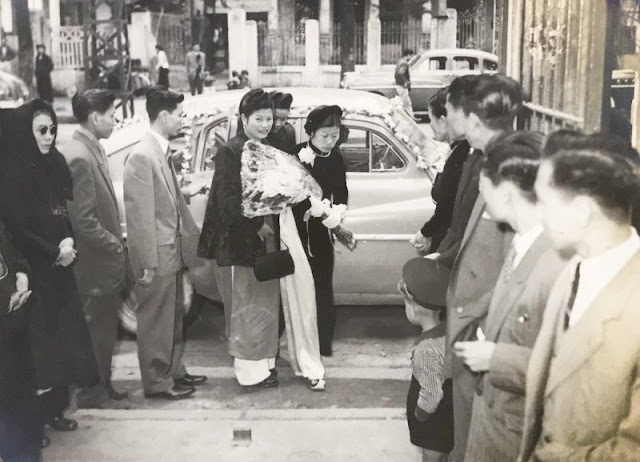
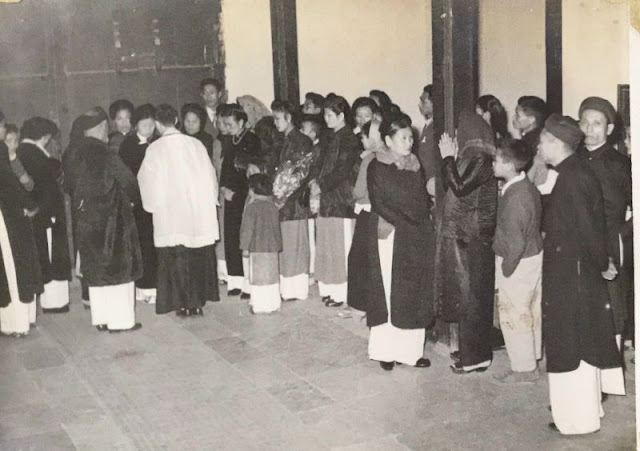
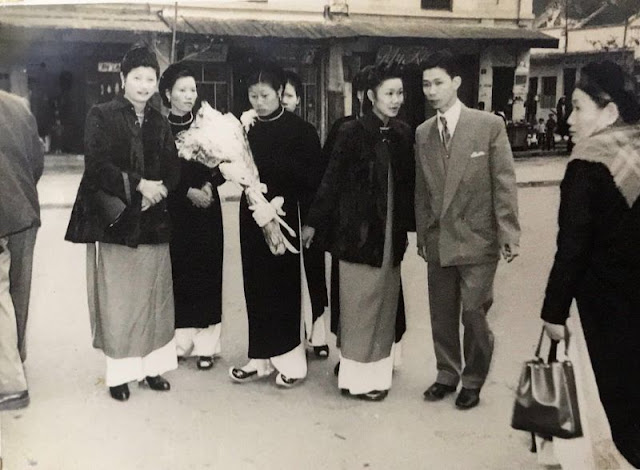
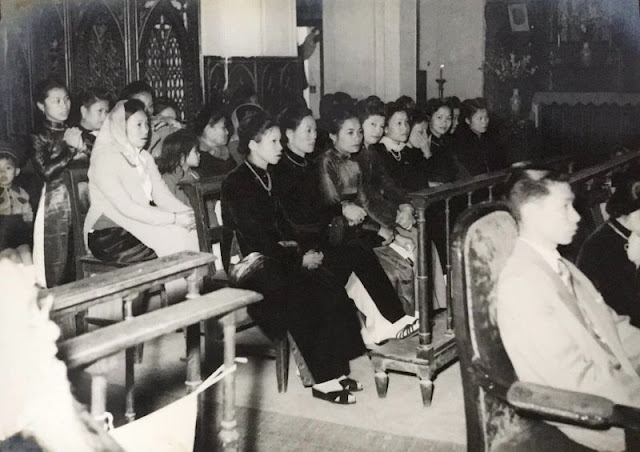
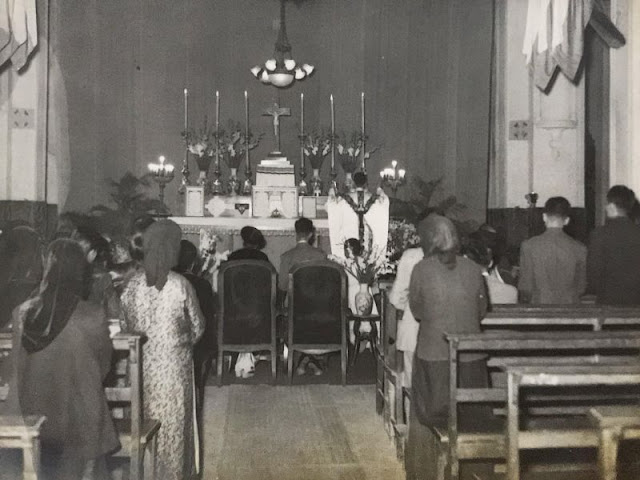
Rare Photos of a Hanoi Wedding in the 1940s

Hanoi is the capital city of Vietnam in the north of Vietnam. It covers an area of 3,358.6 km2 (1,296.8 sq mi). The second largest city in Vietnam, it consists of 12 urban districts, 1 district-leveled town and 17 rural districts. Located within the Red River Delta, Hanoi is the cultural and political centre of Vietnam.

The city was occupied by the Imperial Japanese in 1940 and liberated in 1945, when it briefly became the seat of the Việt Minh government after Ho Chi Minh proclaimed the independence of Vietnam. However, the French returned and reoccupied the city in 1946.

After nine years of fighting between the French and Viet Minh forces, Hanoi became the capital of an independent North Vietnam in 1954. The French Army withdrew that year and the People's Army of Vietnam and International Control Commission occupied the city under the terms of the 1954 Geneva Conference.

These rare vintage photos show what a wedding looked like in Hanoi in the 1940s.


February 2, 2019

Rare Photographs That Show How Vietnamese People Celebrated Lunar New Year in Hanoi in the 1920s

Nearly one hundred years ago, Tet Holiday or Vietnamese Lunar New Year evoked the same excitement and expectations it does today; except, things were very different.

Vietnamese people celebrate the Lunar New Year annually, which is based on a lunisolar calendar (calculating both the motions of Earth around the Sun and of the Moon around Earth). Tet is generally celebrated on the same day as Chinese New Year, except when the one-hour time difference between Vietnam and China results in new moon occurring on different days. It takes place from the first day of the first month of the Vietnamese calendar (around late January or early February) until at least the third day.

Many Vietnamese prepare for Tet by cooking special holiday food and cleaning the house. Many customs are practiced during Tet, such as visiting a person's house on the first day of the new year (xông nhà), ancestor worship, wishing New Year’s greetings, giving lucky money to children and elderly people, and opening a shop.

Tet is also an occasion for pilgrims and family reunions. They start forgetting about the troubles of the past year and hope for a better upcoming year. They consider Tet to be the first day of spring, and the festival is often called Hội xuân (spring festival).

Here’s an early 20th century Tet celebration in black and white.

People gather at the Dong Xuan Market in Hanoi the day before the Lunar New Year. It was the only “supermarket” around then.

On a Hanoi street, Tet paintings are on sale in 1929. Then, too, Chinese characters, parallel sentences, pictures of flowers, carps, dragons and other, more modern subjects were sold as wall hangings to invite luck into a house for the Lunar New Year.

A Hanoi family poses for a picture as part of Tet celebrations.

Young kids help out and watch as an ong do, a Vietnamese calligrapher, writes Chinese or Han characters on red paper to be used as a house decoration for Tet.

A woman sells dong (Phrynium) leaves to wrap banh chung, a traditional Vietnamese glutinous rice cake that is a Tet specialty, at Hanoi’s Dong Xuan Market in 1929.

August 3, 2018

The First Color Photographs of Hanoi, ca. 1910s

The Sword Lake, the Temple of Literature with primitive dirt roads or the girls in brassiere are very lively in the works by French photographer Leon Busy, who was assigned by the Albert Kahn Museum in France to go to Vietnam to capture the lives of the people in northern Vietnam (Tonkin) from 1914 to 1917.

Through the photographs, the audience can see the normal life or the social classes at that time. The photos also express the belief and religion of Hanoi.

Many photographers left valuable photos of Hanoi in the past, but these photos are special because they are the first color photographs of ancient Hanoi.

Hang Thiec Street.

The Hoan Kiem (Sword) Lake.

The Temple of Literature.

Viceroy of Ton Kin Hoang Cao Khai's tomb, which is now ruins.

A rural market in Hanoi’s suburbs.

May 11, 2018

Historical Photos of John Mccain as a Prisoner of War in Vietnam

John McCain's capture and subsequent imprisonment occurred on October 26, 1967. He was flying his 23rd bombing mission over North Vietnam when his A-4E Skyhawk was shot down by a missile over Hanoi. McCain fractured both arms and a leg when he ejected from the aircraft, and nearly drowned after he parachuted into Trúc Bạch Lake. Some North Vietnamese pulled him ashore, then others crushed his shoulder with a rifle butt and bayoneted him. McCain was then transported to Hanoi's main Hỏa Lò Prison, nicknamed the "Hanoi Hilton".


Although McCain was seriously wounded and injured, his captors refused to treat him. They beat and interrogated him to get information, and he was given medical care only when the North Vietnamese discovered that his father was a high-ranking admiral. His status as a prisoner of war (POW) made the front pages of major newspapers.

McCain spent six weeks in the hospital, where he received marginal care. He had lost 50 pounds (23 kg), was in a chest cast, and his gray hair had turned as white as snow. McCain was sent to a different camp on the outskirts of Hanoi. In December 1967, McCain was placed in a cell with two other Americans who did not expect him to live more than a week. In March 1968, McCain was placed into solitary confinement, where he would remain for two years.

In mid-1968, his father John S. McCain Jr. was named commander of all U.S. forces in the Vietnam theater, and the North Vietnamese offered McCain early release because they wanted to appear merciful for propaganda purposes, and also to show other POWs that elite prisoners were willing to be treated preferentially. McCain refused repatriation unless every man taken in before him was also released. Such early release was prohibited by the POWs' interpretation of the military Code of Conduct which states in Article III: “I will accept neither parole nor special favors from the enemy”. To prevent the enemy from using prisoners for propaganda, officers were to agree to be released in the order in which they were captured.

Beginning in August 1968, McCain was subjected to a program of severe torture. He was bound and beaten every two hours; this punishment occurred at the same time that he was suffering from dysentery. Further injuries brought McCain to “the point of suicide,” but his preparations were interrupted by guards. Eventually, McCain made an anti-U.S. propaganda "confession". He has always felt that his statement was dishonorable, but as he later wrote, “I had learned what we all learned over there: every man has his breaking point. I had reached mine.” Many U.S. POWs were tortured and maltreated in order to extract "confessions" and propaganda statements; virtually all of them eventually yielded something to their captors. McCain received two to three beatings weekly because of his continued refusal to sign additional statements.

McCain refused to meet various anti-war groups seeking peace in Hanoi, wanting to give neither them nor the North Vietnamese a propaganda victory. From late 1969, treatment of McCain and many of the other POWs became more tolerable, while McCain continued actively to resist the camp authorities. McCain and other prisoners cheered the U.S. "Christmas Bombing" campaign of December 1972, viewing it as a forceful measure to push North Vietnam to terms.

McCain was a prisoner of war in North Vietnam for five and a half years until his release on March 14, 1973. His wartime injuries left him permanently incapable of raising his arms above his head.

John McCain (front right) with his squadron and T-2 Buckeye trainer, in 1965.

John McCain being pulled out of Trúc Bạch Lake in Hanoi and about to become a prisoner of war, on October 26, 1967.

John McCain is administered to in a Hanoi, Vietnam hospital as a prisoner of war in the fall of 1967.

In this undated photo, John McCain is seen lying injured in North Vietnam wearing an arm cast.

John McCain lies in a hospital bed in Hanoi, North Vietnam, after being taken prisoner of war.

April 19, 2017

Vintage Photographs of Jane Fonda's Trip to North Vietnam in 1972, Which Earned Her the Nickname "Hanoi Jane"

Almost 45 years after she climbed into the seat of a North Vietnamese anti-aircraft gun vehicle and smiled for photographers, Jane Fonda, still finds herself targeted by U.S. military veterans.

The actress and activist already was one of Hollywood's most outspoken opponents of the Vietnam War when, at 34, she made a two-week trip to Hanoi in July 1972. By then, more than 60,000 U.S. soldiers had lost their lives in the conflict; Vietnamese casualties were close to 1 million.

In 2011, Fonda wrote on her website that the photo op — which earned her the nickname "Hanoi Jane" and incensed millions of Americans — came about after Vietnamese soldiers serenaded her with a Communist folk song. "I heard these words: 'All men are created equal; they are given certain rights; among these are life, liberty and happiness,' " she recalled. Then someone led her to a weapon that had shot down countless American aircraft, and flashbulbs went off. "It is possible it was a setup. I will never know."

Fonda told 60 Minutes in 2005 that the trip, where she met with peasants, artists and intellectuals, was worthwhile — but the photo was a mistake. "The image of Jane Fonda, Barbarella, Henry Fonda's daughter, sitting on an enemy aircraft gun was a betrayal," she said, "the largest lapse of judgment I can imagine."


December 16, 2012

Rare Color Photographs Capture Everyday Life in Hanoi, Vietnam in 1915

Hanoi is the capital of Vietnam and the country's second largest city. From 1010 until 1802, it was the most important political centre of Vietnam. It was eclipsed by Huế, the imperial capital of Vietnam during the Nguyen dynasty (1802-1945), but Hanoi served as the capital of French Indochina from 1902 to 1954. From 1954 to 1976, it was the capital of North Vietnam, and it became the capital of a reunified Vietnam in 1976, after the North's victory in the Vietnam war.

These rare color photographs below documented everyday life in Hanoi in 1915.


FOLLOW US:
Facebook • Tumblr • Pinterest • Instagram

CONTACT US


Browse by Decades

Popular Posts

Advertisement

09 10