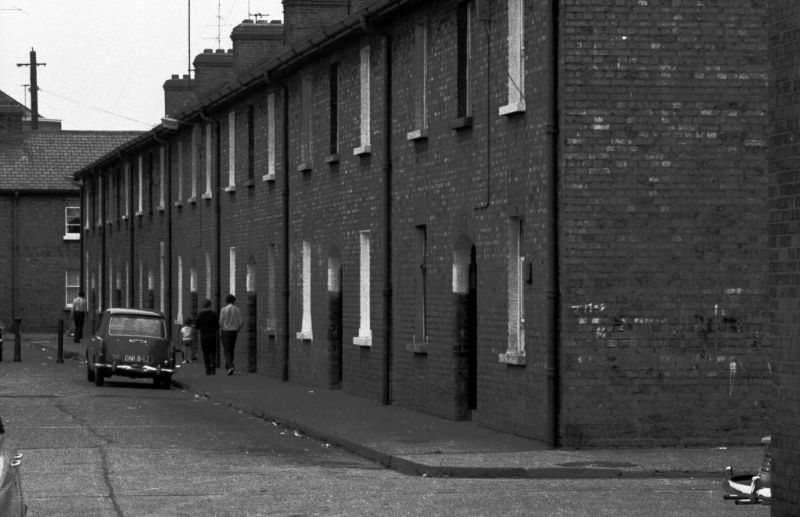
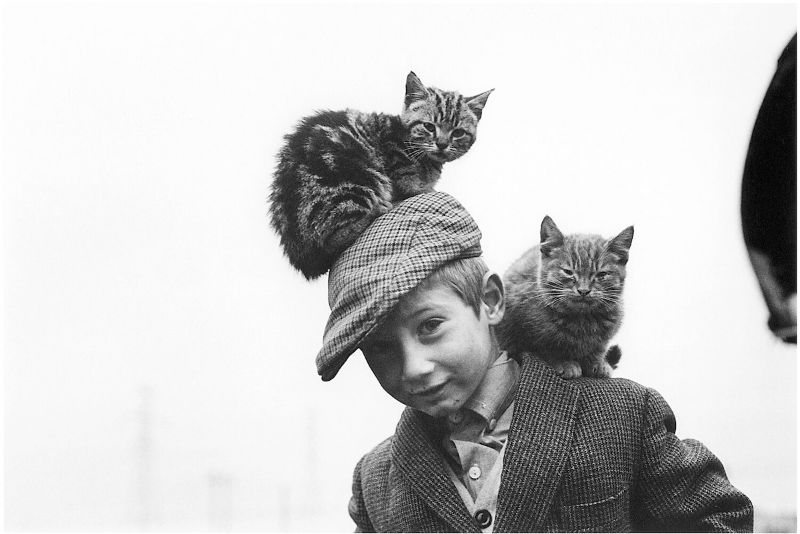
Bring back some good or bad memories


ADVERTISEMENT
Showing posts with label Dublin. Show all posts

December 28, 2023

Demonstration of Artificial Arms at Blackrock Special Hospital, 1921

An item about the versatility and mobility of artificial arms at Blackrock Special Hospital in Dublin, Ireland, 1921.


The Dublin Arm was invented in 1921 and was a significant advancement in artificial limb technology. It operated using a Bowden cable mechanism, where cables connected to the user’s residual limb enabled hand or hook movements.

By contracting specific muscles, users could control the cables, allowing them to grasp objects and perform various tasks with improved dexterity. This pioneering prosthetic limb set the stage for future advancements in the field.

August 20, 2022

26 Fascinating Black and White Snapshots of Dublin Life in the 1970s

The 1970s was a decade full of important events in Ireland and Dublin.

In October 1970, former US President Richard Nixon made his official state visit to the country. On January 1, 1973, Ireland became a member of the European Communities at the same time as the United Kingdom and Denmark. June 1973 marked the official retirement at age 90 of President Éamon de Valera, making him the oldest head of state in the world.

View down North Earl Street, December 1971.

Dublin was also affected to varying degrees by "the Troubles". In 1972, angry crowds in Dublin burned down the British Embassy in Merrion Square in protest at the shooting of 13 civilians in Derry on Bloody Sunday (1972) by British troops. The city, however, did not generally experience paramilitary violence directly, with the exception a period in the early to mid-1970s when it was the target of several loyalist bombings.

The 1972 and 1973 Dublin bombings killed 3 people and injured 185. The worst bomb attacks, however, occurred on Talbot street in 1974. The Dublin and Monaghan Bombings on 17 May 1974 were a series of terrorist attacks on Dublin and Monaghan in the Republic of Ireland which left 33 people dead (26 of them in Dublin), and almost 300 injured.

View from Talbot Street and North Earl Street, 1971.

In the early 1970s the Irish government canceled the hitherto annual Easter parade commemorating the Rising of 1916 and in 1976 banned it, fearing it was serving as a recruiting tool for illegal republican paramilitaries. Nevertheless, the Provisional republican movement organized a demonstration 10,000 strong on Easter Sunday.

Take a trip down memory lane to Dublin in the 1970s through these fascinating black and white pictures:

A group of children playing on a merry-go-round in Ballymun, August 1970.

Former US President Richard Nixon's motorcade passes the GPO on O'Connell Street, October 1970.

A view of a traffic jam in Dublin, March 1971.

August 11, 2022

30 Vintage Photographs Capture Life in Dublin in the Early 1970s

The 1970s was a decade full of important events in Ireland and Dublin. In October 1970, former US President Richard Nixon made his official state visit to the country. This decade also saw the capital city's footprint growing steadily with housing transforming the landscape of the West of Dublin. On January 1, 1973, Ireland became a member of the European Communities at the same time as the United Kingdom and Denmark. June 1973 marked the official retirement at age 90 of President Éamon de Valera, making him the oldest head of state in the world.

These brilliant pictures of Dublin were taken by Heinrich Klaffs in 1971 and 1973. For more fascinating vintage photographs, make sure to take a look at Klaff's Flickr site.


July 6, 2022

The Ambassador Cinema in Dublin, Ireland From the Late 1970s and Early 1980s

These photos of the cinema from the 1970s and ’80s display the artistic skills of Dublin signwriter Kevin Freeney (1919-1986). His first job for the venue was producing the sign for the 1978 Sean Connery’s film The First Great Train Robbery, later he was assisted by his nephew who helped with the artwork in the backroom of the cinema.

In the book “Dublin Street Life & Lore” by Kevin C. Kearns, the author mentions the work of Mr Freeney. He wrote “Signwriting goes back at least three generations in his family. Back in the 1930’s he rambled through Dublin’s streets on a bike or with a pushcart carrying his paints and brushes. In that period the city’s streetscapes were elegantly embroidered with handwritten shop and pub fascias. Having done “at least 700 pubs and shopfronts” in Dublin, the most famed streets — O’Connell, Henry, Grafton, and Capel— all carried his personalised three-dimensional relief lettering and ornamentation. His fellow craftsmen hailed him as a Master.”


July 3, 2022

Intimate Vintage Portraits Documented the Lives of Irish Travelers Outside Dublin in the Late 1960s and Early 1970s

When Alen Macweeney returned to his native Ireland in the 1960s, after working as Richard Avedon’s assistant, he first intended to do a photo essay about W.B. Yeats. His research led him to cover another quintessentially Irish subject, one up to then neglected in photojournalism and Irish society in general. 

“In search of a tinker woman as a subject,” notes Michael Miller at Hudson-Housatonic Arts, Macweeney found “a sprawling field of caravans, shed, and horses… on the outskirts of Dublin.” He also found himself “immersed in the life of the people then called tinkers, but now more respectfully known as travellers, for the next five years.”

From 1965 to 1971, Macweeney documented the lives of Irish Travellers, and in so doing, “without meaning to,” he eventually “became one of the foremost amateur anthropologists of Traveller culture,” a people invisible to most of his countrymen and women.


March 16, 2022

Amazing Vintage Snapshots Capture Everyday Life in Dublin, Ireland at the Turn of the Century

JJ Clarke, from Castleblaney, Co Monaghan, took the photographs between 1897 and 1904, when he was a medical student in Dublin. Dr Clarke’s photojournalistic approach to his subjects allowed him to capture vivid scenes from the daily lives of Dublin’s men, women and children.

Compelling in themselves, the images also show us how the city looked to writer James Joyce. His best known works – the short story collection Dubliners, and the novels A Portrait of the Artist as a Young Man and Ulysses – are all set around this time, when Joyce too was a young student fascinated by the world around him.

Many of JJ Clarke’s photographs show Dubliners making their way along the city streets, or taking a moment’s rest. His images have a spontaneity and “snapshot” quality which is very rare in photographs of this time.


September 6, 2021

33 Amazing Photos Capture Street Scenes of Dublin in the Early 1980s

Dublin is the capital and largest city of Ireland. Situated on a bay on the east coast, at the mouth of the River Liffey, it lies within the province of Leinster. It is bordered on the south by the Dublin Mountains, a part of the Wicklow Mountains range.

Large parts of Georgian Dublin were demolished or substantially redeveloped in the mid-20th century during a boom in office building. After this boom, the recessions of the 1970s and 1980s slowed down the pace of building. Cumulatively, this led to a large decline in the number of people living in the centre of the city, and by 1985 the city had approximately 150 acres of derelict land which had been earmarked for development and 10 million square feet (900 thousand square meters) of office space.

Dublin is a contemporary and historical centre for Irish education, arts and culture, administration and industry. It is one of the top thirty cities in the world.

These amazing photos were taken by David Denny that show street scenes of Dublin in the early 1980s.

Kiosk at corner of Leeson Street and Adelaide Road, 1980

Dublin Arts Festival parade, 1980

Dublin street scenes, 1980

    Feeding the ducks, 1980

    Feeney's, 1980

July 22, 2021

33 Vintage Snapshots Capture Everyday Life in Ireland in the 1960s

The sixties was known as a period when social, cultural and political changes were increasingly challenged around the world. Ireland, with a long history of emigration, a great rural base and a protected economy, however, rarely had any chance to experience the economic miracles occurred in many other post-war societies.

Things shifted in the early sixties nonetheless, when the governments began to pay particular attention to economic growth and planning, thus paving the way for a national project including opening up the economy, courting foreign capital and applying for membership of the European Economic Community.

From Dublin to Kildare and Galway, these terrific vintage snapshots transport us back to a vibrant Ireland in the 1960s. More amazing collections could be found at the National Library of Ireland.

O’Connell Street, Dublin, 1963. (Richard Tilbrook)

Capel Street, Dublin, 1960.

Clifden, Co. Galway, 1960.

A fishing trawler returning to Skerries, Co. Dublin with a full catch, circa 1960.

A man taking a breather in the Signal Cabin, Albert Quay in Cork city, 1961.

February 17, 2021

Dublin in the 1960s Through Fascinating Photos

The decade of the 1960s was characterised by worldwide economic boom, the rise of population after the war, ‘the Baby Boom’, and the emergence of Civil Rights movements. Student movements came to prominence around the world, culminating in the events of 1968.

Dublin in the 1960s


Ireland also benefited from the economic boom and developing economy as policies of protectionism were abandoned and the country was opened up to international trade and industry. RTÉ television began on the last day of 1961.

The 1960s also saw the end of censorship in Ireland, and the provision of free post-primary education. The Civil Rights movement began in the North of Ireland, and the start of the ‘troubles’, which continued to the end of the century.

Take a look at these fascinating photos from National Library of Ireland to see what Dublin, Capital of the Republic of Ireland looked like in the 1960s.

Capel Street, Dublin at 9.30 am, June 28, 1960

Filming at Westland Row Station, now Pearse Station, in Dublin, June 24, 1960

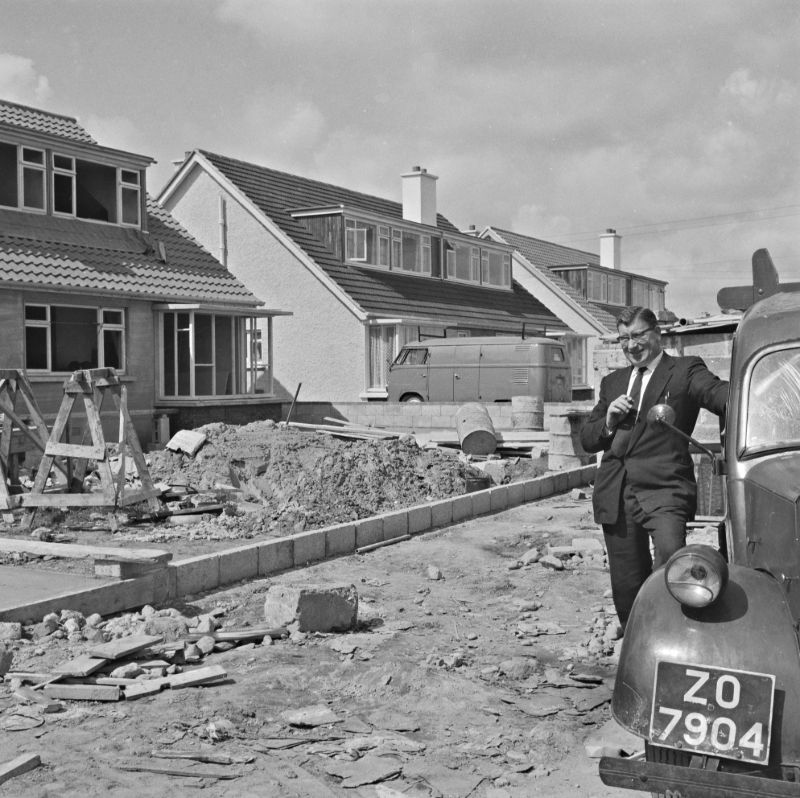
New houses being constructed, Templeogue, Co. Dublin, 1961

Store Street, Dublin, September 1961

The late lamented Theatre Royal on Hawkins Street in Dublin, April 1, 1962

January 5, 2021

Street Interviews with the Dublin Goth New Wave Movement, 1989

Described as “a poser’s paradise”, Grafton Street in Dublin - a look at the youth culture, fashion and trends in Goths, Cure-Heads, Psychobillies and teenagers who prefer not to be labelled about their clothes and music.


Goth is a subculture that began in the United Kingdom during the early 1980s. It was developed by fans of gothic rock, an offshoot of the post-punk music genre. The name goth was derived directly from the genre. Notable post-punk artists who presaged the gothic rock genre and helped develop and shape the subculture include Siouxsie and the Banshees, Bauhaus, the Cure, and Joy Division.

The goth subculture has survived much longer than others of the same era, and has continued to diversify and spread throughout the world. Its imagery and cultural proclivities indicate influences from 19th-century literature of the same name and horror films. The scene is centered on music festivals, nightclubs, and organized meetings, especially in Western Europe. The subculture has associated tastes in music, aesthetics, and fashion.

The music preferred by goths includes a number of styles such as gothic rock, death rock, post-punk, cold wave, dark wave, and ethereal wave. Styles of dress within the subculture draw on punk, new wave, and New Romantic fashion. It also draws from the fashion of earlier periods such as the Victorian, Edwardian, and Belle Époque eras. The style most often includes dark (usually solid black) attire, dark makeup, and black hair. The subculture has continued to draw interest from a large audience decades after its emergence.

September 7, 2018

42 Fascinating Photos of Dublin That Defined the Face of Ireland in the 1960s

Dublin is the capital and largest city in Ireland. It is in the province of Leinster on the east coast of Ireland, at the mouth of the River Liffey and bordered on the south by the Wicklow Mountains.

The city expanded rapidly from the 17th century and was briefly the second largest city in the British Empire before the Acts of Union in 1800. Following the partition of Ireland in 1922, Dublin became the capital of the Irish Free State, later renamed Ireland.

Take a look at these photos to see how Dublin was like from the 1960s.

O'Connell Street, circa 1960

Customs House with a ship berthed at the quay, circa 1960

Post Office Building, O'Connell Street, circa 1960

Trinity College and Bank of Ireland, Dublin, circa 1960

Capel Street, 1961

March 21, 2018

Historic Photos of Dublin After the 1916 Easter Rising

On Easter Monday, 24 April 1916, roughly 1,200 members of local republican groups, including the Irish Volunteers and Irish Citizen Army, took over strongholds in Dublin city centre and made the General Post Office their headquarters.

The British Army were initially caught off guard by the assault with only 1,268 troops in the city at the time but soon rallied and by the end of the week had a force of 16,000 men.

The Glasnevin Trust have said around 485 people were killed and 2,600 were wounded during the week of fighting. Approximately half of those killed were civilians - either people caught in the crossfire or shot by the British Army after being mistaken for rebels. The youngest person reported dead was a 22-month-old child and the oldest was 82.

Most of central Dublin was destroyed in the chaos with an estimated 200 city centre buildings damaged - costing around £3m at the time.

Abbey Street and Sackville Street (O'Connell Street) shelled, rubble remains. The tram passing by was numbered 244. The ads on the tram are for Donnelly's Bacon, Hudson's Super Soap and the Metropolitan Laundry. An ad for Bovil can just be made out on another tram. In the foreground, the bearded man (very nautical vibe) is considering a huge slab on the ground.
Skeleton of the Metropole Hotel. All that remained of the Metropole Hotel, beside the GPO on Sackville Street (now O'Connell Street), after the Easter Rising, 1916.

The shell of the G.P.O. on Sackville Street (later O'Connell Street), Dublin in the aftermath of the 1916 Rising.

Linenhall Barracks, Dublin. Men surveying the wreckage of Linenhall Barracks in the aftermath of the Easter Rising in Dublin.

The remains of the Dublin Bread Company at 6-7 Lower Sackville Street (now O'Connell Street) after the Easter Rising in 1916.

Abbey Street corner, Hibernian Bank shelled. The Hibernian Bank facade on the corner of Abbey St. and O'Connell street stands in the midst of the destruction wrought during the Rising!

(Photos: National Library of Ireland)


FOLLOW US:
Facebook • Tumblr • Pinterest • Instagram

CONTACT US


Browse by Decades

Popular Posts

Advertisement

09 10